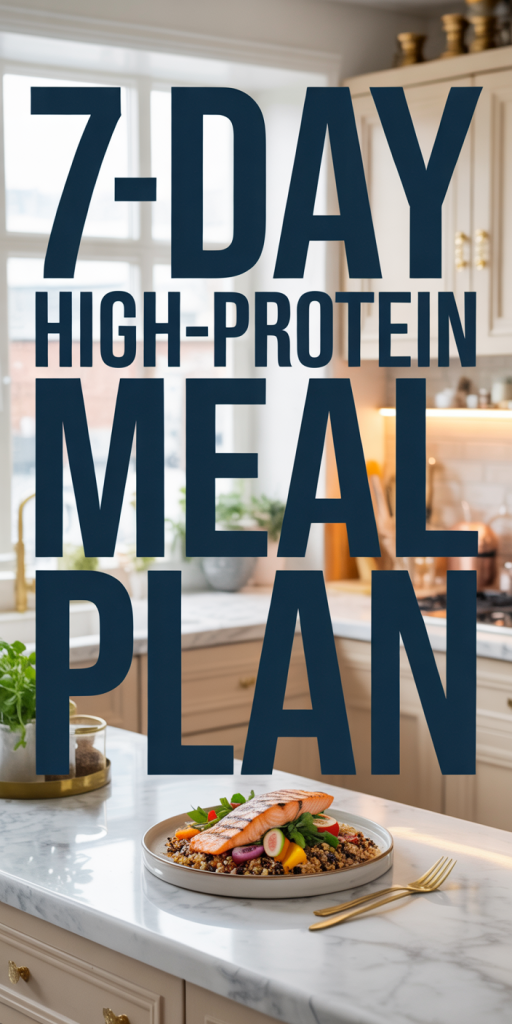
7-Day High-Protein Meal Prep Plan (90–100g Protein Daily)
Getting enough protein and finding time to cook are two of the biggest hurdles in healthy eating. This plan solves both. It’s built around one simple idea: cook smarter once, then eat well all week.
Instead of scrambling for meals or falling back on takeout, you’ll prep a handful of high-protein dishes that carry you through seven days. The goal isn’t extreme dieting or complicated recipes. It’s consistent, balanced nutrition with about 90–100 grams of protein per day—enough to support muscle, metabolism, and steady energy.
Below, you’ll find the science, the structure, and the practical system behind a week of high-protein meal prep that actually works in real life.
Why High-Protein Meal Prep Works
Most people know protein matters. Fewer realize how much they actually need. The basic recommendation—about 0.8 grams per kilogram of body weight—covers survival, not optimal health. For satiety, muscle maintenance, and metabolic support, research suggests closer to 1.2–2.0 grams per kilogram, especially for active adults.
That’s where meal prep becomes powerful.
When meals are planned and portioned ahead of time:
- Protein targets become automatic, not guesswork
- Portions stay consistent
- Calories stay controlled
- Daily cooking stress disappears
A few hours of prep replaces dozens of small decisions during the week. And those decisions—what to eat, what to cook, what to order—are often what derail healthy eating.
Meal prep removes friction. Consistency follows.
How the 7-Day Plan Is Structured
This plan isn’t seven separate dinners and seven separate lunches. That’s the mistake most meal plans make.
Instead, you cook four or five core meals and reuse them strategically. Dinner becomes tomorrow’s lunch. One batch stretches across multiple days. Cooking time drops in half.
Protein is distributed evenly:
- Breakfast: 25–30g
- Lunch: 35–40g
- Dinner: 35–45g
That distribution matters. Spreading protein across meals supports muscle protein synthesis and keeps energy stable throughout the day.
Variety is also built in. Chicken, salmon, beef, lentils, yogurt, and quinoa rotate through the week so meals stay interesting and nutritionally complete.
High-Protein Breakfast Options (25–30g)
Starting the day with protein changes everything—hunger, focus, cravings, and energy all improve. These three breakfasts are simple, repeatable, and prep-friendly.
High-Protein Scrambled Eggs
The upgrade here is cottage cheese. Whisking about ½ cup into eggs creates a creamy texture and adds extra protein without changing flavor. One serving easily reaches ~30g protein.
Greek Yogurt Parfait
Greek yogurt contains roughly double the protein of regular yogurt. Layer with berries and nuts in jars the night before. Add crunchy toppings right before eating to keep texture fresh.
Protein Oat Pancakes
Blend oats, eggs, and protein powder into batter. Cook a double batch on the weekend and freeze. Reheat during the week for a fast, high-protein breakfast that feels like comfort food.
Lunch & Dinner Core Recipes (35–45g)
These meals are designed for batch cooking, minimal cleanup, and strong protein density.
Chicken & Chickpea Curry
Lean chicken and fiber-rich chickpeas create a complete amino acid profile. One-pot cooking keeps prep easy, and it stores well for up to four days. ~35g protein per serving.
Sheet Pan Lemon Herb Chicken
Protein, vegetables, and starch cook together on one pan. Minimal dishes, high output. Each portion delivers roughly 40g protein.
Teriyaki Salmon with Quinoa
Salmon provides high-quality protein plus omega-3 fats. Quinoa adds additional plant protein and texture. Balanced, satisfying, and nutrient-dense. ~35g protein.
Creamy Tuscan Chicken
Chicken in a rich tomato-spinach sauce creates a restaurant-style meal with about 45g protein. Excellent for batch prep and reheating.
These four dishes form the backbone of the week. Cook once, portion multiple meals, and rotate.
Meal Prep Strategy That Saves Hours
Meal prep isn’t just cooking—it’s time design.
Instead of cooking 30 minutes twice daily, you cook about three hours once. That single session replaces roughly 14 separate cooking events during the week.
A simple workflow:
- Start long-cook items first
Roast proteins and cook grains immediately. - Prep while things cook
Chop vegetables, mix sauces, portion ingredients. - Cook in parallel
Oven + stovetop + chopping board all active. - Portion immediately
Containers filled as food finishes.
This layered approach keeps total prep time under three hours for a full week.
If you’re new to meal prep, start with 2–3 days instead of seven. Skill and speed improve quickly after the first week.
Safe Storage & Freshness Guidelines
Food safety determines how long prep meals stay usable.
- Refrigerator: 40°F (4°C) or below
- Cooked meats & fish: 3–4 days
- Grains & legumes: up to 5 days
- Soups/stews frozen: 2–3 months
Always label containers with meal name and date. Rotation becomes easy and waste drops.
If anything smells off or looks questionable, discard it. Food safety always outweighs convenience.
Protein Variety for Better Nutrition
Hitting 90–100g daily isn’t about eating more chicken. It’s about rotating sources.
Animal proteins
- Chicken breast (~31g per 4 oz)
- Salmon (protein + omega-3s)
- Eggs
- Greek yogurt
Plant proteins
- Chickpeas
- Lentils
- Quinoa (complete protein)
Mixing sources improves amino acid coverage, micronutrient intake, and flavor variety. It also prevents burnout from repetitive meals.
Weekly Meal Prep Checklist
A simple system keeps prep days smooth and predictable.
Planning (30 min)
- Review meals
- Build grocery list by store section
- Check pantry basics
Shopping
- Buy proteins in bulk
- Choose pre-cut or pre-washed items if needed
- Focus on versatile ingredients
Prep Day (2–3 hrs)
- Start longest-cook foods first
- Multitask chopping and sauces
- Portion into containers immediately
- Label and refrigerate
During the Week
- Grab meal
- Reheat
- Eat
Total active cooking time during the week: nearly zero.
Key Takeaways
High-protein meal prep turns good intentions into automatic habits. Instead of daily decisions, you rely on preparation.
Core principles:
- Aim for 25–30g protein per meal
- Cook once, eat multiple times
- Use leftovers intentionally
- Label and store correctly
- Start small if new
The first week takes effort. The second feels easier. By the third, it’s routine.
Consistent protein intake supports muscle, metabolism, and satiety. Consistent prep supports adherence. Together, they create sustainable nutrition that fits real life.
Pick a prep day. Make the list. Start this week.