16 Outfits That Look Amazing Online—But Fail In Real Life (And How To Avoid Them)
We’ve all fallen for a flawless Instagram outfit: the lighting is perfect, the model looks like they were born in that silhouette, and the comments are a chorus of heart-eye emojis. But when we try to recreate the look in person, something’s off, the fabric clings wrong, proportions don’t translate, or the shine reads cheap under fluorescent lights. In this guide we’ll walk through 16 common outfit types that photograph beautifully but often fail in everyday life, explain why they deceive the camera, and give practical swaps and styling fixes so you can enjoy the aesthetic without the disappointment. Whether you’re shopping online or planning a real-world outfit, these pointers will help us spot the illusions and make smarter choices.
Sheer Layers, Ill-Fitting Lingerie, And See-Through Trends
Sheer tops, mesh dresses, and ultra-thin knits are staples of online fashion edits. On camera they read as delicate and editorial: in real life they often look like an accidental wardrobe malfunction. The problem usually isn’t the concept, sheer layering can be chic, but the execution: poorly matched undergarments, thin fabrics that stretch and become transparent under movement, and seams that betray bargain construction.
How to avoid the letdown: first, invest in proper base layers. A well-fitting slip, bodysuit, or nude bra that matches our skin tone will create a clean silhouette without shouting for attention. Look for fabrics with a slightly higher thread count or micro-mesh blends that maintain opacity when stretched. If the sheer piece is very lightweight, wear it over structured clothing rather than directly against skin, a camisole and high-waist pencil skirt or a tailored bralette under a sheer blouse usually reads intentional.
Fit matters: avoid pieces that cling to areas where you don’t want transparency to show. When shopping online, check stretch percentages and customer photos for real-world opacity. Finally, consider lining or modesty panels as a simple alteration: they preserve the look but give us confidence to wear it beyond staged photos.
Ultra-Tight Silhouettes, Bodycon Sets, And Overstretched Basics
Bodycon dresses and ultra-skinny sets are popular on social feeds because cameras flatten depth and emphasize curves. That flatness can hide bulges, wrinkling, or gapping that appear once we’re moving, sitting, or stepping into different light. Materials that contain a lot of elastane look great when static but can overstretch, lose shape, or create visible compression lines in real situations.
To keep the look wearable, choose fabrics with structure. Instead of 95% stretchy jersey, opt for blends that include a stable woven or a double-knit that returns to shape. Size up when in doubt: a slightly looser fit preserves movement and avoids the “bunched” look at seams. For sets, prefer pieces with separate tops and bottoms so we can balance proportions, a snug skirt with a relaxed tee often reads more stylish than a head-to-toe squeeze.
Also pay attention to seams and lining. Quality finishes reduce the chance of see-through moments and keep the silhouette smooth. If we love the ultra-tight aesthetic for photos, reserve those items for short, controlled outings rather than all-day wear.
High-Shine Fabrics, Metallics, And Wet-Look Materials
Metallic skirts, vinyl jackets, and wet-look leggings pop on camera because they reflect light in dramatic ways. Offline, but, extreme shine can read cheap, emphasize texture flaws, and highlight every crease. These materials also show fingerprints, smudges, and wear quickly, not ideal when we want a polished, lasting look.
If we want shine without the pitfalls, balance is essential. Pair a small metallic piece, a skirt, shoe, or bag, with matte, tactile fabrics like wool, denim, or suedes to ground the outfit. Choose subdued metallics (brushed gold, pewter) over mirror-like finishes: they photograph beautifully but age more gracefully. For vinyl and patent options, pay attention to lining and construction. A high-quality coated fabric with a soft backing will move better and avoid a squeaky, synthetic feel.
Finally, limit the shine to one focal point. Too much reflective surface creates visual confusion in person and under bright lighting can be overwhelming. A single glinting piece reads intentional rather than costume-like.
Loud Prints, High-Contrast Patterns, And Busy Matching Sets
On an edited grid, bold prints and coordinated matching sets look like a brand statement. But in real life, high-contrast patterns can overwhelm our frame, visually distort proportions, and clash with environments like offices or cafes. Matching patterns from top to bottom can flatten body definition in photos while making us look one-dimensional in person.
We can still wear prints, the trick is scale and placement. Large prints on strategic areas (a skirt or an open coat) create movement: micro-prints can be classy when paired with solid, structured pieces. Avoid prints that create optical illusions near problem areas unless that’s the intent. If we opt for matching sets, break them up with a neutral layer, a blazer, chunky cardigan, or belt, to restore dimension.
Texture mixing helps too: pair a busy floral skirt with a ribbed knit or leather jacket to add contrast that reads better in motion. Finally, check how prints behave under indoor lighting: some color combinations become garish when fluorescent light hits them, so test before committing.
Extreme Lengths: Micro Miniskirts And Floor-Grazing Maxis
Dramatic lengths are made for editorial photos, a micro skirt shot mid-stride or a dramatic maxi flowing in wind can look cinematic. Outside that context, extreme lengths introduce practical problems. Micro hems ride up, create unflattering angles when we sit or bend, and limit movement. Conversely, floor-grazing maxis collect dirt, trip on stairs, and obscure footwear, which disconnects the outfit from how we actually navigate spaces.
Make lengths functional. For mini skirts, choose higher waists and slightly longer hemlines that still show leg but won’t betray us when we sit. A-line minis are more forgiving than bodycon ones. For maxis, opt for strategic slits, ankle-length alternatives, or tailored hems that skim rather than puddle. Consider the activity: if we’ll be walking or commuting, a midi often becomes our best friend, it’s stylish, practical, and photographs reliably.
Alterations solve a lot: having a tailor adjust the hem to an optimal length for our height will keep the dramatic effect without turning daily life into a runway hazard.
Oversized Chunky Knits, Bulky Layers, And Unstructured Coats
Oversized knits and roomy coats are a social media favorite because they read cozy, editorial, and effortless in still images. But in person, excessive bulk can swallow our frame, create awkward proportions, and look shapeless. Heavy textures can also add perceived weight, especially if the pieces lack internal structure or tailoring.
To keep oversized items flattering, layer smartly. Use fitted base layers, a turtleneck or slim tee, under chunky knits to maintain shape. Add a belt over an oversized coat to define our waist when needed. Choose knits with drape rather than extreme puff: a longline cardigan with a subtle shoulder seam usually works better than a sweater that’s two sizes too big.
Pro portions: if the top is oversized, balance with a more tailored bottom, straight-leg jeans, a pencil skirt, or cropped trousers, to avoid the “blocky” look. Also pay attention to sleeve length: excessively long sleeves that bunch at the wrist look unfinished in person even if they photograph as relaxed.
Attention-Grabbing Details: Puff Sleeves, Ruffles, And Heavy Embellishment
Puff sleeves, ruffles, sequins, and heavy embellishment make strong visual statements online. Photographs freeze those details in a flattering pose: real life involves movement, wind, and crowding that can turn embellishments into obstacles, sleeves that block our view, ruffles that flare at inopportune moments, or sequins that snag.
If we love dramatic details, use them selectively. Keep one focal point per outfit: if the blouse has exaggerated sleeves, pair it with streamlined bottoms and minimal accessories. For embellished pieces, consider the scale and placement, shoulder embellishments add interest without interfering with seating, while heavy beading at the hips can weigh fabric down and distort fit.
Care and quality also matter. High-density embellishments on cheap fabrics cause sagging and fraying. Look for reinforced seams and stable bases: when in doubt, save statement details for events rather than everyday wear so they stay striking without becoming burdensome.
How Lighting, Angles, And Editing Create Clothing Illusions
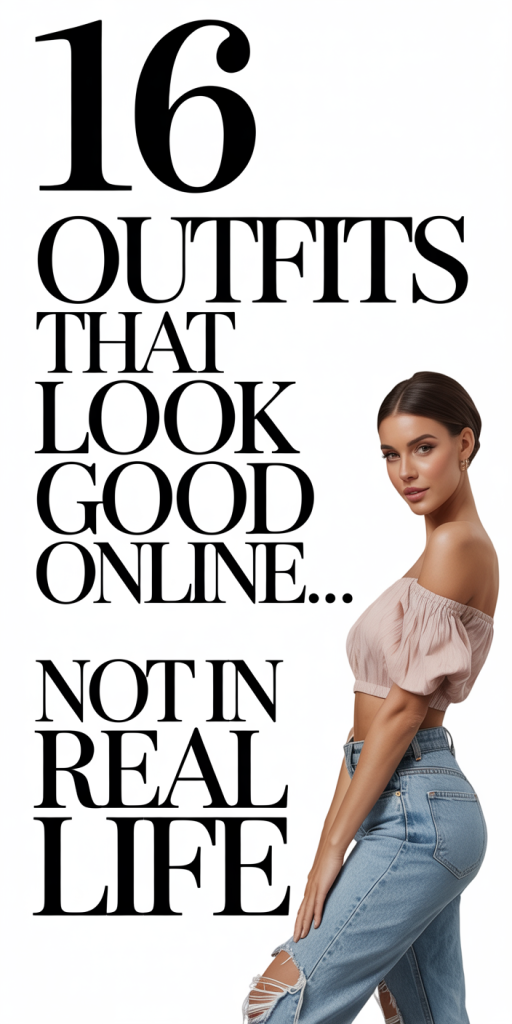
The way clothing looks in photos owes a lot to factors beyond the garment itself. Understanding these will help us separate genuine style from camera trickery and shop more wisely. We’ll break this down into how lighting, angles, and styling tricks flatter on camera, followed by how retouching, color grading, and compression can change fit and texture.
Lighting, Angles, And Styling Tricks That Flatter On Camera
Good lighting sculpts the body and hides flaws: soft directional light reduces texture while backlighting can make fabrics glow. Photographers often use high or low angles to elongate limbs or slim torsos, a slightly elevated camera position lengthens legs, while three-quarter turns create waist definition. Stylists also manipulate garments: tucking, pinning, or cinching transforms a loose item into a tailored silhouette for the frame.
When we evaluate a photo, ask how the light hits seams and folds. If the fabric looks impossibly smooth or the waist seems unrealistically sculpted, a lot of that comes from positioning and subtle styling tricks. Look for alternate shots (walking, sitting) in reviews to see how the piece behaves beyond the hero image.
Retouching, Color Grading, And Compression Effects That Change Fit And Texture
Post-production work dramatically alters garments. Retouching can remove wrinkles, flatten bulges, and even reshape bodies. Color grading adjusts hues so a cheap metallic looks luxe: compression applied when images are saved for web can blur texture and hide pilling or seam puckering. Social creators also use filters that smooth skin and fabric simultaneously, so what we see is often an edited fantasy.
To counteract this, rely on user-generated photos and reviews: buyers post candid shots in different light and movement, revealing real drape, sheen, and fit. Inspect product descriptions for fabric weights and care instructions, a heavy knit will list GSM (grams per square meter) or mention lining. When in doubt, contact customer service for fabric swatches or ask about return policies. Being aware of editing practices helps us interpret aspirational images with healthy skepticism and make purchases that work in real life, not just in a feed.