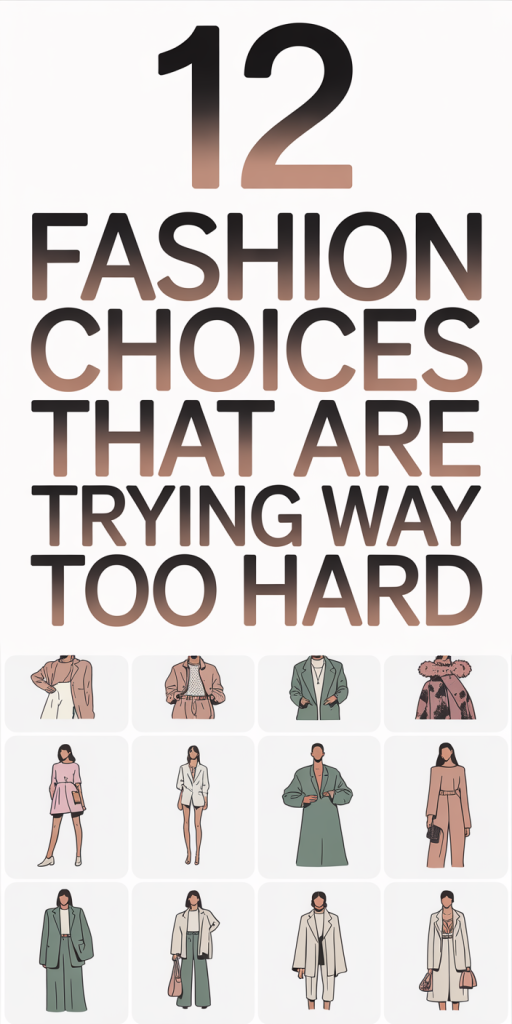
12 Fashion Choices That Are Trying Way Too Hard (And What To Wear Instead)
I’ve all been there: a piece that looked brilliant on Instagram but, worn in real life, reads as trying too hard. In 2026 fashion keeps evolving fast, and what once felt edgy can now look forced. In this guide I’ll call out 12 fashion choices that tend to overshoot, then give practical, stylish alternatives that keep personality intact without the theatricality. Expect clear examples, why each trend can feel off, and fail-safe swaps that modernize my wardrobe without turning me into a walking mood board. Whether I love bold statements or subtle minimalism, these switches will help me look curated rather than curated-for-attention.
1–2: Logo Overload And Head-To-Toe Matchy-Matchy
Logo Overload
There’s a point where brand loyalty becomes visual clutter. Wearing two or three conspicuous logos on one outfit (hat, sweatshirt, bag) can feel less curated and more like advertising. Logos used sparingly communicate taste: logo saturation communicates a checklist. When everything screams brand, nothing whispers quality.
Why it feels like it’s trying too hard:
- It announces intention rather than taste. The message becomes “look at what I bought” instead of “look how this looks on me.”
- It dates quickly. Logos come and go with marketing cycles: subtle tailoring lasts.
What to wear instead:
- Swap one loud logo piece for a textured or well-cut neutral. A high-quality leather bag without visible logos often reads more expensive than a small-logo tote.
- Mix in vintage or unbranded pieces. A thrifted blazer or artisan scarf breaks up the billboard effect and adds personality.
- If you love a logo, pick one focal piece, say, a belt, and balance with quiet, well-fitting items.
Head-To-Toe Matchy-Matchy
The idea of being perfectly coordinated used to be a hallmark of elegance. Now, wearing the exact same fabric, color, and pattern from hat to shoes can look contrived, like a uniform for an influencer convention.
Why it feels like it’s trying too hard:
- It suggests outfit planning over personal expression.
- It reduces visual interest: nothing breathes.
What to wear instead:
- Choose a unifying color palette (three tones max) and vary textures, cotton tee, wool blazer, suede shoes, to create depth.
- Introduce a deliberate contrast piece: a patterned scarf, a vintage watch, or even a leather jacket. That single break in sameness will make the whole look feel intentional rather than forced.
Practical example:
- Instead of a head-to-toe monogram tracksuit, pair a logo hoodie with tailored trousers and minimalist sneakers. We get the comfort and brand nod without the full-court branding.
3–4: Overly Distressed Denim And Excessive Rips
Overly Distressed Denim
Rips and distressing were once a sign of effortless cool. Today, jeans with industrial shredding, exposed pockets, and patchwork that looks like it survived a tornado read gimmicky. Distress should suggest lived-in ease: when it becomes theatrical, it distracts from the wearer.
Why it feels like it’s trying too hard:
- It signals a manufactured rebellion rather than authenticity.
- Heavy distressing makes tailoring pointless: we can’t appreciate fit if the fabric is falling apart.
What to wear instead:
- Opt for subtle wear: light whiskering, gentle fading at the knees, or small abrasions that mimic natural aging.
- Try different silhouettes, straight-leg, tapered, or cropped, so the denim looks modern without relying on ruins.
- Consider raw or selvedge denim if you like the character of aging: it develops real patina over time and tells a genuine story.
Excessive Rips
Rips in the exact same places on every jean (knees, upper thigh) have been overused. Worse, some designs reveal more than they conceal: it becomes a costume for a stereotype rather than an expression.
Why it feels like it’s trying too hard:
- Overexposure of the same trope dilutes originality.
- Excessive holes can look sloppy or like a parody of rebellion.
What to wear instead:
- If we want edge, add structured elements like a biker jacket or chunky boots instead of maximal ripping.
- Try distressed details in surprising places, frayed hems, raw-cut pockets, paired with tailored tops to balance the look.
Practical example:
- Replace a pair of shredded skinny jeans with a slightly cropped straight-leg jean that has a soft fade and a raw hem. Pair with a crisp white shirt and polished loafers to contrast the casual denim.
5–6: Neon Everything And Loud Metallics
Neon Everything
Neon can be fun, it’s energetic and joyful. But an all-neon outfit in day-to-day life often reads as costume-y. Neon’s strength is in its accent power: a pop of electric color can enliven an outfit: a head-to-toe neon ensemble overwhelms.
Why it feels like it’s trying too hard:
- Neon competes with our features and surroundings, making the outfit feel attention-seeking rather than flattering.
- It’s difficult to wear neon with nuanced styling: the color overshadows cut, texture, and proportion.
What to wear instead:
- Use neon as an accent: a shoe, belt, or liner on a jacket. Small doses maintain vibrancy without domination.
- Mix neon with muted tones, olive, charcoal, camel, to let the color sing while keeping sophistication.
Loud Metallics
Metallic clothing and accessories can be statement-making, but metallic-on-metal creates a spectacle that’s rarely chic outside of editorial settings. From disco silver pants to gold lamé blazers, loud metallics can read as epochal or theme-party-ready.
Why it feels like it’s trying too hard:
- It telegraphs “look at me” louder than style nuance does.
- Metallic fabrics often exaggerate texture and silhouette in an unflattering way.
What to wear instead:
- Choose metallics in restrained doses: a bronze loafer, metallic stitching, or a sequined trim on a blazer.
- Favor matte metallics or items with sheen rather than mirror-like finishes. Think satin champagne instead of chrome.
Practical example:
- Swap a full neon suit for a neutral blazer with a neon pocket square and understated white sneakers. Or, trade in foil trousers for dark denim and metallic-accented boots for subtle impact.
7–8: Ultra-Bulky Sneakers Paired With Delicate Pieces
Ultra-Bulky Sneakers
Chunky “dad” sneakers made a justified comeback, but pairing oversized, clunky shoes with delicate, ethereal pieces can create a mismatch that feels accidental rather than intentional. When sneakers dominate the silhouette, they demand proportional counterweights.
Why it feels like it’s trying too hard:
- It reads like trend-chasing rather than a considered juxtaposition.
- Bulky footwear can overpower fine fabrics and soft tailoring, collapsing the outfit’s balance.
What to wear instead:
- If we like chunky sneakers, build the outfit around them: relaxed trousers, utilitarian coats, and structured knits complement the weight.
- For delicate dresses or silk skirts, choose sleeker footwear, minimalist sneakers, low boots, or refined sandals, to maintain the garment’s grace.
Delicate Pieces Paired Poorly
A chiffon slip dress with combat boots and neon socks might get attention, but it risks looking like someone mixed wardrobes from different decades without a point. The key is cohesion.
Why it feels like it’s trying too hard:
- Combining extremes without a linking element produces visual friction.
- It can read as an attempt to be “edgy” rather than a cohesive personal aesthetic.
What to wear instead:
- Use transitional elements: a denim jacket, oversized blazer, or leather belt can bridge delicate fabrics and heavier shoes.
- Emphasize color echoes, pull a color from the dress into the shoe or bag so the look feels purposeful.
Practical example:
- Instead of pairing an organza skirt with oversized technical runners, try a sleek white leather sneaker and a cropped utility jacket. We keep playfulness but restore proportional harmony.
9–10: Too Many Trends At Once And Costume-Like Layering
Too Many Trends At Once
Trends are tempting. But stacking five micro-trends, cropped puffer, neon tights, logo belt, oversized sunglasses, and statement socks, turns us into a walking yearbook of fashion headlines rather than a person with a point of view.
Why it feels like it’s trying too hard:
- Trend overload dilutes identity. We lose the sense of who we are beneath the trend list.
- It creates visual noise: nothing reads because everything competes.
What to wear instead:
- Anchor an outfit in one primary trend and support it with timeless basics. If we want to lean into cropped puffer jackets, pair them with classic straight-leg jeans and simple boots.
- Prioritize pieces that flatter our silhouette and lifestyle. Trends should be accessories to good fit, not substitutes for it.
Costume-Like Layering
Layering is a powerful tool when it builds depth and utility. But when layers are assembled for spectacle, multiple jackets, batting vests, belts over belts, we cross into costume territory.
Why it feels like it’s trying too hard:
- Excessive layering often sacrifices comfort and movement for theatrical effect.
- It can muddle proportion and hide the very pieces we want to showcase.
What to wear instead:
- Think in terms of two or three layers max: base, mid, and outer. Each should have a purpose, warmth, structure, or silhouette.
- Use color and texture to create visual interest rather than piling on garments. A textured mid-layer (knit, suede) can replace two thin layers.
Practical example:
- Rather than stacking a hoodie under a blazer under a cropped puffer under a duster, choose a single statement outerwear piece and coordinate the underlayers for fit and color. We get complexity without theatrical excess.
11–12: Overaccessorizing With Statement After Statement
Overaccessorizing With Statement After Statement
Accessories are the punctuation of an outfit. But too many exclamation points, oversized chains, chunky rings, layered chokers, and a belt that doubles as jewelry, becomes visual overload. Instead of elevating, it competes.
Why it feels like it’s trying too hard:
- Multiple bold accessories fight for attention, obscuring the wearer’s face and line.
- It signals a reliance on adornment rather than the strength of tailoring and proportion.
What to wear instead:
- Pick a focal accessory each day: either a statement necklace or a bold bag, not both. Let secondary pieces be subtle, delicate studs, a slim bracelet.
- Consider scale and placement. A large cuff on one wrist paired with a slim watch on the other creates balance without excess.
Statement Jewelry Overuse
We’re fond of jewelry storytelling, grandmother’s brooches, bold cuffs, but when every piece is a conversation starter, the narrative becomes fragmented.
Why it feels like it’s trying too hard:
- It reads as a checklist of must-haves rather than a cohesive personal archive.
- Layering too many heavy pieces can distract from clothing craftsmanship and facial expression.
What to wear instead:
- Curate jewelry like we would playlist tracks: one central hit and complementary background elements. A chunky ring pairs well with a thin necklace and simple earrings.
- Think about necklines and jewelry proportion. High collars suit long pendant chains: V-necks pair with shorter, more sculptural pieces.
Practical example:
- Swap multiple oversized chains for one sculptural pendant, a slim ring, and understated hoops. The result feels intentional, wearable, and less like an outfit stunt.
How To Tone Down A Look Without Losing Personality
Toning down doesn’t mean neutering our style. It’s about refining choices so personality reads clearer. Here are practical, modern strategies we can use to keep our individual voice while avoiding the “trying too hard” trap.
- Choose one focal point
Decide what we want to emphasize, color, silhouette, or accessory, and keep other elements supporting and subdued. This central decision keeps outfits cohesive.
- Prioritize fit over flash
A well-fitted garment will always outshine an oversized trend piece. Tailoring is an investment that refines every look.
- Limit the palette
Stick to three colors maximum in an outfit (including neutrals). A limited palette looks purposeful and less chaotic.
- Mix textures, not patterns
If we want visual interest, vary fabric textures, corduroy, knit, satin, rather than slapping multiple clashing patterns together.
- Add one modern twist
We don’t have to be boring: add one contemporary element (a sculptural shoe, a vintage find, or a color pop) to keep things current.
- Edit accessories deliberately
Before leaving the house, remove one item. Often that one extra piece is the thing making the outfit feel overworked.
- Consider context and function
We should dress for where we’re going. An outfit that’s perfect for a fashion event might be excessive for a work meeting. Contextualizing our look is both practical and stylish.
- Build a signature capsule
Create a small set of go-to combinations that feel like us. Over time, these will become shorthand for our style and reduce the urge to overdo trends.
Practical exercise:
- Try the three-piece rule for a week: pick one statement item and two supporting basics. Notice how much easier getting dressed becomes and how much clearer our personal style reads. Over time we can reintroduce bolder items with better restraint and confidence.
Conclusion
As trends accelerate, restraint becomes a superpower. We don’t have to reject boldness, just apply it with intention. By dialing back logo noise, choosing meaningful distressing, limiting neon and metallics, balancing footwear, avoiding trend stacking, and editing accessories, we keep our outfits modern and authentic. These swaps help us present a clearer version of ourselves: stylish, confident, and unmistakably human. In 2026, the smartest fashion move is less about proving we’re on-trend and more about proving we know who we are.