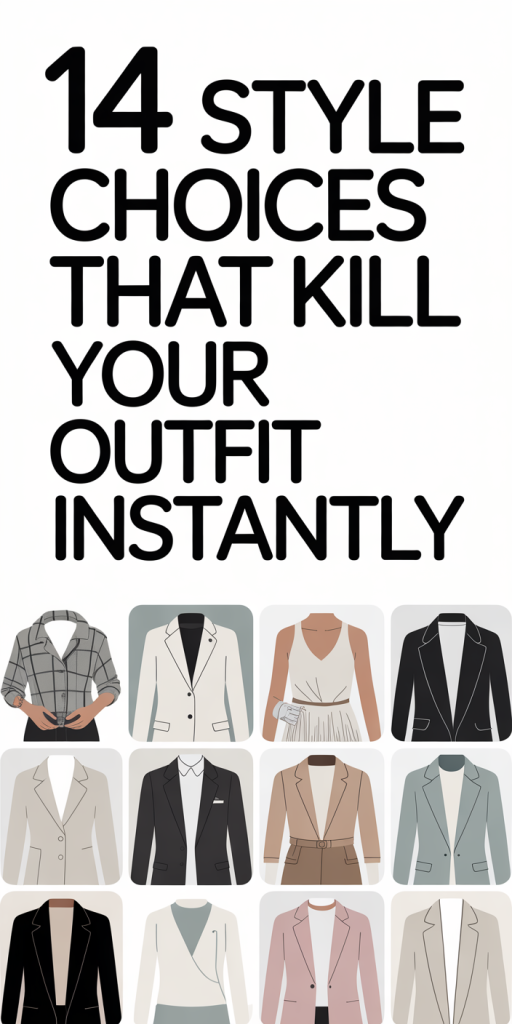
14 Style Choices That Kill Your Outfit Instantly (And What To Wear Instead)
We’ve all stood in front of a mirror and wondered why an outfit that looked promising in our head falls flat in real life. In 2026, with fashion cycling faster than ever and influencers promoting extremes, it’s easy to make choices that unintentionally sabotage our look. This guide calls out 14 common style mistakes that kill an outfit instantly, explains why they fail, and, most importantly, shows what to wear instead so your clothes actually work for you. We’ll focus on practical swaps, proportion fixes, and small styling moves that produce big results. Think of this as a checklist: avoid these pitfalls, and you’ll preserve polish, personality, and longevity in your wardrobe.
Relying On Overly Trendy Pieces Without A Balanced Foundation
Trendy pieces are addictive: they promise instant relevance and a dopamine hit every time we spot them on a feed. But when your outfit depends entirely on one extreme trend, neon micro-bags, head-to-toe PVC, or hyper-elongated platforms, there’s nothing left to ground the look. The result is a costume rather than a cohesive outfit.
Why this kills an outfit
- Trends are temporal. Leaning on them exclusively makes your look feel dated as soon as the cycle turns.
- Overemphasis on novelty can overwhelm personal style, distracting from the individual wearing the clothes.
- Without basics to balance the statement piece, proportions and color can feel uncalibrated.
What to wear instead
We recommend building outfits around a stable foundation of timeless basics: a well-cut blazer, neutral-denim, a simple white shirt, or classic loafers. Then add one trending item as an accent, think of it like a spice. A tailored blazer will tame an oversized sculptural top: classic boots offset an on-trend miniskirt. That balance preserves modernity while protecting versatility.
A practical formula we use: 60% classic, 30% updated basics (like modern tailoring or innovative fabrics), 10% trend. It keeps looks fresh without committing to the volatility of fast fashion. Finally, ask: does this trend complement your lifestyle and the rest of your wardrobe? If not, skip it.
Wearing Clothes That Don’t Fit — Too Big Or Too Tight
Fit is the single most important factor in whether an outfit reads intentional or accidental. Clothes that are too big swallow your shape: garments that are too tight highlight areas in ways that can feel uncomfortable and unflattering. Both extremes can kill an otherwise stylish look.
Too big: the pitfalls
- Oversized items can look sloppy when the silhouette lacks structure.
- Excess fabric can ruin proportions and obscure the garment’s intended design.
- Baggy waistlines or sleeves may give an impression of ill-fitting thrift rather than considered style.
Too tight: the pitfalls
- Overly tight clothes can create visible pulling, unflattering lines, or gaps at seams.
- They limit movement and convey discomfort, readers and observers pick up on that.
- Fabric stress shortens garment lifespan and often reads unpolished.
What to wear instead
Aim for fit that flatters your natural lines while allowing ease of movement. We recommend learning three fit cues:
- Shoulder alignment for tops and jackets: seams should sit where your shoulder actually ends.
- Waist and hip balance for bottoms: trousers and skirts should follow your silhouette without strain or billow.
- Sleeve and rise length: sleeves that hit at the wrist, pant hems that break cleanly over shoes.
If you’re unsure, small tailoring investments, taking in a waist, shortening sleeves, or hemming trousers, transform off-the-rack items into flattering pieces. Clothing that fits isn’t about size labels: it’s about shape.
Ignoring Proportions For Your Body Type
Proportion is the secret language of style: it dictates how individual pieces interact on the body. Ignoring it makes outfits read poorly even when each item is attractive on its own. Adapting proportions to your frame doesn’t mean dressing conservatively: it means arranging elements so they create an intentional silhouette.
We’ll break this down into three practical subtopics to make proportion adjustments simple and repeatable.
How To Balance High-Waist And Low-Waist Silhouettes
High-waist versus low-waist affects how your torso and legs visually divide. A high-waist pant or skirt elongates the legs but can shorten the torso: low-waist pieces do the opposite.
What kills an outfit
- Pairing a cropped top with very low-rise bottoms can create an awkward midriff break, particularly on shorter torsos.
- Conversely, full-length tunics over high-waist bottoms without definition can look boxy.
What to wear instead
- If you wear high-waist trousers, choose tops that either hit at the waistline (tucked or cropped) or that have vertical details to balance the torso length. A fitted tee or a tucked silk blouse is an easy win.
- For low-rise bottoms, balance with longer or looser tops that skim the hip, avoid tiny cropped tees unless you want a deliberate midriff focus.
Small adjustments like a half-tuck or adding a belt can visually re-center the waist, restoring proportion quickly.
Avoiding The Oversized-Top With Slim-Bottom Mismatch
The oversized-top with ultra-slim-bottom look can work, but it often fails when the volume imbalance is extreme. An oversized sweater that completely hides your hips paired with skin-tight leggings can look like you’re wearing two separate outfits that haven’t been reconciled.
What kills an outfit
- A lack of visual connection between the top and bottom.
- Too much fabric on top with nothing to anchor the silhouette.
What to wear instead
- Introduce a middle ground: structured outerwear (a cropped trench or belted coat) or a half-tuck to create definition.
- Choose proportionally scaled oversized pieces, if the top is dramatically big, offset with a slightly less slim bottom: straight-leg jeans instead of figure-hugging bike shorts, for example.
Think in terms of ratios: if top volume increases, either increase bottom structure or add a waist-defining element.
Hemline Mistakes For Petite, Tall, And Curvy Frames
Hemlines significantly affect perceived height and balance. The same midi skirt can flatter one person and make another look disproportionate depending on where it hits the leg.
Common mistakes
- Petite frames: mid-calf skirts and long coats that engulf shorter legs.
- Tall frames: ultra-mini hemlines that create an overly youthful or unbalanced look when not styled intentionally.
- Curvy frames: hemlines that cut at the fullest part of the calf or thigh, creating an unflattering stop point.
What to wear instead
- Petite: opt for higher waistlines, shorter skirt lengths (just above the knee) or midi cuts that hit just below the calf with heels or ankle boots to elongate.
- Tall: embrace longer hemlines, maxi dresses and midis look elegant, but balance with fitted tops or belting to prevent looking shapeless.
- Curvy: choose hemlines that skirt the slimmest part of the leg: A-line and wrap cuts are universally flattering.
When in doubt, try several lengths with your actual footwear to see where the hem lands: small shifts in skirt length or heel height change the silhouette dramatically.
Clashing Prints, Patterns, And Competing Textures
Prints and textures add personality, but mixing them badly creates visual noise. The most common offenders are competing scales, mismatched color undertones, or materials that fight each other instead of harmonizing.
Why this kills an outfit
- The eye can’t settle. When patterns are fighting for attention, the look becomes chaotic.
- Mixed textures with different levels of sheen (matte linen vs. glossy PVC) can appear discordant when not intentionally contrasted.
What to wear instead
- Use one dominant print and support it with solids or subtle texture. For instance, pair a bold floral blouse with a matte, neutral trouser and a leather loafer.
- When mixing patterns, vary scale: a large plaid with a small polka dot works better than two large-scale patterns. Keep color undertones aligned, warm with warm, cool with cool, unless you’re intentionally creating contrast.
Texture tips
- Balance delicate fabrics (silk, chiffon) with structured pieces (denim, tailored cotton) so one component anchors the look.
- For outfits with multiple textures, maintain a coherent color story. A monochrome palette with mixed textures reads sophisticated rather than muddled.
Choosing Colors That Drain Your Complexion Or Clash
Color can make or break how vibrant we look. Wearing shades that drain our complexion or pairing colors that fight each other makes an outfit less flattering, sometimes dramatically so.
Common color mistakes
- Wearing colors with undertones that contrast with your skin’s undertone, which can make you appear washed out.
- Pairing hues at odds (neon green with certain purples) without a neutral buffer.
- Relying exclusively on high-contrast combos that overshadow the face.
What to wear instead
- Identify your undertone: warm (olive/peachy), cool (pink/rosy), or neutral. Warm undertones usually glow in earthy hues (mustard, warm reds, olive): cool undertones benefit from jewel tones (teal, sapphire, magenta). If you’re unsure, start with neutral palettes, charcoal, navy, camel, and cream, which work for most people.
Practical color strategies
- Anchor bold colors with neutrals. If you love an electric blue blazer, wear it over a soft neutral top rather than another competing bright.
- Use accessories (scarves, jewelry) close to the face in flattering colors to brighten the complexion.
- Test outfits in daylight. Artificial indoor lighting changes how color reads, so a quick daylight check prevents complexion-draining surprises.
Neglecting Shoes, Bags, And Accessories As An Afterthought
We often treat accessories as an afterthought, but shoes and bags are the punctuation marks of an outfit. Neglecting them, or choosing options that clash in formality or scale, can undercut the entire look.
How this kills an outfit
- Mismatched formality: sporty sneakers with a delicate silk dress can work intentionally, but when mismatched unintentionally, the ensemble feels disjointed.
- Scale issues: a tiny bag with a heavy-duty coat or a chunky boot with a floaty dress can create imbalance.
- Over-accessorizing or under-accessorizing: either extreme harms cohesion.
What to wear instead
- Plan accessories as part of the outfit, not an afterthought. Consider them during outfit assembly: they should reinforce the look’s intent.
- Match formality: pair casual bags and sneakers with relaxed pieces: pair structured bags and polished shoes with tailored looks.
- Pay attention to scale: large totes suit oversized outerwear: small crossbody bags complement cropped jackets and slimmer silhouettes.
Accessory polish
- Shoes should be clean and well-maintained, scuffs and worn soles distract from even the most carefully curated outfits.
- A simple rule we use: pick one focal accessory and keep others minimal. If your bag is bold, choose understated jewelry.
Conclusion
Killing bad style habits is less about radical wardrobe overhauls and more about smarter choices: fit, proportion, color, and intention. In 2026, with hybrid wardrobes and rapid trend turnover, the outfits that age well are the ones balanced between classic foundations and mindful updates. We encourage you to audit your closet using these checkpoints, prioritize fit, anchor trends with basics, harmonize color and pattern, and treat accessories as essential. Small adjustments, hemming a skirt, swapping a bag, or choosing the right shoe, deliver outsized improvements. Do those consistently, and your outfits will stop getting killed and start earning compliments instead.