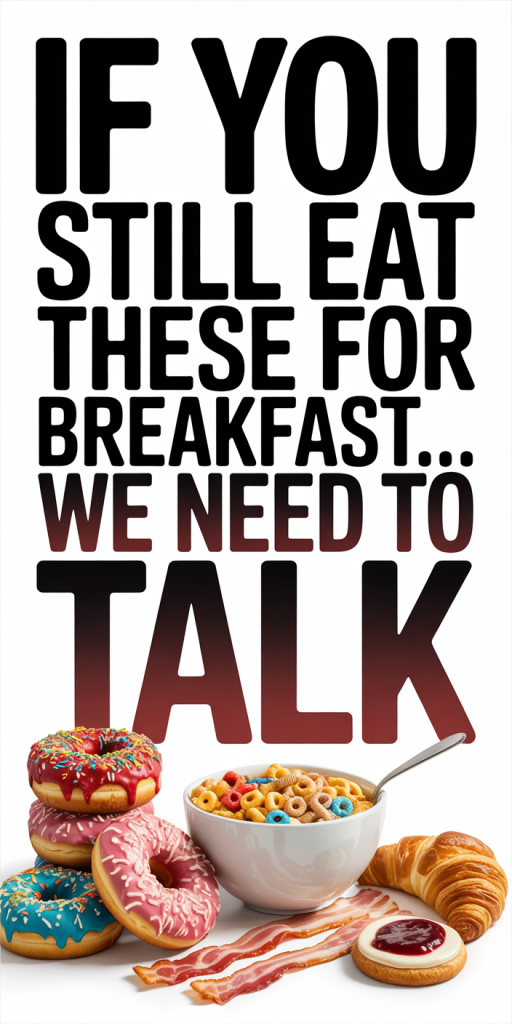
If You Still Eat These for Breakfast… We Need to Talk: 9 Morning Foods to Stop in 2026
We’ve all been there: bleary-eyed, rushing out the door, grabbing whatever’s fastest or most comforting. But some breakfast choices do more harm than good, not just in the moment, but over weeks, months, and years. In 2026 we have better evidence and smarter options than the sugary, ultra-processed mornings many of us still rely on. In this piece we’ll explain why your first meal matters, how we judged these foods, list the nine breakfast offenders you should ditch (with clear reasons), and share practical swaps and transition tips so you don’t feel deprived. This isn’t about moralizing: it’s about smarter mornings that keep us alert, satisfied, and healthier for the long run.
Why Your Breakfast Still Dictates Your Day
Breakfast isn’t magical, but it’s influential. What we eat first affects blood sugar, hunger hormones, cognitive performance, mood, and the metabolic signals that guide our food choices for the rest of the day. Imagine starting with a spike and crash: you’re wired for a mid-morning slump, cravings, and often a heavier lunch. Conversely, a balanced morning meal stabilizes energy, improves concentration, and usually reduces impulsive snacking.
Two physiological threads matter most. First, glycemic response: meals high in refined carbs and sugar create fast blood-glucose swings, followed by a compensatory insulin surge that sends hunger back sooner. Second, satiety signaling: protein, fiber, and healthy fats trigger peptides like peptide YY and GLP-1 that keep appetite in check for hours.
Behaviorally, we’re creatures of inertia. A morning pattern becomes a daily script, the food we reach for shapes what we expect later. If we train our brains to associate breakfast with quick sugar hits, the brain will keep asking for those signals. But change that first link in the chain, and the rest of the day often follows. That’s why revising breakfast is one of the highest-leverage moves we can make for sustained energy, better mood, and long-term metabolic health.
How I Evaluated These Foods (Science, Satiety, And Long-Term Risk)
We used three lenses to decide which breakfasts to call out: acute biology, satiety and behavior, and long-term health risk. Each food on our list failed in at least two of those domains.
- Acute biology: We looked at glycemic index/load, added sugar content, and how quickly a typical serving raises blood glucose. Foods that create rapid spikes and subsequent crashes got flagged. We also considered inflammatory potential, processed meats and ultra-refined pastries often trigger markers associated with chronic inflammation.
- Satiety and behavior: We examined the macronutrient profile (protein, fiber, fat) and portion realism. A food that contains mostly refined carbs with minimal protein or fiber is unlikely to keep us full, which increases the chance of mid-morning snacking or overconsuming at lunch. We also considered portability and habitual context: convenience foods can unintentionally normalize poor choices.
- Long-term risk: We referenced large prospective cohort findings and meta-analyses linking frequent consumption to outcomes like type 2 diabetes, cardiovascular disease, weight gain, and certain cancers. For example, habitual intake of highly processed breakfast meats correlates with higher cardiovascular and colorectal cancer risk in multiple long-term studies.
Finally, we favored practicality. It’s easy to condemn a food: it’s more useful to show swaps and transition strategies that fit modern schedules. So every offender below includes why it’s a problem and what actually works instead. That blend of evidence and real-world practicality is how we determined the nine morning foods to stop in 2026.
The Breakfast Foods You Shouldn’t Be Eating Anymore — At A Glance
Below we break down the most common breakfast items that do more harm than good. For each, we explain the physiological and behavioral harms and what a reasonable swap looks like. We cover sugary cereals and sweetened oats: flavored yogurts and parfait cups: breakfast pastries, donuts, and store-bought muffins: and highly processed breakfast meats like sausage, bacon, and hot dogs.
Sugary Cereals And Sweetened Oats
Why they’re a problem: Most mainstream breakfast cereals and instant flavored oats are engineered for taste and texture, not nutrition. A single bowl can deliver 20–40 grams of added sugar, often with minimal protein and fiber. That combination produces a quick glycemic spike, then a crash that leaves us hungry within 60–90 minutes. Beyond immediate effects, habitual high-sugar breakfasts are associated with greater daily caloric intake and worsened insulin sensitivity over time.
Behavioral angle: Cereal is convenient and marketed as wholesome, which masks the metabolic reality. We eat more than the serving size, pair it with fruit juice, and call it a healthy routine.
Smarter swap: Choose plain, whole-grain oats (steel-cut or old-fashioned) and control the add-ins. Mix in a scoop of protein powder or a spoon of nut butter, and top with fresh berries and a sprinkle of seeds. That adds protein, healthy fat, and fiber to slow digestion and extend satiety. If you want convenience, make overnight oats with a higher ratio of milk (dairy or unsweetened plant) to oats, and portion into jars for the week.
Flavored Yogurts, Parfait Cups, And Fruit-On-The-Bottom Varieties
Why they’re a problem: Flavored yogurts hide large amounts of added sugar under the guise of fruit and probiotics. A typical 6–8 ounce flavored yogurt can contain 15–30 grams of sugar: parfait cups often add granola and syrup on top. Protein content is often modest unless you pick Greek-style products, and many brands use fruit concentrates rather than real fruit.
Physiology and satiety: Liquid or semi-liquid dairy with added sugar still allows fairly rapid gastric emptying, so hunger returns sooner than with a higher-protein, higher-fat option. Also, the ‘healthy’ label can give us permission to snack later, a phenomenon known as licensing.
Smarter swap: Opt for plain, full-fat Greek yogurt or skyr, then add your own fruit and a small handful of nuts. That approach increases protein, reduces added sugar, and delivers a fuller texture. For grab-and-go, portion these jars the night before, or use single-serve plain options and carry a sachet of berries or nut mix.
Breakfast Pastries, Donuts, And Store-Bought Muffins
Why they’re a problem: Pastries and many bakery muffins are essentially dessert masquerading as breakfast. They combine refined flour, sugar, and added fats (often partially hydrogenated or cheap vegetable oils) with little to no protein or fiber. The result is a calorie-dense, nutrient-poor meal that spikes glucose and fails to satisfy.
Health risk: Frequent consumption of baked goods is linked to weight gain and metabolic disorders. Also, industrial pastries sometimes include additives and trans fats that are detrimental to cardiovascular health.
Smarter swap: If you crave something doughy, try a protein-rich alternative: a whole-grain English muffin with nut butter and sliced banana, or a homemade muffin made with nut flours, oats, eggs, and fruit (keep added sugar low). Another quick option is a whole-grain toast with ricotta, a drizzle of honey, and berries, it hits the texture craving but adds protein and fiber.
Highly Processed Breakfast Meats (Sausage, Bacon, Hot Dogs)
Why they’re a problem: Processed meats are tasty and convenient, but they carry well-documented long-term risks. Multiple large cohort studies and meta-analyses have linked regular processed-meat intake to higher rates of cardiovascular disease and certain cancers, especially colorectal cancer. These meats are often high in sodium, saturated fat, and preservatives like nitrites.
Acute effects: While they offer protein, the quality and context matter. A strip of bacon may satisfy taste buds but doesn’t provide sustained satiety unless paired with complex carbs and fiber, and you’ll be paying a long-term health premium.
Smarter swap: Reserve processed meats as a rare treat, not a daily staple. For regular protein, choose minimally processed options: smoked salmon, slices of roast turkey, or a tofu scramble seasoned well. If you want the smoky flavor, look for nitrate-free, reduced-sodium options and keep portions small while bulking the plate with vegetables and whole grains.
Healthier Swaps That Actually Satisfy (Quick, Portable, And Nutritious)
Replacing a bad breakfast doesn’t mean sacrificing convenience or flavor. Here are practical swaps that keep mornings easy while providing sustained energy.
- Protein-forward jar meals: Combine plain Greek yogurt or skyr with a scoop of protein powder, berries, and chia seeds in a jar. It’s portable, high-protein, and ready to go.
- Savory grain bowls: Cook a batch of quinoa or farro and top with a soft-boiled egg, avocado, and sautéed greens. Grain bowls are reheatable and keep well for several days.
- Egg-based make-ahead: Frittatas or mini crustless quiches baked in muffin tins store in the fridge for a week. They’re rich in protein and can include vegetables and a bit of cheese for flavor.
- Toast, upgraded: Start with whole-grain or sprouted bread, add protein (cottage cheese, ricotta, smoked salmon, or nut butter), and finish with fruit or vegetables. This gives the comfort of toast but with a better macronutrient ratio.
- Smoothies with structure: Make smoothies that combine a protein source (protein powder, Greek yogurt, silken tofu), fiber (spinach, oats, chia), healthy fat (avocado, nut butter), and fruit for flavor. Blend to drink on the commute, and include a small handful of nuts to chew later if you need longer satiety.
- Overnight oats, but do them right: Use oats with chia seeds or flax, add protein powder or Greek yogurt, and use unsweetened milk. Flavor with cinnamon and vanilla instead of syrup.
- Canned fish on whole grains: Sardines or tuna on whole-grain crackers or toast with sliced tomato deliver protein, omega-3 fats, and savory satisfaction.
The core principle: combine protein + fiber + healthy fat. That triad is the simplest rule-of-thumb that improves satiety, moderates blood sugar, and reduces mid-morning cravings.
How To Transition Your Morning Routine Without Feeling Deprived
Behavior change hinges on small wins and realistic trade-offs. We don’t recommend an all-or-nothing approach: instead, try incremental swaps and build a morning template that fits your life.
- Make one swap per week. If you usually eat a donut Monday, replace just Monday’s donut with a higher-protein alternative. See how you feel. Small successes build momentum.
- Preserve rituals. If the ritual is “I need something warm and sweet,” maintain the warmth but adjust ingredients: a cinnamon-spiced bowl of oats with a touch of maple and a scoop of protein keeps the ritual but improves nutrition.
- Use the fridge to your advantage. Meal prep once or twice weekly: hard-boiled eggs, frittata slices, jars of yogurt-and-berries, or pre-portioned smoothie packs. Convenience removes the excuse.
- Create taste continuity. If you love the crunch of a cereal, combine plain puffed grains with chopped nuts and a dusting of cocoa or cinnamon instead of honey-coated versions. If you crave smoky-salty, add smoked paprika to a tofu scramble.
- Allow gradual reductions in sugar. If you’re used to sweetened yogurt, start mixing half flavored and half plain to reduce sugar gradually. Abrupt cuts can feel punishing: pacing helps long-term adherence.
- Track non-scale wins. Pay attention to clearer thinking, reduced mid-morning snacking, and steadier energy. Those immediate benefits often matter more for motivation than weight changes.
- Socialize the change. If your household shares breakfasts, involve them. If you eat out, scout menus and choose options with eggs, whole grains, and vegetables, or bring your own protein-rich item.
Transition isn’t about deprivation: it’s about building a repertoire of satisfying, easy options so that healthier choices become the default.
Conclusion
We can keep the comforts of breakfast without accepting the metabolic and long-term costs of sugary, ultra-processed options. By prioritizing protein, fiber, and healthy fats, and by making small, sustainable swaps, we improve energy, appetite control, and long-term health without feeling punished. Start with one change this week: swap flavored yogurt for plain Greek with berries, or replace a store-bought muffin with an egg-and-veg frittata slice. Those tiny edits compound. In 2026, let our mornings support our days instead of sabotaging them.