13 Breakfasts That Should Come With a Warning Label — Dangerous, Decadent, and Delicious
We all know breakfast is the most important meal of the day, but that doesn’t stop some morning creations from flirting with danger. From syrup-soaked stacks that could double as desserts to greasy, cheese-laden monstrosities that test the limits of human digestion, there are breakfasts that demand a mental helmet before you dig in. In this piece we’ll walk through 13 breakfast offenders: the sugar bombs, the grease monsters, the calorie behemoths, and the caffeinated cocktails that make our hearts skip a beat. Our goal isn’t to shame these items, far from it. We love indulgence. Instead, we want to point out why they deserve a warning label, when to treat them as a once-in-a-while splurge, and simple strategies to enjoy them without derailing your health or your next few hours. Read on if you have a weak spot for decadence, but maybe have a nap planned afterward.
The Ultimate Sugar Bombs: Cereal Bowls, Mini-Donut Stacks, And Glazed Donuts
We’ll start with the classics: bowls and stacks that read like dessert menus. A colorful cereal bowl loaded with marshmallows and sugar glaze, a tower of mini donuts piled high and drizzled with frosting, or a warm glazed donut fresh from the fryer, all of these hit our sweet tooth and then kick our blood sugar into overdrive.
Why they deserve a warning label: The sugar in these breakfasts isn’t just a quick energy lift: it’s a hormonal roller coaster. Rapid glucose spikes cause insulin surges, which are often followed by a crash, leaving us groggy, irritable, and reaching for more sugar by mid-morning. For people with insulin resistance or diabetes, these choices can be particularly risky.
Portion and frequency: We’re not saying never. A glazed donut or a small bowl of fun cereal is a fine weekend treat, but frequency matters. Treat these as occasional rewards, not daily rituals. When we do indulge, pairing sweets with protein and fiber can blunt glycemic spikes. For example, enjoy a glazed donut with a boiled egg or a Greek yogurt on the side.
Smarter swaps: If you crave crunch and a hint of sweetness in the morning, try plain oats topped with a small drizzle of honey and a handful of berries. Or choose whole-grain cereal with nuts and milk instead of the neon-colored, hyper-sweet varieties. For donut lovers, consider baking donut-shaped muffins using mashed banana and whole-wheat flour, you’ll keep the ritual but reduce the sugar shock.
Social and cultural angle: Let’s be honest, sugary breakfasts are fun. They’re nostalgic and social. Many of our most fond morning memories involve a sweet treat after late-night parenting shifts or as a celebratory brunch item. The warning isn’t about moralizing: it’s about recognizing physiological consequences and choosing to indulge with intention.
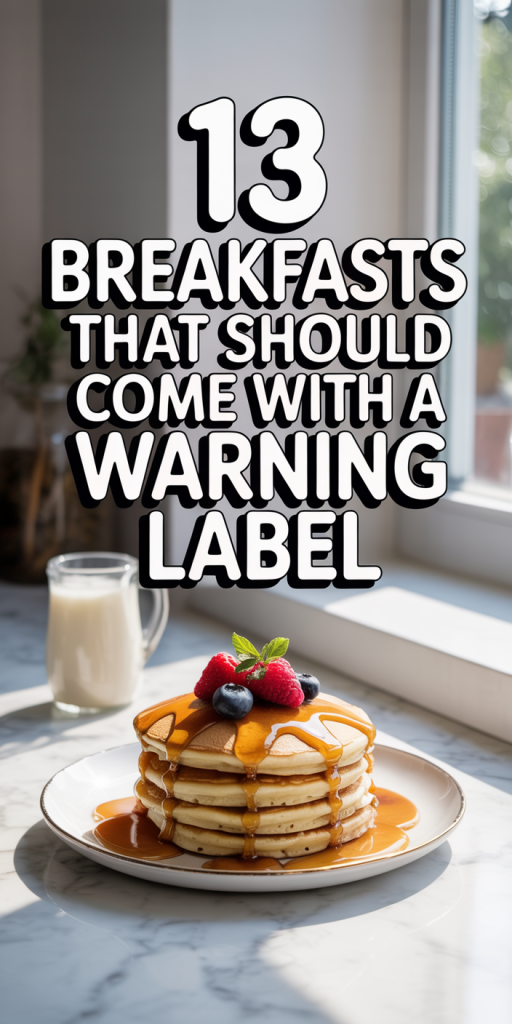
Pancake Towers And French Toast Soaked In Syrup: When Breakfast Becomes Dessert
Pancake towers and French toast drenched in butter and syrup make a persuasive argument: why wait for dessert when you can start with it? These dishes combine refined flour, sugar, and butter, a trifecta that tastes phenomenal but can overwhelm our metabolism.
The decadence breakdown: A stack of pancakes with butter and maple syrup can easily top 800–1,200 calories depending on size and toppings. French toast, especially when made from brioche or challah and finished with powdered sugar and caramelized fruit, further amplifies calorie and fat content. Add whipped cream, chocolate chips, or a honeyed compote and we’re in full-on dessert territory.
Physiological impact: Beyond calories, these breakfasts are typically low in fiber and can be heavy on saturated fats when butter and cream are involved. That combination contributes to post-meal fatigue and, over time, raises cardiovascular risk when consumed frequently. For those tracking macros or trying to manage weight, these items can set a day’s nutritional goals back before lunch.
How to enjoy them wisely: We suggest a few simple strategies. First, share: split a stack between two people and add a side of eggs or smoked salmon to introduce protein. Second, make batter upgrades: swap some all-purpose flour for whole-wheat or oat flour, add mashed banana or Greek yogurt to the mix for moisture and protein, and reduce added sugar. Third, favor real maple syrup but use it sparingly, a little goes a long way.
Occasions and mindset: Pancake towers and syrup-soaked French toast are weekend, celebratory, and travel foods. We’ll happily order them at a cabin brunch or a birthday breakfast. The warning label would simply say: plan your day around it, fewer carbs later, more movement, and maybe an intentional nap.
The Grease Overload: Bacon-Wrapped Anything And Deep‑Fried Breakfast Sandwiches
There’s a primal pleasure in wrapped and fried foods. Bacon-wrapped everything, from scallops to tater tots, and deep-fried breakfast sandwiches (think: battered-and-fried croissant with egg and cheese) are engineered for one response: total surrender. But the grease overload carries consequences.
What’s happening biologically: These items are dense in saturated fats and trans fats (especially when fried in reused oils). That combination can acutely affect endothelial function, the lining of our blood vessels, and chronically contribute to elevated LDL cholesterol. Eating a large fried breakfast can also slow digestion, making us feel heavy and sluggish.
Variations and extremes: The extremes are where the warning light should blink. A bacon-wrapped, deep-fried breakfast sandwich, if such a thing exists in your city’s food scene, stacks multiple risk factors: processed meat (bacon), deep-frying, refined carbs (biscuit or croissant), and cheese. Add a side of loaded tots and you’ve got a meal that rivals a full day’s caloric intake for many people.
Tactical approaches: If we’re going to indulge, moderation and context matter. Reserve these for rare outings, choose smaller portions, and balance the rest of the day with lighter meals and activity. Another tactic: seek versions prepared with healthier oils (olive or avocado when possible), remove excess visible grease with a napkin, and add a green salad or fruit on the side to introduce fiber and micronutrients.
Cultural note: Fried breakfast items are part of comfort-food traditions in many places. They’re celebratory and communal. Saying no to them outright isn’t realistic, but treating them as once-in-a-while luxuries reduces harm while preserving joy.
Mega-Calorie Breakfast Sandwiches And Biscuits Smothered In Gravy
We love a good breakfast sandwich: egg, cheese, and a savory protein, but when these become towers of sausage, bacon, multiple cheeses, fried eggs, and mayo slathered across oversized biscuits or croissants, they transform into mega-calorie traps. Biscuits smothered in gravy, the Southern brunch staple, pair biscuits with a cream- and-fat-heavy sauce that’s delicious and dense.
Calorie and macronutrient realities: A single oversized breakfast sandwich can contain 700–1,200 calories with 30–70 grams of fat and high sodium content. Biscuits and gravy may pack similar numbers per plate, especially when gravy includes sausage drippings and heavy cream. High sodium leads to bloating and temporary blood pressure elevation for salt-sensitive individuals.
When size matters: Portion control is our friend here. Choosing an English muffin or thin-sliced whole-grain bread rather than a croissant or oversized biscuit cuts calories without sacrificing the ritual of the sandwich. For biscuits and gravy, ask for gravy on the side or split the plate as a shared appetizer rather than the main course.
Ingredient swaps and smarter builds: We can preserve flavor while reducing impact. Leaner proteins (turkey sausage, Canadian bacon), lower-fat cheeses, and using whole eggs sparingly with extra egg whites keep the protein satisfaction high and saturated fat lower. For gravy, try a reduced-fat milk base and add herbs or mustard for flavor complexity without relying solely on fat.
Sociability and planning: Breakfast sandwiches and biscuits are go-to comfort and convenience foods. If we know we’ll have one for brunch, we can plan lighter dinners, add a brisk walk after the meal, or choose a sandwich with a side salad. A little foresight keeps the enjoyment and minimizes the physiological sting.
Loaded Breakfast Burritos And Nacho-Style Morning Plates
Breakfast burritos and nacho-style morning plates are portable, communal, and wildly customizable, which makes them both brilliant and dangerous. When a burrito is filled with fried potatoes, multiple cheeses, bacon, chorizo, crema, and smothered sauces, it becomes a caloric powerhouse. Nacho-style plates piled with tortilla chips, queso, and scrambled eggs are brunch favorites but can be nutrition landmines.
The portability paradox: Burritos are convenient, which often leads to large portion sizes and mindless eating. A restaurant burrito can be the size of our forearm and contain enough calories to fuel two or three meals. Chips and queso, meanwhile, encourage continuous snacking, pushing sodium and saturated fat intake higher than intended.
Flavor engineering: What makes these dishes addictive is the combination of starch, fat, and savory umami flavors. That mix stimulates dopamine pathways, reinforcing the desire to eat more. When we combine highly palatable ingredients with large portions, it’s easy to overshoot satiety signals.
How to contain the chaos: Choose whole-grain or lower-carb tortillas, ask for half the cheese or sauce on the side, and add vegetables, peppers, onions, salsa, or a side of charred tomatoes. Opt for grilled proteins (chicken, lean pork) instead of fried. For nachos, share a plate family-style and focus on topping fresh, hot chips with pico de gallo, a sprinkle of cheese, and a squeeze of lime rather than drowning everything in queso.
Occasion and mindset: These dishes are social and shareable, perfect for a weekend hangout or tailgate. We enjoy their conviviality while being mindful of portions and accompaniments. Trick: pair a loaded burrito with a side salad to naturally moderate intake without killing the experience.
Sweet-And-Salty Extremes: Chocolate-Covered Waffles And Maple-Glazed Bacon
Sweet-and-salty combos are culinary kryptonite. Take chocolate-covered waffles crowned with whipped cream, or maple-glazed bacon where candied sugar meets cured pork. These creations deliver a multi-layered taste experience that’s hard to stop eating, and they bring an outsized nutritional punch.
Why contrast drives overconsumption: Our brains like contrast. Salt amplifies sweetness, and fat carries flavor. When we combine sweet syrups, chocolate, and cured, fatty meats, we create hyper-palatable food that short-circuits normal satiety cues. That’s why we reach for another bite even though we know we’re full.
Practical moderation tips: When we want the thrill of sweet-and-salty, we can downshift without losing pleasure. For chocolate waffles, use a smaller portion of dark chocolate and keep fruit as the main topping. For maple-glazed bacon, reserve it as a garnish rather than the main protein. Another approach is to prepare the dish at home where we control sugar and portion size: one or two strips of glazed bacon can elevate a plate without turning it into a sugar-meat bomb.
Taste balance and composition: A well-composed plate will balance richness with acidity and texture. Add citrus or pickled elements to cut through sweetness and fat. For example, a grapefruit segment or pickled red onion alongside maple bacon balances the palate and reduces the impulse to overconsume.
Cultural indulgence: These pairings are often brunch stars and Instagram favorites, visually irresistible and deeply gratifying. Enjoy them for their spectacle, share them, and keep the rest of your day calibrated to offset the indulgence.
Breakfast Cocktails And Caffeinated Concoctions That Pack A Punch
Coffee and cocktails both wake us up, but when combined or amplified, they can pack a physiological punch. Think espresso martinis, Irish coffee, or high-caffeine cold brews blended with energy shots and sweet cream. These drinks can spike heart rate, jitter nerves, and interfere with later sleep.
Caffeine + alcohol = mixed signals: Alcohol is a depressant: caffeine is a stimulant. Mixing them masks intoxication cues, which can lead us to drink more alcohol than we realize. That’s why drinks like espresso martinis feel deceptively harmless, they’re stimulating us while we’re also being impaired.
Caffeine overload: Beyond cocktails, many modern coffee concoctions carry massive caffeine and sugar loads. A blended coffee with added espresso shots, energy-drink mixers, and flavored syrups can deliver well over 300–400 mg of caffeine, the equivalent of several cups of coffee. For sensitive individuals, that’s enough to cause palpitations, anxiety, and digestive upset.
How to sip responsibly: If we’re ordering boozy coffee, keep portions modest and alternate with water. For straight caffeine, know your limits, the FDA suggests up to 400 mg daily for most healthy adults, but individual tolerance varies. Opting for single-shot drinks, choosing unsweetened milk, or substituting one of the espresso shots with decaf helps reduce the intensity while preserving ritual.
Timing and downstream effects: Consider timing. A boozy brunch can wreck an afternoon or evening with poor sleep and lingering dehydration. Plan activities accordingly and hydrate. If we want a celebratory coffee cocktail, treat it like a dessert drink, small, savored, and spaced apart from additional caffeinated beverages.
Conclusion: How To Enjoy These Indulgences Wisely (And When To Pass)
We love the breakfasts on this list because they’re joyful, comforting, and often tied to memories. The point of a warning label isn’t to banish indulgence: it’s to nudge us toward mindfulness. Treat sugar bombs, pancake towers, grease monsters, mega sandwiches, burritos, sweet-and-salty hybrids, and potent caffeinated cocktails as occasional celebrations rather than daily staples.
Practical takeaways: share portions, add protein and fiber, choose smaller sizes, ask for sauces on the side, and plan the rest of your day to accommodate indulgence (move a little more, eat lighter later). Pay attention to how these meals make you feel, if a certain breakfast leaves you flat or wired, it’s worth adjusting.
Eventually, balance is what lets us enjoy decadence without regret. We’ll keep ordering the donut, the syrup-soaked stack, or the boozy coffee from time to time, but with a little strategy, we can savor them and still feel good afterward.