If we want to lose fat without feeling ravenous or giving up flavor, a low-carb, high-protein approach is one of the most practical, evidence-backed options. This article gives you the why and the how, the science behind protein and carb manipulation, practical macro targets, meal-prep strategies, a pantry checklist, 10 scalable recipes with macros, and a ready-to-use 7-day meal plan with swaps and a shopping list. Read on and you’ll walk away with a sustainable system for faster fat loss that fits real life: busy schedules, social meals, and a sweet tooth (we’ve included smart swaps).
How Low-Carb, High-Protein Eating Accelerates Fat Loss
The Science Behind Protein, Carbs, And Fat Loss
Protein is the single most satiating macronutrient and has the highest thermic effect of food (TEF), meaning we burn more calories digesting protein than carbs or fat. For many people, increasing protein intake to ~25–35% of daily calories helps reduce appetite, maintain lean mass, and improve body composition while in a calorie deficit.
Carbohydrates influence insulin and glycogen storage. Reducing carbs moderately (not necessarily zero-carb) lowers insulin spikes and may reduce water weight and appetite for some people, especially those sensitive to high-carb meals. A lower-carb approach also encourages the body to rely more on fat stores for energy when calories are reduced.
Combining reduced carbs with higher protein creates a metabolic environment where we’re less hungry, burn more calories from digestion, and preserve muscle while losing fat, a trifecta for sustainable fat loss.
How Appetite, Thermogenesis, And Muscle Preservation Help You Lose Fat Faster
Appetite: Protein increases satiety hormones (like PYY and GLP-1) and suppresses ghrelin, the hunger hormone. That means fewer snacks between meals and easier adherence to a calorie deficit.
Thermogenesis: The thermic effect of protein is roughly 20–30% of the calories consumed, compared to 5–10% for carbs and 0–3% for fats. Practically, higher protein means we expend more energy processing our food.
Muscle Preservation: During calorie restriction, our bodies naturally catabolize tissue. Adequate protein plus resistance training helps preserve muscle mass, which maintains resting metabolic rate. That keeps fat loss coming instead of muscle loss, improving body composition and long-term results.
Who Benefits Most From A Low-Carb, High-Protein Approach
We find this approach beneficial for:
- People who struggle with hunger on moderate- or high-carb diets.
- Those aiming to preserve or build lean mass while cutting calories.
- Individuals with insulin resistance or type 2 diabetes who need to manage glucose spikes (with healthcare oversight).
- Busy professionals and parents who need straightforward, filling meals that travel well.
It’s not mandatory for everyone, athletes in heavy endurance training or people who perform best with higher carbs may need a tailored approach, but for most aiming to lose fat and keep muscle, low-carb, high-protein is a reliable strategy.
Practical Principles: Target Macros, Portion Sizes, And Timing
How Much Protein And How Few Carbs? Practical Targets By Goal And Bodyweight
We recommend starting with protein between 0.8–1.2 grams per pound of bodyweight (1.6–2.6 g/kg). For example, a 160-lb person should aim for ~128–192 grams of protein daily if they’re highly active or want to aggressively preserve muscle: a more moderate target is 0.8–1.0 g/lb.
Carbs can vary by preference and activity. For most people pursuing fat loss, a practical range is 50–150 grams of carbs per day:
- Conservative low-carb (for faster initial results): 50–80 g/day
- Moderate low-carb (easier to sustain): 80–130 g/day
- Targeted higher-carbs on training days: 130–150+ g/day (if performance demands it)
Fats fill remaining calories once protein and carbs are set, aim for primarily mono- and polyunsaturated fats with some saturated fat from whole foods.
Calories: To lose fat, we need a calorie deficit. A typical starting deficit is 10–20% below maintenance for steady, sustainable loss. Aggressive deficits increase hunger and muscle loss risk.
Choosing Quality Protein Sources And Healthy Fats
Protein choices affect satiety, micronutrients, and cooking variety. Prioritize:
- Lean meats: chicken breast, turkey, lean beef
- Fatty fish: salmon, mackerel (great for omega-3s)
- Dairy: Greek yogurt, cottage cheese
- Eggs and egg whites
- Plant proteins: tempeh, tofu, edamame, legumes (for vegetarians)
Healthy fats to include:
- Olive oil, avocado, nuts and seeds
- Fatty fish (omega-3s)
- Small amounts of butter or ghee for cooking if desired
We should limit processed fats (trans fats) and be mindful of calorie density from nuts and oils, they’re healthy but easy to overconsume.
Carb Timing, Fiber, And Vegetables To Keep You Full And Fueled
Carb timing can help performance and satiety. We often schedule more carbs around workouts (before/after) to support training and recovery. The rest of the day can focus on lower-carb vegetables and fiber.
Fiber-rich vegetables and small servings of legumes or low-sugar fruits (berries) keep us full without major glucose swings. Think leafy greens, broccoli, cauliflower, Brussels sprouts, zucchini, and mushrooms. They add volume and micronutrients with minimal carbs.
Drink water, include electrolytes if reducing carbs significantly (to avoid headaches and fatigue), and prioritize sleep, all of these support appetite control and recovery.
Meal Planning And Prep Strategies For Consistency
Weekly Prep Workflow And Time-Saving Tips
A simple weekly workflow keeps us consistent and reduces decision fatigue:
- Plan two templates: a weekday template (work lunches) and a weekend template (easier cooking).
- Pick 3–4 core proteins and 4–6 vegetable sides to rotate.
- Batch-cook proteins and a few sides on one or two days (90–120 minutes total).
- Pre-portion meals into containers and label with date and macros if tracking.
Time-saving tips:
- Use a slow cooker or Instant Pot for proteins that shred and portion well.
- Roast a sheet pan of mixed veggies while grilling chicken or fish.
- Keep ready-to-eat snacks (Greek yogurt, hard-boiled eggs, cottage cheese) visible and accessible.
Batch Cooking, Storage, And Reheating Best Practices
- Cook proteins to safe internal temps (chicken 165°F / 74°C, beef/fish per preference but follow safety guidelines).
- Cool foods quickly and store in airtight containers. Refrigerate up to 4 days: freeze portions for longer storage (2–3 months for most cooked meats).
- Reheat evenly: add a splash of water when reheating rice or cauliflower rice to keep texture, and reheat in a covered dish to prevent dryness.
Portioning, Tracking, And Simple Tools To Use
Tools that make life easier:
- Digital food scale for accurate portions
- Measuring cups/spoons for sauces and oils
- A macro-friendly tracking app (we favor ones that let us save recipes and meals)
- Airtight meal containers and a good set of knives
We recommend portioning by protein first (e.g., 4–6 oz cooked protein per meal), then adding vegetables and fats to fit remaining calories. Tracking for the first 2–4 weeks builds awareness: after that, most of us can eyeball portions reliably.
Pantry Staples, Smart Substitutions, And Shopping Checklist
High-Protein, Low-Carb Staples To Always Have On Hand
Stocking the right staples makes low-carb, high-protein eating effortless. Our go-to list:
- Proteins: canned tuna/salmon, chicken breasts/thighs, ground turkey, eggs, Greek yogurt, cottage cheese, tempeh, firm tofu
- Vegetables: spinach, kale, broccoli, cauliflower, zucchini, bell peppers, mushrooms
- Healthy fats: olive oil, avocado, nut butters (portion-controlled), olives
- Flavor enhancers: garlic, onions, lemons, mustard, apple cider vinegar, low-sodium soy sauce or tamari
- Low-carb swaps: cauliflower rice, shirataki noodles, almond or coconut flour for baking
- Snacks: beef jerky (low-sugar), roasted edamame, hummus (moderate portions)
Simple Substitutions To Lower Carbs Without Sacrificing Taste
- Replace rice with cauliflower rice or konjac rice.
- Use lettuce wraps or large collard leaves instead of tortillas or burger buns.
- Swap sugary condiments for mustard, vinaigrettes, or homemade yogurt-based sauces.
- Make zucchini noodles (zoodles) instead of pasta: toss with olive oil and herbs for a satisfying base.
These swaps keep texture and flavor while reducing carbs, and they often add more fiber and micronutrients.
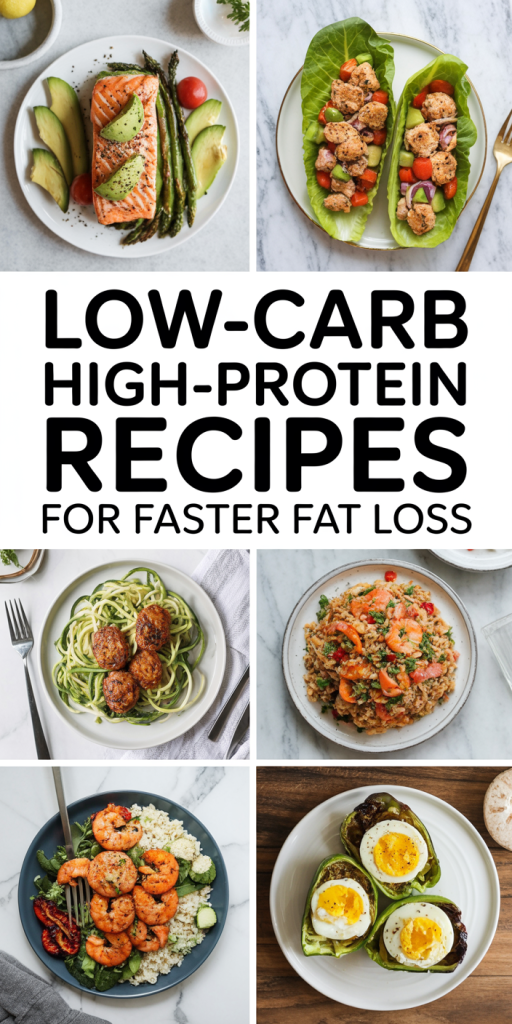
10 Low-Carb, High-Protein Recipes (Quick, Balanced, And Scalable)
Breakfasts: Greek Yogurt Berry Bowl With Hemp + Savory Egg Muffins With Spinach (Recipes + Macros)
Greek Yogurt Berry Bowl With Hemp (serves 1)
- 1 cup 2% Greek yogurt (~20 g protein)
- 1/3 cup mixed berries (strawberries, blueberries)
- 1 tbsp hemp seeds (~3 g protein)
- 1 tsp cinnamon
Macros (approx): 30 g protein, 20 g carbs, 8–10 g fat, 260–300 kcal.
Savory Egg Muffins With Spinach (makes 6 muffins, 2 muffins per serving)
- 6 large eggs + 3 egg whites
- 2 cups chopped spinach
- 1/2 cup diced bell pepper
- 1/4 cup shredded low-fat cheese
- Salt, pepper, paprika
Per 2-muffin serving (approx): 22–25 g protein, 3–5 g carbs, 12 g fat, 220–250 kcal.
Lunches: Grilled Chicken Salad With Avocado Vinaigrette + Turkey Zucchini Boats (Recipes + Macros)
Grilled Chicken Salad with Avocado Vinaigrette (serves 1)
- 5–6 oz grilled chicken breast (~35–40 g protein)
- Mixed greens, cucumber, cherry tomatoes
- 1/3 avocado
- Dressing: 1 tbsp olive oil, 1 tbsp lemon juice, 1 tsp mustard
Macros (approx): 40 g protein, 8–12 g carbs, 18–22 g fat, 420–480 kcal.
Turkey Zucchini Boats (serves 2)
- 1 lb lean ground turkey
- 3 medium zucchinis, halved and scooped
- 1/2 cup tomato sauce (no sugar added)
- Italian seasoning, 1/4 cup parmesan
Per serving (half recipe): 32–35 g protein, 8–10 g carbs, 12–14 g fat, 340–380 kcal.
Dinners: Salmon With Cauliflower Rice Pilaf + Steak Stir-Fry With Broccoli (Recipes + Macros)
Salmon with Cauliflower Rice Pilaf (serves 2)
- 12 oz salmon fillet (6 oz per person) (~36 g protein)
- 3 cups cauliflower rice
- 1/2 cup diced onion, 1/2 cup peas (optional)
- 1 tbsp olive oil, lemon zest
Per serving (approx): 36 g protein, 10–15 g carbs, 18–20 g fat, 420–480 kcal.
Steak Stir-Fry with Broccoli (serves 2)
- 10–12 oz flank steak, thinly sliced (~30–36 g protein per serving)
- 4 cups broccoli florets
- 2 tbsp low-sodium soy sauce, 1 tsp sesame oil, garlic, ginger
Per serving: 32–38 g protein, 8–12 g carbs, 12–16 g fat, 380–450 kcal.
Snacks & Quick Meals: Cottage Cheese Power Dip And Chili-Lime Shrimp Skewers (Recipes + Macros)
Cottage Cheese Power Dip (serves 2 as snack)
- 1 cup low-fat cottage cheese (~28 g protein total)
- 1 tbsp lemon juice, 1 tbsp chopped chives, black pepper
- Serve with raw veggies (celery, cucumber)
Per snack serving: ~14 g protein, 6–8 g carbs, 4–6 g fat, 120–140 kcal.
Chili-Lime Shrimp Skewers (serves 2)
- 12 oz shrimp (~30 g protein total)
- Chili powder, lime juice, 1 tsp olive oil
- Grill or broil quickly
Per serving: 28–32 g protein, 2–4 g carbs, 3–5 g fat, 150–180 kcal.
Scaling Recipes For Meal Prep, Vegetarians, And Lower Calories
Scaling: Double or triple protein and sides when batch cooking: freeze single portions for a quick reheat. For lower-calorie needs, reduce added fats (like oil) and prioritize leaner proteins (chicken breast, white fish).
Vegetarian options: Swap animal proteins for tempeh, tofu, edamame, and high-protein dairy (Greek yogurt, cottage cheese). Combine legumes and seed/nut-based meals with veggies to reach protein targets, and consider a protein powder to bridge gaps.
We recommend weighing cooked proteins to maintain accuracy when scaling, cooked weights vary by method, so batch label with cooked ounces per container for quick portioning.
Sample 7-Day Low-Carb, High-Protein Meal Plan (Including Swaps And Shopping List)
Daily Meal Layouts With Calorie/Protein Targets (Days 1–7)
We’ll present a flexible template aimed at ~1,800–2,000 kcal/day with ~120–150 g protein, adjust up or down for your size and activity. Each day includes three meals + two snacks.
Day 1
- Breakfast: Greek yogurt berry bowl (30 g protein)
- Snack: Hard-boiled egg + carrot sticks (10 g)
- Lunch: Grilled chicken salad with avocado vinaigrette (40 g)
- Snack: Cottage cheese power dip with cucumber (15 g)
- Dinner: Salmon + cauliflower rice pilaf (36 g)
Day 2
- Breakfast: 2 savory egg muffins + 1 small apple (25 g)
- Snack: Beef jerky (10 g)
- Lunch: Turkey zucchini boats (35 g)
- Snack: Greek yogurt (12 g)
- Dinner: Steak stir-fry w/ broccoli (34 g)
Day 3
- Breakfast: Protein smoothie (whey or plant protein, spinach, berries) (30 g)
- Snack: Edamame (10 g)
- Lunch: Tuna salad lettuce wraps (35 g)
- Snack: Almonds, portioned (8 g)
- Dinner: Grilled shrimp skewers + large mixed salad (30 g)
Day 4
- Breakfast: Cottage cheese bowl + berries (25 g)
- Snack: Boiled egg + cherry tomatoes (8 g)
- Lunch: Leftover salmon + roasted Brussels sprouts (36 g)
- Snack: Celery + hummus (6–8 g)
- Dinner: Turkey stir-fry with zucchini noodles (34 g)
Day 5
- Breakfast: Egg scramble with spinach and feta (28 g)
- Snack: Protein bar (choose low-sugar) (15–20 g)
- Lunch: Grilled chicken + cauliflower tabbouleh (40 g)
- Snack: Greek yogurt (12 g)
- Dinner: Baked tofu with roasted broccoli (26 g)
Day 6
- Breakfast: Greek yogurt berry bowl (30 g)
- Snack: Cottage cheese (14 g)
- Lunch: Steak salad (35 g)
- Snack: Shrimp cocktail (12 g)
- Dinner: Chicken thighs + roasted cauliflower (34 g)
Day 7
- Breakfast: Savory egg muffins (25 g)
- Snack: Edamame or roasted chickpeas (10 g)
- Lunch: Turkey zucchini boats (35 g)
- Snack: Protein shake (20 g)
- Dinner: Salmon + side salad (36 g)
These layouts provide daily protein in the 120–160 g range and carbs typically under 120 g/day. Adjust portions for your calorie and protein needs.
Flexible Swaps And Snack Options To Fit Preferences And Allergies
- Dairy-free: Choose coconut or almond-based yogurts with added protein powder, or rely on tofu/tempeh.
- Nut allergies: Use seeds (pumpkin, hemp) and lean meats as snacks.
- Gluten-free: Most recipes are naturally gluten-free when using tamari or gluten-free sauces.
- Sweet tooth: Swap higher-sugar desserts for a small serving of dark chocolate (70%+), Greek yogurt with cinnamon, or a protein mousse.
Consolidated Shopping List And Estimated Prep Time For The Week
Shopping list (core items):
- Proteins: 3–4 lb chicken breast/thighs, 2–3 lb salmon or mixed fish, 1–2 lb lean ground turkey, 2 dozen eggs, 2 tubs Greek yogurt, cottage cheese, tempeh/tofu
- Vegetables: spinach, mixed greens, broccoli (2–3 heads), cauliflower (2 heads or riced), zucchini (6–8), bell peppers, onions, mushrooms
- Pantry: olive oil, low-sodium soy sauce/tamari, canned tuna/salmon, nuts/seeds, almond flour (optional), spices
- Extras: avocados (3–5), lemons, garlic, low-sugar tomato sauce
Estimated prep time: 2 hours on a big-prep day (cook proteins, rice cauliflower, chop veggies). Quick daily reheat/assemble time: 5–15 minutes.
We recommend one big prep session (weekend or midweek) and a top-up cook session on day 3–4 to keep flavors fresh.
Common Mistakes And How To Avoid Plateaus
Overdoing Fat Or Undereating Calories: Finding The Right Balance
A common pitfall is assuming ‘low-carb’ means unlimited fat. Fat is calorie-dense (9 kcal/g), so too much can stall weight loss even with low carbs. Conversely, eating too few calories can cause severe hunger, energy dips, and muscle loss. We recommend a moderate deficit and measuring fats (oil, dressings, nuts) until we know how they affect our daily calories.
Relying On Processed ‘Low-Carb’ Products Versus Whole Foods
Packaged low-carb bars, shakes, and ‘keto’ snacks can be convenient but often contain sugar alcohols, additives, and low-quality oils. Whole foods provide better satiety, micronutrients, and long-term sustainability. Use processed options sparingly for convenience, not as the foundation of our diet.
When To Reintroduce Carbs And How To Transition Sustainably
If progress stalls or training performance suffers, we’ll add carbs strategically: increase complex carbs on workout days, add a serving of starchy vegetables (sweet potato, squash) or whole grains once or twice weekly, and reassess energy and weight trends. Reintroducing carbs slowly helps us find a sustainable balance that supports both fat loss and quality of life.
Tracking Progress, Adjusting Macros, And When To Seek Help
Simple Metrics To Track (Weight, Measurements, Performance, Energy)
We track more than the number on the scale. Useful metrics include:
- Weekly body weight (same day/time, fasting)
- Circumference measurements (waist, hips, chest, arms) every 2–4 weeks
- Strength/performance in key lifts or workouts
- Daily energy, sleep quality, and hunger levels
These give a fuller picture: sometimes weight stalls while we lose inches and gain strength.
How To Adjust Calories And Macros Based On Progress
If we’re losing 0.5–1% body weight per week, that’s a sustainable rate. If loss is faster with energy crashes, we raise calories slightly. If loss stalls for 2–4 weeks, options include:
- Reduce calories by 5–10% (preferably by trimming fats) or
- Increase activity slightly (extra 20–40 minutes/week of moderate cardio) or
- Refeed: increase carbs for 1–2 days to reset hormones and performance while monitoring weight.
Always adjust one variable at a time and give it 1–2 weeks to observe changes.
When To Consult A Dietitian Or Healthcare Provider
Seek professional help if:
- You have a medical condition (diabetes, thyroid disease, eating disorder history)
- You experience persistent fatigue, dizziness, or irregular periods
- Rapid, unexplained weight changes occur
A registered dietitian can personalize macros, accommodate medical needs, and ensure nutrient adequacy, especially for vegetarians, older adults, or people with complex health histories.
Conclusion
Low-carb, high-protein recipes are a practical and effective way to accelerate fat loss without constant hunger. By prioritizing protein, choosing quality fats, timing carbs around activity, and using simple meal-prep systems, we can create a sustainable plan that fits busy lives. Use the 10 recipes and the 7-day plan as a foundation, track your progress with multiple metrics, and tweak macros based on real results. If anything feels off or you have health concerns, reach out to a dietitian or healthcare provider, but for most of us, this approach offers a realistic path to faster fat loss while preserving muscle and energy.