We all want meals that fuel us, satisfy cravings, and leave the kitchen almost as tidy as it was before we started. One-pan high-protein meals deliver that trifecta: strong nutrition, bold flavors, and dramatically reduced cleanup. In this guide we explain why these dishes work, how to build balanced plates in a single vessel, the essential equipment and prep techniques to speed your evenings, and a curated list of 20 one-pan recipes that span diets and tastes. We’ll finish with a weekly plan, shopping list, and smart batch-cook strategies so you can put this approach to work immediately.
Why One-Pan High-Protein Meals Work So Well
Protein Goals And How To Hit Them With One Pan
High-protein eating isn’t just for bodybuilders. Protein supports satiety, preserves lean mass, stabilizes blood sugar, and helps with recovery after activity. With one-pan meals, we can reliably hit protein targets, generally 20–40 g per meal depending on needs, by centering the dish on a protein-dense ingredient like salmon, chicken, tofu, tempeh, legumes, or eggs. A 4–6 ounce portion of most meats and fish typically provides 25–40 g of protein: a cup of cooked lentils or chickpeas gives ~15–18 g, and firm tofu or tempeh delivers about 15–20 g per serving. We balance these with vegetables and modest carbs to create nutrient-dense plates without extra cookware.
Time, Cleanup, And Real-Life Convenience
The biggest practical win is time. Roasting, sautéing, or baking everything together reduces active cook time and consolidates cleanup: one sheet pan, one skillet, or one ovenproof dish. That simplicity makes it more likely we’ll cook at home on busy nights. One-pan recipes often reheat well, so they support leftovers and meal prep, another convenience multiplier. When life gets hectic, eliminating the ‘ten pots and a sink’ penalty means we stick to healthier, higher-protein meals more often.
Nutritional Tradeoffs To Watch For
There are tradeoffs to be mindful of. One-pan meals can lean heavy on starches or oils if not planned, which may bump calories and fat beyond our targets. Piled-together flavors can also mask under-seasoned veggies: we must use acid (lemon, vinegar) and fresh herbs to brighten dishes. Finally, cooking times for different proteins and vegetables vary, without attention, some items risk being overcooked while others stay underdone. We’ll cover strategies below to avoid these pitfalls: staging ingredients, size uniformity, and quick-finish additions like greens or soft cheeses.
How To Build Balanced One-Pan High-Protein Meals
Choosing The Right Protein Sources (Animal And Plant)
We think about protein first. Animal proteins (chicken, turkey, beef, pork, fish, shrimp, eggs) usually cook faster and provide complete amino acid profiles in smaller portions. Plant proteins, legumes, lentils, chickpeas, tofu, tempeh, seitan, are excellent for fiber and micronutrients: pairing them with grains or seeds helps round out amino acids. For one-pan cooking, choose proteins with similar cook times or plan staging: sear steaks or bake salmon whole: toss in chickpeas or beans that withstand higher heat: add delicate tofu or tempeh later or press and roast it for a firmer texture.
Adding Vegetables For Fiber And Micronutrients
Vegetables are crucial for bulk, fiber, and vitamins. We favor cruciferous vegetables (broccoli, Brussels sprouts, cauliflower), root veg (sweet potatoes, carrots), and quick greens (spinach, kale) that can be added near the end. Aim for color variety to cover a range of nutrients: deep greens for iron and vitamin K, orange veg for beta-carotene, and red/yellow peppers for vitamin C. Cut pieces to similar sizes to ensure even roasting and timing.
Smart Carbohydrate And Fat Pairings
Carbs provide energy: fats carry flavor and help absorb fat-soluble vitamins. For balanced one-pan meals, we choose complex carbs, sweet potatoes, farro, quinoa, brown rice (par-cooked for sheet pans), or orzo, and pair them with healthy fats like olive oil, tahini, avocado, or nuts. Keep added fats measured (1–2 tablespoons of oil for a full sheet pan often suffices) and finish with a controlled drizzle or sprinkle to keep calories in check while maintaining mouthfeel.
Seasoning, Sauces, And Flavor Boosts That Travel Well
Robust seasoning is a make-or-break element. We prefer rubs, spice blends, and marinades that withstand high heat, smoked paprika, cumin, za’atar, curry powders, and dried herbs. Sauces should either be sturdy (chimichurri, tahini-based dressings) or added after cooking (yogurt sauce, citrus vinaigrette). Acidic finishes, lemon, lime, vinegars, brighten roasted flavors. For one-pan convenience, pre-mix a quick sauce to pour over after baking so it doesn’t burn in the oven.
Portioning And Macro Estimation For One Pan Dinners
Estimating macros for a full pan is simpler when we portion at the start. We recommend scaling the protein to provide at least 25 g per plated serving. Rough guide per person: 4–6 oz animal protein or 1–1.5 cups cooked legumes/soy: 1 cup cooked whole grains or 1 medium sweet potato: 1–2 cups vegetables. Use a kitchen scale or measuring cups during meal prep and log the recipe once to reuse macro estimates. That small upfront effort pays off in consistency across meals.
Essential One-Pan Equipment And Prep Tips
Best Pans And Bakeware For Even Cooking And Easy Cleanup
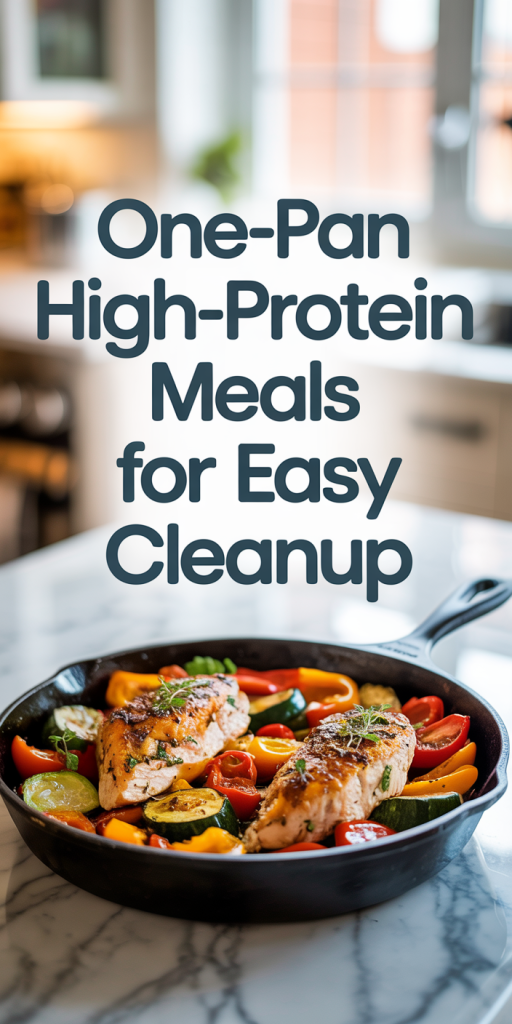
We invest in a few reliable pieces: a large rimmed sheet pan (half-sheet), a heavy-bottomed oven-safe skillet (cast iron or stainless steel), and a rimmed baking dish (9×13). Nonstick is convenient but doesn’t give the same caramelization: line pans with parchment or aluminum foil for easy cleanup when using nonstick alternatives. A rimmed sheet pan is our go-to for roasting because it allows airflow and even browning. For acidic dishes or stovetop-to-oven recipes, use an enameled cast iron or ovenproof stainless skillet.
Prep Techniques To Save Time (Sheet Pan, Skillet, Foil Packets)
Batch prep: chop vegetables once and store them in airtight containers for several days. Pre-mix spice blends in jars so seasoning is one less step. Par-cook denser carbs (rice, farro) ahead of time. Foil packets are perfect for single-serve proteins like salmon or shrimp, season, seal, and bake: cleanup is minimal. For sheet pan dinners, arrange proteins at the center or edges depending on heat intensity and leave space between pieces to encourage roasting rather than steaming.
Food Safety, Temperature, And Storage Basics
We follow safe internal temperatures: poultry 165°F (74°C), ground meats 160°F (71°C), fish 145°F (63°C), and pork 145°F (63°C) with a three-minute rest. Use a probe thermometer to avoid undercooking or overcooking. Cool leftovers quickly (within two hours), store them in shallow airtight containers, and consume within 3–4 days. Most cooked one-pan meals can be frozen for 2–3 months: label with date and contents. Reheat thoroughly to 165°F before eating.
20 One-Pan High-Protein Recipes (Quick Overview And Serving Notes)
We list 20 one-pan recipes with serving notes and quick tips to adapt portions, swap ingredients, or speed the process.
Sheet Pan Salmon With Chickpeas, Broccoli, And Lemon
Serving notes: 4 portions, each with ~30 g protein. Toss chickpeas and broccoli with olive oil, roast 10–12 minutes, add salmon fillets skin-side down and roast 8–10 more minutes. Finish with lemon zest and parsley. Swap chickpeas for cannellini beans if milder flavor is preferred.
Chicken Thighs With Sweet Potatoes, Kale, And Tahini Drizzle
Serving notes: 4 portions, skin-on thighs provide ~28–32 g protein. Roast thighs and sweet potatoes until caramelized: toss kale in last 5 minutes. Drizzle with tahini mixed with lemon and a touch of maple for balance.
Turkey And Black Bean Skillet With Corn And Cilantro
Serving notes: 4 portions, lean ground turkey yields ~30 g protein per serving. Brown turkey, add black beans, corn, tomatoes, and finish with cilantro and lime. Serve over quick-cooked rice or cauliflower rice for lower carbs.
Shrimp And Quinoa One-Pan With Cherry Tomatoes And Spinach
Serving notes: 3–4 portions, shrimp plus quinoa give ~25–30 g protein. Cook quinoa on the stovetop or par-cook and add shrimp and tomatoes to the pan for a one-pot finish. Fold in spinach to wilt at the end.
Baked Tofu With Edamame, Bok Choy, And Sesame-Ginger Sauce
Serving notes: 4 portions, pressed tofu + edamame ≈ 20–25 g protein each. Cube and roast tofu until crisp, add bok choy stems earlier and leaves last. Drizzle with a sesame-ginger sauce after roasting.
Steak And Roasted Veggies With Chimichurri
Serving notes: 3–4 portions, 4–6 oz steak delivers 25–40 g protein. Sear steak on the skillet, roast root vegetables on a sheet pan. Rest steak, slice, and serve alongside vegetables with chimichurri.
Mediterranean Baked Cod With White Beans And Olives
Serving notes: 4 portions, cod delivers ~22–26 g protein. Bake cod on top of seasoned cannellini beans and olives so the beans absorb juices. Finish with lemon and parsley.
Sausage, Peppers, And Cannellini Beans Sheet Pan
Serving notes: 4 portions, Italian or chicken sausage yields 20–30 g protein. Roast sausages with bell peppers and onions: add cannellini beans during last 10 minutes to heat through.
Lentil And Sweet Potato Skillet With Feta (Vegetarian)
Serving notes: 4 portions, cooked lentils offer ~18 g protein each. Sauté sweet potato cubes until tender, add lentils and spices, finish with crumbled feta and mint.
Egg And Potato Skillet With Spinach And Smoked Paprika
Serving notes: 2–3 portions, eggs provide ~12–18 g protein depending on count. Roast or pan-fry potatoes, create wells for eggs, and bake until set. Add spinach at the end and finish with smoked paprika.
Greek Chicken With Orzo, Tomatoes, And Cucumbers
Serving notes: 4 portions, chicken breasts ~25–30 g protein. Bake seasoned chicken with orzo and cherry tomatoes in an ovenproof dish: add cucumbers and a yogurt-dill sauce fresh before serving.
Cajun Salmon Foil Pack With Rice And Zucchini
Serving notes: 4 portions, salmon ≈ 25–30 g protein. Place salmon and zucchini on foil, season with Cajun spices, seal, and bake. Serve over rice: foil keeps cleanup minimal.
Moroccan Chickpea And Lamb Tray Bake With Carrots
Serving notes: 4 portions, ground lamb + chickpeas ≈ 25–30 g protein. Roast lamb meatballs or crumbles with carrots and warm spices: finish with cilantro and a dollop of yogurt.
Chicken Sausage And Farro Skillet With Brussels Sprouts
Serving notes: 4 portions, farro + sausage ≈ 20–25 g protein. Sear sausage slices, add par-cooked farro and halved Brussels sprouts, roast until caramelized.
Pork Tenderloin With Apple, Cabbage, And Mustard Glaze
Serving notes: 4 portions, pork tenderloin ≈ 25–30 g protein. Roast tenderloin with apple wedges and shredded cabbage: glaze with Dijon-mustard-honey near the end.
Black Bean And Tempeh Fajita Sheet Pan With Peppers
Serving notes: 4 portions, tempeh + black beans ≈ 20–25 g protein. Marinate tempeh strips, roast with peppers and onions, serve with tortillas and avocado.
Baked Cod With Lentils, Spinach, And Dijon Vinaigrette
Serving notes: 4 portions, cod + lentils ≈ 25–30 g protein. Bed lentils under cod fillets so they soak up pan juices: add spinach and vinaigrette to finish.
Spicy Chickpea And Paneer Skillet With Cauliflower Rice
Serving notes: 3–4 portions, paneer + chickpeas ≈ 20–25 g protein. Sear paneer cubes, mix with spiced chickpeas, and serve over cauliflower rice to keep it low-carb.
Mediterranean Shrimp And Chickpea Skillet With Feta
Serving notes: 3–4 portions, shrimp + chickpeas ≈ 25–30 g protein. Sauté shrimp with garlic, add chickpeas and tomatoes, finish with crumbled feta and oregano.
One-Pan Breakfast Bowl: Sausage, Eggs, Sweet Potato, And Greens
Serving notes: 2–3 portions, sausages + eggs ≈ 25–35 g protein. Roast sweet potato cubes and sausage, bake eggs in wells, and add quick-sauteed greens. This is a hearty morning option that stores well for busy days.
Each recipe can be scaled and swapped to meet dietary needs: see the customization section for vegetarian, vegan, and allergy-friendly swaps.
Weekly Meal Plan, Shopping List, And Batch-Cook Strategy
5-Day One-Pan Meal Plan For Busy Weeks (Macros And Timing)
We recommend this lean, protein-forward plan to cover a busy five-day workweek. Portions assume average adult needs, adjust up for higher calorie or protein targets.
Day 1 (Mon): Sheet Pan Salmon with Chickpeas & Broccoli, Prep 10 min, cook 20 min. Protein ~30 g.
Day 2 (Tue): Turkey & Black Bean Skillet with Corn, Prep 10 min, cook 20 min. Protein ~30 g.
Day 3 (Wed): Baked Tofu with Edamame & Bok Choy, Prep 15 min, cook 25–30 min. Protein ~22 g.
Day 4 (Thu): Steak with Roasted Veggies & Chimichurri, Prep 10 min, cook 20–25 min. Protein ~30–40 g.
Day 5 (Fri): Shrimp & Quinoa One-Pan with Tomatoes & Spinach, Prep 10 min, cook 15–20 min. Protein ~25–30 g.
We suggest prepping a few things Sunday evening: cook a bag of quinoa or farro, roast a tray of sweet potatoes, and pre-chop vegetables. That reduces nightly active time to seasoning and assembly.
Consolidated Shopping List And Pantry Staples
Proteins
- Salmon fillets, chicken thighs/breasts, shrimp, firm tofu/tempeh, lean ground turkey or lamb, steak (or plant-based equivalents)
Canned/Legumes
- Chickpeas, black beans, cannellini beans, lentils
Grains & Bases
- Quinoa, farro, brown rice, orzo, sweet potatoes
Vegetables & Greens
- Broccoli, kale, spinach, cherry tomatoes, zucchini, bell peppers, carrots, Brussels sprouts, bok choy, onions, garlic
Pantry & Flavorings
- Olive oil, tahini, soy sauce/tamari, Dijon mustard, vinegar (red wine, balsamic), lemon/lime, smoked paprika, cumin, za’atar, chili flakes, sesame oil
Extras
- Feta, yogurt, eggs, nuts (almonds, walnuts), fresh herbs (cilantro, parsley, dill)
Make-Ahead, Reheat, And Freezer-Friendly Tips
Make-ahead: Cooked grains and roasted vegetables last 3–4 days refrigerated. Pre-marinated proteins can sit 24 hours in the fridge. Store components separately to retain texture: keep dressings and sauces in small jars.
Reheat: Reheat in a skillet over medium heat for best texture or in the oven at 350°F until warmed through. Microwaving is fine for convenience but may soften crispy elements.
Freezing: Freeze fully cooked meals in portioned airtight containers for 2–3 months. For best quality, avoid freezing meals with dairy-based sauces: add those after reheating. Thaw overnight in the fridge before reheating.
Troubleshooting, Dietary Swaps, And Customization
How To Adjust Portion Sizes And Macros Quickly
We use quick rules to scale meals: increase protein by an extra 3–4 oz of meat or an extra 1/2 cup cooked legumes to add ~10–15 g protein. To reduce carbs, halve grains or swap for extra vegetables. To boost calories for higher energy needs, add a tablespoon of olive oil or a quarter cup of nuts per serving. Logging one representative recipe in an app once makes future adjustments painless.
Vegetarian, Vegan, Gluten-Free, And Allergy-Friendly Swaps
Vegetarian: Swap meats for paneer, tempeh, tofu, or extra legumes and add a cheese finish if desired.
Vegan: Replace yogurt or dairy-based sauces with tahini, cashew cream, or avocado-based dressings. Use tempeh or seitan for higher protein, note seitan contains gluten.
Gluten-Free: Use quinoa, rice, or certified gluten-free oats/farro alternatives: choose tamari instead of soy sauce.
Allergy-Friendly: For nut allergies, avoid pesto or nut-based dressings, use herb vinaigrettes instead. For soy allergies, choose legumes or animal proteins in place of tofu/tempeh.
Boosting Flavor Without Extra Cleanup (Sauces, Citrus, Herbs)
We keep flavor amps separate from the cooking vessel to avoid burning and extra washing. A simple trick: mix a master sauce in a mason jar (olive oil, vinegar, mustard, salt, pepper) and shake before drizzling. Fresh herbs and citrus zest added after cooking make dishes feel brighter without adding steps. Toast seeds or nuts in a dry skillet quickly and toss them on top at service for crunch, no pans to scrub if you use a small dedicated skillet or oven sheet lined with foil.
Conclusion
One-pan high-protein meals are an efficient way to eat well without trading time or flavor. By centering dishes on reliable protein sources, balancing vegetables and smart carbs, and using a few equipment and prep strategies, we can create satisfying plates that fit busy lives. The 20 recipes here give a flexible foundation, mix and match proteins, swap in-season veg, and use the weekly plan to keep us on track. Start with one or two recipes this week, scale portions to your needs, and you’ll quickly see how minimal cleanup frees up time and mental energy for the rest of life. Let’s get cooking.