We’ve all experienced the disappointment of a meal that looked hearty but left us hungry an hour later. When we choose vegetarian meals, the common concern is whether they’ll deliver enough protein and lasting fullness. The good news: with the right ingredients, combinations, and a few cooking tricks, vegetarian dishes can be every bit as satisfying as meat-based meals, often with added fiber, micronutrients, and variety. In this guide we explain why high-protein vegetarian meals work for satiety, how much protein you should aim for, pantry staples and swaps, meal-prep tactics, cooking techniques to boost absorption, and, most importantly, 10 filling recipes with estimated protein counts so you can cook and feel confident that you’ll stay full all day.
Why High-Protein Vegetarian Meals Work For Satiety
Protein is the backbone of satiety. When we consume protein-rich foods, they trigger hormones like peptide YY and GLP‑1 that help us feel full, reduce subsequent appetite, and slow gastric emptying. In vegetarian diets, protein often comes packaged with fiber and healthy fats, think beans, lentils, whole grains, nuts, and seeds, and that combination is powerful for prolonged fullness.
Two mechanisms matter most:
- Protein’s metabolic effect: Protein requires more energy to digest (thermic effect) than carbs or fat, which modestly increases calorie burn and stabilizes blood glucose swings that trigger hunger.
- Texture and bulk: High-fiber vegetarian proteins (beans, legumes, whole grains) add volume and chewiness to a meal. A bowl packed with chickpeas and quinoa occupies space in the stomach and slows digestion.
We also need to consider amino acid balance. Some plant proteins are incomplete on their own, but combining sources, legumes with grains, or tofu with seeds, yields a more complete amino acid profile and sustains muscle maintenance, which is crucial when our goal is long-term fullness and metabolic health.
Bottom line: With intentional combinations and adequate portion sizes, vegetarian high-protein meals satisfy both appetite and nutritional needs.
How Much Protein Do You Really Need? Quick Targets And Simple Calculations
Protein needs vary by body size, activity level, and goals. We like simple rules of thumb that are easy to calculate and adjust.
Quick targets:
- Sedentary adults: roughly 0.8 g per kilogram of body weight (0.36 g/lb).
- Active adults or those strength training: 1.2–1.8 g/kg (0.54–0.82 g/lb).
- Older adults (to protect muscle mass): aim for 1.0–1.2 g/kg.
How we calculate: multiply body weight in kilograms by the chosen target. Example: a 70 kg (154 lb) moderately active person aiming for 1.4 g/kg needs about 98 g of protein per day.
Practical daily distribution:
- Aim for 20–35 g of protein at each main meal (breakfast, lunch, dinner) and 5–15 g per snack. That distribution supports muscle protein synthesis and stable satiety across the day.
Tracking tips we use:
- Start by estimating portion sizes and using packaged protein counts or app databases for whole foods.
- If you’re new to tracking, pick a 2–3 day window and record intake: this quick audit shows where gaps exist (often at breakfast).
- Adjust by adding a protein booster (Greek yogurt, tempeh, protein powder) to the meal that’s low.
Remember: these are targets, not rigid rules. If you find yourself full and performing well, small deviations are fine. The goal is consistency over time, not perfection in a single meal.
Pantry Staples, Protein Boosters, And Smart Swaps
Stocking the right staples makes hitting protein goals effortless. Here are items we recommend keeping on hand and the smart swaps that increase protein without complicating cooking.
Pantry staples:
- Dried lentils and split peas, fast-cooking, inexpensive, and high-yield.
- Canned beans (chickpeas, black beans), for quick bowls, salads, and bakes.
- Quinoa, farro, barley, whole grains with more protein and fiber than refined grains.
- Nuts and seeds (almonds, walnuts, chia, hemp), great for texture and microprotein.
- Nut butters and tahini, calorie-dense, satisfying, and protein-rich.
- Canned or frozen edamame, a convenient soy protein.
- Shelf-stable tempeh and tofu (silken and firm), versatile and high in protein.
- Plain Greek yogurt and cottage cheese, excellent for breakfasts and sauces.
Protein boosters (quick additions):
- Hemp hearts (3 tbsp ≈ 10 g protein), sprinkle on salads or yogurt.
- Nutritional yeast (2 tbsp ≈ 8–10 g), cheesy flavor, perfect on pasta and popcorn.
- Protein powders (pea, brown rice, mixed plant), useful in smoothies and baking.
Smart swaps we use:
- Swap white rice for quinoa or farro to add protein and fiber.
- Replace half the pasta in a dish with lentil or chickpea pasta for a simple protein boost.
- Stir Greek yogurt into sauces instead of cream to add tang and protein.
With these staples, assembling a high-protein vegetarian meal becomes a matter of combining two or three complementary ingredients rather than reinventing recipes.
Meal Planning And Prep Strategies For Busy Weeks
We make high-protein eating sustainable by planning. A little prep converts a week of indecision into effortless, filling meals.
Weekly blueprint:
- Choose two protein bases per week (e.g., lentils and tempeh) and plan 3–4 meals around them.
- Batch-cook grains and legumes on one day, quinoa, farro, brown rice, lentils keep well and reheat nicely.
- Roast a tray of mixed vegetables and a pan of tofu or tempeh to assemble bowls quickly.
Batching tricks that save time:
- Cook a big pot of lentils and freeze in 1–2 cup portions for soups, shepherd’s pie filling, or salads.
- Make a large jarred dressing with tahini, lemon, and miso, it adds protein and flavor to bowls.
- Pre-portion snack packs with nuts, roasted chickpeas, or Greek yogurt cups topped with hemp hearts.
Daily assembly shortcuts:
- Leftover grain + leftover protein + fresh greens + a quick dressing = a full meal in under 5 minutes.
- Use a slow cooker for soups and dals to set and forget: they often taste better the next day.
We find that planning meals around two main proteins plus variable vegetables keeps shopping simple and prevents decision fatigue while ensuring we hit our protein targets all week.
Cooking Techniques To Maximize Protein Absorption And Fullness
A few cooking techniques increase the nutritional value, digestibility, and satiety of plant proteins.
- Combine complementary proteins strategically
- Pair legumes with whole grains (lentils + rice, beans + farro) to provide a complete amino acid profile. We don’t need to do it at every meal, but regular combination helps overall intake.
- Soak and cook legumes properly
- Soaking beans reduces anti-nutrients like phytates and oligosaccharides that can cause digestive discomfort. For lentils and split peas, a short rinse is enough: for larger beans, soak overnight and discard soaking water.
- Gentle cooking for tofu and tempeh
- Press firm tofu to remove excess water and then marinate or dust with cornstarch before pan-frying for a crisper texture and more satisfying mouthfeel.
- Tempeh benefits from steaming for 10 minutes to remove bitterness, then pan-frying or baking to build flavor and chew.
- Use acid and heat to increase bioavailability
- Vitamin C enhances iron absorption from plant foods. Add lemon, lime, or bell peppers to lentil or spinach dishes.
- Cooking tomatoes with legumes improves lycopene absorption and overall flavor.
- Add healthy fats for satiety
- A small amount of olive oil, avocado, or nuts helps us feel fuller longer because fat slows gastric emptying and increases palatability.
Applying these techniques makes plant proteins more digestible, more nutrient-dense, and more likely to keep us full.
10 Filling High-Protein Vegetarian Recipes (With Protein Counts)
Below are 10 recipes built to be filling and protein-forward. Protein ranges are estimates per serving and depend on exact portions and ingredients: we list typical values so you can plan.
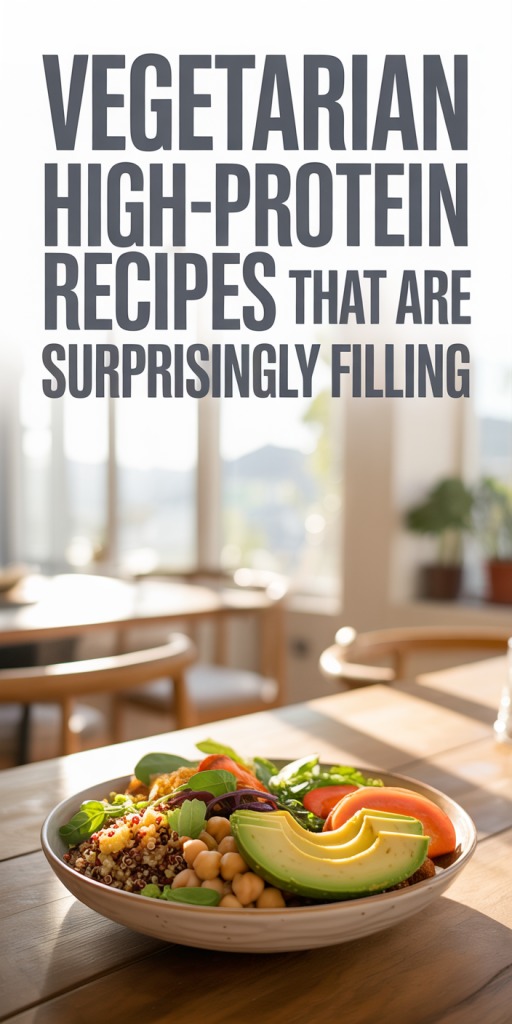
Chickpea And Quinoa Power Bowl, ~25–30g Protein
A bowl layered with toasted quinoa, roasted chickpeas, spinach, roasted sweet potato, avocado, and a tahini-lemon dressing. Quinoa (1 cup cooked ≈ 8 g), roasted chickpeas (1 cup ≈ 15 g), plus tahini and hemp hearts add another 3–7 g depending on portions.
Why it fills: protein + fiber + healthy fat: texture variety increases satiety.
Lentil And Sweet Potato Shepherd’s Pie, ~22–28g Protein
We swap ground meat for a spiced mixture of brown lentils and finely chopped mushrooms, topped with mashed sweet potato. One cup of cooked lentils provides ~18 g protein: add milk or yogurt in mash and some cheese for extra protein.
Why it fills: combination of slow-digesting carbs and legumes keeps blood sugar steady.
Tofu, Edamame, And Greens Stir‑Fry With Brown Rice, ~30–35g Protein
Firm tofu (200 g ≈ 18–20 g), 1/2 cup shelled edamame (≈9 g), 1 cup cooked brown rice (≈5 g), plus broccoli and spinach. Use a savory sauce and finish with sesame seeds and scallions.
Why it fills: concentrated soy proteins and fibrous greens deliver lasting fullness.
Black Bean And Farro Stuffed Peppers, ~20–24g Protein
Cooked farro (1 cup ≈ 10 g), black beans (1 cup ≈ 15 g), mixed with salsa and spices, stuffed into bell peppers and baked. Topped with a sprinkle of cheese or nutritional yeast.
Why it fills: dense, chewy farro and beans make each bite substantial.
Greek Yogurt Savory Grain Bowl With Nuts And Seeds, ~25–30g Protein
Greek yogurt (1 cup ≈ 20 g) over a bed of barley or quinoa, topped with roasted vegetables, pumpkin seeds, and a drizzle of olive oil. Add a scoop of cottage cheese for extra protein if desired.
Why it fills: the high-protein dairy base plus seeds provides immediate and sustained satiety.
Tempeh Bolognese Over Whole‑Grain Pasta, ~28–34g Protein
Crumble tempeh into a rich tomato sauce and serve over whole-grain or legume-based pasta. A 1-cup portion of tempeh has ≈30 g protein: combined with pasta and grated cheese, this yields a hefty protein count.
Why it fills: umami-rich sauce and chewy tempeh create a satisfying, slow-to-digest meal.
Paneer And Vegetable Curry With Lentil Daal, ~30–36g Protein
Pair a paneer curry (100 g paneer ≈ 18 g protein) with a side of yellow lentil daal (1 cup cooked ≈ 18 g). Add basmati or brown rice if desired.
Why it fills: dairy protein in paneer plus lentils provide complementary amino acids and calories for fullness.
High‑Protein Breakfast Scramble With Cottage Cheese And Veggies, ~20–25g Protein
Scramble eggs or a tofu base with spinach, mushrooms, and 1/2 cup cottage cheese (≈14 g). Add a slice of whole-grain toast or a side of quinoa for extra protein.
Why it fills: combining fast-digesting eggs with cottage cheese prolongs satiety across the morning.
Peanut Butter Oat Protein Bars (No Bake), ~10–15g Per Bar
Blend rolled oats, peanut butter, protein powder, honey or maple syrup, and add-ins like chia or hemp. Press into bars: refrigerate. Depending on serving size and protein powder, each bar can provide 10–15 g of protein.
Why it fills: concentrated calories with peanut butter and oats provide sustained energy and moderate protein.
Hearty Split Pea And Barley Soup, ~18–22g Protein Per Bowl
Split peas (1 cup cooked ≈ 16 g) with barley (1 cup cooked ≈ 8 g) and root vegetables make a thick, stew-like soup. Finish with a dollop of Greek yogurt or grated cheese to bump protein further.
Why it fills: thick, warm soups with legumes and whole grains are comforting and keep hunger at bay.
We encourage experimenting with portion sizes and minor ingredient swaps to match personal protein goals and taste preferences.
Quick High-Protein Snacks And Sides To Keep You Full
When hunger hits between meals, small protein-forward snacks prevent overeating later. Our favorite quick options:
- Greek yogurt with hemp seeds and berries (15–20 g).
- Roasted chickpeas tossed with spices (1/2 cup ≈ 7–10 g).
- Cottage cheese with sliced cucumber and tomato (1/2 cup ≈ 12–14 g).
- Edamame pods sprinkled with sea salt (1 cup ≈ 17 g).
- Nut butter + apple slices with a sprinkling of chia (PB adds 7–8 g per 2 tbsp).
- Mini tempeh skewers or leftover tofu bites (portion-dependent, 8–15 g).
- Smoothie with pea protein, spinach, banana, and oats (20–30 g depending on powder).
We plan snacks like micro-meals: pairing protein with fiber or fat, yogurt + berries, nuts + fruit, keeps hunger satisfied and energy steady until the next full meal.
Serving Sizes, Tracking, And Adjusting For Your Goals
Serving sizes determine whether a high-protein meal actually delivers the protein we expect. Here’s how we recommend tracking and adjusting.
Practical serving-size references:
- 1 cup cooked lentils ≈ 18 g protein.
- 1 cup cooked quinoa ≈ 8 g protein.
- 100 g firm tofu ≈ 8–12 g protein (varies with brand).
- 100 g tempeh ≈ 18–20 g protein.
- 1 cup Greek yogurt ≈ 17–23 g protein (varies by brand).
- 1 cup cooked beans ≈ 15 g protein.
- 1 cup cooked farro/barley ≈ 8–10 g protein.
Tracking approach:
- Use a nutrition app for two weeks to identify any consistent shortfalls.
- Record meals where we feel hungry soon after: those are candidates for increased protein or added healthy fat/fiber.
Adjusting for goals:
- For weight loss: prioritize higher protein per meal (25–35 g) and keep portions of calorie-dense carbs moderate: add non-starchy vegetables to increase volume without many calories.
- For muscle gain: increase total daily protein (1.4–1.8 g/kg) and distribute evenly across meals, adding strength training.
- For maintenance: ensure each main meal has at least 20 g protein: adjust snacks to keep totals aligned.
Small adjustments often produce big results: adding 1/4 cup cooked lentils or a scoop of Greek yogurt to a meal can be the difference between a snack at 10 AM and lasting until lunch.
Conclusion
We don’t have to sacrifice satisfaction when choosing vegetarian meals. By focusing on protein-rich building blocks, combining complementary foods, and using simple cooking and meal-prep strategies, we can create dishes that keep us full, energized, and nutritionally complete. The 10 recipes above show how versatile and filling vegetarian protein can be, from quick power bowls to comforting stews and snacks. Start by stocking a few staples, batch-cook your favorite protein bases, and aim for balanced plates with 20–35 g of protein at main meals. With that approach, staying full all day becomes not only attainable but enjoyable.