12 Nail Trends That Went From Cute To Cringe — What Went Wrong And What To Wear Instead (2026 Guide)
We’ve all watched nail trends rise and fall faster than a TikTok sound. What started as playful experimentation, a daring silhouette, an oversized jewel, a neon fade, can quickly tip from fashionable to forced. In this guide we break down 12 nail moments that once felt fresh but aged into cringe, explain why they misfired, and most importantly, show what to wear instead so your manicure looks intentional (not Instagram-viral-for-the-wrong-reasons). Expect practical alternatives, maintenance tips, and the design logic behind what keeps a look timeless versus what makes it exhausting. Whether you’re a salon regular or someone who paints their own tips on Sundays, we’ll help you choose details that flatter your hands, last longer, and photograph better.
1. Extreme Lengths: Stiletto And Talon Nails
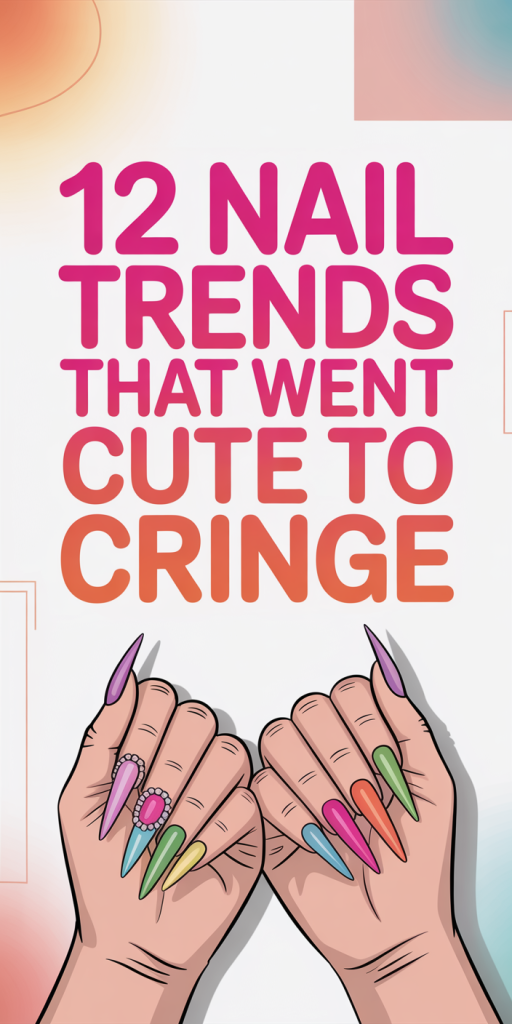
Stiletto and talon nails made a splash because they were dramatic and instantly recognizable. They promised runway energy and fierce confidence, and for editorial shoots or a themed party, they nailed it. But in everyday life the ultra-long, needle-like silhouette often became impractical and, frankly, awkward. We started seeing chipped tips, bent nails, and wrists awkwardly angled to avoid breakage. What went wrong wasn’t the boldness: it was scale. When length overwhelms function and proportion, a trend becomes cringe.
Why these went off the rails
- Proportion mismatch: Not every hand supports a 2–3 inch extension. The extreme profile can make fingers look strained rather than elongated.
- Functionality fail: Tasks like typing, cooking, and putting on jewelry become a performance, which quickly ruins the novelty.
- Maintenance burn: Frequent fills, reinforced tips, and repairs make the look costly and time-consuming.
What to wear instead
We recommend playing with shape rather than extreme length. Almond and soft-square silhouettes give the elongating effect without the theatrical downside. If you love a pointed tip, try a modest stiletto (shorter length with a softened point) or the “coffin short”, it keeps edge but stays wearable. For drama without impracticality, choose one accent nail with a sculptural topcoat or a metallic tip: you get the statement without surrendering everyday use.
Materials and upkeep
If you insist on length, opt for a reinforced acrylic with proper stress-relief techniques (beveling, edge thinning) and realistic daily habits: short nails for heavy-hand work, gloves for chores, and bi-weekly professional maintenance. Otherwise, embrace medium lengths: they photograph well, endure, and feel chic rather than contrived.
2. Overfilled Gel And Puffy Tips
The overfilled gel trend, where technicians packed gel to create exaggerated domes, initially looked glossy and futuristic. The appeal was obvious: it caught light, added dimension, and made a mani appear high-gloss and luxe. But the line between ‘plump and glossy’ and ‘bubble-wrap’ was thin. Puffy tips ended up looking like air pockets on the nail bed rather than polished, intentional volume.
Why these went off the rails
- Poor technique: Overfilling without smooth shaping leads to uneven, unstable domes that chip or lift.
- Visual weight: Puffy tips add bulk that can make nails look heavy and unnatural, especially on shorter nails.
- Hygiene and longevity: Excess product at the free edge is prone to cracking and collecting debris.
What to wear instead
We advise a subtle, controlled dome created with thin-layer builder gels and thoughtful shaping. A moderate curvature that follows the natural nail plate gives that glassy, dimensional look without the exaggerated puff. Another wearable alternative is the “ice glass” manicure: a glossy, near-flat gel finish with a faint gradient or flash powder underneath to mimic depth. It photographs like a puffy style but behaves like a classic gel.
Maintenance tips
Ask your tech for a balanced profile (not a mound), and request stress-relief at high-traffic points like sidewalls and the free edge. Avoid aggressive buffers at home: gentle oiling and scheduled fills keep the finish glassy longer.
3. Excessive Embellishments: Gems And 3D Charms
There was a moment when piling rhinestones, pearls, and sculpted charms on every nail felt maximalist and luxurious. But the problem wasn’t embellishment itself, it was the ‘more is more’ mentality that turned hands into tiny, noisy sculptures. Over-embellished nails often clashed with outfits, snagged on fabric, and presented an accessibility problem for daily living.
Why these went off the rails
- Scale and repetition: When every nail carries three-dimensional elements, the overall look becomes visually cluttered.
- Practicality: Large gems catch threads, trap dirt, and make ordinary activities fiddly.
- Trend fatigue: The novelty wears off fast: what was once eye-catching begins to read as costume-y.
What to wear instead
We suggest strategic placement. Reserve substantial 3D pieces for one or two feature nails and keep the rest simple with satin or cream finishes. Mixed textures are great but balance is key: pair a single jewel with negative space, minimalist line art, or micro-foiling on supporting nails. For a luxe feel without bulk, try flat metallic decals, micro-rhinestones near the cuticle, or a single sculpted accent on the ring finger.
How to make gems last
When you do go for crystals, anchor them properly: use a small well of builder gel, press the jewel in, and encapsulate with a thin layer so it’s secure. For everyday wear, opt for smaller, low-profile stones and carry a micro glue for emergency reattachment. Eventually, fewer, better-placed accents age more gracefully than a full set of gaudy hardware.
4. Overly Busy Mixed Media: Foil, Flakes, And Stickers Everywhere
Mixed-media manis were once celebrated for their collage-like creativity: flakes, chrome, matte patches, holographic foils, and stickers coexisting on a single sheet of nails. That variety can be brilliant if curated. But when every nail tries to showcase a different micro-trend, the effect becomes chaotic and exhausting to look at.
Why these went off the rails
- Competing focal points: Multiple effects fight for attention, leaving no visual hierarchy.
- Mismatch in finishes: Matte next to mirror chrome next to glossy flakes can create an incoherent texture story.
- Sticker disappointments: Cheap decals peel fast and look obviously manufactured when not embedded correctly.
What to wear instead
Curation is our watchword. Pick two complementary techniques, for example, soft metallic foil and a fine matte accent, and repeat them across the set with a deliberate pattern. Alternating a foil nail every other finger or creating a French-with-a-twist keeps visual rhythm. If you love eclecticism, anchor it with a unifying color family or base finish so the set reads as intentional rather than scattershot.
Application and longevity
Use high-quality foils and micro-flakes and ask for proper encapsulation under thin builder gel or topcoat. For sticker lovers, invest in gel-adhesive decals that are sealed under a glossy topcoat: they hold much better than peel-and-stick versions. The trick to a wearable mixed-media mani is repetition and restraint, not leaving the salon with a different mini-theme on each finger.
5. Loud Logo Nails And Obvious Brand Decals
Logo nails rode the wave of streetwear-meets-beauty. A tiny brand insignia on a tip felt like a fashionable wink, for a minute. But when logos became ubiquitous, oversized, or plastered across multiple fingers, the look shifted from chic endorsement to billboard-like and, well, tacky.
Why these went off the rails
- Over-branding: Repeating logos across nails reduces them to noise rather than a stylistic accent.
- Trendy vs timeless: Brand references date quickly: seasonal logos don’t age like a neutral manicure does.
- Licensing and taste: Some decals can look counterfeit or poorly scaled for nail-width, which cheapens the effect.
What to wear instead
If you like branded accents, subtlety is everything. Choose a single, micro logo tucked near the cuticle or on an accent nail, and balance it with clean, neutral shades on the other digits. Alternatively, translate brand identity into color or motif rather than literal logos, a palette that echoes a label’s signature colorway feels inspired without being literal.
Styling notes
Think of your nails like jewelry: a tasteful stamp rather than a banner. Matte neutrals, sheer bases, and micro decals used sparingly feel modern. We also recommend avoiding fast-fading printed stickers: for a long-lasting branded detail, go for gel-embedded decals or hand-painted insignias by a skilled technician.
6. Trend-Chasing Colors: Neon Gradients And Toxic Greens
Color is the most immediate way a manicure reads as ‘of-the-moment.’ Neon gradients and hyper-saturated greens once screamed cutting-edge for their vibrancy. But trends that hinge on shock value often age badly. Neon fades, when poorly blended, can create harsh banding. And those ‘toxic’ greens can wash out complexions or clash with everyday wardrobes.
Why these went off the rails
- Harsh application: Poorly executed gradients show stripes and unflattering transitions.
- Universality issue: Not every skin tone or wardrobe pairs well with neon or acidic hues.
- Overexposure: When influencers and salons oversaturate feeds, a color loses its edge quickly.
What to wear instead
We favor refined takes on bold color. Swap neon gradients for saturated pastels with tonal ombrés, vivid but softer on the eye. Replace toxic greens with jewel-tone sap greens or muted olive for a more flattering, wearable chroma. If you crave drama, reserve neon for an accent (a thin neon liner, a single gradient nail, or a French tip) rather than an entire set.
Color technique tips
Ask your tech for smooth, airbrushed blending or use micro-diluted polish layers to build depth without banding. Consider undertones: warm complexions pair better with yellow-based greens: cool skin tones suit blue-leaning shades. Finally, use a high-quality topcoat to lock in vibrancy, neons fade faster without proper sealing.
7. How To Update These Looks: Cleaner, Wearable Alternatives And Maintenance Tips
By now we’ve pointed out common failure points: scale, proportion, technique, and overuse. Updating a cringe-ing trend is less about killing the idea and more about refining it. Here are practical alternatives and maintenance habits that preserve the fun while ensuring the final effect feels polished and contemporary.
Design rules to keep trends wearable
- Scale down: Miniaturize embellishments and shorten lengths to suit your lifestyle.
- Choose a focal point: Limit high-impact details to one or two nails per hand.
- Anchor palettes: Pick a cohesive color story so diverse finishes unite visually.
- Prioritize negative space: Small amounts of bare nail create contrast and breatheability.
Practical maintenance and salon requests
- Ask for structural support: Request stress-relief zones, sidewall tapering, and tapered free edges for longer nails.
- Opt for encapsulation: For flakes, foil, or gems, a thin builder gel layer prevents snagging and loss.
- Invest in cuticle care: A clean cuticle line makes even bold designs look professional: regular oiling prevents lift and peeling.
- Set expectations: Tell your tech how you live, if you’re hands-on, request shorter lengths and low-profile accents.
At-home care
- Use a non-acetone remover to reduce drying and edge delamination.
- Maintain a routine: 2–3 drops of cuticle oil daily, weekly gentle buffing, and topcoat refresh every 7–10 days.
- Carry a minimalist repair kit: clear gel, a dot of builder, and mini glue for emergency re-seats of stones.
When to retire a trend
If the look compromises function, makes you self-conscious, or requires unsustainable upkeep, it’s not worth it. Trends are tools, use them to express style, not to complicate life. Updated approaches keep the playful spirit of trends alive while making sure we don’t regret our manicure a week later.
Conclusion
Trends come and go, but style that considers proportion, wearability, and technique endures. We don’t want to police creativity, bold choices can be brilliant, but the difference between cute and cringe often comes down to thoughtful restraint. Miniaturize drama, prioritize one focal point, and invest in proper application and upkeep. Do that and you’ll have manicures that feel current in 2026 and still look smart six months from now. Pick the elements you love, tweak them for your life, and wear your nails with confidence.