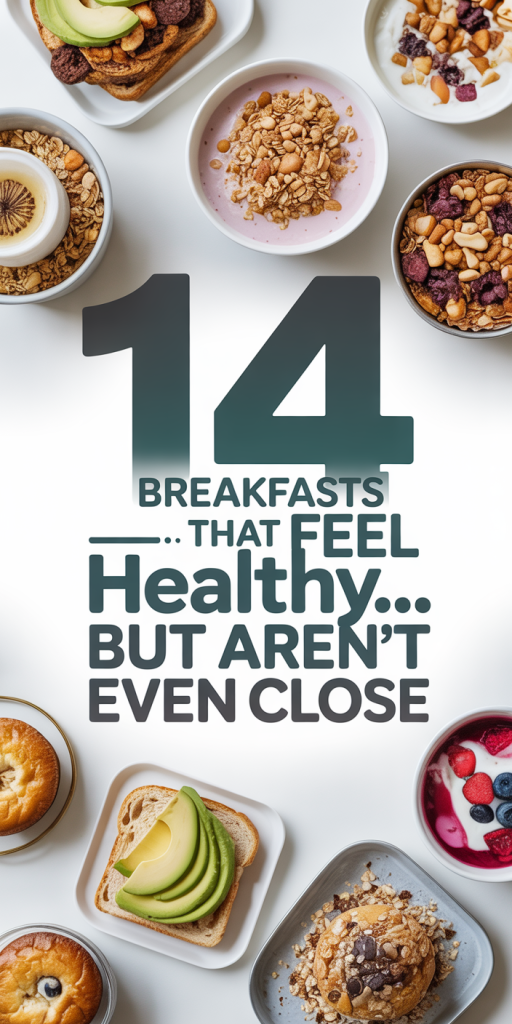
14 Breakfasts That Feel Healthy… But Aren’t Even Close — How To Spot Them And Eat Better In 2026
I want breakfast to set the tone for the day: energized, focused, and satisfied. Problem is, the food industry has gotten very good at making indulgent, highly processed items look like healthful choices. From colorful yogurt parfaits to “protein” breakfast sandwiches, many morning options carry a veneer of wellness while delivering sugar, refined carbs, and inflammatory fats. In this guide I’ll unpack why so many breakfasts feel healthy but aren’t, walk through 14 common offenders you likely recognize, and show practical swaps and rules of thumb that actually keep me full and support long-term health in 2026. No moralizing, just clear, science-informed advice I can use every morning.
How Foods Get Labeled “Healthy” (And Why That Misleads You)
Food labeling, marketing, and retail design are engineered to trigger fast decisions. Words like “natural,” “wholesome,” “light,” or “protein” plastered on packaging or menus create an impression of health without guaranteeing it. Two mechanisms make this especially misleading.
First, reductionist claims. Companies often highlight a single nutrient, “low fat,” “high protein,” “added vitamins”, as a proxy for overall health. But focusing on one metric allows them to add sugar, refined flour, or hyper-processed oils to compensate for taste and texture. A yogurt labeled “low fat” can be loaded with cane sugar: a cereal that says “whole grain” can still be 40 grams of sugar per serving.
Second, health cues. Packaging uses earthy colors, images of fruit, or photos of smiling people to imply wellness. Restaurants place “superfood bowls” and “acai smoothies” in prominent spots, nudging us to assume those choices are superior. Visual cues are powerful, research shows they change perception of taste and health even when the product is identical.
Regulatory gaps matter, too. “Healthy” is not a strictly enforced term in many jurisdictions: companies exploit that ambiguity. Meanwhile, modern dietary science favors whole foods, fiber, and balanced macronutrients, factors often absent from products marketed as healthy.
Understanding these mechanisms helps us read past the veneer. Instead of trusting a claim, we need to inspect ingredient lists, sugar content, and the food’s role in a balanced meal. That shift from marketing-led to nutrition-led choices is how we stop being fooled by false-health breakfasts.
What Makes A “Healthy” Breakfast Actually Unhealthy
Several common characteristics turn a seemingly healthy breakfast into a nutritional dud. Recognizing these helps us evaluate options quickly, at the grocery aisle, coffee shop, or office break room.
High added sugar: This is the single biggest culprit. Added sugar spikes blood glucose, scars metabolic health over time, and doesn’t provide lasting satiety. Many “healthy” breakfasts supply 20–40 grams of sugar per portion, equivalent to a soda.
Refined carbohydrates: White flour, rice syrup, and de-germed grains digest quickly, producing rapid insulin responses and mid-morning crashes. If a breakfast lacks intact fiber and is dominated by refined carbs, it’s functionally closer to dessert than to fuel.
Ultra-processed ingredients: Emulsifiers, maltodextrin, hydrogenated or interesterified oils, isolates, and long lists of hard-to-pronounce additives characterize ultra-processed breakfasts. These ingredients optimize shelf-life and texture but may harm gut health and metabolic regulation when consumed regularly.
Unknown fat quality: “Low fat” claims drove the addition of sugar for palatability in past decades. Conversely, some convenience breakfasts use cheap industrial seed oils (high in omega-6 and often oxidized) that can promote inflammation. Healthy breakfasts rely on whole-food fats, nuts, seeds, avocado, olive oil, not hydrogenated or heavily refined oils.
Minimal protein and fiber: Protein and fiber are the two best predictors of prolonged fullness. A breakfast that lacks both will leave us hungry and reaching for snacks.
Portion distortion: Small-sounding serving sizes on packaging (e.g., 30 g of granola) hide the fact that a realistic meal is larger, so calories and sugar multiply quickly.
When these elements combine, added sugar, refined carbs, processed ingredients, poor fat quality, low protein/fiber, the breakfast might look healthy but will likely destabilize energy and metabolic health. Our job is to spot the patterns, not only the single ingredient claims.
Sugary Yogurts, Parfaits, And Smoothies
Yogurt, parfaits, and fruit smoothies are quintessential “healthy” breakfast choices, colorful, fruit-forward, and often positioned as nutritious. But many versions are sugar bombs dressed in healthful-looking packaging. Flavored yogurts frequently contain 15–30 grams of added sugar per 6–8 ounce serving. Layer a flavored yogurt with granola and fruit, and you’ve easily consumed 40–60 grams of sugar before 9 a.m.
Smoothies at cafes often double down: fruit juice concentrate, sweetened yogurt, and flavored syrups blended with whey or plant protein isolates create a calorie-dense liquid that is rapidly absorbed. Liquid calories blunt satiety signals: we digest them faster than whole foods, which can lead to earlier hunger and overeating later.
Parfaits in grocery cases can be deceptive, those little clear cups show fruit and nuts, but the base is often a sweetened yogurt and the “granola” may be just sweet clusters. The portion sizes are small relative to energy density, so we feel virtuous while still getting a surge of sugar and refined carbohydrates.
We should also note misleading “healthy” variants: non-dairy yogurts sweetened with added sugar or sweetened plant-based milks that replace dairy with coconut cream and cane sugar. The macro profile looks different, but the metabolic effect is similar when sugar is present in high amounts.
Better Swaps And How To Fix These Breakfasts
We can rescue yogurt, parfaits, and smoothies with a few straightforward swaps that preserve convenience and flavor without the sugar crash.
Choose plain yogurt (or plain unsweetened plant yogurt) and sweeten minimally. Add fresh or frozen berries, a sprinkle of cinnamon, and a small handful of chopped nuts for texture and healthy fat. A 6–8 ounce serving of plain Greek yogurt plus 1/2 cup berries and 1 tablespoon chopped walnuts yields protein, fiber, and only a few grams of natural sugar.
When making smoothies, prioritize whole ingredients and protein-rich bases. Use a half cup of plain yogurt or a scoop of unflavored protein powder, add a serving of leafy greens, a small fruit portion (e.g., 1/2 banana or 3/4 cup berries), healthy fat (1 tablespoon nut butter or 1 tablespoon chia seeds), and liquid (water or unsweetened plant milk). This combo slows digestion and sustains energy.
For parfaits, substitute granola with toasted oats or a mix of nuts + seeds, or reserve granola for a smaller topping (1–2 tablespoons) rather than the base.
Portion control matters. If we buy flavored yogurt for convenience, we can mix a 1/2 plain + 1/2 flavored to cut sugar in half while keeping some sweetness. These small, practical fixes keep breakfast easy and prevent the hidden sugar trap.
Granola, Breakfast Bars, And Cereal Bowls
Granola, breakfast bars, and boxed cereals often wear a health halo but are designed to taste like candy. Commercial granola typically blends oats with sugar, syrups, and oil: a single cup can contain 400–600 calories and 20–30 grams of sugar. That’s meant to be a topping, not an entire bowl.
Breakfast bars are another convenience staple. They’re marketed as meal replacements or on-the-go solutions, yet many are little more than compressed sugar, syrup, and refined grains with a dash of protein isolate. Ingredients lists that read like a chemistry set, maltodextrin, corn syrup, hydrogenated oils, are red flags.
Cereal boxes are using clever imagery (athletes, whole grains, bright fruit) while packing several servings of sugar per bowl. Even “whole grain” cereals can be high in added sugars and low in protein and fat, making them poor at sustaining satiety.
Portion size confusion makes these worse. Serving sizes printed on packages are often smaller than what we eat. A “one-cup serving” might be half what we pour, doubling calories and sugar.
That said, not all granola and bars are bad. Some brands produce minimally processed bars with whole nuts, seeds, and dates as binders, and granola can be made at home with controlled sweeteners and more nuts/seed content. But as a default, store-bought versions are worth scrutinizing.
Muffins, Quick Breads, And Sweet Pastries
Muffins, quick breads, danishes, croissants, these are breakfast classics and comfort staples. They also frequently masquerade as a morning “treat” that’s somehow acceptable during an otherwise healthy routine. Most commercial muffins are large, refined-flour-based items with copious sugar and often trans or highly processed fats to achieve that soft texture and long shelf life.
A bakery muffin isn’t a small cake: nutritionally it often is a small cake. One large muffin can contain 300–600 calories, high glycemic carbs, and minimal protein or fiber. Quick breads labeled “banana” or “zucchini” can lull us into thinking we’ve had a serving of fruit or veg, yet the primary ingredients remain white flour and sugar.
Sweet pastries made with laminated dough (croissants, danishes) are often made with butter or butterlike substitutes that can have oxidized fats when prepared at scale. Frequent consumption of pastries contributes to postprandial lipemia and provides little sustained nourishment.
If we crave something baked in the morning, better options prioritize whole grains, nuts, and lower added sugar. Homemade muffins with whole-grain flour, fruit puree replacing part of the sugar, and added protein (Greek yogurt or cottage cheese) can be genuinely satisfying without the sugar-surge legacy of commercial pastries.
“Protein” Sausages, Breakfast Sandwiches, And Processed Meats
Breakfast sandwiches and meat-based breakfast items are everywhere, and brands have leaned into “protein” messaging to sell convenience. But many of these products are ultra-processed: reformed meat, fillers, sodium, preservatives like nitrates, and often inflammatory fats. Labeling something as “high protein” does not neutralize the harms of processing and excess sodium.
Processed breakfast sausages and patties frequently use textured vegetable protein, isolated soy, or mechanically separated meat, cheaper ingredients that provide protein but also bring additives and high sodium. Even when the protein quality is decent, the accompanying refined English muffin and cheese or sugary ketchup can turn the meal into a high-sodium, high-calorie package.
High sodium at breakfast shifts our daily intake rapidly toward upper limits, contributing to blood pressure concerns. And processed meats have been linked in epidemiological studies to higher risk of certain chronic diseases when consumed regularly.
That doesn’t mean we must avoid protein-focused breakfasts. Real cooked eggs, fillets of salmon, or minimally processed turkey are excellent protein sources. The key is prioritizing minimally processed proteins paired with whole grains, vegetables, and healthy fats rather than imitation-meat sandwiches loaded with additives.
Fruit Juice, Sweetened Coffee Drinks, And “Energy” Beverages
Liquid stimulants are morning rituals for many of us, juice, lattes, and electrolytic or energy drinks. They can be deceptively caloric. A typical 12-ounce orange juice serving contains about 30–40 grams of natural sugar and little fiber, which behaves similarly to added sugar metabolically. Fresh-squeezed or shop-bought, juice concentrates sugar and removes the fiber of whole fruit.
Sweetened coffee drinks are another trap. Flavor shots, vanilla syrup, and whipped cream can add 100–400 extra calories and 20–50 grams of sugar to what might otherwise be a small-protein caffeine fix. Because we often sip them over time, we don’t get the immediate satiety that solid food provides.
Energy drinks and some “enhanced” waters promise focus or immune benefits but are loaded with sugar, artificial stimulants, and unnecessary additives. Regular consumption leads to fluctuating energy and increased caloric load.
Simple changes make a big difference: swap juice for whole fruit (an apple or orange provides fiber and slower sugar absorption), order coffee with unsweetened milk or a single pump of syrup, or hydrate with water and keep high-caffeine/sugar beverages as occasional treats. If we want a fortified morning beverage, add a small protein source, collagen or whey in a coffee-based smoothie can blunt the glycemic effect and improve satiety.
How To Choose Real Breakfasts That Keep You Full And Healthy
We can boil a good breakfast down to three practical rules we can apply in cafes, at the supermarket, or at home:
- Prioritize protein and fiber. Aim for at least 15–25 grams of protein and 5–10 grams of fiber at breakfast when possible. Protein sources include eggs, Greek yogurt, cottage cheese, smoked salmon, tofu, or a measured scoop of unflavored protein powder. Fiber comes from whole fruit (berries, apple), vegetables, oats, and whole-grain breads.
- Favor whole foods over packaged convenience. Whole-food breakfasts, vegetable omelets, overnight oats with chia seeds, steel-cut oats with nuts, or a bowl of plain yogurt topped with berries and a tablespoon of seeds, provide slower digestion, more sustained energy, and better micronutrient density.
- Watch for hidden sugar and portion sizes. Read ingredient lists: if sugar (or multiple types of sugar: cane sugar, brown rice syrup, maltodextrin) appears in the top three ingredients, press pause. Consider realistic portions rather than the tiny serving size printed on the package.
Here are easy, replicable breakfasts we recommend:
- Veggie omelet + slice of whole-grain toast + 1/2 avocado. Protein, fiber, and healthy fats.
- Overnight oats made with rolled oats, chia seeds, a scoop of plain Greek yogurt, cinnamon, and berries. Portable and balanced.
- Plain yogurt parfait: plain Greek yogurt, 1/2 cup mixed berries, 1 tablespoon chopped nuts, and a dash of cinnamon.
- Smoked salmon on sprouted-grain toast with lemon and arugula. High protein, omega-3s, and low added sugars.
- Savory grain bowl: quinoa or farro, roasted vegetables, a soft-boiled egg, and a drizzle of olive oil.
We also encourage planning and batch prep. When mornings are rushed, having prepped hard-boiled eggs, portioned overnight oats, or chopped veggies removes the convenience advantage from processed breakfasts. Small changes, starting with two balanced breakfasts per week and scaling up, are sustainable and make a measurable difference in energy, mood, and weight management over months.
Conclusion
In 2026 the marketing around breakfast keeps getting smarter, but our approach can get smarter too. The difference between a breakfast that merely looks healthy and one that actually supports our energy and metabolic health is often simple: real ingredients, protein, fiber, and reasonable portions. By spotting the common red flags, added sugars, refined carbs, ultra-processed ingredients, and portion tricks, we can make better choices without sacrificing convenience or enjoyment. Let’s swap a few packaged items for whole-food-based options, read labels more critically, and keep a few reliable, balanced breakfasts in our weekly rotation. Small, consistent changes at the start of the day add up.