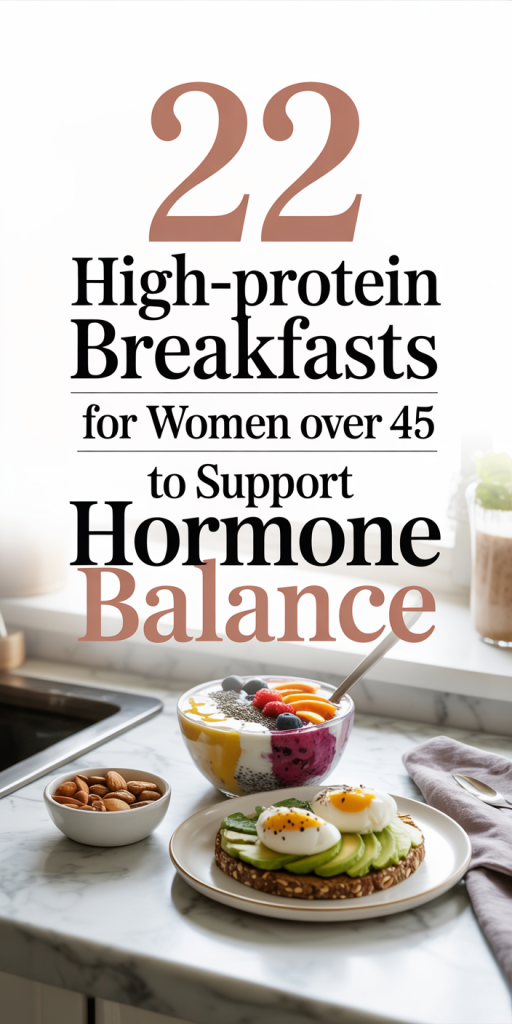
22 High-Protein Breakfasts For Women Over 45 To Support Hormone Balance (Practical, Quick, And Delicious)
As we move through midlife, our bodies change, hormone shifts, slower metabolism, and a gradual loss of lean muscle all make nutrition more important than ever. One of the simplest, most powerful levers we have is breakfast: choosing higher-protein starts the day by supporting steady blood sugar, preserving muscle, and helping hormones like insulin and cortisol behave better. In this guide we share science-backed context, quick strategies, and 22 complete high-protein breakfast recipes tailored for women over 45. Each recipe lists ingredients and straightforward instructions so you can cook, batch-prep, or swap ingredients easily. Let’s make mornings easier and more nourishing.
Why Protein Matters For Women Over 45: Hormones, Metabolism, And Muscle Health
Protein is more than calories, it’s the building block for muscle, bones, enzymes, and many hormones. After 45, women commonly experience lower estrogen and progesterone levels, which influences fat distribution, insulin sensitivity, and bone density. Adequate protein intake helps counteract sarcopenia (age-related muscle loss) and supports metabolic rate: more muscle means more calories burned at rest, and stronger muscles protect joints and balance.
Hormones and protein interact in several practical ways. Protein slows gastric emptying and reduces post-meal glucose spikes, which eases insulin demand and steadies energy, valuable when perimenopausal insulin resistance can emerge. Amino acids from protein also support neurotransmitter synthesis (think mood and sleep) and help regulate hormones involved in appetite and satiety, such as peptide YY and GLP-1.
We should also consider meal timing: distributing protein across meals, rather than loading it at dinner, appears to better support muscle protein synthesis and metabolic steadiness. And the type of protein matters: complete proteins with a strong essential amino acid profile (especially leucine), like dairy, eggs, poultry, fish, and soy, are particularly effective at preserving muscle. But varied sources, including legumes, nuts, and seeds, also play important roles for a balanced diet.
Finally, protein-rich breakfasts are practical: they reduce mid-morning cravings, help maintain focus, and can lower the likelihood of overeating later. For women over 45 aiming for hormone balance, building every breakfast around a quality protein source is one of the highest-impact changes we can make.
How Much Protein You Need, When To Eat It, And The Best Protein Types To Prioritize
Recommended protein targets vary by activity, health status, and goals. For women over 45 who want to preserve muscle and support metabolic health, we generally aim for roughly 1.0–1.2 grams per kilogram of body weight per day as a baseline: if strength training or trying to regain muscle, 1.2–1.6 g/kg may be better. In practical terms, many women do well aiming for 20–35 grams of protein at breakfast, and similar amounts at lunch and dinner, rather than concentrating intake late in the day.
Timing: prioritize a protein-rich breakfast within 1–2 hours of waking to jumpstart muscle protein synthesis and stabilize morning blood sugar. Spreading protein evenly through the day (every 3–4 hours) is associated with better muscle retention than skewed intake.
Types of protein to prioritize:
- Complete animal proteins: eggs, Greek yogurt, cottage cheese, lean poultry, fish, high in essential amino acids and especially leucine, which triggers muscle-building pathways.
- Dairy and whey: rapidly digestible, high biological value, and useful post-workout or as a creamy breakfast base.
- Soy and quinoa: plant-based options with more complete amino acid profiles than many other plants.
- Legumes + grains or nuts: combine for complementary amino acids (e.g., lentils + rice, nut butter on whole-grain toast).
We should also watch for quality: choose minimally processed sources when possible, and balance protein with fiber, healthy fats, and colorful produce to support hormones, gut health, and inflammation.
22 High-Protein Breakfasts — Grouped By Prep Time And Dietary Preference
Below are 22 complete recipes (ingredients and instructions). We grouped them for quick selection: 5-minute options, 10–20 minute stovetop/oven breakfasts, make-ahead meal-prep choices, and vegetarian/plant-forward picks. Each recipe serves 1–2 depending on appetite: scale as needed.
Quick 5–Minute Breakfasts
- Greek Yogurt & Berry Protein Bowl
- Ingredients: 1 cup plain Greek yogurt (2% or full-fat), 1/2 cup mixed berries, 2 tbsp ground flaxseed, 1 tbsp chopped walnuts, drizzle honey (optional).
- Instructions: Spoon yogurt into a bowl, top with berries, flax, walnuts and honey. Stir and enjoy.
2. Cottage Cheese & Tomato Toast
- Ingredients: 1 slice sprouted whole-grain bread, 1/2 cup cottage cheese, 1 small tomato sliced, pinch black pepper, fresh basil.
- Instructions: Toast bread, spread cottage cheese, top with tomato, basil, and pepper.
3. Smoked Salmon & Avocado Rice Cake
- Ingredients: 1 large rice cake, 2 oz smoked salmon, 1/4 avocado mashed, squeeze lemon, dill.
- Instructions: Spread avocado on rice cake, layer salmon, lemon, and dill.
4. Protein Smoothie (Grab-and-Go)
- Ingredients: 1 scoop protein powder (whey or plant), 1 cup unsweetened almond milk, 1/2 banana, 1 tbsp almond butter, ice.
- Instructions: Blend until smooth: pour and drink.
5. Skillet Egg & Spinach Mug (microwave)
- Ingredients: 2 eggs, 1 handful baby spinach chopped, 1 tbsp feta, salt & pepper.
- Instructions: Beat eggs with spinach and feta in a microwave-safe mug: microwave 60–90 seconds, stirring halfway.
10–20 Minute Cooked Breakfasts
6. Veggie Omelet With Feta
- Ingredients: 3 eggs (or 2 eggs + 2 egg whites), 1/2 cup chopped bell peppers & onions, 1/4 cup spinach, 2 tbsp crumbled feta, olive oil.
- Instructions: Sauté veggies in olive oil 3–4 min, pour beaten eggs, cook until set, fold and serve.
7. Quinoa Porridge With Almonds & Berries
- Ingredients: 1/2 cup cooked quinoa, 1/2 cup milk, 1/4 cup berries, 1 tbsp almond butter, cinnamon.
- Instructions: Warm quinoa and milk, stir in almond butter, top berries and cinnamon.
8. Salmon & Scrambled Egg Bowl
- Ingredients: 2 eggs, 2 oz cooked salmon, 1/4 avocado, 1 cup mixed greens.
- Instructions: Scramble eggs, flake salmon into eggs, serve over greens with avocado.
9. Turkey Sausage & Sweet Potato Hash
- Ingredients: 3 oz turkey sausage, 1 small sweet potato diced, 1/4 onion, 1 egg, olive oil, salt.
- Instructions: Sauté sweet potato & onion 8–10 min, add turkey sausage to heat, top with a fried egg.
10. Tofu Scramble With Nutritional Yeast
- Ingredients: 6 oz firm tofu crumbled, 1/4 cup diced tomato, 1/4 cup spinach, 1 tbsp nutritional yeast, turmeric, salt.
- Instructions: Sauté tofu and veggies with spices 6–8 min: finish with nutritional yeast.
Make-Ahead & Meal-Prep Friendly
11. Baked Egg Muffins (Make 6)
- Ingredients: 6 eggs, 1/2 cup diced veggies, 1/4 cup shredded cheddar, salt, pepper.
- Instructions: Whisk eggs and add veggies/cheese. Pour into greased muffin tin, bake 18–20 min at 350°F. Refrigerate and reheat.
12. Overnight Oats With Protein
- Ingredients: 1/2 cup rolled oats, 1/2 cup Greek yogurt, 1/2 cup milk, 1 scoop protein powder, 1 tbsp chia seeds.
- Instructions: Combine in jar, refrigerate overnight, stir and top with fruit.
13. Chicken & Avocado Breakfast Wrap
- Ingredients: 3–4 oz shredded rotisserie chicken, whole-grain tortilla, 1/4 avocado, handful spinach, mustard.
- Instructions: Assemble wrap and warm briefly in skillet or microwave.
14. Lentil & Egg Breakfast Bowl
- Ingredients: 1/2 cup cooked lentils, 1 soft-boiled egg, 1/4 cup cherry tomatoes, parsley, olive oil.
- Instructions: Warm lentils, top with halved egg, tomatoes, parsley, and oil.
15. Greek Yogurt Protein Parfaits (Make 4)
- Ingredients: 4 cups Greek yogurt, 1 cup granola, 2 cups mixed fruit, 4 tbsp chia seeds.
- Instructions: Layer in jars: refrigerate up to 4 days.
Vegetarian & Plant-Forward High-Protein Picks
16. Chia Pudding With Protein Powder
- Ingredients: 3 tbsp chia seeds, 1 cup unsweetened milk, 1 scoop plant protein, 1 tsp vanilla.
- Instructions: Whisk, chill 4+ hours, top with nuts.
17. Black Bean Breakfast Tostada
- Ingredients: 1 small corn tortilla toasted, 1/2 cup black beans warmed, 1 egg or tofu, salsa, cilantro.
- Instructions: Top tortilla with beans and cooked egg/tofu, garnish.
18. Cottage Cheese & Fruit Bowl With Hemp
- Ingredients: 1 cup cottage cheese, 1/2 cup pineapple, 1 tbsp hemp seeds.
- Instructions: Combine and serve.
19. Savory Oatmeal With Poached Egg
- Ingredients: 1/2 cup steel-cut oats cooked, 1 egg poached, 1 tbsp grated Parmesan, pepper.
- Instructions: Make oats, top with poached egg and cheese.
20. Peanut Butter Banana Protein Pancakes (Quick)
- Ingredients: 1 ripe banana mashed, 2 eggs, 1 scoop protein powder or 1/4 cup oats, 1 tbsp peanut butter.
- Instructions: Mix, cook small pancakes in nonstick skillet 2–3 min per side.
Higher-Protein Indulgences
21. Smoked Trout Caesar-Style Salad
- Ingredients: 2 oz smoked trout, 1 cup romaine, 1 tbsp grated Parmesan, 1 tbsp Caesar-style Greek yogurt dressing.
- Instructions: Toss and top with trout.
22. Ricotta & Berry Toast With Almonds
- Ingredients: 2 slices whole-grain bread, 1/2 cup part-skim ricotta, 1/2 cup berries, 1 tbsp sliced almonds.
- Instructions: Toast bread, spread ricotta, top berries and almonds.
Notes: For plant-based variants, swap dairy yogurt for soy or pea-protein–fortified options and use plant protein powders when listed. Each recipe centers ~15–35 g protein depending on portions: scale up if you need higher intake.
Meal-Prep, Swaps, And Cooking Tips To Keep Breakfast High-Protein And Hormone-Friendly
Meal-prep is the secret to consistency. We aim to batch-cook proteins and components that recombine quickly at morning time. Tips we rely on:
Batch proteins: Bake a tray of chicken breast, poach several eggs, make a big pot of lentils or quinoa and portion into containers. Egg muffins, Greek yogurt parfaits, and baked tofu hold well for 3–5 days.
Portion protein at each meal: Keep single-serve containers of cottage cheese, yogurt, or pre-portioned nut butter in the fridge. When reaching for toast, add a scoop of cottage cheese or an egg to hit a solid protein target.
Smart swaps to increase protein without extra time:
- Use Greek yogurt instead of regular yogurt in overnight oats.
- Stir whey or pea-protein into porridge or pancakes.
- Add a scoop of collagen or protein powder to smoothies and chia puddings (collagen isn’t a complete protein but complements other sources).
Cooking tips for hormone-friendly preparation:
- Favor olive oil, avocado oil, and moderate use of butter. Omega-3 rich fish (salmon, trout) help inflammation and are easy to prep ahead.
- Season with herbs and citrus rather than heavy salt to manage blood pressure and fluid balance.
- Include fiber at breakfast (veg, fruit, oats, seeds) to support gut health and estrogen metabolism: fiber helps the body excrete excess hormone metabolites.
Ingredient swaps for personal needs:
- Dairy intolerance: use fortified soy yogurt or pea-protein products to retain a high-quality amino acid profile.
- Vegetarian: combine legumes, dairy/eggs, or soy/whole grains to ensure complete amino acid intake.
- Time-poor: rely on high-quality protein bars or ready-made Greek yogurt cups that list minimal added sugars.
Finally, prioritize simple rituals: we recommend prepping 2–3 protein components on Sunday (e.g., roasted chicken, boiled eggs, and quinoa) so breakfasts all week can be assembled in under five minutes while remaining high-protein and hormone-friendly.
7-Day Sample Breakfast Plan Using 22 Recipes (Balanced, Time-Smart, And Flexible)
This sample week blends quick, cooked, and make-ahead choices to reflect a busy lifestyle while keeping protein high and meals varied. Portions assume average appetite: increase protein portions (extra egg, more yogurt, or added protein powder) if you need closer to 30–40 g per breakfast.
Day 1 (Monday), Quick & Portable
- Breakfast: Protein Smoothie (Recipe 4) + small handful almonds. Why: fast, portable, ~20–30 g protein depending on powder.
Day 2 (Tuesday), Make-Ahead
- Breakfast: Baked Egg Muffins (Recipe 11, 2 muffins) + 1/2 grapefruit. Why: reheats quickly, high-protein and satisfying.
Day 3 (Wednesday), Cooked & Satisfying
- Breakfast: Salmon & Scrambled Egg Bowl (Recipe 8). Why: omega-3s, complete protein, low prep if salmon is pre-cooked.
Day 4 (Thursday), Plant-Forward
- Breakfast: Tofu Scramble With Nutritional Yeast (Recipe 10) + slice whole-grain toast. Why: savory, high in protein with plant sources.
Day 5 (Friday), Light & Focused
- Breakfast: Cottage Cheese & Tomato Toast (Recipe 2) + green tea. Why: simple, high-protein, quick.
Day 6 (Saturday), Leisurely Weekend
- Breakfast: Peanut Butter Banana Protein Pancakes (Recipe 20) + Greek yogurt dollop. Why: a treat that still delivers protein and fiber.
Day 7 (Sunday), Prep & Reset
- Breakfast: Overnight Oats With Protein (Recipe 12) + fresh berries. Why: sets us up for a low-stress morning and uses Sunday-prepped jars for the week ahead.
Swapping and scaling suggestions: If you train in the morning, add a scoop of whey or plant protein to any smoothie or porridge for quick recovery. If we want more fiber, double the veggies in scrambles or add a side of fruit to cottage cheese bowls. Use the 22 recipes as building blocks: if Monday you crave sweet, pick a yogurt bowl: if you need savory, reach for egg-based bowls. Our goal is consistency: make high-protein choices most days, and keep breakfast enjoyable.
Conclusion
For women over 45, prioritizing protein at breakfast isn’t a fad, it’s a practical strategy to support hormones, preserve muscle, and stead energy through the day. We provided 22 ready-to-use recipes, meal-prep tips, and a flexible 7-day plan so you can choose options that fit your schedule and tastes. Start by picking two go-to breakfasts from this list that you enjoy, prep the components once or twice a week, and aim for 20–35 grams of protein at breakfast. Small, consistent changes add up: with better breakfast habits we’ll support hormone balance, maintain strength, and feel more in control of our mornings.