
Smart, Simple Ways to Shrink Your Grocery Bill Without Stress
Groceries don’t have to dominate your budget or your week. Small, repeatable habits — not frantic deal-chasing — cut the cost of feeding a household. Below are nineteen practical, kitchen-forward strategies you can try one at a time. Each section includes concrete steps, examples, and a short checklist so you can build a grocery system that works for your life, not against it.
1. Make Waste Visible and Stop Tossing Food
Turn invisible waste into actionable information. Keep a scrap pad on the fridge and write one line every time you throw food away: what it was, why it was trashed, and roughly when you bought it. After two weeks patterns appear — maybe greens die first, or leftovers vanish by Thursday — and that tells you which purchases to change. Pair this with visible storage: put fragile items in a clear container on a middle shelf and label leftovers with a date. When you can see what would otherwise hide in a crisper or a baking dish, you’ll eat it. Small visibility changes reduce repeat buys and make weekly shopping decisions simpler and smarter.
2. Open the Freezer First: Shop Around What’s Already Frozen
Treat the freezer as your primary inventory list. Before you write a shopping list, open the freezer and pick one protein, vegetable, or prepared meal to center a dinner around; that single decision can remove a protein purchase from your list. Keep frozen staples like berries, spinach, and peas ready to rescue breakfasts and quick dinners. When you buy meat in bulk, portion and freeze immediately so you avoid last-minute shopping. If a planned meal uses frozen food, you can skip an extra trip. Use flat freezer bags for soups and sauces — they thaw faster — and label them with contents and date so you’ll actually reach for them on a busy night.
3. Start With a Simple Receipt Audit
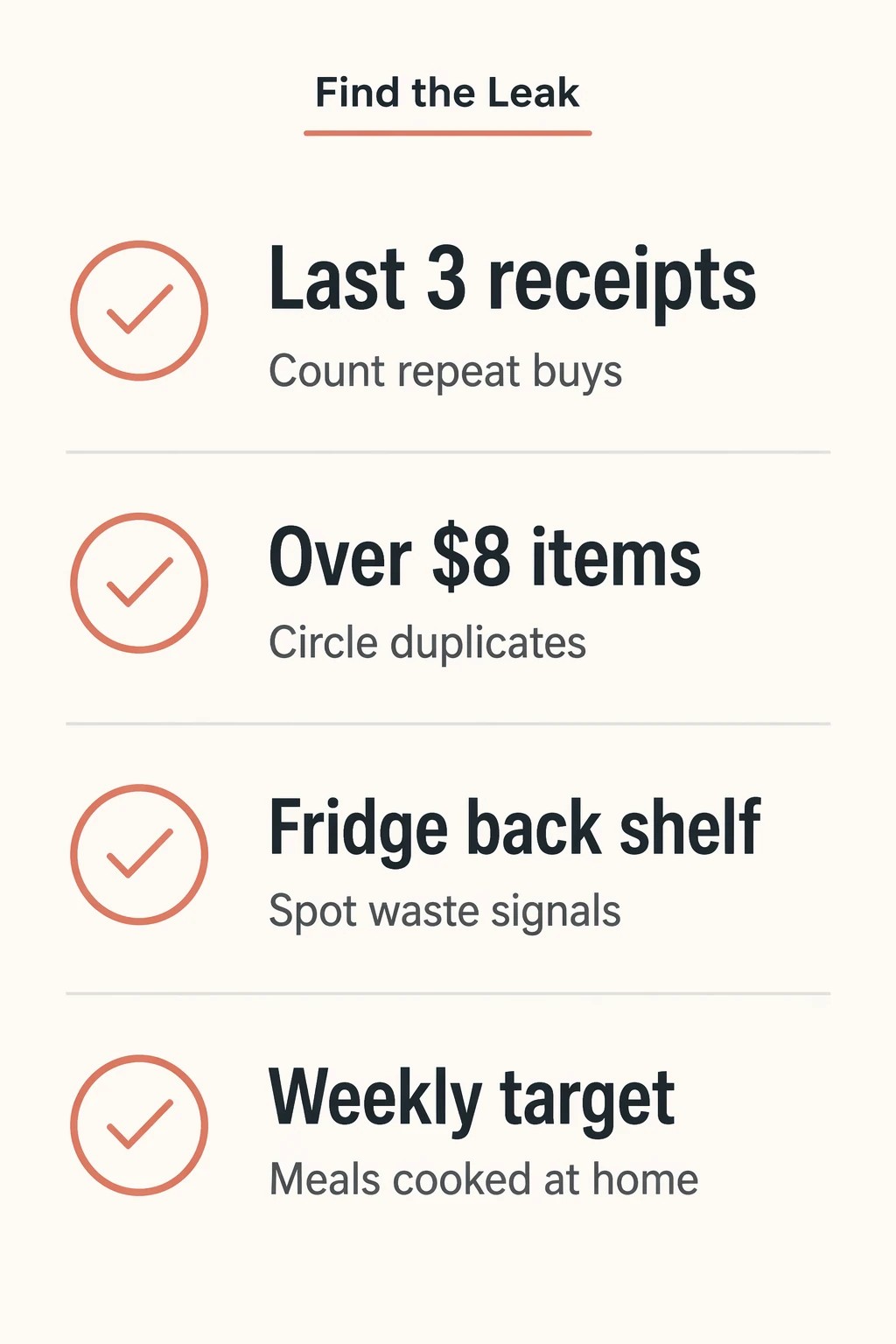
Pull your last three grocery receipts and look for repeats and patterns. How often do you buy the same item twice within a short window? Circle any duplicate purchases and note whether they were forgotten, spoiled, or simply used faster than expected. Next, mark any high-ticket items that reappear — cheeses, specialty oils, or prepared foods — and ask if each repeat was avoidable. Use this mini-audit to set one weekly target: cook one more home meal than last week or use one forgotten item before buying its replacement. This straightforward check turns vague money worries into specific habits you can fix.
4. Keep a Short, Trusted Shopping List
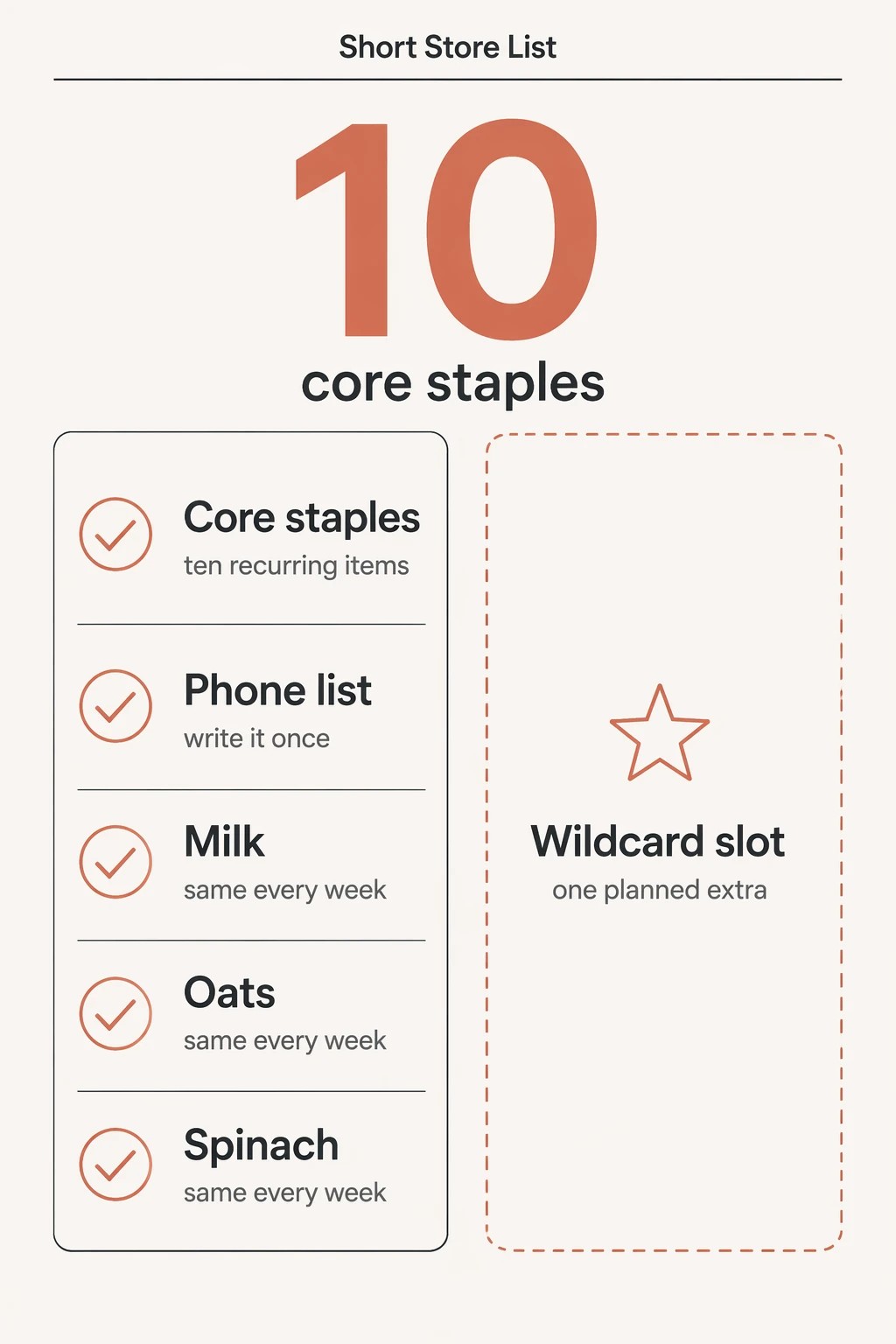
Create a fixed ten-item core list of things your household actually finishes every week. These are the staples you’ll buy without debate — milk, oats, eggs, a bag of spinach, rice, canned tomatoes, a versatile protein, and similar items. Store the list on your phone and pull it up before shopping so you buy by default, not by impulse. Allow one wildcard slot for something seasonal or fun so the list doesn’t feel restrictive. Finally, avoid shopping hungry: eat a small snack before you walk in, and you’ll reduce impulse buys that drive up the total without adding value to meals.
5. Build the Week Around Three Stretchable Anchors
Choose three budget-friendly anchors that can produce multiple meals across the week: a whole chicken, a bag of dried lentils, and a dozen eggs are classic examples. Roast the chicken for one dinner, shred leftovers for tacos, and simmer the carcass into soup for another night. Cook a big pot of lentils to become a salad, a curry, and a topping for toast. Eggs can be breakfast, a quick pan dinner, or stir-in protein for fried rice. Writing your list by store section — produce, dairy, dry goods, meat — helps prevent doubling back and reveals where anchors can cross meals and reduce overall spending.
6. Choose Ingredients That Do More Work
Build your grocery cart around multi-use staples: rice, oats, potatoes, dried beans, and plain canned tomatoes. Favor ingredients that move across breakfasts, lunches, and dinners — a head of cabbage can be slaw, braised greens, or an addition to soup. Opt for low-prep proteins like eggs and beans over single-use, expensive cuts. Keep snacks honest: popcorn kernels, a jar of peanut butter, a block of cheese can be portioned to control cost and reduce the temptation to buy packaged snack bars. Prioritize items that combine value, shelf life, and flexibility so each purchase earns more than one plate.
7. Shop With a Unit-Price Mindset
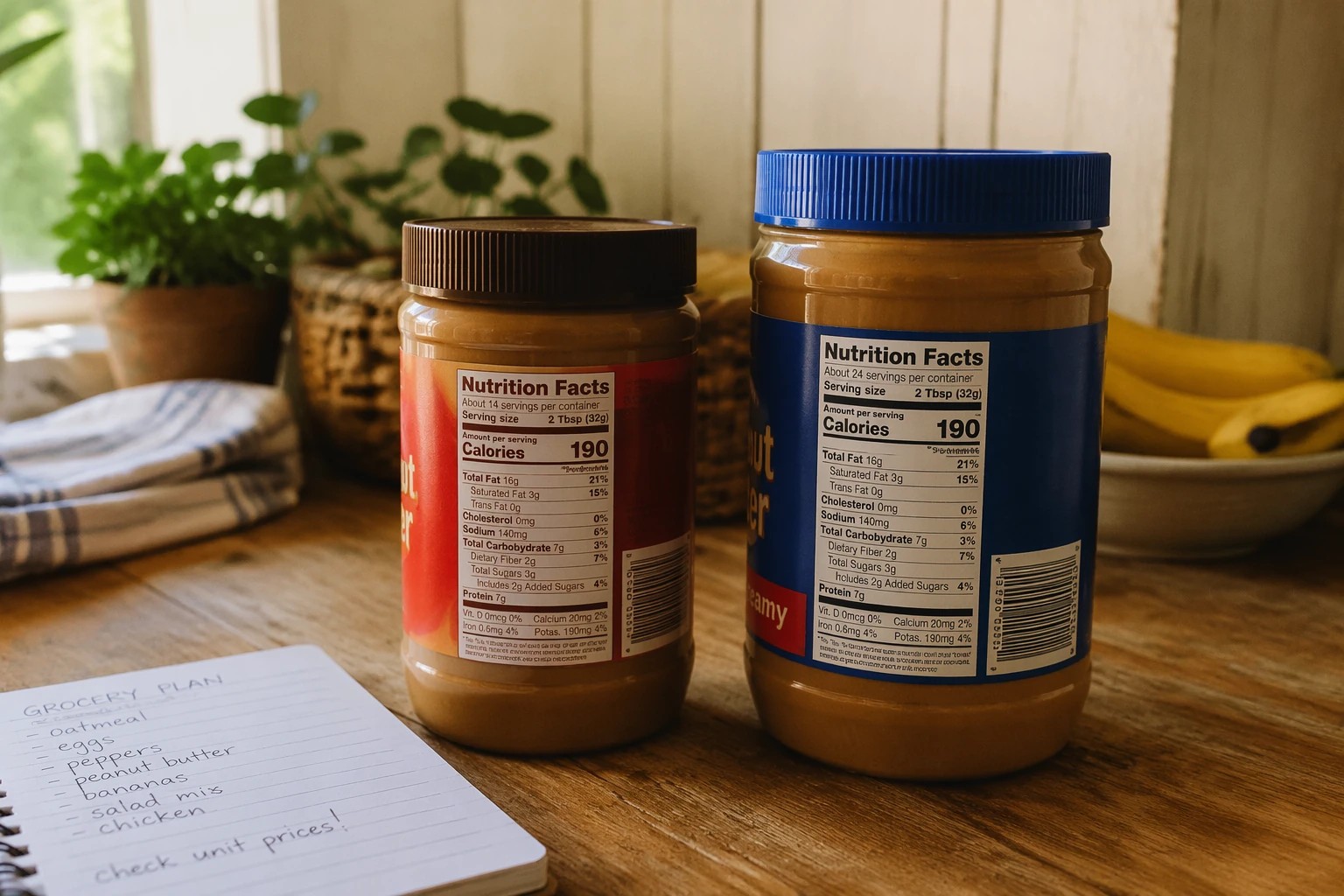
Make the small price-per-ounce or per-unit figure on the shelf tag your primary decision number. Ignore packaging tricks — tall boxes and fancy jars — and compare the unit price across sizes and brands. Many store-brand options sit beside national brands with a better per-ounce value; read the tag, not the logo. Set a personal ceiling for staples you buy often — a maximum you won’t pay per pound or ounce — and use it to decide whether to buy now, switch brands, or wait. This method turns price shopping into a quick habit rather than a time-consuming chore.
8. Use Frozen and Canned Smartly, Not Automatically
Swap fresh for frozen or canned when seasonality or waste makes fresh the expensive option. Frozen berries, peas, and spinach are low-cost, ready-to-use saviors for breakfasts, smoothies, and quick dinners. Choose plain canned goods rather than sauce-packed versions so you control salt and added ingredients while saving a little money. Compare price per edible ounce: a frozen bag often contains more usable food than a pint of fresh out of season. Keep a few frozen staples on hand so you can delay a shopping trip and avoid last-minute convenience purchases.
9. Batch the Building Blocks, Not a Whole Casserole
Batch cooking should give flexibility, not a full-plate repetition you’ll tire of. Make versatile bases — a pot of plain beans, roasted vegetables, cooked grains — that become different dishes through the week with small finishing steps. Double recipes when you’re already cooking and freeze single-serving portions for busy nights. Use clear masking tape and a marker to date and label freezer meals so you’ll actually eat them. This approach saves time and money without turning Sunday into a marathon; you’ll have ready components to assemble varied dinners in minutes.
10. Stock a Pantry You Will Actually Use
Build a lean, functional pantry: keep a short backup list of five or six essentials and restock them when you open the last jar or bag, not when you finish it. Choose sauces and grains that appear in at least three of your regular meals so each item justifies shelf space. Avoid duplicate “maybe later” purchases by scanning for close substitutes before adding a new jar; for example, finish the red curry paste before opening a green one. A pantry that answers dinner demands reduces last-minute runs and impulse buys, and it keeps your cupboard from becoming paid storage.
11. Try Store Brands One Swap at a Time
Start by replacing commodity staples with store-brand alternatives: flour, sugar, canned beans, frozen vegetables, and pasta are good first tests. Swap one item per week to avoid disappointing the household all at once, and keep name brands for the few items that truly matter to you. Often the store-brand version is made in the same facility as the national brand; the difference is the label. If a swap doesn’t work for your family, you’ve only risked a small amount and learned a useful preference. Over time, these quiet swaps compound into a noticeably lower bill.
12. Buy Bulk Only When It Actually Saves Space and Money
Check the unit price before you assume bulk is cheaper. Large packages can cost more per pound when convenience factors or packaging changes are hidden. Only buy bulk items that you can store properly and will realistically finish within their shelf life. In small kitchens, storage limits turn a great unit-price deal into a waste problem; a ten-pound grain bag is only a win if it has a dry, sealed spot. Skip bulk on items that go rancid or stale quickly, like some nuts or specialty oils, unless you have a plan to use them promptly.
13. Use Coupons and App Offers Without Letting Them Lead
Treat discounts as tools for planned purchases, not permission to buy new things. Clip coupons only for items already on your list. Stack loyalty-app offers with paper coupons when both apply for extra savings on staples you already buy. Before checkout, glance at your store app’s offers and clip any that match what’s in your cart — this can trim the total without changing your planned menu. Avoid clearance or “deal” items that don’t fit your rotation; a cheap, unfamiliar product is effectively paid storage if it never gets eaten.
14. Learn Where the Cheapest Items Live in One Store
Memorize the patterns and rhythms of your primary grocery store. Cheap items often live on the lower shelves or in the international aisle rather than at eye level. Note when bakery, meat, or deli markdowns appear and time visits around restocks or clearance windows. Ask a staffer one simple question — when does this department get new stock? — then show up at the approximate clearance time to scoop marked-down items you’ll use or freeze. Sticking to one store reduces travel and helps you learn where value hides so you can buy smartly without hopping between shops.
15. Treat Meat Like a Flexible Ingredient
Let sale prices guide protein choices and portion large packs at home. Buy proteins on discount and freeze them in meal-sized portions, so a family pack becomes multiple dinners. Use meat as a flavoring rather than the whole plate: a little ground pork or a single sausage can season a pot of lentils or a tray of roasted vegetables and make the meal feel substantial. This stretches expensive items and lowers your per-meal cost. Be willing to substitute beans, eggs, or canned fish in a meal plan to reduce reliance on costly cuts without losing satisfaction.
16. Run a Fast Cart Audit Before You Pay
Before you step into the checkout, spend thirty seconds scanning the cart. Remove one nonessential item that crept in — the impulse jar of olives or snack that has no job this week. Check for obvious duplicates and swap one name-brand staple for a trusted store version if you’re over your planned spend. Glance at the running total and compare it to the number you intended to spend; if you’re over, decide which small change brings you back to target. This simple routine prevents small drifts from becoming regular budget holes without requiring complex tracking.
17. Create One Simple Checkout Rule and Stick to It
Adopt a repeatable checkout rule you perform every trip: remove one item without a clear role, recheck for duplicates, and compare the running total to your personal limit. Make the rule so quick you won’t skip it — thirty seconds at the cart is fine. Over time this ritual trains your eye to spot the small, recurring leaks that add up: the extra jar, the second bag of greens, the single splurge that pushes you past your target. The goal is not deprivation but to make the overage a conscious choice rather than unnoticed drift.
18. Run a 30-Day Grocery Reset to Recalibrate Habits
Try a focused month-long reset to reveal where spend and waste live. Week one: save every receipt to find duplicates and impulse patterns. Week two: swap the five most expensive staples for store-brand equivalents and cook with them blind to see what changes. Weeks three and four: shop a list built around anchors and the items you actually finished, lean on frozen and pantry backups, and avoid aspirational buys. At the end of the month compare your totals to a normal month to set a new baseline. This concentrated reset helps you adopt repeatable changes rather than temporary fixes.
19. Fix Two Simple Defaults: Freezer Habits and Your Loyalty Card
Two high-leverage moves are easy to adopt and pay off quickly. First, make a habit of checking the freezer before you shop and freezing perishables immediately; this prevents needless replacement buys. Second, use your store loyalty account consistently so you capture price reductions and app offers on items you already buy. Both moves require little time but reduce waste and ensure you’re not leaving savings on the table. Once those routines stick, add one protein swap and one breakfast swap for a month to cement long-term savings without turning grocery shopping into a second job.
Small systems beat heroic effort. Pick one idea above to test this week — make it visible, repeatable, and simple — and let the savings compound through habit rather than hustle.