Start Small, Sell Smart: A Practical Guide to DIY Side Hustles You Can Test at Home

You don’t need a workshop, a big budget, or a perfect product to start a side hustle from home. The trick is choosing something you can finish with what’s already around you, test in a few evenings, and price so a sale actually helps your household. This article walks through a compact, do‑able path from idea to first sale.
1. What Makes a Home Project a Real Side Hustle
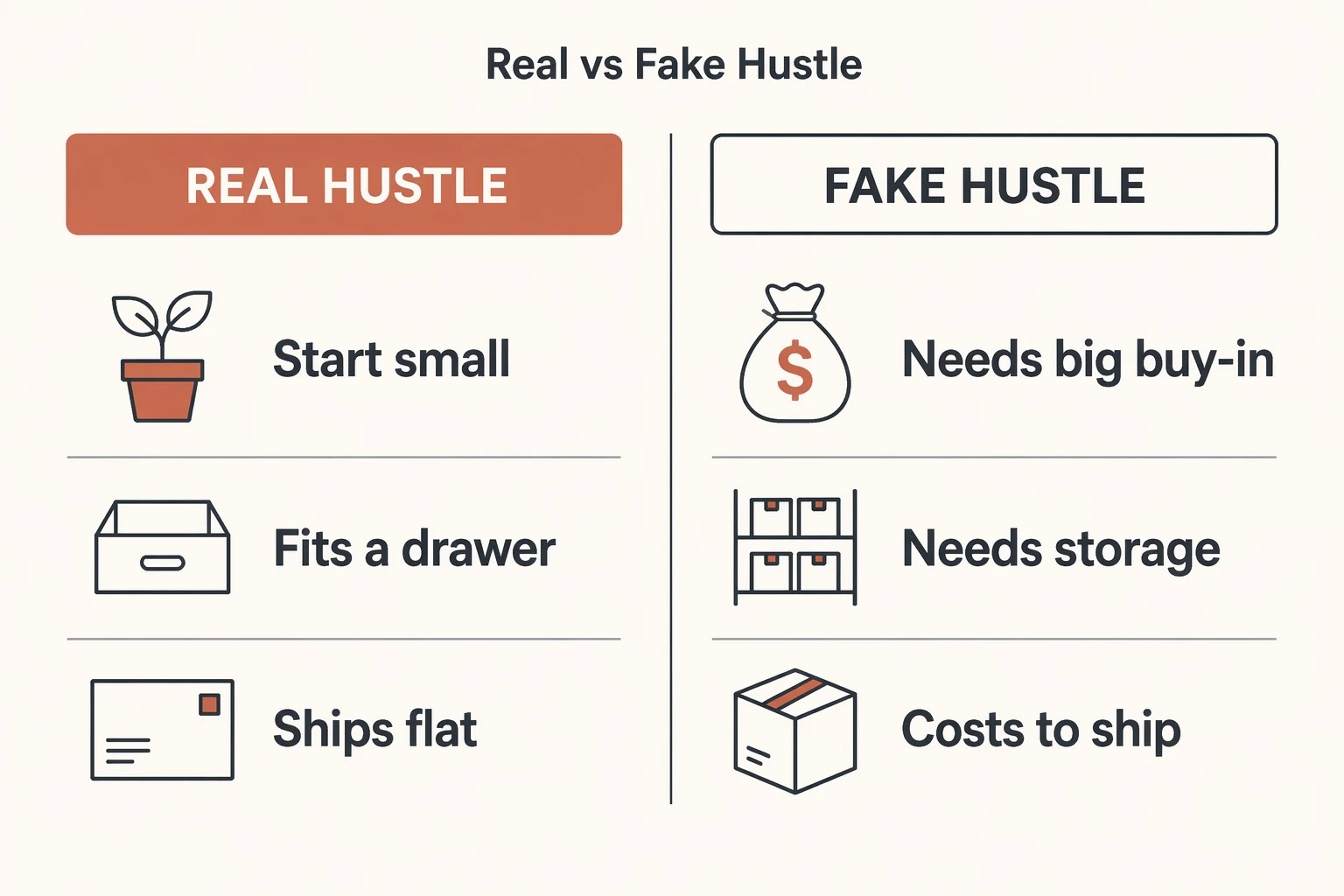
Not every craft becomes a business. A practical home hustle is one you can launch using items you already own or can buy without creating a storage problem, and one that can be tested quickly. The key signs to look for: you can produce a sellable unit in an ordinary evening, the product is simple to store, and it can be delivered either physically without bulky shipping or digitally. Examples: a printable meal planner you can design on your laptop and sell as a download; a small batch of hand-poured candles using clean jars you already have; or a one‑off food item sold to neighbors without needing commercial gear.
2. Build From What’s Already in Your Home
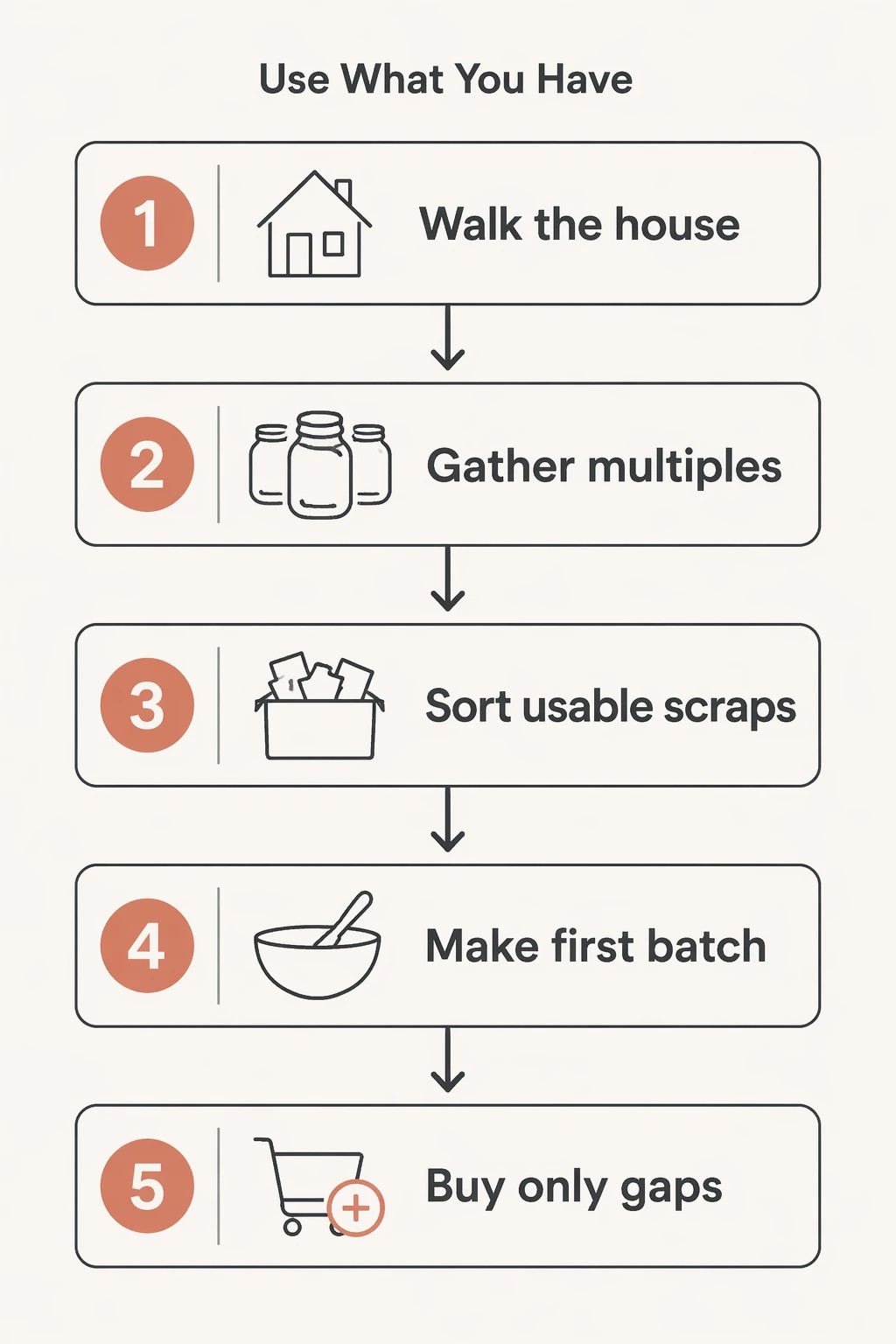
Before shopping, take a quick inventory: jars, boxes, fabric scraps, bubble mailers, and half-used supplies can be your raw materials. Turning what you already own into your first products keeps risk low and shows whether there’s interest before you spend. For instance, clean pasta jars can be refilled as candles; fabric remnants can be sewn into sachets or coasters; a cracked cutting board becomes several coasters with a saw and sandpaper. If you need a new tool, limit yourself to one reasonable purchase you can get in 48 hours. When supplies are scarce, a thrifty trip to a secondhand store for a few dollars beats an oversized shopping cart.
3. Design a Mini Experiment, Not a Factory
Treat the first week like a short experiment. Start by writing one clear sentence that names the buyer and the benefit—this keeps the offer focused. Make a small batch of three to five items to learn where mistakes happen and how long each unit really takes. Use a single listing or a local post to test demand instead of building a full shop: a Facebook Marketplace post or a single Etsy listing is enough. If something sells, you have proof; if it doesn’t, adjust the photo, description, or price and try again. That low-cost loop gives fast feedback with minimal inventory and stress.
4. Simple Products Customers Actually Reach For

Focus on finished items that slot into someone’s daily life without extra effort. Refill options are attractive: clean candle vessels can be refreshed instead of replaced. Small home organizers that solve a specific fit problem—think a narrow drawer divider or a spice jar rack sized for a popular shelf—sell because people search by dimensions. Digital printables like meal planners or trackers are low-friction sellers; design them to print well in black and white on standard paper. Also consider ultra-practical fixes, such as a pebble-shaped earbud rest or a three-hook key rail. Offer local pickup at first so buyers can see and hold the product.
5. Price to Protect Your Time and Margin
Good pricing starts by adding up every ingredient and minute: list the materials per unit, include wasted bits you discard, and time how long a unit takes from setup to cleanup. Convert your time into an hourly rate that feels fair, then add that labor cost to the materials. Add a modest markup so your price survives platform fees and postage. Don’t forget shipping boxes, tape, and the reality that postage doesn’t disappear. A simple operational fix is a small minimum order or an order fee so single-item shipments don’t erase the profit. Run the math once and keep the numbers handy for each product.
6. Keep the Things That Fit Your Week; Let Go of the Rest
A sustainable side hustle conforms to the time you actually have. If setup, production, and cleanup require a block of hours you don’t have during the week, it will turn into an occasional project, not a repeatable income stream. Watch for signs the work is invading your home life: excessive dust, lingering odors, or storage spilling into living spaces are red flags. Scale only when making larger batches requires no extra, complicated setup—when producing ten items feels almost the same as producing one. If an idea drains energy or space, shelve it and keep the winners.
7. Practical Answers to the Questions New Makers Ask
You don’t always need upfront cash—start with what’s on hand and a phone for photos. If you have several ideas, choose the one you can finish in one evening and explain in a single sentence. To test demand without risk, post one clear listing on a marketplace people use or offer local pickup. Compliments from friends aren’t the same as a sale; real demand shows up in a transaction. Keep your operation compact: assign one shelf or tote for inventory and pack away tools each night so your hustle doesn’t take over your home.
8. A Weeknight Plan to Reach Your First Sale
Pick one product you can finish in an evening using household items. Night one: raid the house for containers and materials, cut a cardboard prototype if needed, and decide the final size. Night two: make three small units, photograph them by a window on a plain background, and write a single-sentence buyer-focused listing. Post the item on a local marketplace with a pickup option and a fair price that covers materials and your time. If an item sells, repeat the process and improve photos or descriptions. If it doesn’t, tweak one thing and run the next small test.
Start small, measure honestly, and treat the first sale as the real signal. With a clear offer, a tiny batch, and a simple listing, you can learn whether a home project is worth scaling—without overfilling your closet or your calendar.