Is Grocery Delivery a Smart Side Hustle? A Practical Guide to Working with Instacart
Thinking about earning extra income by shopping and delivering groceries? This friendly guide breaks down what working with Instacart really looks like, how pay and costs flow, ways to improve your take-home, and sensible alternatives so you can decide if this gig fits your life.
1. The Roles: What You’ll Actually Do on Shift
Instacart offers a few different ways to plug into grocery delivery. As a full-service shopper you accept orders through the app, shop at multiple stores, and deliver to customers using your own vehicle. In-store shoppers stay inside one retailer and pick items for orders without delivering, a quieter option if you’d rather avoid driving. There are also delivery-only batches where someone else has done the shopping and you simply bring the groceries to the doorstep. Practical example: if you enjoy being behind the wheel and meeting people, full-service shifts that start with a cluster of grocery orders in one neighborhood can be a good fit; if you want routine hours, look at in-store schedules.
2. Understanding Pay and What It Costs to Work
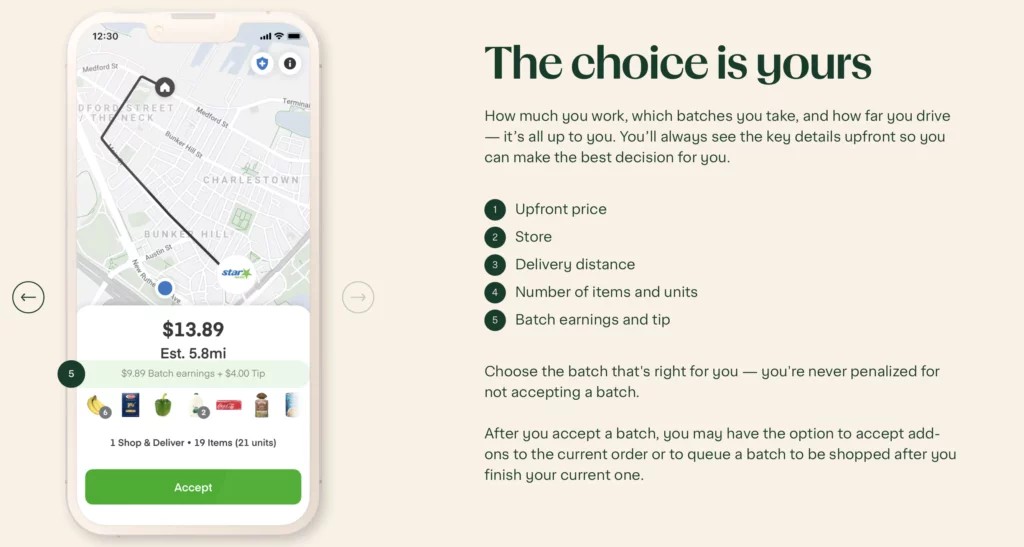
Earnings from grocery delivery can swing widely because pay depends on order details, distance between stops, customer tips, and local demand. At the same time, vehicle costs—fuel, routine maintenance, and insurance—come out of your pocket, and you’ll need to plan for taxes as an independent contractor. A practical approach is to track every trip for a couple of weeks: log miles, note time spent per order, and keep receipts for car-related expenses. Use a simple spreadsheet or a mileage-tracking app to calculate your net rate per hour after expenses. That exercise reveals whether your local market and schedule make the gig worthwhile for you.
3. Tactical Habits That Improve Your Bottom Line
Small changes in how and when you work can meaningfully boost take-home pay. Pick high-demand windows—typically evenings and weekends—and favor dense neighborhoods where short drives link multiple orders. Use navigation tools to avoid traffic and a mileage tracker to document write-offs. Be selective about batches: prioritize orders with manageable item counts and nearby drop-offs rather than long single deliveries that eat fuel. Communicate clearly with customers about substitutions and arrival times to improve ratings and tips. Example: combine two short deliveries in the same apartment complex before accepting a long-distance run, and you’ll often reduce downtime and increase earnings per hour.
4. What Shoppers Say: The Tradeoffs of Flexibility
Feedback from people who do this work highlights a familiar tradeoff: freedom versus unpredictability. Many value setting their own hours, picking shifts that fit family or other jobs, and the variety of work. Others point out the stress of competitive platforms, inconsistent order flow, and the physical demands of lifting bags and navigating busy parking lots. A common real-world tactic is multi-apping—running two or more platforms at once to reduce idle time—so you can cherry-pick the best offers. If you crave strict stability, this gig may feel rocky; if you prize control over your schedule, its flexibility can be appealing.
5. If Instacart Isn’t Right: Other Ways to Earn with Errands and Driving

If grocery shopping and delivery doesn’t fit your goals, related platforms let you keep the flexibility while shifting the work type. Some services focus on in-store picking or marketplace delivery-only runs, while others center on restaurant orders or ride services. There are also non-driving options like task marketplaces where you help with furniture assembly, home chores, or creative freelance work from home. Practical example: if you like driving but want more stable blocks, explore ride-hailing or dedicated grocery delivery drivers for specific chains; if you prefer variety and hands-on tasks, try a task app that connects you with local odd jobs.
6. Deciding Whether to Try It—and How to Test the Waters
Before committing, run a short trial period with clear goals: track hours worked, miles driven, gross receipts, tips, and the specific costs you incur. Compare that net figure to what you could earn in other part-time options or the value of your time. Consider experimenting with different shifts, neighborhoods, and whether to multi-app. Keep records for taxes and look into simple bookkeeping tools to make quarterly payments manageable. A two- or three-week pilot often gives enough data to know if the gig meets your financial needs and lifestyle preferences without a long-term commitment.
Grocery delivery can be a flexible way to earn extra money, but it isn’t the same experience for everyone. Try a focused trial, track your real costs versus earnings, and weigh the lifestyle tradeoffs before deciding if it belongs in your side-hustle toolkit.