31 Days of Intermittent Fasting Meals
Intermittent fasting (IF) has grown in popularity as a strategy for weight loss and overall health. By cycling between periods of eating and fasting, it offers a flexible approach to managing meals without strict calorie counting. In this text, we will guide you through a comprehensive plan filled with meals for 31 days, designed to cater to various dietary preferences while supporting your fasting journey. Whether you’re new to intermittent fasting or looking to refine your meal choices, we’ve got you covered.
Understanding Intermittent Fasting
Intermittent fasting is not a diet in the traditional sense: it’s an eating pattern that cycles between periods of fasting and eating. We may choose methods like the 16/8 technique, where we fast for 16 hours and eat during an 8-hour window, or other variations such as the 5:2 diet.
Understanding how our body reacts during fasting hours is crucial. During fasting, our insulin levels drop, allowing our body to use stored fat for energy. This not only aids in weight loss but also improves metabolic health. We must recognize that during our eating window, what we consume greatly impacts our results.
Benefits of Intermittent Fasting
Intermittent fasting offers a myriad of health benefits that go beyond weight loss. Here are some significant advantages:
- Improved Metabolic Health: By lowering insulin levels and increasing norepinephrine, our body can burn fat more efficiently.
- Enhanced Brain Function: Some studies suggest that fasting can increase the growth of new neurons and may protect the brain from degenerative diseases.
- Increased Longevity: Animal studies show that intermittent fasting may extend lifespan by reducing age-related diseases.
- Simplicity: With fewer meals to plan for, we can simplify our eating routine, freeing up time and mental energy.
As we embark on our fasting journey, it’s essential to keep these benefits in mind to motivate us through the challenges.
How to Prepare for 31 Days of Intermittent Fasting
Preparation is key for a successful month of intermittent fasting. Here are some steps we should follow:
- Set Clear Goals: Whether it’s weight loss, improved health markers, or increased energy, defining our goals will help us stay committed.
- Meal Prepping: Taking time to prepare meals in advance ensures we have healthy options available, reducing the temptation to break our fast with unhealthy choices.
- Educate Ourselves: Understanding what to eat during our eating windows is crucial. Focusing on whole foods, healthy fats, and high-quality proteins can enhance our experience.
With proper preparation, we are better equipped to handle the month ahead.
Weekly Meal Plans for 31 Days
To simplify our approach to intermittent fasting, we’ve broken down meals into weekly plans:
Week 1: Beginner-Friendly Meals
For our first week, we’ll focus on simple recipes that are easy to prepare:
- Breakfast: Scrambled eggs with spinach and feta.
- Lunch: Grilled chicken salad with a light vinaigrette.
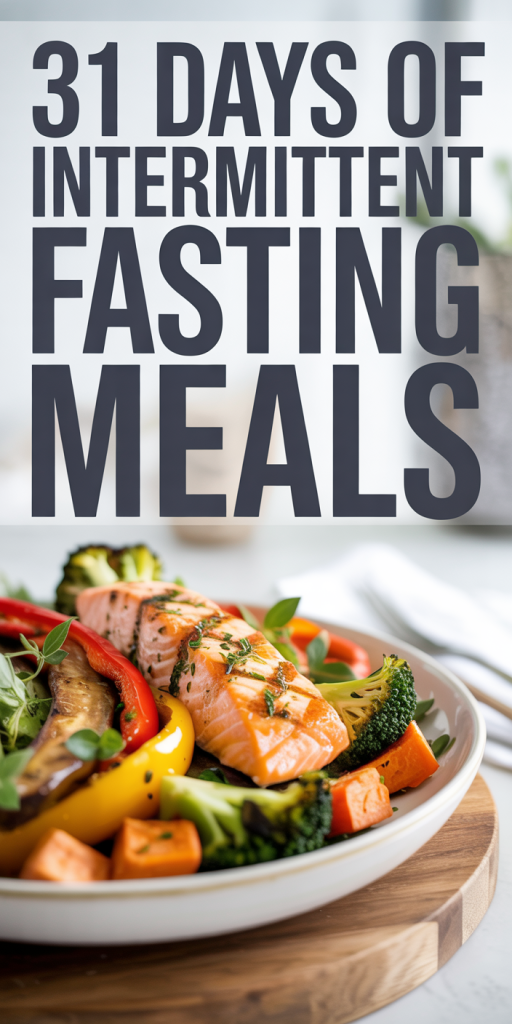
- Dinner: Baked salmon with steamed broccoli.
Week 2: Balanced Nutrition Focus
In our second week, we emphasize balanced meals:
- Breakfast: Oatmeal with berries and almond butter.
- Lunch: Quinoa bowl with black beans, corn, and avocado.
- Dinner: Stir-fried tofu with mixed vegetables.
Week 3: Low-Carb Options
During week three, we’ll shift to low-carb meals:
- Breakfast: Greek yogurt with chia seeds and nuts.
- Lunch: Zucchini noodles with marinara sauce and chicken.
- Dinner: Beef stir-fry with bell peppers.
Week 4: Plant-Based Meals
In our final week, we’ll embrace plant-based options:
- Breakfast: Smoothie with spinach, banana, and almond milk.
- Lunch: Lentil soup with a side of mixed greens.
- Dinner: Chickpea curry with cauliflower rice.
Tips for Sticking to the Plan
Staying committed to our intermittent fasting journey can be challenging, but with these strategies, we can enhance our resilience:
Hydration and Its Importance
Staying hydrated during fasting is crucial. Water is our best friend: it not only keeps us feeling full but also aids in digestion and overall health. We should aim for at least 2-3 liters of water daily, including herbal teas and black coffee.
Adjusting Fasting Windows
If we find the initial fasting window too challenging, it’s okay to adjust. We can start with shorter fasting periods and gradually increase them as our body adapts. Listening to our bodies will lead to better outcomes.
Troubleshooting Common Challenges
As with any lifestyle change, we may face challenges during our month of intermittent fasting:
- Hunger Pangs: It’s normal to feel hungry, especially at first. We can combat this by drinking water or herbal tea.
- Fatigue: If we feel fatigued, it might indicate that we’re not consuming enough nutrients. Ensuring our meals are balanced can help alleviate this.
- Social Situations: Social gatherings can pose challenges to our fasting schedule. Communicating our eating windows with friends and family can help us navigate these events without straying from our plan.
Conclusion
Embarking on 31 days of intermittent fasting can be a transformative experience. By following our structured meal plans and tips, we can successfully navigate this journey, gaining not only weight loss but improved health and mental clarity. Remember, the key is flexibility and listening to our bodies, every day is a new opportunity to refine our approach. Here’s to a healthier, more vibrant version of us as we take on the next month.