14 Days Of Clean Eating Meal Prep
Embarking on a clean eating journey can feel overwhelming at first, but with our 14-day meal prep guide, we’re here to make it as seamless as possible. Clean eating emphasizes whole, unprocessed foods that fuel our bodies, making it easier to maintain a balanced diet. In this text, we’ll walk you through the essentials of clean eating, its benefits, key meal prep strategies, and a delicious two-week menu that will keep us satisfied and nourished. Get ready to take charge of your meals, boost our health, and enjoy the delightful flavors of clean cuisine.
Understanding Clean Eating
Clean eating often brings to mind images of meticulously prepared salads and smoothie bowls, but it’s fundamentally about choosing whole foods that are minimally processed. This means prioritizing fruits, vegetables, whole grains, lean proteins, and healthy fats while avoiding refined sugars, artificial ingredients, and overly processed items.
At its core, clean eating is about nourishing our bodies and avoiding food that lacks nutritional value. This approach allows us to listen to our bodies and understand the impact different foods have on our health and wellbeing.
Benefits Of Clean Eating
Adopting a clean eating lifestyle offers numerous benefits that can greatly enhance our well-being. Some of the key advantages include:
- Increased Energy Levels: By consuming nutrient-dense foods, we fuel our bodies with the energy needed to power through our busy days.
- Improved Digestion: Whole foods are often rich in fiber, which aids digestion and helps maintain a healthy gut.
- Weight Management: Clean eating naturally encourages portion control and helps us feel satisfied, reducing cravings for unhealthy snacks.
- Better Mood and Mental Clarity: The right foods can have a direct effect on our mental health, leading to improved focus and mood stability.
By focusing on clean eating, we’re investing not just in our physical health but our mental and emotional well-being as well.
Meal Prep Essentials
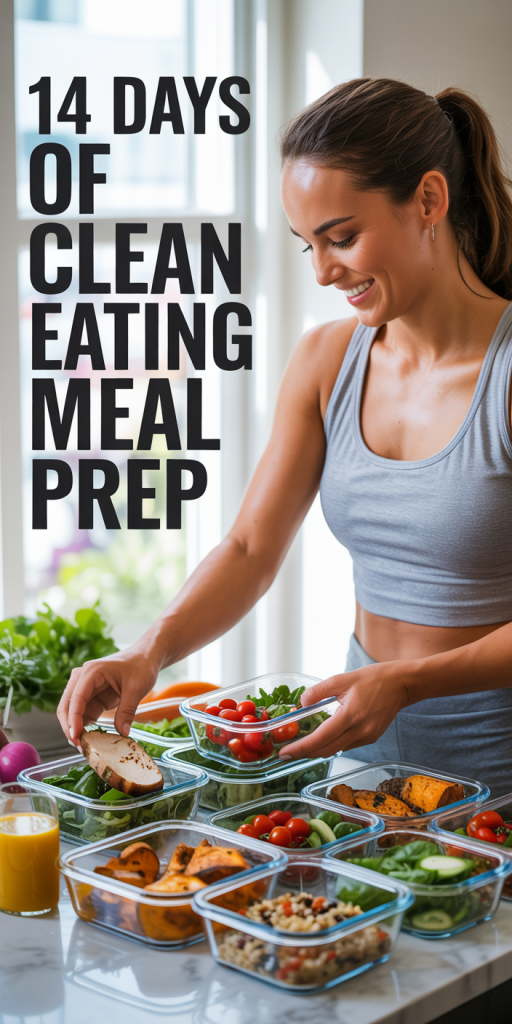
Before diving into our two-week meal prep plan, let’s outline some essentials that will make our cooking experience smoother and more enjoyable:
- Containers: Invest in high-quality, BPA-free containers for meal storage. Having a variety of sizes is useful for different meals and snacks.
- Labeling Supplies: Labels or markers can help us keep track of what meals are in each container and their preparation dates, ensuring nothing goes to waste.
- Cooking Staples: Stock up on essential cooking staples such as olive oil, herbs, spices, and pantry staples like quinoa, rice, and lentils.
- Fresh Produce: Prioritize buying seasonal and local produce for the best flavor and nutrition.
- Preparation Tools: Good knives, cutting boards, and a variety of cooking methods (like baking, grilling, or steaming) will enhance our cooking experience.
With these essentials in place, we’re ready to create delicious and nutritious meals.
Planning Your 14-Day Clean Eating Menu
Planning our meals can streamline our week and save us time in the kitchen. Below, we have divided the menu into two weeks, featuring meals that are simple to prepare while being delectable and nutritious.
Week 1 Meal Prep Guide
This first week focuses on incorporating a mix of proteins, grains, and plenty of veggies for nutrient diversity.
Breakfast Ideas
- Overnight Oats with Berries: Combine rolled oats, almond milk, chia seeds, and your favorite berries. Leave in the fridge overnight for a quick, nutritious breakfast.
- Veggie Omelettes: Whisk eggs with diced vegetables like bell peppers and spinach, cook, and store in the fridge for an easy reheat during busy mornings.
Lunch Ideas
- Quinoa Salad: Toss cooked quinoa with cucumbers, cherry tomatoes, chickpeas, and a lemon-olive oil dressing.
- Grilled Chicken Wraps: Use whole-grain wraps filled with grilled chicken, mixed greens, and hummus for a satisfying meal.
Dinner Ideas
- Baked Salmon and Asparagus: Simple and filling, bake salmon fillets alongside asparagus. Season with lemon and herbs.
- Vegetable Stir-Fry: Stir-fry a mix of broccoli, bell peppers, and carrots in a splash of soy sauce, served over brown rice.
Snacks And Smoothies
- Nut Butter and Apple Slices: A perfect on-the-go snack that’s both satisfying and rich in nutrients.
- Spinach and Banana Smoothie: Blend spinach, banana, almond milk, and a scoop of protein powder for a nutritious smoothie.
Week 2 Meal Prep Guide
The second week will introduce some variety with different flavors and textures, helping us keep our meals fresh and enjoyable.
Breakfast Ideas
- Greek Yogurt Parfaits: Layer Greek yogurt with granola and mixed fruits for a tasty, filling breakfast.
- Savory Oatmeal: Cook oats with vegetable broth, topped with sautéed mushrooms and poached eggs.
Lunch Ideas
- Lentil Soup: A hearty soup filled with lentils and diced veggies, perfect for lunch.
- Roasted Veggie Bowl: Prepare a mix of roasted vegetables with your choice of grain, drizzled with tahini sauce.
Dinner Ideas
- Stuffed Bell Peppers: Fill bell peppers with quinoa, black beans, cilantro, and spices, then bake until tender.
- Zucchini Noodles with Pesto: Swap traditional pasta with zucchini noodles for a lighter option topped with fresh pesto.
Snacks And Smoothies
- Carrot and Celery Sticks with Hummus: Crunchy veggies paired with hummus make for a delightful snack.
- Berry Smoothie Bowl: A frozen berry blend topped with granola and coconut flakes for a refreshing finish.
Tips For Successful Meal Prep
To maximize our clean eating experience, here are some helpful tips for successful meal prep:
- Plan Ahead: Dedicate some time each week to plan our meals and shop for ingredients. This will save us stress and time during the week.
- Stay Organized: Keep our kitchen organized and use storage containers efficiently.
- Cook in Batches: Preparing items in batches, such as grains or proteins, can simplify our meals throughout the week.
- Experiment with Recipes: Don’t hesitate to try new recipes and ingredients to keep our meals interesting.
Overcoming Common Challenges
While clean eating can be rewarding, it can also come with obstacles. Here’s how we can navigate some common challenges:
- Time Constraints: If we’re short on time, consider finding a few quick recipes or using a slow cooker to save effort.
- Meal Variety: To avoid meal fatigue, rotate ingredients and try new flavor combinations every few weeks.
- Dining Out: When eating out, look for grilled options, salads, or dishes that use whole, unprocessed foods.
Conclusion
Embarking on a 14-day clean eating meal prep journey can profoundly impact our health and well-being. By understanding the principles of clean eating, preparing our meals in advance, and experimenting with diverse flavors, we create a sustainable lifestyle that nourishes our bodies and minds. Let this plan guide us as we take your first strides into a healthier, cleaner approach to eating, enjoy the adventure.