Why Your Small Living Room Looks Smaller Because Of This One Bad Habit (And How To Fix It Fast)
We’ve all stood in our small living room and wondered why it still feels cramped even though decluttering, painting light colors, or buying slim furniture. The surprising truth is that one common habit, pushing furniture against the walls, does more harm than good. It’s a layout reflex we inherit from magazine photos or the idea that against-the-wall equals more space. But that reflex flattens depth, interrupts natural traffic, and ruins conversational flow, making a modest room feel noticeably smaller.
In this text we’ll show why this single mistake has an outsized effect, how to spot it quickly in your own home, and give five practical, fast fixes you can carry out today. We’ll keep advice realistic, no expensive renovations or custom builds, just smart rearranging, scale choices, and styling tips that open the room immediately. Read on and we’ll help you reclaim every inch of perceived space so your small living room finally feels like the comfortable, airy room it should be.
The One Bad Habit That Shrinks A Living Room
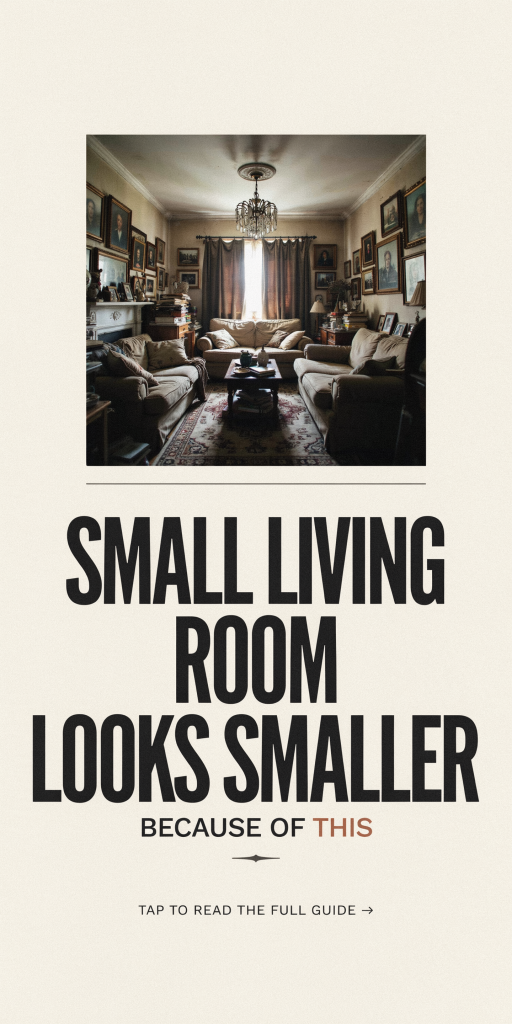
The habit is simple and pervasive: we push all seating and major furniture flush against the walls. It feels intuitive, more wall space = more floor space, yet the opposite usually happens. When couches, chairs, and consoles hug the perimeter, the room loses its center, structure, and pacing. What remains is an awkward, flattened rectangle where movement, conversation, and visual interest sputter.
Why does this matter so much? Rooms read in layers, foreground, middle ground, background. When furniture is anchored to the edges, that middle layer disappears. We end up with a cold, museum-like void in the middle that our eyes and bodies interpret as wasted or constrained space. Pushing to the edges also fragments how we use the room: people end up positioned as lone figures against walls rather than part of a cohesive group.
We should think of furniture placement as choreography, how people enter, sit, pass by, and interact. Good choreography invites movement and connection. The “push-to-wall” habit kills that choreography: it makes a living room functionally smaller even if the square footage hasn’t changed. Fortunately, breaking this single habit produces outsized improvements: better flow, more intimacy, and a room that finally feels larger.
Why Pushing Furniture Against The Walls Makes Rooms Feel Smaller
At first glance, pushing furniture to the walls seems to maximize open floor. But perception of space isn’t just about open floor area: it’s about how the eye and body move through layered planes. When everything is along the perimeter, the room reads as two-dimensional. That loss of depth compresses the visual field and reduces the psychological sense of roominess.
There are also behavioral consequences. People tend to avoid the center because it feels like dead space, so circulation becomes concentrated along narrow paths. That creates awkward traffic patterns and makes the room feel congested even when it isn’t. Finally, wall-hugging furniture makes it harder to create distinct zones, conversation, TV watching, reading, so the room functions less efficiently, which again reduces perceived size. Below we unpack two major mechanisms that illustrate why the habit is so damaging.
Shifting just a few pieces away from the walls reallocates how the mind and body use space. You don’t need to demolish anything, just rearrange with intention. The following sub-sections explain the practical effects on conversation and depth, which will clarify why our fixes focus on creating layers and flow.
It Kills Conversation Flow And Natural Traffic Patterns
When seating is aligned along the walls, people are seated too far apart or facing the room instead of each other. That discourages eye contact and makes casual conversation feel forced. In living rooms meant for socializing, proximity and orientation matter: seats should form a loose polygon or semicircle that invites interaction.
Wall-anchored layouts also create odd traffic squeezes. Entryways, door swings, and pathways to other rooms become pinch points because the center is empty and unusable. Guests and family members naturally walk along the perimeter, stepping between furniture legs or brushing against edges. Those interruptions break the flow and make the room feel smaller than its actual footprint.
Instead we want paths that flow naturally around conversation zones, not through them. When we arrange seating to face inward and leave clear, wide walkways, the room functions better and feels more open. Small changes, angling a chair, sliding the sofa six to twelve inches from the wall, or positioning a coffee table to anchor the group, can immediately restore conversation flow and erase those claustrophobic pinch points.
Quick Ways To Tell If You’re Guilty
We can diagnose the problem in minutes. Start with these quick checks to see if wall-hugging is shrinking your living room:
- The center feels like wasted space. If you hesitate to walk or place things there, that’s a red flag.
- People naturally sit on opposite walls rather than facing one another. If conversation is across a gulf instead of within a circle, the layout is working against you.
- Traffic squeezes at doors and passages. Narrow paths and bumping into furniture means the layout blocks movement.
- Furniture looks like it’s orbiting the perimeter. If your eye stops at the wall and doesn’t move inward, you’ve lost depth.
- The TV or focal point dominates because everything points at it from the edge. While that can be fine, it often forces awkward seating angles and distance.
Walk into the room with a guest in mind: would you naturally invite them to sit and chat, or would you both be turned toward the TV or walls? If the layout doesn’t foster comfortable interaction, that’s your cue to change it. The good news: once we spot the issue, the fixes are straightforward and impactful.
Five Practical Fixes That Instantly Open A Small Living Room
We’ve found five changes that consistently make small living rooms feel larger and more usable. They don’t require a renovation, mostly just courage, some measuring, and a willingness to move pieces away from the walls. Carry out these gradually: try one, live with it for a couple days, and adjust. Together, these tactics restore depth, improve flow, and create inviting zones.
- Pull seating in from the walls to create a conversation zone.
- Use rugs, layered lighting, and accessories to define depth and visual planes.
- Pick right-scaled, multipurpose furniture and keep sight lines clear.
- Consider floating storage and narrow-profile pieces rather than bulky wall units.
- Edit and anchor: less is more, choose a focal point and let pieces support it without crowding the perimeter.
Below we expand the three most actionable steps you can take immediately, each one addresses both perception and function so your small living room starts feeling bigger as you work.
Conclusion
Breaking the single habit of pushing furniture against the walls is one of the fastest, most cost-effective ways to make a small living room feel bigger. By pulling seating inward, layering rugs and lighting, choosing right-scaled furniture, and clearing visual lines, we create depth, restore natural flow, and invite conversation. These are changes you can test in an afternoon and refine over a weekend.
We encourage you to pick one fix, move the sofa six inches off the wall or place a rug that anchors the seating, and watch how the room responds. Small moves often unlock the biggest shifts in perception. Once you start arranging with intention, your living room will finally feel like the welcoming, airy space you’ve been aiming for.