20 Warm Industrial Dining Room Mashups With Vintage Leather Accents: Cozy, Timeless Ideas For 2026
Industrial dining rooms have a reputation for rawness: exposed brick, steel beams, and concrete floors. But when we add vintage leather, soft, patinated, and full of history, the result is unexpectedly cozy and deeply personal. In this guide we’ll walk through why this mashup works, how to choose palettes and materials that build warmth, and practical design moves for furniture, lighting, and accessories. Then we’ll share 20 room-by-room mashup ideas you can adapt to apartments, renovated lofts, and suburban homes in 2026. Whether you’re starting from scratch or layering onto an existing industrial shell, these ideas will help you create a dining room that feels lived-in, stylish, and welcoming.
A Warm Industrial Overview: What Makes This Mashup Work
Industrial style is defined by an honesty of materials, metal, wood, brick, concrete, and by a certain utilitarian restraint. Left alone, that restraint can read as cold. The secret to warming an industrial dining room is contrast: pairing the structural, often monochrome elements with materials that invite touch and time. Vintage leather is one of the most effective counterpoints. It brings patina, warmth, and a human scale that balances steel and stone.
We should think of the room as a conversation between two vocabularies. One vocabulary speaks in beams, rivets, and factory lighting: the other answers with supple upholstery, warm tones, and timeworn edges. When we orchestrate those voices carefully, the dining room becomes both modern and approachable, a place to host dinner, linger over wine, or do weekday assignments at a table that feels durable and soft at once.
Another reason the mashup works is versatility. Vintage leather furniture can read formal or relaxed depending on finish and silhouette: a chesterfield bench will feel different from mid-century leather chairs, yet both anchor an industrial room in warmth. The result is a layered, lived-in look that ages gracefully, something that aligns perfectly with slow design trends and our desire for spaces that tell a story.
Why Vintage Leather Is The Perfect Counterpoint To Industrial Elements
Vintage leather has qualities that make it uniquely suited to temper industrial interiors. First, its tactile nature. Leather develops a patina over time, scuffs, lightening at creases, richer color in high-contact areas. That visual history softens the starkness of metal and concrete and signals comfort.
Second, leather offers visual warmth. Even deep brown or cognac tones read warmer than gray metal, and they create a focal point that draws people into the room. In a dining space, chairs and banquettes upholstered in distressed leather invite lingering conversation, an emotional effect that materials like steel can’t deliver on their own.
Third, durability. Industrial rooms often demand robust furniture because floors may be stone, foot traffic high, and the climate variable. Well-made leather is resilient: it wears with character. That makes vintage leather both an aesthetic and practical choice.
Finally, leather connects eras. Industrial elements recall the machine age, while vintage leather suggests craftsmanship and human touch. Together they produce a time-bridging interior that feels curated rather than one-note. For 2026, when many of us value authenticity and sustainability, reusing or selecting high-quality vintage leather pieces also aligns with mindful consumption.
Palette, Textures, And Materials That Build Warmth
In a warm industrial dining room, the palette and textures do the heavy lifting. They’re how we turn raw materials into a cozy experience. Our approach is to start with a restrained industrial base, then layer in complementary tones and tactile surfaces.
Smart Color Pairings For Leather And Metal
- Cognac + Black Steel: A classic. Cognac leather brings amber highlights that look luminous next to matte black metal frames. This pairing reads modern and sophisticated without being cold.
- Deep Chocolate + Brushed Nickel: Chocolate tones with cool nickel create a slightly dressier feel, great for dining rooms that double as formal entertaining spaces.
- Tobacco Brown + Weathered Iron: This pairing is rugged and grounded. Weathered iron with visible tooling or weld marks complements tobacco leather’s lived-in character.
- Warm Gray + Saddle Tan: For lighter, airier spaces, pair warm gray walls or concrete with saddle tan leather. The contrast is softer and adds an approachable, Scandinavian-inflected warmth.
- Olive Green Accents + Dark Brown Leather: Introduce olive through plants, textiles, or cabinetry to add an earth-forward note that enhances leather’s organic feel.
Textures and materials to layer:
- Reclaimed Wood: Tabletops or buffet cabinets in reclaimed oak or pine add grain and narrative, perfect to offset metal bases.
- Natural Fibers: Linen napkins, wool rugs, and jute place mats introduce softness underfoot and at the table.
- Matte Finishes: Use matte paints and metal finishes to avoid glare: they harmonize with leather’s organic sheen.
- Exposed Masonry: Brick walls or a concrete accent provide the industrial anchor. Consider a limewash or warm-toned mortar to prevent the surface from feeling antiseptic.
- Soft Metals: Bronze or brass details (drawer pulls, candlesticks, chandelier accents) add a hint of luxury and reflect leather’s warmth.
By controlling contrast, balancing cool and warm, rough and smooth, we create spaces that are visually rich but still cohesive. Our aim: tactile variety that invites touch, not visual chaos.
Furniture, Layout, And Scale: Designing For Comfort And Flow
Furniture choices and room layout determine whether an industrial dining room feels functional or forbidding. We prioritize comfort, circulation, and proportion so vintage leather accents read as intentional anchors rather than afterthoughts.
Seating: Mix and match. Use vintage leather chairs paired with a long wooden bench upholstered in leather or fabric. This creates visual interest and accommodates varied dining needs. For small spaces, choose leather side chairs with slim metal frames to keep sightlines open. For larger rooms, opt for upholstered leather armchairs at the heads of the table to create a formal anchor.
Table scale: Match table height and footprint to the room’s scale. An industrial dining room often has high ceilings: we recommend a longer table to hold proportion with vertical space. Reclaimed wood or a wood-top table with a metal trestle base works well. If the room is narrow, a round or oval table improves flow and conversational intimacy.
Layout and circulation: Maintain at least 36 inches (about 90 cm) between the table edge and walls or furniture for comfortable movement: 42 inches is better for homes with active traffic. If we’re integrating a leather banquette, plan the banquette depth (18–20 inches for seating) and keep clearance for the table and chairs.
Mixing scales: Contrast large industrial fixtures, think pendant lights and iron shelving, with mid-century leather chairs or slim-profile dining chairs. This prevents the room from feeling top-heavy. Use area rugs to anchor the dining zone within larger open-plan spaces: choose rugs large enough so chairs remain on the rug when pulled out (about 24 inches beyond the table edge).
Practical durability: Protective finishes on tables and stain-treated leathers are smart choices for families. We favor leather with natural oils and waxes that can be refreshed rather than coated synthetic skins that wear poorly over time.
Lighting, Rugs, And Accessories To Soften Industrial Edges
Lighting, textiles, and small accessories are where warmth comes alive. They’re the finishing moves that turn raw bones into a room people actually want to spend time in.
Lighting
- Layered lighting: Combine overhead fixtures with task and ambient lighting. A statement pendant over the table (think multi-bulb linear fixtures or an oversized globe with an aged metal finish) defines the dining area. Add wall sconces or a floor lamp near a sideboard for softer, indirect light.
- Warm color temperature: Use bulbs in the 2700K–3000K range to render leather and wood tones richly. LED options now deliver warm, dimmable light without energy waste.
- Dimmers: Install them. Dimming warm light transforms a bright, workshop-like room into an intimate dining space.
Rugs and textiles
- Rug texture: Choose low- to medium-pile wool or flatweave rugs that can handle chair movement. Patterns with subtle distressing hide wear and echo leather’s patina.
- Layering textiles: A linen table runner, tactile napkins, and a few throw cushions on a banquette add softness. We prefer natural fibers for breathability and longevity.
Accessories
- Art and mirrors: Introduce framed vintage prints, black-and-white photography, or oxidized metal artwork. Mirrors with patinated frames increase light without diluting the industrial mood.
- Greenery: Large-leaf plants (figs, rubber plants) or a row of herbs on a windowsill introduce life and mitigate the starkness of metal and concrete.
- Tabletop elements: Mixed metals, brass candleholders next to a cast-iron trivet, create visual warmth. Use a few well-chosen ceramics or a wooden bowl as a centerpiece rather than clutter.
Small decisions, like choosing a woven placemat instead of a plastic one, add up. We encourage editing: keep accessories intentional so the room breathes and the leather pieces remain focal.
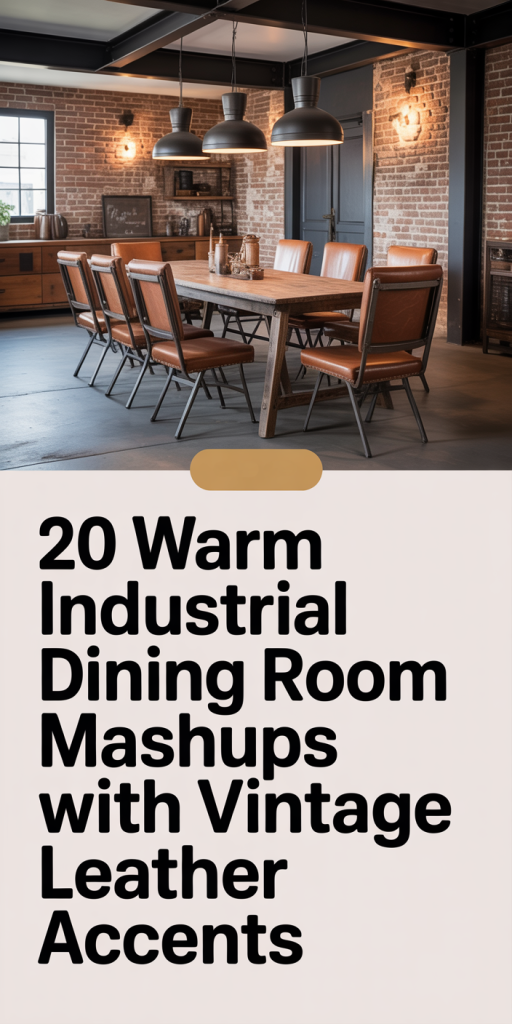
20 Mashup Ideas — Room-By-Room Styling Approaches And Visual Scenarios
- Urban Loft Long Table: Exposed ductwork, a reclaimed walnut trestle table, and cognac leather Parsons chairs. Finish with a black iron linear pendant and a sisal rug for texture.
- Suburban Retrofit Farmhouse: Soft white shiplap walls, weathered iron chandelier, and tufted vintage leather banquette running one wall of the dining area. Add a large botanical print for color.
- Minimal Concrete Box: Polished concrete floors, a round oak table, and saddle leather mid-century dining chairs. Keep accessories minimal, one oversized sculptural bowl.
- Warehouse Meets Mid-Century: High ceilings, factory pendant lights, and a warm walnut table. Pair with low-profile leather chairs and a patterned kilim rug to soften the floor plane.
- Rustic Industrial Mix: Reclaimed plank table, horseshoe nail detailing on iron legs, and distressed chestnut leather chairs. Accent with matte black metal pendant clusters.
- Dark-and-Moody Dining: Charcoal walls, matte black trim, and deep brown leather chairs. Use warm brass hardware and amber glass pendants to avoid gloom.
- Scandinavian-Industrial Fusion: Pale walls, light oak table, and caramel leather seats. Incorporate linen textiles and a sheepskin drape over one chair for layered warmth.
- Open-Plan Loft with Banquette: Built-in leather banquette in tobacco tone, industrial shelving above for display, and a narrow farmhouse table to maximize walking space.
- Compact City Apartment: Slim metal-framed table, fold-away leaves, and vintage leather stools that tuck under. A round mirror amplifies light.
- Eclectic Collector’s Dining: Mix mismatched vintage leather chairs around a live-edge table: gallery wall with metal frames unifies the look.
- Chef’s Table: Stainless-steel prep island repurposed as a dining table, paired with studded leather bar stools. Industrial task lights on adjustable arms top the setup.
- Formal Warmth: A dark-stained mahogany table with brass inlay, tufted leather dining chairs, and a chandelier with aged metal arms, bridges formal and industrial styles.
- Light-Filled Conservatory-Dining: Glass walls, iron mullions, and saddle leather dining chairs. Add lots of potted plants and a woven rug to ground the space.
- Monochrome Contrast: Whitewashed brick, black metal table base, and rich espresso leather seating. Bronze flatware introduces a subtle warmth.
- Transitional Vintage: Antique leather captain’s chairs surrounding a mid-century modern table: a distressed runner ties eras together.
- Small Rustic Nook: Corner banquette with tufted leather and a round pedestal table: industrial pendant tucked low for intimacy.
- Lofted Industrial Studio: Open shelving displaying ceramics, a simple plank table, and deep cognac leather seats. Use track lighting to highlight artwork.
- Family-Friendly Mashup: Waxed leather chairs (easier to clean), a sealed wood table, and layered washable textiles for spills. Rounded table edges help with safety.
- High-Contrast Glam: Polished concrete with a mirrored buffet, dark leather chairs, and a mixed-metal chandelier that includes brass and blackened steel.
- Outdoor-Adjacent Dining: In a covered patio with steel framing, use weather-treated leather-look upholstery or reclaimed leather cushions and a rugged wood table: add lanterns for atmosphere.
Each scenario is adaptable: swap finishes, scale furniture to your room, and pick leather tones that suit your light. We recommend testing a leather swatch next to the room’s metal finish and rug to ensure harmony before committing.
Conclusion: Pulling The Look Together And Where To Start
To build a warm industrial dining room with vintage leather accents, start with a clear base: choose the structural elements you’ll keep, brick, concrete, metal, and decide how much patina you want to reveal. Next, select one or two leather pieces as anchors (a set of dining chairs or a banquette) and build outward with wood, textiles, and layered lighting. Focus on proportion, tactile contrast, and practical durability.
If we had to recommend one practical first step: source a leather chair or bench you love and see how it transforms the space. From there, add a warm rug, dimmable lighting, and a reclaimed wood table or topper. Small edits, a brass candlestick, a linen runner, a well-placed plant, will stitch the room together.
This mashup rewards patience. Vintage leather improves with age, and an industrial shell becomes homier as you layer in pieces that carry memories. Start simple, prioritize touch and proportion, and you’ll create a dining room that’s both timeless and intimately yours.