18 Outfits That Feel Stylish… Until You See Them in Public — How To Recognize And Rescue Them In 2026
We’ve all had that moment: a skim through Instagram or a late-night shopping spree leaves us convinced we’ve discovered the perfect outfit. We try it on, admire ourselves in the mirror, and feel… stylish. Then we step outside and notice puzzled looks, awkward fits, or simply a sense that something’s off. What feels editorial at home can read costume-y or impractical in real life. In 2026, with fashion cycling faster and context shifting around hybrid work and varied social norms, learning to spot these wardrobe traps is more useful than ever. In this guide we’ll run through the types of looks that often fail the public test, explain why they flop, and give practical, modern fixes, from tailoring tweaks to accessory swaps, so you can keep the joy of experimenting without the cringe.
The Mirror Vs. Reality: Why Some Outfits Fail Public Tests
We fall for illusions. Mirrors flatter, lighting hides creases, and the privacy of our bedrooms removes the social feedback loop that reveals how an outfit reads in motion and among people. There are several consistent reasons an outfit that looks great in the mirror doesn’t translate outside.
Perception vs. function: The mirror presents a static, frontal image. Real life involves movement, other viewpoints and practical needs (sitting, walking, weather). A skirt that looks perfectly proportioned while standing may ride up when we walk. A blazer that looks structured on a hanger might collapse into a shapeless block when we raise our arms.
Lighting and scale distortions: Retail dressing rooms and social-app filters often use flattering light and angles that hide texture, transparency, and scale. An outfit that reads as ‘sleek’ on camera can be confusing in daylight because fabrics reveal patterns, sheerness, or unintended bulk.
Context blindness: We tend to assess clothes in isolation. An item may be stylish on its own but clash with the setting, airport, office, wedding, or subway. The line between ‘fashion-forward’ and ‘out of place’ is narrow and set by occasion norms.
Emotional bias: Trying on clothes can be an emotional experience, we buy into the aspirational version of ourselves. That bias makes us overlook fit issues, movement constraints, or how accessories shift the whole look.
In short, the mirror gives us a curated preview. Public life gives us the full movie: multiple angles, motion, interaction, and context. Identifying which part of that movie an outfit fails is the first step toward making it wearable without killing the original vibe.
Statement Trends That Read Like A Costume In Real Life
Statement pieces are seductive: bold silhouettes, theatrical prints, and exaggerated details promise instant personality. But when one trend element screams louder than your personal style or the situation allows, it becomes costume-like. Below are common statement trends that often overplay their hand in public.
Overly themed prints: Tropical motifs, novelty icons, and hyper-realistic florals are great for content and vacays. But when worn head-to-toe in an urban, everyday setting, they can read as themed rather than stylish. A blouse with a tropical print paired with conservative trousers often looks far more balanced than an entire suit screaming theme-park chic.
Excessive embellishment: Sequins, oversized appliqués, and fringe look spectacular on stage. In a coffee line, they can read like a performance. The trick is scale: one embellished focal point (a jacket back, a shoe, or a bag) keeps the drama under control.
Historical reenactment silhouettes: Corsetry, large ruffles, and full Victorian skirts have informed recent runway cycles. But unless we’re attending a period-themed event, these silhouettes can create an unintended drama. The perimeter between “tasteful homage” and “wearable costume” is tailoring and proportion, small nods to history are usually more effective than a full remake.
Uniform-adjacent looks: Military-inspired or occupational references (think: firefighter-bright colors, tool-belt accessories) are trendy, but if you look like you’re about to clock into a different job, people notice. We recommend softening utilitarian pieces with classic tailoring or unexpected fabrics to avoid a literal read.
Hyper-minimal futuristic gear: Think technical garments with too many straps, buckles, and utility panels. They photograph like tactical-wear editorials, but in public they can look like a prop from a sci-fi show. Keep one futuristic element and let the rest of the outfit be quietly contemporary.
In each case, the costume feel emerges when a single statement trend dominates without anchors, neutral basics, subtle tailoring, or a deliberate counterpoint. If we want to keep the trend without the theatrics, we scale back or mix it with pieces that ground the look in everyday life.
Volume And Proportion Mistakes Across 18 Popular Looks
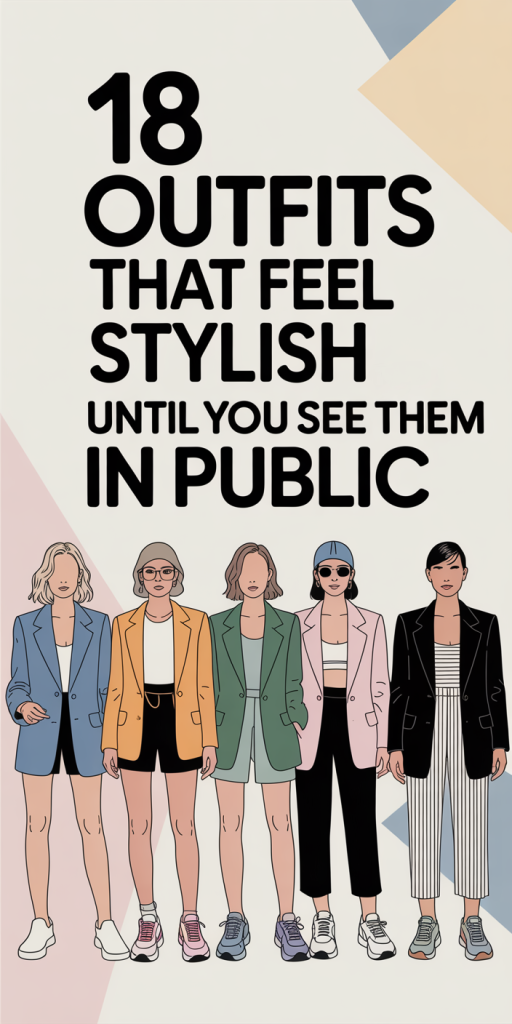
Volume and proportion are the anatomy of an outfit: get them wrong and even expensive items read amateurish. Below we break down typical mistakes across popular 18 looks we see people attempt, from ultra-wide culottes to oversized blazers, and how they go wrong in public.
- Head-to-toe oversize: When every piece is voluminous, your silhouette can vanish. Oversize feels intentional when balanced with structure or a clear hemline: otherwise it looks like you’re wearing clothes two sizes too large.
- Micro-skirts with oversized tops: A mini paired with an oversized sweatshirt can work, but it often reads unbalanced in movement. If the top overwhelms the waist, the skirt stops reading as a fashion choice and starts feeling disproportionate.
- Balloon sleeves with heavy skirts: Dramatic sleeves need a streamlined lower half. Otherwise you create a top-heavy costume effect that’s visually exhausting.
- Extreme layering: Multiple jackets, long vests, and shirts layered without contrast can bulk up the body rather than add depth. Layers should create visual breaks, different lengths, textures, or a visible waistline.
- High-waist everything: Very high-rise trousers, skirts, and longline tops stacked together can shorten the torso unexpectedly. A mid-point belt or subtle tuck re-centers the proportions.
- Wide-leg pants with long coats: Both create long vertical planes that can swamp shorter frames. Add a cropped jacket or a defined shoe line to anchor the leg.
- Tiny bags with oversized outerwear: A microscopic bag looks lost beside a voluminous coat. Scale accessories to outerwear, a larger tote or a bold clutch can restore balance.
- Stiff structured pieces with soft fabrics: Pairing rigid corsets or boned tops with flowy gauze skirts without a connecting element creates a clash that reads costume-y. Introduce transitional pieces (fitted knit or structured skirt) to bridge fabrics.
- Heavily sculpted heels with athletic basics: A sculptural shoe looks striking, but with joggers and a hoodie, it can feel like two different outfits fighting for attention. Let one element be the focal point.
- Monochrome in high-shine fabrics: Head-to-toe patent or satin eliminates texture contrast, flattening the look visually. Tone down one piece or add matte elements.
- Drop-crotch pants with cropped tops: The proportions exaggerate the lower body in ways that movement reveals as awkward rather than avant-garde. Balance with heels or more fitted shoulders.
- Excessively long sleeves: When sleeves drag or cover hands completely, they suggest poor fit. Cuff, pin, or alter them for practicality and polish.
- Statement collars with busy bottoms: A pronounced collar draws the eye upward. If the bottom half is equally loud, the look competes instead of harmonizing.
- Thigh-high boots with short hems and bulky outerwear: The legwear can clash with heavy outer layers, creating an odd silhouette transition. Swap the outer layer for something sleeker.
- Sheer layering everywhere: Multiple transparent layers can create unintended transparency or muddled patterns. Use opacity strategically and add underlayers with smooth lines.
- Excessive peplum or flares: Peplums designed to exaggerate hips can feel dated and costume-like when not balanced by streamlined pieces.
- Too many textures at once: Velvet, patent, faux fur, and metallics together become sensory overload. Limit to one or two dominant textures.
- Volume only in the wrong place: Adding bulk around the midsection or hips without corresponding structure elsewhere can age or distort proportions.
Fixing these proportion issues is mostly about contrast, defined lines, and hierarchy. One voluminous piece paired with a fitted anchor reads intentional. The public eye expects outfits to move with the body, so prioritize lines that signal where the waist, shoulders, and hem truly lie.
Context Mismatches: When Outfit And Occasion Clash
An outfit’s success relies heavily on context. We can love a look at home but walking into the wrong venue in that same outfit can send the message: “I misread the invitation.” Here are common context mismatches and how to spot them before you step out.
- Overdressing vs. underdressing: This is the most obvious mismatch. A cocktail dress at a daytime farmer’s market or sneakers at a formal dinner both create discomfort, for you and those around you. We suggest assessing three cues before leaving: time of day, venue formality, and expected activity.
- Climate and practicality: A sheer runway-ready coat in midwinter or cork-soled platforms for a rainy commute might photograph well but fail the basics. Practicality doesn’t have to equal dull, swap materials for weather-appropriate versions that keep the silhouette.
- Cultural and regional norms: Styles that are expressive in one city may be jarring in another. While we shouldn’t self-police expression completely, being mindful of local norms helps avoid accidental attention that’s not flattering.
- Workplace vs. nightlife: Blurred lines between work and evening wear mean hybrid pieces are valuable. But something overtly clubby at a client lunch signals a mismatch. Carry a blazer or a layering piece to pivot if needed.
- Activity-specific misreads: Trying to bike in platform sandals or sit through a 3-hour conference in a stiff, boned dress are red flags. Choose fabrics and fits that accommodate core activities for the occasion.
- Event themes and costume traps: Themed events are obvious exceptions, but occasionally invites use slogans like “creative black tie” where attendees interpret “creative” wildly. When in doubt, err on the side of smart, wearable choices and add small themed accents.
- Attention budget: Some contexts (funerals, court appearances) demand restraint. An outfit that’s intentionally attention-grabbing can be disrespectful or distracting. We always consider the social purpose of the gathering before selecting a maximal look.
Spotting context mismatch early is a habit we can build: scan the invite, check venue photos, and imagine yourself doing the event’s activities. If any detail makes you hesitate, adjust. It’s easier to tone down a look than to add seriousness once you arrive.
How To Rescue These Looks: Fit, Fabric, And Styling Fixes
When an outfit reads costume-y, the good news is most issues are reversible. Rescue focuses on three levers: fit, fabric, and styling. Addressing one or two of these usually gives the outfit new life without losing its original personality.
Fit: The single most transformative element. Even cheap garments can look chic if the fit is right: conversely, expensive pieces can look sloppy if they hang wrong. Key fit adjustments include hemming, shortening sleeves, taking in seams, and adding or removing shoulder pads. Often the most effective alterations are simple, a 1-inch tuck at the waist or a shortened hem can entirely change the silhouette.
Fabric: Some fabrics photograph better than they function. Lightweight sheers can be impractical: stiff synthetics can add unintended bulk. Swapping or lining pieces with matte, breathable materials often tames an over-the-top look. If replacing fabric isn’t an option, add layers in different textures (knitwear, denim, or leather) to absorb the showiness.
Styling: Accessories, color balance, and undergarments finish the look. Choosing the right shoe, bag size, or belt can reframe an entire outfit. Even hairstyles and makeup matter, a polished low bun or restrained makeup can calm an otherwise theatrical ensemble.
Below we break practical, immediate fixes you can try at home or on the way out.
Simple Fit And Tailoring Fixes To Try Today
- Hem strategically: Shorten a skirt or pant so it hits the most flattering point on your leg. For wide-leg trousers, a slightly longer hem that grazes the shoe can look intentional: too long and it reads sloppy.
- Define the waist: Add a belt or take in a top. A slight waist definition reintroduces proportion and prevents a costume-like boxy silhouette.
- Taper sleeves: If dramatic sleeves are overwhelming, pin or hem them so they stop where your hand begins. Cuffing is a quick visual anchor.
- Add shoulder structure: If oversized tops swamp your frame, subtle shoulder pads or a fitted undershirt can restore balance without making the piece rigid.
- Shorten outerwear length: Long coats with voluminous trousers can swamp height. Opt for a mid-length or cropped coat to create a clearer leg line.
- Quick fixes: sew in a few stitches to create darts, use fashion tape to keep lapels in place, or binder-clip excess fabric inside for a temporary contour.
Accessory And Color Swaps That Instantly Ground An Outfit
- Anchor with a grounded shoe: Swap novelty footwear for a classic loafer, ankle boot, or understated heel. Shoes establish the outfit’s tone.
- Choose a larger or more proportionate bag: A bag that matches the scale of your outerwear balances the visual weight.
- Muted color breaks: Insert neutral pieces, a beige turtleneck, black jeans, or navy coat, to break up thematic color clusters. This prevents the outfit from reading as a costume.
- Minimal jewelry: If the clothes are loud, pare down metalwork to a single pair of studs or a slim chain. Too many statement pieces compete.
- Textural contrast: Add a matte knit or leather element to offset shine or sequins. Texture interrupts and grounds.
- Strategic layering: Wear a fitted blazer over a dramatic dress to subdue its theatricality: throw a crisp white tee under a sheer blouse for opacity and structure.
These fixes are intentionally low-effort. We prefer solutions you can do the night before or while waiting for coffee, small tailoring, a different shoe, or a belt often do the trick. The goal is not to strip personality but to translate it into clothes that function in the public sphere.
Conclusion
Style is part intuition and part engineering. The outfits that feel stylish in private often need simple adjustments to perform in public: fit, fabric, proportion, and context are our control points. As we head through 2026, the best approach is curious experimentation combined with quick rescue strategies, keep the pieces that excite you, but learn the tiny fixes that keep them wearable. If we treat clothes like instruments that need tuning, we’ll get the dramatic notes without hitting a costume-y sour chord.