20 Things That Make Your Home Look Messy (Even When It’s Not) — Simple Fixes That Instantly Refresh Your Space
We love a tidy home, but sometimes a place that’s technically clean still looks chaotic. The difference between messy and merely lived-in often comes down to a handful of visual cues: mismatched storage, crowded surfaces, poor lighting, and small piles in the wrong places. In this guide we’ll walk through twenty common things that make your home look messy (even when it isn’t) and give straightforward fixes you can carry out this weekend. These are practical, low-cost adjustments that change how a room reads at a glance, so your space feels calmer and more intentional without a full-scale cleanout.
Entryway Red Flags That Set The Tone
Your entryway is the first thing guests (and you) see when you come home, so it sets the visual expectation for the rest of the house. A cluttered entrance signals disorder immediately, even if the living areas are spotless. We’ve found that several small habits make an outsized impact: leaving shoes and bags in the middle of the floor, using mismatched catchalls, and neglecting a quick declutter routine. To fix this, pick one clear landing zone and commit to it: a small bench with storage, a tray on a console table, or a slim wall-mounted shelf. Keep only daily essentials there and store seasonal items elsewhere. Add a hook or two for bags and coats, and make putting things away a single-step action. That tiny behavior change prevents visual chaos before it starts.
Surface Clutter That Adds Visual Weight
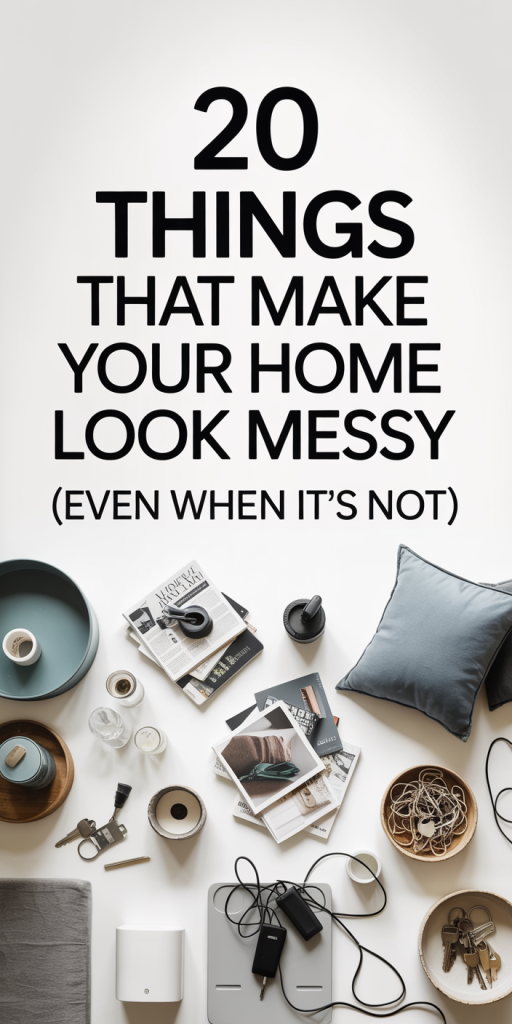
Surfaces speak louder than floors. A tabletop covered in half-finished projects, random decor, chargers, and loose papers reads as heavy and disorganized. We recommend adopting a three-item rule for visible surfaces: keep no more than three meaningful objects on a table or shelf, and let negative space do the work of framing those pieces. Use trays to corral small items, A tray creates an intentional arrangement rather than a chaotic scatter. Keep chargers and electronics stowed in a drawer or a discreet charging station. For frequently used surfaces like kitchen counters, identify one functional zone (coffee station, prep space) and keep everything else out of sight. The goal is not minimalism for its own sake but intentional placement that lets the eye rest.
Furniture And Layout Mistakes That Create Chaos
Furniture that’s poorly scaled or wrongly placed can make a room feel cluttered even when it isn’t. Too-large sofas block sightlines: a coffee table that’s off-center throws off balance: pushing everything against the walls can create awkward, underused corners. We recommend measuring before you buy and using painter’s tape on the floor to map out prospective layouts. Aim for clear pathways, if you have to push through furniture, the space will feel crowded. Consider pieces that serve double duty, like ottomans with storage or side tables with drawers, so you reduce visible accessories. Finally, group seating into conversational zones rather than scattering single chairs, cohesive arrangements make a room read as deliberate rather than haphazard.
Storage Without Style: Visible Containers And Mismatched Bins
Storage is essential, but visible, mismatched containers turn storage into visual noise. When we see an array of different baskets, open boxes, and random plastic bins, the eye fixates on the inconsistency. The fix is surprisingly simple: choose a limited palette for visible storage, two colors or materials max, and stick with it across a room. If you need to use existing bins, consider covering them with fabric, using matching labels, or placing them behind doors or in cabinets. For open storage, uniform bins create the illusion of order. A coordinated look doesn’t need to be expensive: thrift stores and simple DIY covers can harmonize disparate containers quickly.
Lighting, Windows, And Shadow Issues That Make Rooms Feel Messy
Lighting plays a decisive role in perceived order. Dim rooms hide clutter but also flatten details and create uneven shadows that read as mess. We recommend a layered lighting plan: ambient light (overhead), task light (reading lamps, under-cabinet lighting), and accent light (sconces, picture lights). That combination bathes the room evenly, making it easier for the eye to register surfaces and textures correctly. Clean light fixtures and replace old bulbs with warmer, energy-efficient LEDs to improve color rendering. Reposition lamps to reduce harsh shadows behind furniture. Bright, well-distributed light simply makes a space look cleaner and more considered.
Conclusion
A home can be lived-in and still look intentional, most of it comes down to choices that affect how our eyes read the room. We’ve shown practical fixes for twenty common visual culprits: from entryway piles and surface clutter to storage consistency and smart lighting. Start small, pick two or three changes from this list and carry out them over a weekend. The cumulative effect will be immediate: better flow, clearer surfaces, and a sense of calm that feels like an upgrade. When we treat a space with a few thoughtful edits, it stops shouting “mess” and starts whispering “home.”