16 home trends that look expensive until you look closer
I love interiors that read as luxe without the luxe price tag. In 2026, a handful of visual strategies, clever material choices, scaled details, and well-placed accents, can make a room feel expensive even when it isn’t. In this guide I’ll walk through sixteen trends that consistently deliver that elevated impression: they’re visible in high-end showrooms and glossy magazines, but you can recreate them affordably if you know what to prioritize and what to fake. I’ll explain the “why” behind the illusion, break down kitchen, living room, bathroom, bedroom, closet and built-in examples, and give practical tips so you don’t waste money chasing a style that falls flat. Read on for approachable swaps, where to invest, and the finishing touches that convince the eye, and potential buyers, that your home cost more than it did.
Why These Trends Read As High-End: Materials, Scale, and Visual Tricks
There’s usually a pattern behind what looks expensive: it’s not always real marble or custom millwork, it’s proportion, finish, and restraint. We break the illusion into three reliable pillars.
Materials with depth. High-end spaces often use materials that have visual depth, think honed stone, woven textiles, or wood with real grain. These surfaces catch the light in subtle ways. We can mimic that depth by choosing engineered products with realistic texture (e.g., high-quality porcelain tile that reads like stone) or by layering materials, matte paint under a gloss trim, a fabric lampshade over a metal lamp, to create perceived richness.
Proper scale and negative space. Luxury design respects breathing room. Oversized art, wide moldings, deep countertops, and generous negative space give a custom feel. We don’t need structural intervention to get this: swapping for larger-scale rugs, using fewer but bigger accessories, and installing wider trim can produce a similar effect.
Finishing details and restraint. Finishes matter, soft-brushed metals, satin lacquers, and matte ceramics read expensive. Equally important is restraint: a limited palette, consistent metal finishes, and cohesive hardware unify a space and communicate intent, which the eye interprets as investment and taste.
Kitchen Looks That Feel Luxe On A Budget
Kitchens are a make-or-break space for perceived value. A few strategic moves let us achieve a high-end look without a full remodel.
Start with cabinet treatment. Painting existing cabinets in a deep, grounding color, navy, forest green, or charcoal, instantly reads custom. If replacing is necessary, consider slab fronts or shaker profiles in a semi-matte finish: they’re timeless and photograph well. Add simple trim to the toe kick and top of cabinets to mimic cabinetry with a frame.
Countertop approach. We don’t always need a marble slab. Large-format porcelain slabs replicate marble veining without the maintenance and often at lower cost. Another option is a narrow-budget butcher block for a prep area paired with an engineered quartz used only on the main island, this creates contrast and the impression of selective splurging.
Lighting and metal consistency. Replace builder-grade fixtures with two or three statement pendants over an island and under-cabinet LED strips for layered light. Use one metal finish across faucets, cabinet pulls, and lights for coherence: mismatched metals scream DIY, while a consistent finish reads intentional.
Three Kitchen Details That Sell The Illusion: Open Shelving, Faux Stone Surfaces, And Statement Hardware
Living Room And Entry Features That Seem Pricier Than They Are
The living room and entry are first impressions, so small investments there pay dividends.
Layered lighting. A three-tiered lighting plan, ambient (overhead), task (reading lamps), and accent (wall washers or picture lights), feels curated. We can achieve this by swapping a basic flush mount for a low-profile chandelier, adding a floor lamp, and installing plug-in picture lights rather than hardwiring. The result reads as a professionally planned scheme.
Curated focal points. A single large sofa, an oversized mirror or statement art piece anchors the space and suggests custom selection. We recommend buying fewer, larger items rather than many small ones. A well-chosen mirror in a simple but substantial frame reflects light and doubles the visual space.
Architectural accents without construction. Introducing tall baseboards, painted window casings, or adhesive molding can simulate built-in detail. These finishes frame the room and give that bespoke feel without a major contractor bill.
Strategic paint choices. A full-room color, either moody or serene, ties elements together. Painting the trim the same color as walls for an enveloping look, or painting trim a contrasting deep tone for drama, both create a designer impression.
Bathroom Trends That Mimic Luxury Suites
Bathrooms are where materials and plumbing choices can quickly read either cheap or sumptuous. Fortunately, a few trends let us mimic a hotel-grade suite affordably.
Large-format tile and continuous surfaces. Extending the same tile from floor to shower wall, or using a single material across the vanity backsplash and the shower, creates a seamless, custom feel. Large-format porcelain slabs with minimal grout lines mimic stone expanses at a fraction of the cost.
Open, airy shower styling. Frameless glass or minimal-profile frames make the shower appear larger and more expensive. We don’t need floor-to-ceiling glass to get the effect: a single fixed panel plus a neat curb and consistent tile gives the same impression.
Hardware and fitted storage. Switching to matte or brushed metal finishes in faucets, showerheads, and cabinet pulls elevates a bathroom quickly. Built-in niches for shampoo and a simple floating shelf feel intentional and custom without requiring major plumbing changes.
Bedroom, Closet, And Built-In Styling For A High-End Feel
Bedrooms and closets are personal spaces where thoughtful styling can convey luxury through comfort and organization.
Headboard and wall treatments. A tall, upholstered headboard or a paneled wall behind the bed instantly creates a focal point that reads custom. We can DIY a fabric-wrapped headboard or install inexpensive MDF panels painted in a saturated color to mimic millwork.
Bedding and textile layering. Hotel-style bedding is about layers: a crisp sheet set, a mid-weight duvet, a folded blanket at the foot, and two textures of pillows. Choose natural fibers where possible, linen, cotton percale, for a tactile richness that photos and guests notice.
Closet organization and built-in look. You don’t need a custom closet to look bespoke. Matching hangers, uniform storage boxes, and a few freestanding shelves painted to match the wall create cohesion. For built-in appeal, add crown molding to a standalone wardrobe or paint the back wall of closet shelving a darker color to suggest depth and permanence.
Small Details And Finishing Touches That Make A Home Look Expensive
The difference between pricey and pedestrian is often in the details. We’ll call out small upgrades that punch above their weight.
Consistent hardware language. Choose one metal tone for plumbing, cabinet pulls, lighting, and decor accents. A single tone, whether warm brass, nickel, or blackened steel, feels considered and cohesive.
Window treatments and trim. Full-length drapery that hits the floor and is mounted high creates the illusion of taller windows and rooms. Layer sheer and opaque panels for depth. Swap basic 2.5″ baseboards for wider 5–7″ profiles where it makes sense: wider trim reads like custom millwork.
Paint quality and palette. A well-applied, mid-sheen paint in a curated palette makes everything look more intentional. We recommend investing in better paint and a few hours of a pro painter for trims and tricky ceilings, appearance improves dramatically.
Art placement and scale. Oversized art or well-assembled gallery walls at the right height (centered about 57–60″ from the floor) read as commissioned rather than bargain-hunted. Even inexpensive prints feel elevated in substantial frames with matting.
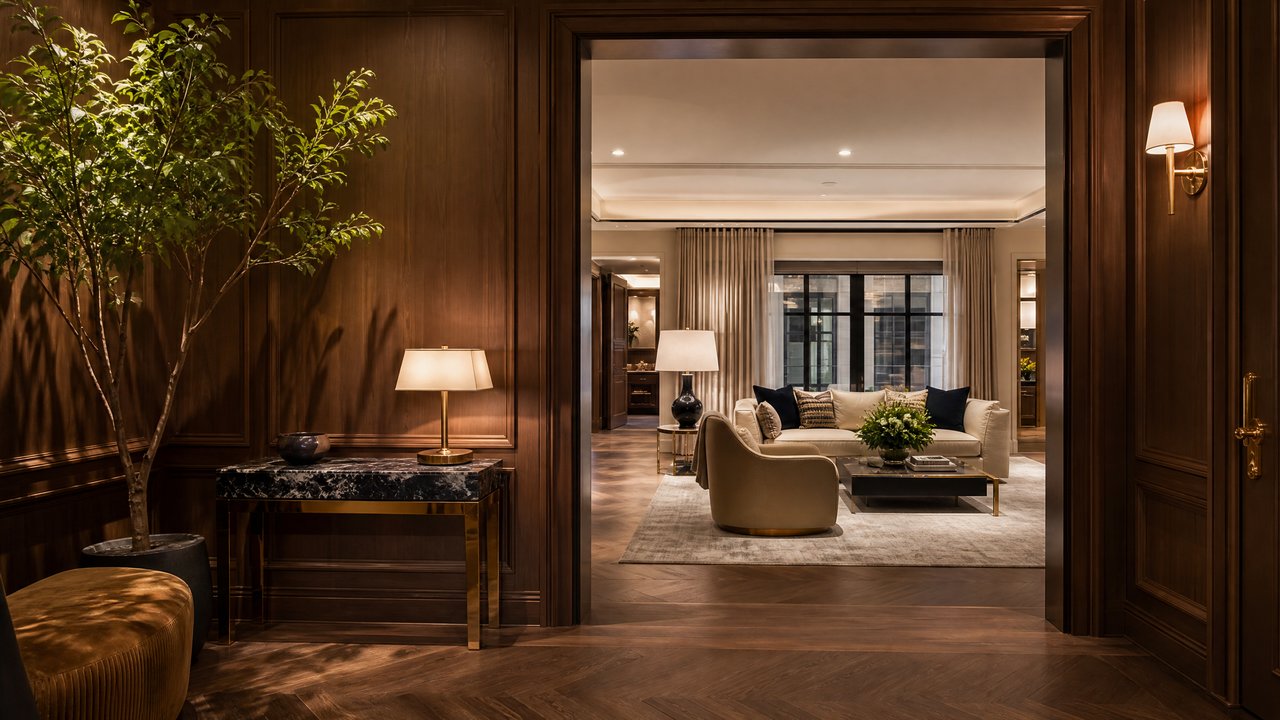
Three Living Room Tricks: Layered Lighting, Curated Art Walls, And Sculptural Rugs
Layered lighting, thoughtfully curated art, and the right rug can transform a living room more than new furniture can.
Layered lighting: Think indirect light. A dimmable overhead fixture combined with wall sconces and a sculptural floor lamp creates depth and drama. We like plug-in sconces and lamps with directional light so you can achieve the same effect without rewiring.
Curated art walls: Resist the urge to scatter many small pieces. Instead, select fewer, larger works or a tight, themed gallery wall. Matting and simple frames make prints and posters read like originals. We recommend arranging on the floor first to find the best composition before hanging.
Sculptural rugs: Texture and scale matter. A rug with a subtle pattern or raised pile anchors furniture and suggests a custom selection. Oversized rugs that allow front legs of furniture to sit on them make the room feel intentionally arranged, this is a high-end trick that doesn’t require expensive wool: performance blends and hand-tufted synthetics can achieve a similar look.
Two Bathroom Upgrades That Punch Above Their Weight: Tile Patterns And Matte Fixtures
Two inexpensive shifts, tile pattern and fixture finish, create a spa-like feeling with minimal expense.
Tile patterns: Small tiles can read custom when used in pattern. Herringbone or chevron on a shower floor or feature wall creates visual interest and suggests a bespoke design decision. Alternatively, running large rectangular tiles vertically elongates the wall, and laying subway tiles in stacked or vertical patterns modernizes a classic look. The labor cost can be slightly higher for complex patterns, but even a small accent area in an interesting pattern goes a long way.
Matte fixtures: Matte-black, brushed brass, and soft-gold finishes read designer-made. Replacing a faucet, showerhead, and towel bars in a single finish is an affordable refresh that instantly modernizes a bathroom. Matte finishes also hide fingerprints and water spots better than polished chrome, which keeps the room looking cared-for and costly over time.
Small Details And Finishing Touches That Make A Home Look Expensive
We’ve already touched on detail, but here’s a compact checklist of small moves that reliably elevate a home.
- Hardware consistency: Pick one metal and stick with it across the house where possible.
- Trim and baseboard upgrades: Wider profiles add gravitas: paint them in a complementary but slightly glossier finish than the walls.
- Switch plates and outlet covers: Upgrading to low-profile or brass covers keeps the line clean.
- Declutter and stage: Fewer, better items on surfaces look intentional: a single tray with curated objects is more effective than many knickknacks.
- Greenery and life: A few well-placed plants, real or high-quality faux, add warmth and perceived care.
These are inexpensive, low-risk changes, but when combined they produce a compound effect: rooms look thought-through and, crucially, cohesive. Cohesion is what reads as investment to a viewer or buyer.
Small Details And Finishing Touches That Make A Home Look Expensive
Okay, we’re repeating the evidence because details really are everything. Here are three final, pragmatic reminders to get the most bang for your buck.
- Prioritize what’s in view. Spend on visual anchors: the entry, living room, and primary bathroom. These rooms create perceived value beyond their footprint.
- Mix real with faux wisely. Invest in one authentic material per room (a real wood tabletop, a stone-look countertop, or natural fiber rug) and complement it with convincing alternatives elsewhere.
- Hire help for the fiddly stuff. A professional painter, a short carpentry job to install trim, or a local framer for oversized art will cost less than you think and multiplies the perceived value of everything else.
We recommend creating a small plan before buying: list three visible items you’ll upgrade, two finishes you’ll standardize, and one pro trade you’ll hire. That focused approach prevents waste and yields a genuinely elevated result.
Conclusion: How To Pick The Right Trends For Your Budget And Style
We’ve shown how scale, finish, and restraint let us craft interiors that look expensive without very costly. The key is to decide what’s most visible and where the eye lands, then apply a focused mix of authentic materials and convincing alternatives. Start by choosing one anchor investment per room, standardize finishes, and spend a little on pro help for trim and painting. With those principles, depth in material, generous scale, and thoughtful finishing touches, we can make almost any space feel bespoke. Pick trends that align with your lifestyle, prioritize cohesion over novelty, and you’ll get a luxe result that’s genuinely liveable and worth the money.