12 Clean Eating Bowls Packed With Flavor And Nutrients
We’ve all experienced the convenience and satisfaction of a single-bowl meal that hits every mark: bright flavor, solid protein, fiber-rich carbs, and texture contrasts that keep every bite interesting. Clean-eating bowls do exactly that, they make nutritious eating simple, scalable, and delicious. In this guide we’ll explain why bowls work, show how to build balanced plates, present 12 tested bowl ideas organized by flavor profile, and share meal-prep and pantry strategies to keep weekday bowls effortless. Whether you’re eating to fuel workouts, manage weight, or simply feel better, these bowls put good food within easy reach.
Why Clean-Eating Bowls Work For Health And Flavor
Clean-eating bowls are practical and powerful for a few reasons that matter for both health and everyday life. First, they naturally encourage balance: when we deliberately include a lean protein, a whole-grain or starchy vegetable, lots of colorful vegetables, and a small amount of healthy fat, the result is a satisfying meal that supports blood sugar control and nutrient density. Second, bowls make portioning intuitive, visual cues help us judge proportions (protein the size of our palm, a cupped handful of carbs, generous non-starchy veg). Third, they reward variety. Combining different herbs, acids (lemon, vinegar), and textured ingredients (crunchy seeds, creamy avocado, soft grains) keeps repeat meals interesting.
From an adherence standpoint, bowls reduce decision fatigue. When we adopt a framework, pick a base, add protein, pile on veg, finish with a sauce or crunch, we can mix and match endlessly. That variety prevents boredom, which is a silent enemy of any eating plan. Finally, bowls are efficient for nutrition: they concentrate vegetables and whole foods so we get more fiber, vitamins, and phytonutrients per sitting than many sandwich- or snack-style lunches.
Scientifically, meals that combine protein, fiber, and healthy fats promote satiety and better post-meal glycemic responses. For anyone focused on appetite control, energy, or body-composition goals, clean-eating bowls are a practical way to apply that evidence every day without sacrificing flavor.
How To Build A Balanced Clean-Eating Bowl (Macros, Textures, And Flavor)
We use a simple template to build bowls that perform nutritionally and delight the palate. Think in four layers:
- Base (20–30%): a whole grain or starchy vegetable to provide sustained energy. Examples: brown rice, quinoa, farro, sweet potato, or winter squash. These give fiber and micronutrients.
- Protein (25–35%): the muscle-maintaining, appetite-satisfying element. Include lean animal proteins (chicken breast, salmon), plant proteins (tofu, tempeh, lentils), or eggs. Aim for 20–35 grams of protein per meal if you’re active: adjust up or down to match your goals.
- Plenty of Vegetables (30–40%): non-starchy veg should dominate the bowl by volume, greens, bell peppers, tomatoes, cucumbers, roasted broccoli, shredded carrots. They add fiber, color, and phytonutrients.
- Flavor & Texture Finishes (small but crucial): a drizzle of olive oil or tahini, an acid (citrus, vinegar), fresh herbs, crunchy seeds or nuts, and a savory sauce or spice blend. These turn a pile of nutritious ingredients into a crave-worthy meal.
Macros are only part of the story. We balance textures, creamy avocado, crisp radish, chewy farro, to keep eating engaging. We also chase flavor cross-currents: salty (soy, olives), sour (lemon, yogurt), sweet (roasted beets, balsamic glaze), and bitter/herbaceous (arugula, parsley). Finally, we adjust portions to our energy needs: larger base and fat portions on high-activity days, lighter carb and extra veg on lower-activity days.
Practical tips: cook grains in batches, roast a sheet pan of vegetables, and pre-portion proteins so assembly takes minutes. Keep a small jar of a favorite vinaigrette or tahini dressing in the fridge, sauces unify flavors and keep bowls from feeling dry.
12 Clean-Eating Bowls Grouped By Flavor Profiles
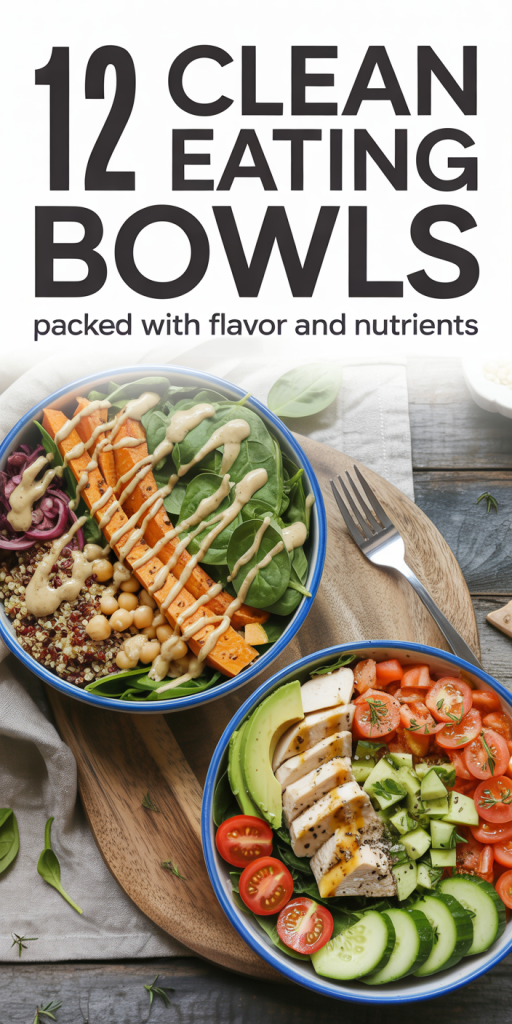
Below we present 12 bowl recipes, grouped into four flavor trios. Each bowl includes a base, protein, veg, and finishing touches so you can recreate them or use them as a template.
Mediterranean Trio: Bright, Herbaceous, And Satisfying
- Lemon-Herb Chickpea & Quinoa Bowl
Base: Quinoa cooked in vegetable broth. Protein: Crispy roasted chickpeas seasoned with smoked paprika and cumin. Veg: Baby spinach, diced cucumber, cherry tomatoes, and shredded radish. Finish: Lemon-tahini drizzle, fresh parsley, and toasted pumpkin seeds. Why it works: the citrus and tahini add creaminess without excess oil, while chickpeas deliver fiber and plant protein that keep us full through the afternoon. - Greek Salmon Bowl with Farro
Base: Warm farro. Protein: Oven-roasted salmon flakes with oregano and pepper. Veg: Romaine, kalamata olives, roasted red pepper, and thin-sliced red onion. Finish: Crumbled feta, a splash of red-wine vinegar, and dill. Why it works: omega-3-rich salmon supports heart health and pairs beautifully with briny olives and tangy feta for a savory, balanced mouthfeel. - Mediterranean Mezze Bowl (Vegetarian)
Base: Brown rice and a scoop of hummus as an additional creamy element. Protein: Grilled halloumi or marinated tofu for a vegetarian option. Veg: Roasted eggplant, cherry tomatoes, chopped parsley, and arugula. Finish: Lemon zest, za’atar, and a drizzle of olive oil. Why it works: this bowl is herb-forward and textural, creamy hummus, chewy halloumi/tofu, and roasted veg create satisfying contrasts.
Plant-Powered Trio: Vegetables, Whole Grains, And Umami
- Umami Mushroom & Buckwheat Bowl
Base: Toasted buckwheat (kasha). Protein: Sautéed shiitake and cremini mushrooms with tamari. Veg: Steamed kale, roasted carrots, and scallions. Finish: Sesame oil, toasted sesame seeds, and a squeeze of lime. Why it works: mushrooms deliver savory depth while buckwheat gives an earthy chew: the sesame-lime finish lifts the bowl. - Roasted Sweet Potato & Lentil Bowl with Greens
Base: Cubed roasted sweet potato. Protein: French green lentils cooked until tender but not mushy. Veg: Wilted Swiss chard, sliced avocado, and pickled red onion. Finish: Cumin-yogurt sauce and chopped cilantro. Why it works: the sweet-and-smoky potato pairs with lentils for steady energy and a comforting texture profile. - Asian-Style Tofu & Veggie Noodle Bowl
Base: Brown rice noodles or soba. Protein: Pan-seared tofu marinated in ginger-soy. Veg: Shredded cabbage, julienned carrots, steamed edamame, and cilantro. Finish: Chili oil or sriracha, lime wedge, and crushed peanuts. Why it works: bold umami and a spicy-acid finish keep the plant-based proteins interesting and crave-able.
Protein-Packed Trio: Lean Meats, Fish, And Plant Proteins
- Citrus Chicken Power Bowl
Base: Wild rice blend. Protein: Grilled chicken breast tossed in an orange-ginger glaze. Veg: Blanched broccolini, shaved fennel, and roasted beets. Finish: Sliced almonds, orange segments, and a drizzle of reduced balsamic. Why it works: the citrus glaze brightens lean chicken and adds natural sweetness that contrasts roasted beets. - Spicy Tuna Poke Bowl (Clean Version)
Base: Short-grain brown rice or cauliflower rice for a lower-carb option. Protein: Sushi-grade tuna cubes tossed in a light tamari–yuzu dressing. Veg: Seaweed salad, cucumber ribbons, edamame, and pickled ginger. Finish: Scallions, sesame seeds, and a small scoop of avocado. Why it works: raw tuna provides lean protein and healthy fats while the briny-sour components make each bite pop. - Turkey Taco Bowl with Cilantro-Lime Cauliflower Rice
Base: Cauliflower rice seasoned with lime and cilantro (or brown rice if preferred). Protein: Lean ground turkey seasoned with ancho chili and cumin. Veg: Charred corn, pico de gallo-style tomato mix, shredded lettuce, and sliced jalapeño. Finish: A dollop of plain Greek yogurt, cilantro, and a handful of crushed baked tortilla chips for crunch. Why it works: it delivers taco flavors without heavy cheese or sour cream, and cauliflower rice keeps things light if that’s our aim.
Breakfast & Smoothie Trio: Energizing Morning Bowls
- Savory Egg & Farro Breakfast Bowl
Base: Leftover farro warmed. Protein: Soft-scrambled eggs with chives. Veg: Sautéed spinach, slow-roasted tomatoes, and mushrooms. Finish: A spoonful of ricotta, cracked black pepper, and a drizzle of olive oil. Why it works: savory breakfasts improve satiety through the morning: farro adds chewiness and slow-burning carbs. - Berry-Oat Breakfast Bowl with Greek Yogurt
Base: Steel-cut oats or rolled oats soaked overnight. Protein: Thick Greek yogurt mixed in. Veg/Fruit: Mixed berries (blueberries, raspberries), sliced banana. Finish: Ground flaxseed, a sprinkle of chopped walnuts, and a small drizzle of honey if desired. Why it works: the combo of oats, yogurt, and flax provides fiber, protein, and omega-3 precursors to start the day steadily. - Green Smoothie Bowl with Superfood Toppings
Base: Thick smoothie made from spinach, frozen banana, unsweetened almond milk, and a scoop of protein powder. Protein: Protein powder or silken tofu blended in. Veg/Fruit: Toppings of kiwi, hemp seeds, sliced almonds, and raw shredded coconut. Finish: A few cacao nibs for bitter contrast. Why it works: it’s an easily digestible morning option that still delivers a nutrient-dense mix, perfect for days when our appetite is lighter but we still need a quality meal.
Each of these bowls can be scaled up for family meals, plated for guests, or broken down into single-serving containers for grab-and-go lunches. We like applying the same finishing-chef mindset, acid, fat, crunch, and herb, to every bowl to guarantee satisfaction.
Meal Prep, Storage, And Batch-Cooking Tips For Bowls
Successful bowl routines hinge on smart prep. Here’s a system we use that saves time and keeps flavors fresh:
- Batch-cook grains and legumes on Sunday. Store cooled portions in airtight containers for up to 5 days in the fridge (or freeze in single portions).
- Roast a large sheet pan of mixed vegetables, root vegetables, cauliflower, and bell peppers reheat well and add roasted flavor to multiple bowls.
- Prepare proteins in two ways: cook some to use cold (shredded chicken, chilled tofu) and reserve a portion to finish hot (pan-seared salmon) the day you eat it for better texture.
- Keep quick-cook veg ready: shredded cabbage, carrot matchsticks, and spinach require no reheating and add freshness.
- Store dressings and sauces in small jars or squeeze bottles. Acid and oil-based dressings keep flavors bright: creamy dressings last 4–7 days depending on ingredients.
- Assemble bowls just before eating when possible. If you must pack lunches, place wet ingredients (dressings, soft avocado) separately and add right before serving to keep textures crisp.
For freezer-friendly prep: cooked grains and legumes freeze exceptionally well: protein patties (turkey, lentil) also freeze and reheat quickly. Label containers with dates to avoid freezer mystery meals. Finally, make small “tasting jars” of new dressings so we can test and tweak acidity and seasoning before making a big batch.
Grocery List, Pantry Staples, And Time-Saving Swaps
Stocking a bowl-friendly kitchen reduces friction. Here’s our core list of pantry, fridge, and freezer staples plus smart swaps to shorten cook time:
Pantry staples:
- Whole grains: brown rice, quinoa, farro, buckwheat
- Canned legumes: chickpeas, black beans, lentils
- Nuts/seeds: almonds, walnuts, pumpkin seeds, sesame seeds
- Shelf-stable sauces: tamari, chili paste, tahini, vinegar varieties
- Olive oil, toasted sesame oil
Fridge/freezer staples:
- Fresh lemons/limes, jars of preserved lemon if you like bold flavors
- Greek yogurt, feta, ricotta
- Tofu, tempeh
- Frozen mixed vegetables, frozen berries, frozen spinach
- Pre-cooked frozen chicken breasts or fish portions for emergencies
Time-saving swaps and hacks:
- Swap quick-cook or instant grains when hunger is immediate (instant oats, microwave brown rice). We favor whole forms for nutrition but use quick options strategically.
- Use canned beans instead of dried when time is tight, rinse them well to reduce sodium.
- Pre-washed greens and bagged coleslaw mix shorten assembly time dramatically.
- Keep a jar of pre-made spice blends (taco rub, za’atar, curry powder) to season proteins in under 5 minutes.
With these staples on hand, we can assemble a balanced bowl in 10–15 minutes on most days. Shopping tip: buy seasonal vegetables, they’re cheaper and more flavorful, and a few seasonal swaps can keep bowls feeling new all year.
Customization, Dietary Swaps, And Allergy-Friendly Alternatives
Bowls are inherently modular, which makes them easy to adapt to dietary needs and preferences. Here’s how we approach common swaps:
- Gluten-free: choose quinoa, rice, buckwheat, or certified gluten-free oats and avoid farro/barley. Tamari is a gluten-free soy sauce alternative.
- Vegetarian/Vegan: replace animal proteins with tofu, tempeh, legumes, or a larger portion of nuts and seeds. Use coconut or soy-based yogurts as dairy substitutes.
- Dairy-free: swap Greek yogurt for coconut or almond yogurt: omit or use nutritional yeast in place of cheese for umami.
- Nut allergies: skip chopped nuts and use seeds (pumpkin, sunflower) for crunch. Watch pesto and sauces that often include pine nuts.
- Low-FODMAP: choose protein-focused bowls, use firm tofu, avoid onions/garlic (use infused oils for flavor), and select low-FODMAP veggies like spinach and carrots.
- Lower-carb/Keto-friendly: replace grains with cauliflower rice, extra greens, or spiralized vegetables. Prioritize fatty fish, eggs, and higher-fat dressings in moderate amounts.
We recommend incremental swaps rather than wholesale changes: keep the bowl’s structure and simply change one or two components. Taste-test new pairings in small batches, sometimes a simple swap (like switching lemon for lime or yogurt for tahini) unlocks a new favorite without sacrificing balance.
Allergy note: when feeding others, label bowls and keep dressings separate. Cross-contamination is common in shared kitchens: we always clean serving tools thoroughly and, when necessary, prepare allergy-free bowls in a sanitized area.
Conclusion
We’ve given you a flexible toolkit: why bowls work, how to structure them for nutrition and flavor, a dozen bowl ideas we actually make and enjoy, and practical prep and pantry strategies to keep healthy eating sustainable. The best part is that bowls are forgiving, once you’ve learned the template, you can improvise with what’s fresh, on sale, or already in your fridge. Start with one or two bowls this week, batch-cook a few staples, and notice how much easier meal decisions become. Small, consistent changes, like choosing whole grains, adding more vegetables, and finishing with an acid and crunch, add up quickly in wellbeing and taste. Let’s get cooking.