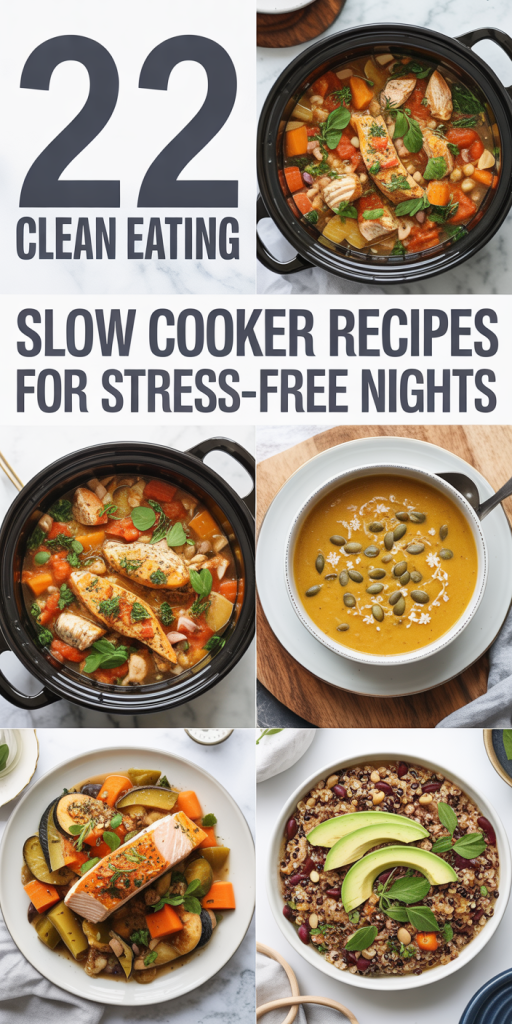
22 Clean Eating Slow Cooker Recipes For Stress-Free Nights
We all know the weeknight scramble: work, errands, extracurriculars, and then the question of what’s for dinner. That’s where clean eating meets the slow cooker and saves the day. In this guide we share 22 clean eating slow cooker recipes designed to simplify evenings, boost nutrition, and make leftovers something to look forward to. We’ll explain why these two approaches pair so well, offer practical tips for success, and give clear, doable recipes across breakfasts, soups, mains, vegetarian dishes, and sides. Each recipe includes a flavor profile, key ingredients, rough cook time, and easy swaps so you can adapt to what’s in your pantry. Let’s get dinner (and breakfast) back to being easy, healthy, and, dare we say, enjoyable.
Why Clean Eating And Slow Cooking Work So Well Together
Clean eating emphasizes whole foods, vegetables, legumes, lean proteins, whole grains, and minimal added sugar or processed ingredients. Slow cookers, by design, coax deep flavor from inexpensive cuts, fibrous veggies, and dried legumes with minimal active time. Together they create several practical wins:
- Flavor with less fat: Long, low heat releases natural sweetness and umami from vegetables and meats, so we use less oil and fewer sauces yet get big flavor.
- Time efficiency: We can assemble a meal in 10–20 minutes, go about our day, and return to a ready, nutritious dinner.
- Better use of pantry staples: Dried beans, steel-cut oats, brown rice, and whole spices shine in a slow cooker, stretching our grocery budget without sacrificing nutrition.
- Meal versatility: Many slow-cooker dishes double as lunches, freeze well, and reheat cleanly.
Beyond convenience, slow cooking preserves nutrients in a different way than high-heat methods: vitamins that are water-soluble can leach into broth, but when we consume that broth, think soups and stews, we keep the benefits. That’s especially important for clean eating, where we want to preserve the inherent goodness of whole ingredients rather than masking them with heavy sauces.
Essential Tips For Clean Eating Slow Cooker Success
To make the most of the 22 recipes below, follow these practical tips:
- Brown proteins when useful: Searing chicken, beef, or tofu briefly before adding to the slow cooker develops Maillard flavor. It’s optional, but it lifts a simple dish into something memorable.
- Mind liquid amounts: Slow cookers don’t evaporate much liquid. Use less broth than you would on the stovetop, and add thickeners (pureed vegetables, blended beans, or a cornstarch slurry) at the end if needed.
- Layer smartly: Denser root vegetables (potatoes, carrots) go in first, with quick-cooking legumes or greens added later to avoid mushiness.
- Use whole spices and fresh aromatics: Whole cinnamon sticks, bay leaves, or a knob of ginger can make a big difference. Add delicate herbs like basil or cilantro toward the end.
- Avoid dairy early: Add milk, cream, yogurt, or cheese in the last 15–30 minutes to prevent curdling.
- Salt toward the end: Salt concentrates as liquids reduce: season at the end to avoid over-salting.
- Cook times and safety: Most recipes do well on low for 6–8 hours or high for 3–4 hours. Use a thermometer, chicken should reach 165°F (74°C), beef roasts at least 145°F (63°C) for medium-rare (or longer for fork-tender).
- Batch and freeze: Make double batches and freeze portions for easy weeknight meals (see storage section for details).
With these habits, our slow-cooker meals stay clean, flavorful, and predictable, exactly what we want when life gets busy.
Meal Prep, Storage, And Freezing Strategies
We rely on planning to keep clean eating sustainable. Here’s how we prep and store slow-cooker meals without sacrificing quality:
- Plan one proteind-based slow-cooker meal per week and double it. Cook once, eat thrice: dinner, lunch, and a frozen portion for later.
- Cool safely: Let foods cool down at room temperature no more than two hours, then transfer to airtight containers and refrigerate.
- Portion for convenience: Store single-serving portions (2–3 cups) in stackable containers so reheating is fast.
- Freeze flat: Pour soups, stews, and sauces into freezer-safe bags and lay flat to freeze. They thaw faster and stack neatly.
- Label well: Note the date and contents. Most slow-cooker soups and stews last 3–4 months in the freezer.
- Reheat gently: Thaw overnight in the refrigerator, reheat on low in the slow cooker or on the stove. If using a microwave, stir halfway through to distribute heat.
- Refresh textures: Add fresh herbs, a squeeze of lemon, or a handful of raw greens at serving to brighten reheated dishes.
With these strategies, we turn the slow cooker into the backbone of our weekly routine, quick, healthy dinners with minimal daily effort.
Breakfasts (3 Recipes)
Steel-Cut Oats With Berries And Chia
A creamy, long-cooked breakfast that’s hearty and fiber-forward. Combine steel-cut oats, almond milk (or water), a handful of chia seeds, mixed berries, cinnamon, and a touch of maple syrup in the slow cooker. Cook low 6–7 hours overnight. Stir well in the morning, top with toasted nuts and a drizzle of yogurt if desired.
Why it works: Steel-cut oats benefit from slow, steady heat, texture improves and natural sweetness develops without added sugars.
Overnight Muesli-Style Slow Cooker Oats
This version uses rolled oats, chopped apples, raisins, cinnamon, and orange zest. Add milk or plant-based milk, a bit of vanilla, and cook on low for 4–5 hours or on warm overnight. Finish with chopped almonds and a spoonful of unsweetened applesauce for extra moisture.
Why it works: It’s essentially an all-in-one, warm muesli, great for kids or when we want a grab-and-go breakfast.
Savory Sweet Potato And Turkey Breakfast Hash
Lean ground turkey, diced sweet potatoes, bell pepper, onion, and smoked paprika slow-simmer into a savory morning hash. Add spinach in the last 20 minutes. Serve topped with a poached egg or with whole-grain toast.
Why it works: This savory start is high in protein and fiber, keeps us full, and uses minimal oil while packing in veggies.
Soups And Stews (6 Recipes)
Hearty Lentil And Vegetable Stew
Brown red or green lentils, carrots, celery, tomatoes, bay leaf, and rosemary combine into a thick, stew-like meal. Add vegetable broth and a splash of balsamic for depth. Cook on low 6–7 hours. Finish with chopped parsley and a swirl of olive oil.
Why it works: Lentils hold texture in the slow cooker, and this stew makes excellent freeze-and-reheat meals.
Clean Chicken Noodle Soup With Zoodles Option
Use bone-in chicken breasts or thighs for depth. Add carrots, celery, onion, garlic, thyme, and chicken broth. After the chicken shreds, add whole-wheat noodles or for lower-carb option, spiralized zucchini (zoodles) during the last 20 minutes.
Why it works: A classic comfort soup, use whole ingredients and reduce processed sodium by skipping canned soup bases.
Butternut Squash And Red Lentil Soup
Roasted or raw butternut, red lentils, onion, curry powder, and coconut milk (optional) make a silky, nutrient-dense soup. Cook on low 4–6 hours then blend until smooth. A squeeze of lime lifts the flavor.
Why it works: Red lentils break down into a creamy consistency, pairing beautifully with squash for vitamin-rich, filling bowls.
Classic Beef And Root Vegetable Stew
Use a lean chuck roast trimmed of excess fat, potatoes, carrots, parsnips, and pearl onions, with beef broth, tomato paste, and thyme. Cook low 8 hours until fork-tender. Skim fat and serve with whole-grain mustard on the side.
Why it works: Tough cuts become tender without needing a lot of added fat, an economical route to a hearty, clean meal.
Immune-Boosting Turmeric Chicken Soup
Combine chicken thighs, garlic, ginger, turmeric, black pepper, carrots, and kale with a bright lemon finish. Simmer low 5–6 hours. The turmeric-ginger combo warms and soothes.
Why it works: Anti-inflammatory spices plus bone-in chicken create a nourishing, restorative bowl for colder nights.
White Bean, Kale, And Tomato Soup
Dried white beans (soaked or quick-cook), canned or fresh tomatoes, chopped kale, garlic, and rosemary form a rustic, protein-rich soup. Add a splash of red wine vinegar to brighten the flavors at the end.
Why it works: Beans and greens together are a plant-protein powerhouse, filling, wallet-friendly, and deeply comforting.
Proteins And Mains (7 Recipes)
Lemon-Herb Slow Cooker Chicken With Vegetables
Whole or bone-in chicken pieces, lemon slices, garlic, rosemary, and mixed root vegetables simmer until tender. Finish with chopped parsley and lemon zest.
Why it works: Citrus and herbs keep the dish bright and clean, and the veg cooks in the juices for minimal prep and cleanup.
Moroccan-Spiced Chickpea And Lamb Tagine
Lean lamb shoulder, chickpeas, carrots, apricots, cinnamon, cumin, and coriander create an aromatic tagine. Cook low 7–8 hours until lamb is shreddable. Serve over whole-grain couscous or quinoa.
Why it works: Slow heat melds warm spices and sweet fruit, transforming simple ingredients into complex, clean comfort.
Honey-Mustard Glazed Salmon (Slow-Cooker Poach)
Poach salmon fillets on a bed of aromatics (lemon, dill, thinly sliced onion) with a light honey-mustard glaze. Cook on low 1–1.5 hours: salmon should flake easily.
Why it works: Slow-poaching keeps salmon moist without heavy oils, perfect for a fast, nutritious main.
Pulled Pork With Apple Cider And Cabbage Slaw
Trimmed pork shoulder, apple cider, onion, and smoked paprika slow-cook to shreddable perfection. Serve with a crunchy slaw of shredded cabbage, apple, and a yogurt-based dressing.
Why it works: The pork is rich without added sugars if we let the apples and cider do the sweetening.
Turkey And Black Bean Chili
Lean ground turkey, black beans, tomatoes, onion, chipotle or ancho powder, and cumin make a lean, hearty chili. Cook low 6–8 hours. Top with avocado and chopped cilantro.
Why it works: We get all the chili satisfaction with less saturated fat and more fiber.
Asian-Style Ginger Garlic Tofu With Broccoli
Firm tofu pressed and cubed simmers with a ginger-garlic soy (or tamari) broth, a touch of sesame oil, and broccoli florets added at the end. Serve over brown rice.
Why it works: Tofu absorbs flavors beautifully in the slow cooker: adding broccoli late preserves its texture and color.
Stuffed Bell Peppers With Quinoa And Ground Turkey
Hollowed bell peppers are filled with a mix of cooked quinoa, browned ground turkey, tomatoes, onion, and Italian herbs, then cooked upright in a light tomato broth for 4–5 hours on low.
Why it works: A complete meal in a pepper, balanced macros and an easy, portable dinner.
Vegetarian And Plant-Based (4 Recipes)
Sweet Potato, Chickpea, And Spinach Curry
Sweet potatoes, chickpeas, tomatoes, coconut milk (light), curry powder, and baby spinach slow-cook into a luscious curry. Add lime juice and cilantro at the end. Serve with brown basmati or cauliflower rice.
Why it works: Plant-based protein and complex carbs combine for a satiating, spice-forward bowl.
Quinoa, Mushroom, And Walnut “Meat” Ragu
A deeply savory ragu of mushrooms, walnuts, quinoa, tomatoes, and Italian herbs simmers until thick. Spoon over roasted vegetables or whole-grain pasta.
Why it works: The texture of walnuts and mushrooms gives a meaty mouthfeel without animal protein, excellent for flexitarian nights.
Coconut Red Lentil Dahl With Spinach
Red lentils, shredded coconut (unsweetened), mustard seeds, and turmeric develop into a fragrant dahl. Stir in spinach at the end and finish with lemon and chopped cilantro.
Why it works: Dals are naturally protein- and iron-rich: this one freezes and reheats beautifully.
Creamy Cauliflower And White Bean Bake
Cauliflower florets, cannellini beans, garlic, and a light cashew-cream binder slow-cook to tender perfection, then broil briefly for a golden top. Lemon zest and thyme brighten the dish.
Why it works: The beans add creaminess and protein without dairy: a quick broil gives satisfying texture.
Sides, Grains, And Extras (2 Recipes)
Barley Pilaf With Herbs And Lemon
Pearl barley, shallots, vegetable broth, chopped parsley, dill, and lemon zest become a springy, nutty pilaf after 3–4 hours on low. Fold in toasted pine nuts for crunch.
Why it works: Barley holds shape and provides more fiber than white rice: it’s a great base for protein and vegetables.
Mexican-Style Brown Rice With Corn And Cilantro
Brown rice, corn kernels, diced tomatoes, cumin, and lime juice cook together for an easy, flavorful side. Add chopped cilantro and green onion after cooking.
Why it works: This side is a natural partner for chilis, tacos, and grilled proteins, simple, whole-grain, and crowd-pleasing.
Conclusion
Slow cookers give us the freedom to eat well without the evening scramble. These 22 clean eating slow cooker recipes cover every mealtime need: breakfasts that make mornings easier, soups that comfort and nourish, mains that are balanced and flavorful, and sides that round out the plate. Our tips on layering, timing, and storage make the process predictable and reliable, so we can batch-cook smartly and rescue busy nights with wholesome food. Try a few recipes this week, double the batch, freeze a portion, and reclaim a few evenings. Once the slow cooker becomes part of our rhythm, clean eating stops being a chore and starts feeling like a sustainable, delicious habit.