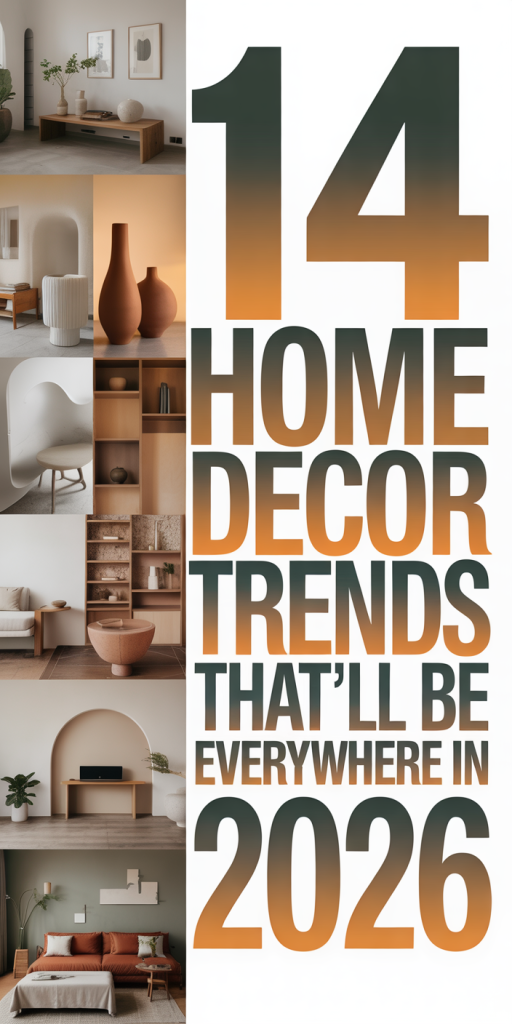
14 Home Decor Trends That’ll Be Everywhere in 2026
I’m on the cusp of a refresh in how I live and design my homes. 2025 isn’t just another year for paint chips and trend forecasts, it’s the moment when comfort, craftsmanship, and tech finally find a balanced, stylish marriage. In this guide let me walk through 14 home decor trends that will shape interiors next year, from color palettes and materials to furniture forms, sustainability approaches, and the subtle tech that melts into my rooms. Whether I’m planning a full renovation or a small seasonal update, these trends give me practical direction and creative permission to experiment.
Color And Pattern Directions For 2026
Color is the quickest way to change how a room feels, and in 2025 we’ll see palettes that favor warmth, depth, and unexpected contrasts. Designers are steering away from purely minimal monochromes and toward layered neutrals, saturated accents, and graphic motifs that read modern but lived-in.
Warm Earthy Neutrals And Layered Tones
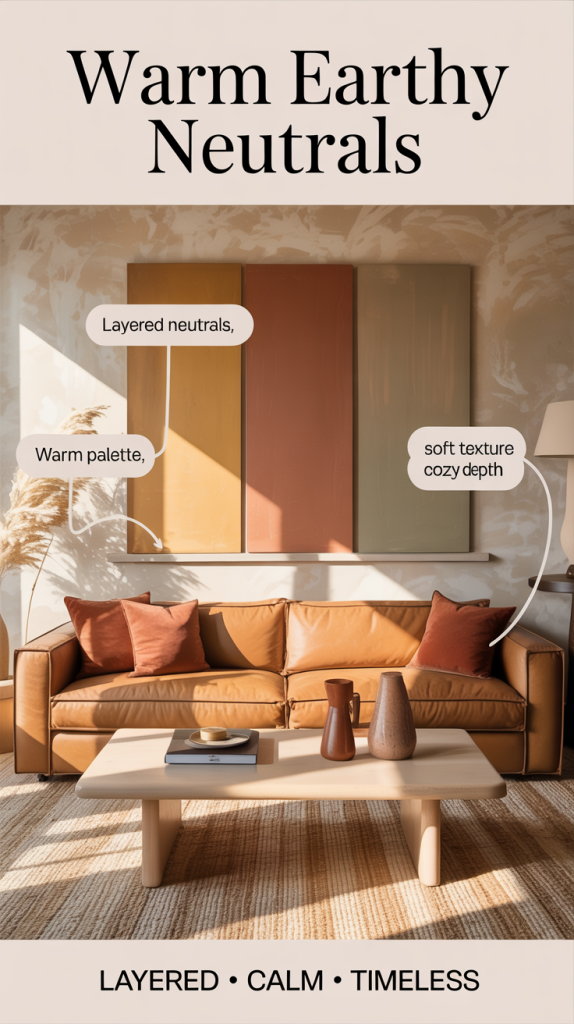
We’re leaning into warm earthy neutrals, think sand, ochre, muted olive, and clay-tinted beiges. These hues work as a soft backdrop that reads cozy without feeling heavy. The trick for 2025 is layering: multiple close-toned neutrals in one room to create dimension. For example, a plastered warm beige wall, a toasted almond sofa, and terracotta accents add nuance without loud contrast. Layering also includes finishes: matte walls, soft wool rugs, and satin woodwork that catch light differently and keep the space visually interesting.
Jewel And Terra Cotta Accent Colors
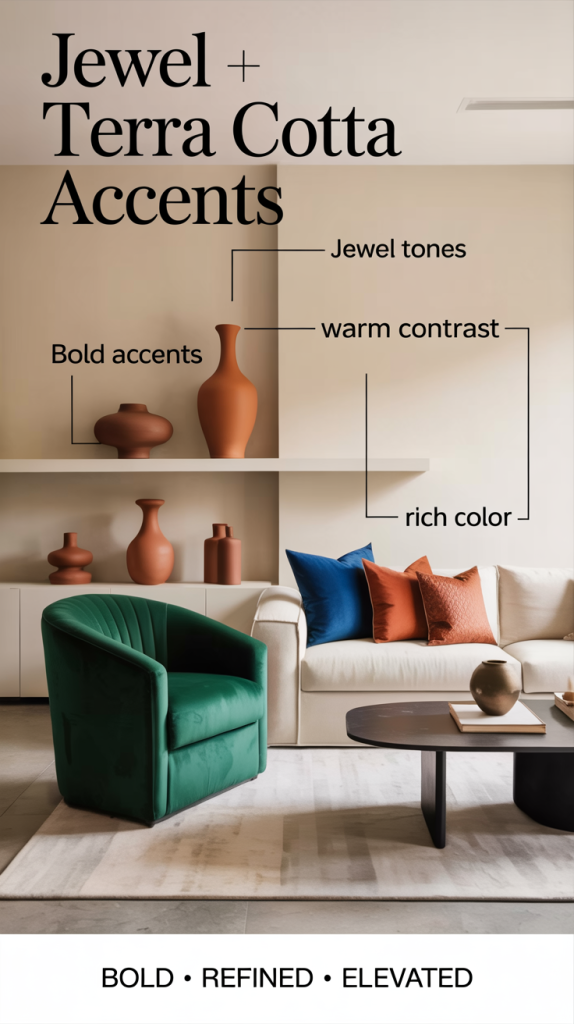
Accent palettes are bolder. Jewel tones, deep emerald, lapis, and rich sapphire, will be used as punctuation rather than dominance. Terra cotta and rust remain dominant accent colors, pairing exceptionally well with the warm neutrals noted above. We’re likely to see jewel and terra cotta used across upholstery, cabinetry, and even tile, delivering a sense of permanence and personality.
Digital Pastels And Playful Graphic Patterns
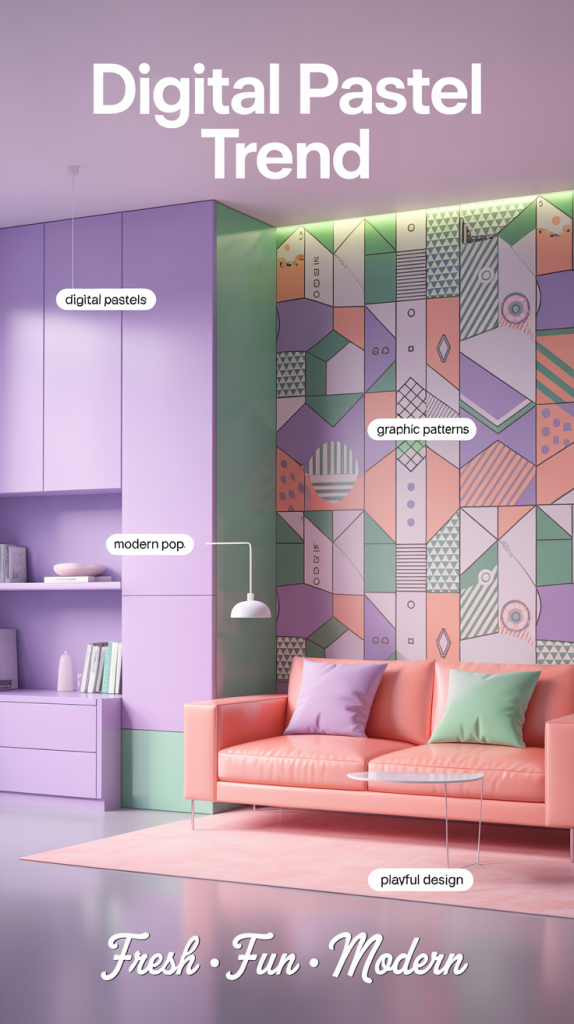
On the opposite end, digital pastels (soft lavender, mint with a neon edge, and washed coral) will pop up in playful, graphic patterns. These pastels won’t be the saccharine shades of the past: they carry a slightly chromatic, pixel-inspired edge that feels modern. Expect to spot them in wallpaper, cushions, and art, often layered with geometric or organic graphics for a fresh, optimistic note.
Materials And Texture Trends Shaping Interiors
Texture is the tactile language of interiors, and 2025 makes texture a primary storyteller. We’ll see a mix of cozy fabrics, palpable wall treatments, and finishes that celebrate time and touch.
Tactile Fabrics: Bouclé, Velvet, And Natural Weaves
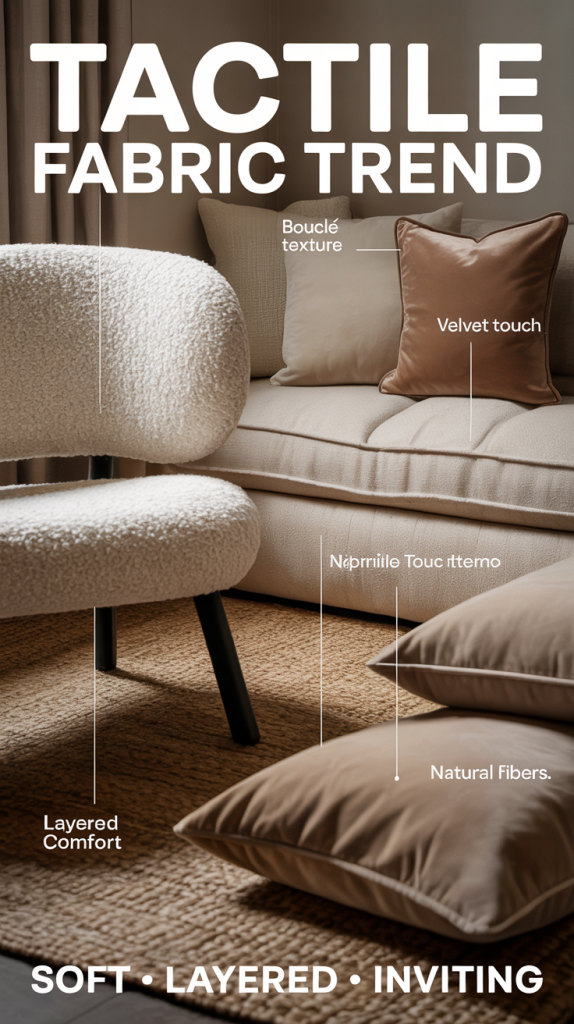
Bouclé continues its rise: it’s approachable, forgiving, and translates across styles from mid-century to coastal. Velvet remains a go-to for a touch of luxe, used thoughtfully on accent chairs or headboards rather than entire roomfuls of upholstery. Natural weaves, jute, seagrass, and open linen, balance the plushness with grounded, breathable textures. Combining bouclé throws with a linen sofa and a woven rug creates a layered tactile scene that invites touch.
Textured Walls: Plaster, Venetian Finish, And Limewash
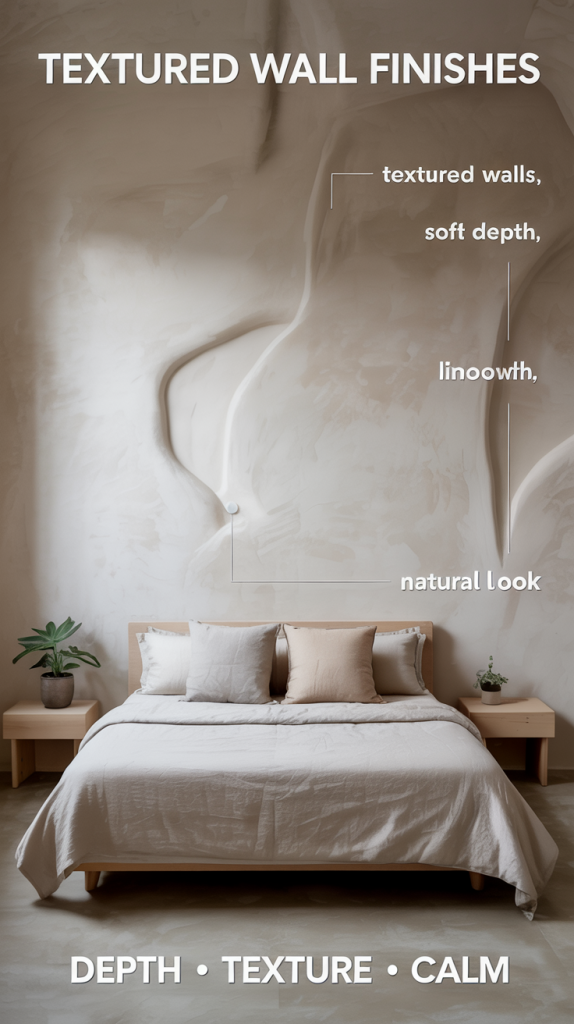
Smooth painted drywall is no longer the default. Plaster, Venetian finishes, and limewash provide depth through subtle imperfections and soft sheen. These finishes catch light differently throughout the day, giving walls an almost living quality. They’re especially effective in bedrooms and dining rooms where atmosphere matters: a silk-plastered dining wall elevates the meal without stealing focus.
Mixed Metals And Raw, Weathered Finishes
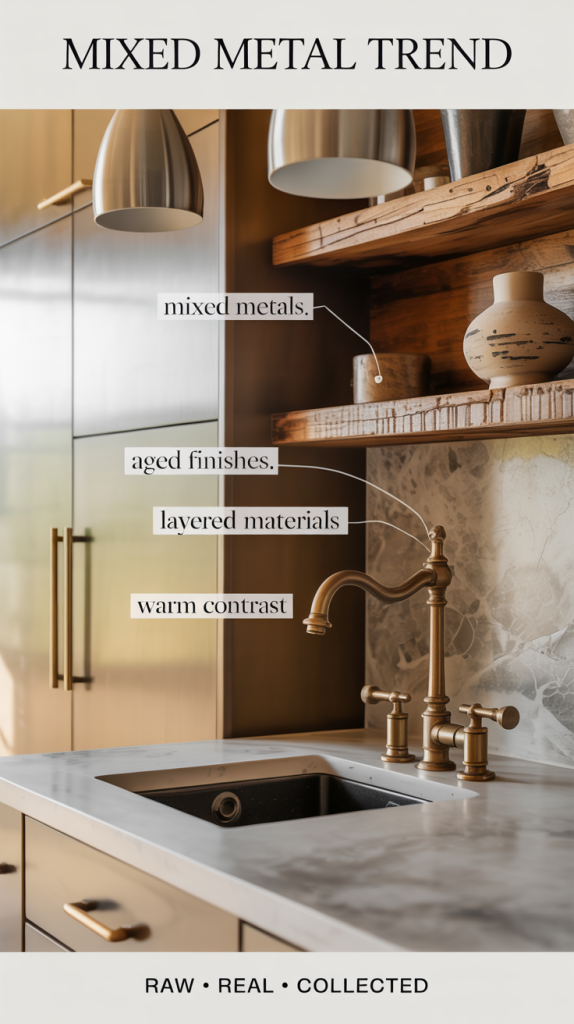
We’re moving past matchy-matchy metal palettes. Mixed metals, matte brass pulls, an oxidized steel lamp, and a warm bronze faucet, create layers of warmth and interest. Alongside that, raw and weathered finishes (patinaed copper, brushed iron, reclaimed wood) signal authenticity. The goal is a curated, collected look where each material has a tactile backstory.
Sustainability, Wellness, And Biophilic Design
Sustainability and wellness are no longer niche: they’re core imperatives. In 2025 we’ll see more designs that prioritize materials and layouts that improve health, reduce waste, and reconnect us to nature.
Sustainable Materials And Regenerative Sourcing
We’ll favor responsibly sourced materials like FSC-certified wood, recycled metals, and low-VOC finishes. But it’s not just sustainability for sustainability’s sake, regenerative sourcing takes it further by prioritizing supply chains that restore ecosystems. Expect to see brands highlight their regenerative practices, and for consumers to choose pieces with transparent provenance. Reclaimed furniture and upcycled textiles will be celebrated rather than seen as second-best.
Biophilic Design And Wellness-Focused Spaces
Biophilic design continues to grow: living walls, abundant houseplants, natural light-maximizing strategies, and materials that mimic organic patterns. Wellness-driven rooms will include dedicated corners for movement and meditation, breathable materials, and circadian-friendly lighting systems. We’ll also see increased interest in air-purifying plants, non-toxic sofas, and kitchens designed to make healthy cooking more convenient, because design that supports wellbeing is the new luxury.
Furniture, Layout, And Flexible Living
As lifestyles evolve, furniture and layouts are adapting. 2025 prioritizes sculptural comfort, flexibility for hybrid living, and storage that’s integrated rather than tacked on.
Curved, Artisan Furniture And Sculptural Forms
Curved silhouettes are staying strong, sofas with rounded arms, crescent-shaped chairs, and tables with soft edges. These forms read approachable and social: curves encourage conversation and circulation. We’ll also see a renewed emphasis on artisan-made pieces: small-scale production and hand-finished items that feel unique and human. Choosing a handcrafted credenza or a sculptural ceramic lamp signals a move away from mass homogeneity.
Multi-Functional Pieces For Small And Hybrid Homes
The hybrid work era demands furniture that can stretch and adapt. We’ll see desks that fold into consoles, ottomans with hidden storage and charging stations, and dining tables that double as workspace hubs. Multi-functional pieces will be elegant and intentional rather than gimmicky, thoughtful engineering that supports real-life needs in compact footprints.
Built-In Storage And Intentional Zoning
Built-ins will be strategic: bookcases that incorporate display niches, window seats with storage, and kitchen banquettes that cleanly hide clutter. Intentional zoning, using rugs, lighting, and furniture arrangement to create distinct areas, will replace the one-room-fits-all approach. This helps small spaces feel organized and purposeful without adding visual noise.
Technology And Seamless Smart Integration
Tech keeps getting smarter and more discreet. In 2025 the goal is seamlessness: smart features that disappear into design rather than dominate it.
Hidden Tech, Integrated Lighting, And Voice Control
Smart home elements will be integrated into the furniture and architecture, speakers embedded in shelving, charging pads built into side tables, and motorized shades that tuck away cleanly. Lighting systems will be both adaptive and human-centric, shifting color temperature to support circadian rhythms. Voice control becomes more sophisticated and private: local processing that reduces cloud dependence and respects data privacy. Designers and homeowners will prioritize tech that enhances comfort and convenience without announcing itself.
Indoor-Outdoor Living And Year-Round Outdoor Rooms
The boundary between inside and out continues to blur, with outdoor spaces becoming true extensions of the home, comfortable, weatherproof, and styled for year-round use.
Expanded Outdoor Living, Weatherproof Comfort, And Garden Rooms
Outdoor furniture will feel as comfortable and curated as indoor pieces: waterproof upholstery with the look of linen, heated patio elements, and weatherproof rugs that read like their indoor counterparts. Structures like garden rooms and fully insulated patios will make outdoor living possible in more climates and seasons. We’ll also see more attention to acoustics and lighting outdoors, layered light for evenings and materials that dampen noise so outdoor spaces feel intimate and restful.
Decorative Details And Personalized Styling
In 2025, accessories and styling will emphasize personality over perfection. We’ll see a shift from showroom minimalism to curated maximalism, carefully edited but emotionally rich.
Maximalist Collecting, Curated Displays, And Statement Accessories
Collecting becomes confident: layered art walls, matched-and-mismatched ceramics, and shelves that tell stories. Curated displays will balance restraint and abundance, a single oversized sculpture paired with a cluster of small finds, for instance. Statement accessories (oversized mirrors, bold rugs, sculptural lighting) anchor rooms and help express an owner’s narrative. We’ll favor pieces with history, family heirlooms, flea market finds, and artisan objects, arranged with intentionality rather than clutter.
Conclusion
These 14 trends point toward a design ethos that values warmth, adaptability, and authenticity. We’re moving beyond transient fads: the best looks for 2025 are layered, tactile, and rooted in thoughtful sourcing and human needs. Whether we’re refreshing a single room or rethinking a whole house, the guiding principle is clear, design for comfort, design for longevity, and design that reflects who we are.
If we had to summarize practical starting points: choose a warm neutral base and layer in one or two bold accents (terra cotta or jewel tones), bring in tactile textiles and at least one handcrafted piece, integrate smart tech that stays out of sight, and reclaim outdoor spaces as year-round living areas. Do this, and our homes will feel current in 2025, and built to last beyond it.