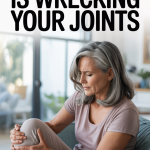
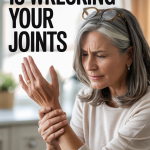
Over 50? This One Thing Is Wrecking Your Joints
Let me start with a simple question.
If you’re over 50, are you tired of joint pain limiting your life?
Maybe your knees ache when you walk up stairs. Your hips feel stiff in the morning. Your hands don’t grip like they used to. Most people shrug and say, “Well, that’s just aging.”
But here’s the truth: joint pain is not just “wear and tear.” And it’s not something you’re doomed to accept.
There’s one hidden force doing the real damage to your joints — and once you understand it, you can start taking back control.
That force is chronic inflammation.
The Myth of “It’s Just Aging”
Millions of adults over 50 deal with daily stiffness, swelling, and discomfort. We’ve been told this is inevitable. Like an old car breaking down.
But that story is incomplete — and honestly, disempowering.
Yes, age plays a role. But research now shows that joint deterioration is driven less by simple mechanical wear and more by a biological process happening inside your body.
You don’t have to accept joint pain as your future. You have more influence over it than you think.
The Silent Saboteur: Chronic Inflammation
You’ve probably heard the word “inflammation.” But not all inflammation is bad.
Acute inflammation is helpful. If you sprain your ankle or cut your finger, your body sends inflammatory cells to heal the damage. That’s a good thing.
Chronic inflammation is different.
It’s low-grade.
It’s persistent.
And it never fully shuts off.
Think of it like a fire that never goes out. It doesn’t rage. It smolders. Day after day. Year after year.
Inside your joints, that smoldering fire releases inflammatory molecules that slowly break down cartilage and damage surrounding tissues.
And after 50, this process ramps up.
“Inflamm-Aging” After 50
There’s even a name for it: inflamm-aging.
As we get older, our bodies naturally develop higher baseline levels of inflammation. Scientists measure this through markers like Interleukin-6 (IL-6), which increase with age and are linked to declining physical function and higher risk of osteoarthritis.
This means inflammation isn’t just a side effect of joint damage.
It’s a driver of it.
And it works in two powerful ways.
How Inflammation Attacks Your Joints
Chronic inflammation damages joints both systemically and locally.
1. Systemic Inflammation
As we age — especially if we gain excess body fat — fat tissue begins producing inflammatory chemicals like IL-6 and TNF-alpha.
These circulate throughout your bloodstream and affect every joint in your body.
It’s a whole-body attack.
2. Local Joint Inflammation
Inside the joint capsule itself, cells begin producing their own inflammatory substances. Even the fat pads inside the knee can become inflammatory hotspots.
These local inflammatory signals directly degrade cartilage and irritate bone surfaces.
The result? Pain, stiffness, and swelling.
But here’s where it gets worse.
The Vicious Cycle of Joint Destruction
As joint cells age, some become senescent cells — often called “zombie cells.”
They stop functioning properly, but they don’t die.
Instead, they constantly pump out inflammatory chemicals and enzymes. This process, called the secretory phenotype, destroys structural proteins in cartilage.
That tissue destruction triggers more inflammation.
More inflammation creates more senescent cells.
And the cycle accelerates.
That’s why joint pain can feel like it’s speeding up over time.
Osteoarthritis: More Than Wear and Tear
For years, osteoarthritis was described as simple “wear and tear.”
That thinking has changed.
Mechanical stress plays a role, yes. But research now shows inflammatory processes are central drivers of cartilage breakdown.
Osteoarthritis is often the final stage of chronic inflammatory assault on your joints.
When cartilage thins and bones rub together, pain becomes constant. Swelling increases. Mobility decreases.
But if inflammation is the root cause, that gives you leverage.
You can target it.
It’s Not Just About Age — It’s About Lifestyle
A healthy, active 60-year-old can have better joints than a sedentary 40-year-old.
Joint pain isn’t just about birthdays.
It’s about daily habits.
Too little movement weakens the muscles that support joints.
Too much high-impact stress without recovery damages them.
But there’s another major driver of inflammation you control every day.
Your diet.

Your Diet May Be Fueling the Fire
If inflammation is the fire, certain foods are gasoline.
Common inflammatory triggers include:
- Sugary drinks
- Processed snacks
- Refined carbohydrates
- Ultra-processed seed oils
- Excess alcohol
These foods increase inflammatory markers in your body and can worsen joint pain.
But here’s the good news:
Food can also be medicine.
The Anti-Inflammatory Diet Solution
An anti-inflammatory diet is one of the most powerful tools for protecting joint health.
Focus on:
- Fatty fish like salmon (rich in omega-3s)
- Leafy greens
- Berries
- Extra virgin olive oil
- Nuts and seeds
- Turmeric and ginger
These foods help reduce systemic inflammation and support cartilage health.
You don’t need perfection. You need consistency.
The Exercise Paradox: Movement Is Medicine
It sounds counterintuitive to move when you hurt.
But the right kind of movement is critical.
Your joints produce synovial fluid — their natural lubricant — when you move. Without movement, that fluid thickens and stagnates.
Low-impact activities like:
- Walking
- Swimming
- Cycling
- Strength training with proper form
…help strengthen supporting muscles and reduce inflammation.
Sedentary living allows inflammation to flourish.
Movement helps control it.
The Weight–Joint Multiplier Effect
Here’s a powerful fact:
For every one pound of body weight you carry, your knees experience about four pounds of pressure when you walk.
That means losing just 10 pounds removes roughly 40 pounds of pressure from your knees with every step.
But it’s not just mechanical.
Excess body fat actively produces inflammatory cytokines, increasing systemic inflammation.
Weight loss is a two-pronged attack:
- Less mechanical stress
- Less inflammatory signaling
The Forgotten Foundations: Hydration, Sleep, and Smoking
Joint health isn’t just about food and exercise.
Hydration
Cartilage is mostly water. Dehydration reduces shock absorption and lubrication.
Sleep
Poor sleep increases inflammatory markers and heightens pain perception. Deep sleep is when tissue repair happens.
Smoking
Smoking damages cartilage, reduces blood flow, and accelerates degeneration.
If you ignore these, progress will stall.
When Lifestyle Changes Aren’t Enough
Sometimes, despite your best efforts, pain persists.
That’s when professional help matters.
Treatment options include:
- Physical therapy
- Anti-inflammatory medications
- Corticosteroid injections
- Hyaluronic acid injections
- Minimally invasive procedures
- Joint replacement in severe cases
Organizations like the Arthritis Foundation and the Cleveland Clinic offer excellent evidence-based resources.
If pain limits your daily life, consult an orthopedic specialist or registered dietitian for personalized guidance.
You don’t have to suffer silently.
Your 5-Step Action Plan (Starting Today)
If you do nothing else, start here:
- Eliminate one inflammatory food this week — sugary drinks are a strong place to begin.
- Add one anti-inflammatory food daily — leafy greens or fatty fish.
- Move for 10–15 minutes each day — low impact.
- Drink at least eight glasses of water daily.
- Prioritize 7–8 hours of sleep.
Small changes.
Done consistently.
Beat drastic overhauls that last two weeks.
A Future With Less Pain
Chronic inflammation may be the force wrecking your joints after 50.
But it’s not unbeatable.
Your grocery choices.
Your movement.
Your sleep.
Your hydration.
Your weight.
These determine whether inflammation wins — or you do.
Life after 50 should be about vitality, not limitation.
Start with one change today.
Your future joints will thank you.