Over 60? 3 Breakfast Foods Ruining Your Health
Let me start with a simple question.
What did you eat for breakfast this morning?
For most people over 60, breakfast is automatic. Same cereal. Same toast. Maybe bacon and eggs on the weekend. It feels harmless. Comforting, even.
But here’s the uncomfortable truth: some of the most common breakfast foods eaten by older adults are quietly working against your health.
This isn’t about dieting. It’s not about cutting calories. It’s about understanding how your body changes after 60 — and adjusting your morning routine to protect your energy, heart, brain, and longevity.
Let’s talk about the three breakfast foods that do the most damage — and what to eat instead.
Why Breakfast Matters More After 60
When you’re younger, your body is more forgiving.
After 60, things shift.
- Your metabolism slows down
- Insulin sensitivity decreases
- Muscle mass naturally declines
- Inflammation becomes easier to trigger
- Blood sugar spikes hit harder and last longer
That means the wrong breakfast doesn’t just give you a mid-morning slump. It can increase your risk of:
- Heart disease
- Type 2 diabetes
- Cognitive decline
- Chronic inflammation
- Certain cancers
Breakfast isn’t just the first meal of the day anymore. It sets the metabolic tone for everything that follows.
Now let’s look at the three biggest offenders.
Dangerous Food #1: Processed Breakfast Meats
Bacon. Sausage. Ham.
They’re traditional. They’re tasty. They feel like a proper breakfast.
But they come with serious risks.
The World Health Organization classifies processed meats as Group 1 carcinogens — the same category as tobacco. That classification isn’t dramatic. It means strong scientific evidence links these foods to cancer, especially colorectal cancer.
What Makes Them Dangerous?
Several things happen when processed meats are cured, smoked, and cooked:
- Nitrates and nitrites can form cancer-causing compounds during digestion.
- Heme iron in red meat can damage colon cells.
- High-heat cooking creates heterocyclic amines, compounds linked to cancer.
- Smoking produces polycyclic aromatic hydrocarbons, another harmful group of chemicals.
And that’s just the cancer side.
The Heart Health Problem
One serving of bacon or sausage can contain close to 1,000 mg of sodium.
Adults over 60 are generally advised to stay around 1,500 mg of sodium per day. That means one breakfast could use up most of your daily allowance.
High sodium plus saturated fat equals:
- Higher blood pressure
- Increased arterial plaque
- Greater stroke and heart attack risk
If your goal is staying independent and active into your 70s and 80s, protecting your cardiovascular system is non-negotiable.
Better Protein Swaps
You don’t have to give up a savory breakfast.
Try:
- Eggs cooked in olive oil
- Uncured turkey or chicken sausage (no added nitrates)
- Greek yogurt
- Black beans
- Cottage cheese
You still get protein and satisfaction — without the chemical burden.
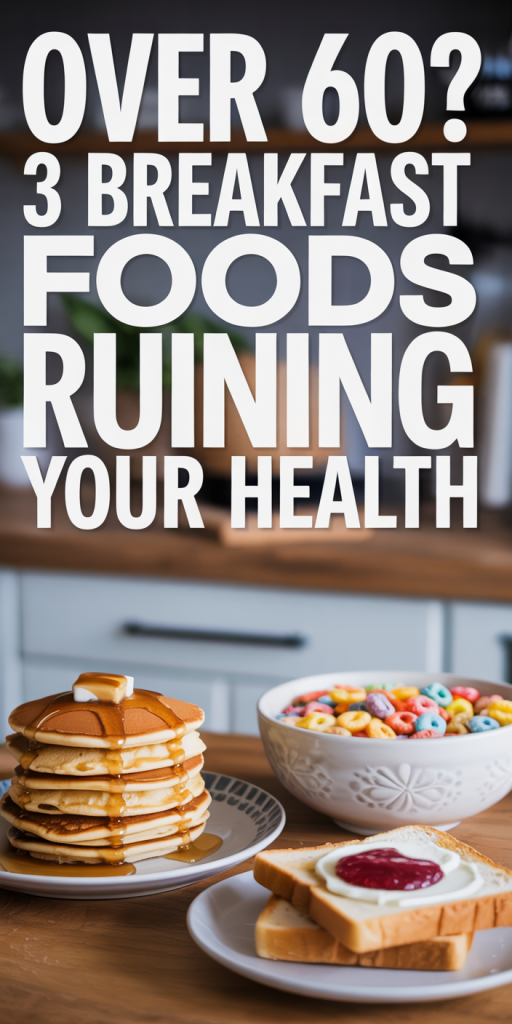
Dangerous Food #2: Sugary Cereals and Pastries
This one surprises people.
Many cereals marketed as “heart healthy” contain 15–30 grams of sugar per serving. That’s equal to — or more than — a candy bar.
The American Heart Association recommends women consume no more than 25 grams of added sugar per day. One bowl of cereal can exceed that before 9 a.m.
Add in pastries, muffins, or donuts — which often contain 20–40 grams of sugar plus refined flour — and you’ve created the perfect metabolic storm.
The Blood Sugar Rollercoaster
Here’s what happens:
- Blood sugar spikes rapidly.
- Your body releases a surge of insulin.
- Blood sugar crashes 1–2 hours later.
- You feel tired, irritable, foggy.
- You crave more sugar.
After 60, insulin sensitivity declines. That means these spikes are sharper — and more damaging.
Over time, this pattern contributes to:
- Weight gain
- Type 2 diabetes
- Chronic inflammation
- Energy instability
But there’s another major concern.
Sugar and Brain Health
Elevated blood sugar is strongly associated with cognitive decline in older adults.
Research shows that even modest increases in blood glucose — in non-diabetics — are linked to a higher risk of dementia.
High sugar intake also contributes to:
- Brain fog
- Memory lapses
- Reduced focus
- Mood instability
If staying mentally sharp matters to you, controlling morning blood sugar is one of the most powerful things you can do.
Smarter Breakfast Choices
Use what I call the “5 and 5 Rule” when shopping:
- At least 5 grams of fiber
- Less than 5 grams of sugar
Better options:
- Steel-cut or rolled oats with berries and nuts
- Plain Greek yogurt with fruit and a small drizzle of honey
- Chia pudding
- High-fiber, low-sugar cereal
Fiber slows glucose absorption. Protein stabilizes energy. Healthy fats protect the brain.
That combination keeps you steady for hours.
Dangerous Food #3: White Bread and Bagels
White toast. Bagels. English muffins.
They seem harmless — especially if you’re avoiding sugar.
But refined grains are essentially concentrated starch.
During processing, the fiber, vitamins, and minerals are stripped away. What remains digests extremely fast and turns into glucose.
Here’s the shocking part:
A plain bagel can have a higher glycemic index than table sugar.
That means it can spike blood sugar even faster.
After 60, that rapid glucose surge:
- Triggers inflammation
- Stresses insulin response
- Promotes fat storage
- Damages blood vessels
The Inflammation Connection
Chronic inflammation is the root driver of many age-related diseases:
- Heart disease
- Arthritis
- Type 2 diabetes
- Alzheimer’s
Refined grains also lack the fiber needed for gut health. A disrupted gut microbiome contributes to systemic inflammation, accelerating the aging process.
The Whole Grain Upgrade
Switch to:
- 100% whole wheat bread
- Sprouted grain bread
- Oats
- Quinoa
- Barley
Look for:
- “100% whole wheat” as the first ingredient
- At least 3 grams of fiber per serving
Fiber acts like a speed bump in digestion. It slows glucose absorption and feeds beneficial gut bacteria.
The result? Steady energy. Lower cholesterol. Reduced inflammation.
When You Eat Matters Too
What you eat is critical. But timing also plays a role.
A long-term study from Mass General Brigham followed nearly 3,000 older adults for over 20 years. Later breakfast timing was associated with:
- Higher mortality risk
- Increased depression
- Chronic fatigue
- Poor sleep
Eating breakfast consistently — and earlier in the morning — helps regulate circadian rhythm and metabolic function.
Your body likes rhythm. It likes consistency.
Give it that.
A Complete Breakfast Strategy After 60
Here’s the simple blueprint:
- Eliminate processed meats.
- Cut sugary cereals and pastries.
- Replace refined grains with whole grains.
- Eat at a consistent, earlier time.
- Include protein, healthy fats, and fiber in every breakfast.
That’s it.
No extreme dieting. No complicated rules.
Just better inputs.
What a Healthy Breakfast Actually Looks Like
Here’s a practical example:
- 2 eggs cooked in olive oil
- 1 slice 100% whole grain toast
- ¼ avocado
- Sautéed spinach or kale
This meal provides:
- High-quality protein for muscle maintenance
- Healthy fats for brain function
- Fiber for blood sugar stability
- Micronutrients for longevity
You’ll feel full. Clear-headed. Energized.
Not shaky. Not foggy. Not hungry an hour later.
The One-Swap Rule
Don’t try to change everything overnight.
Instead:
Pick the one unhealthy breakfast item you eat most often. Replace it for one week.
Then build from there.
Also, read labels. If sugar is higher than fiber, put it back.
And prep ahead. Hard-boil eggs. Make overnight oats. Set yourself up for success.
Small changes, done consistently, reshape long-term health.
The Bottom Line
After 60, breakfast is no longer just routine. It’s strategy.
Avoid:
- Processed meats
- Sugary cereals and pastries
- White bread and bagels
Choose:
- Lean protein
- Healthy fats
- Whole grains
- Fiber-rich foods
Your energy improves.
Your heart benefits.
Your brain stays sharper.
And it all starts tomorrow morning.
Your health is still in your hands. Every single day begins with a choice.