Omega-3s: The Simple Upgrade That Can Change Your Health
It started with a pretty ordinary moment. My mom sat across from her doctor, and after going over her labs, he said something that stuck:
“You need more Omega-3s.”
That one sentence sent us down a rabbit hole. What are Omega-3s? Why do they matter so much? And how do you actually get enough of them without overthinking your diet?
What we found was simple, practical, and honestly kind of eye-opening.
This isn’t about complicated nutrition theory. It’s about understanding one of the most important nutrients your body depends on—and how to start using it to your advantage.
Why Omega-3s Matter More Than You Think
Omega-3s are essential fatty acids. That word essential matters.
Your body cannot make them on its own, so the only way to get them is through food.
And they’re not just “nice to have.” They play a role in:
- Brain function
- Heart health
- Inflammation control
- Hormone balance
- Blood sugar stability
- Skin health
If you’ve ever felt like your energy is off, your focus isn’t sharp, or your body just feels inflamed or sluggish… there’s a good chance Omega-3 intake is part of the equation.
The 3 Types of Omega-3s (And Why Most People Get This Wrong)
Not all Omega-3s are created equal. This is where most people get confused.
There are three main types:
1. ALA (Alpha-Linolenic Acid)
- Found in plant foods like flaxseeds, chia seeds, and walnuts
- Your body has to convert it into usable forms
- Conversion is very inefficient
2. EPA (Eicosapentaenoic Acid)
3. DHA (Docosahexaenoic Acid)
- Found in fish and seafood
- These are the forms your body actually uses directly
If you take one thing from this article, it’s this:
EPA and DHA are the “gold standard” Omega-3s.
Plant sources are great, but they’re more like backup. The real benefits come from getting enough EPA and DHA consistently.
How Much Omega-3 Do You Actually Need?
A good daily target looks like this:
- 1,000 mg of EPA + DHA combined
- Up to ~4,000 mg total Omega-3s
That might sound like a lot, but it’s easier than it sounds.
For example:
- One serving of wild-caught salmon can give you 500–1,500 mg
- A tablespoon of flaxseed adds a strong ALA boost
It’s not about perfection. It’s about stacking a few smart foods daily.
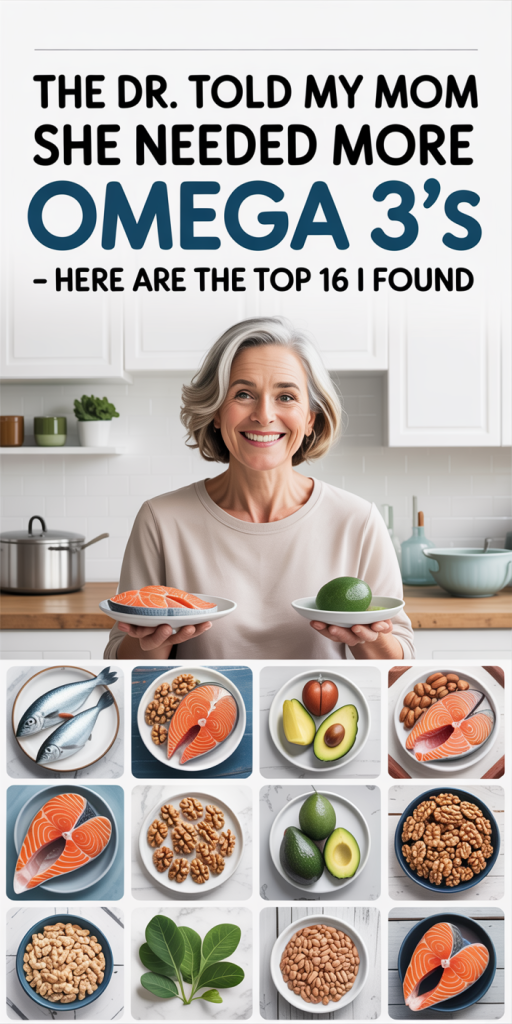
The 16 Best Omega-3 Foods (Simple, Real-World Options)
Let’s break this down into foods you can actually use.
The Heavy Hitters (Highest Impact)
1. Flaxseed Oil
Loaded with ALA. Great for smoothies or salads (don’t cook with it).
2. Atlantic Mackerel
One of the most underrated fish. High in EPA and DHA, affordable, and powerful.
Easy Boost Options
3. Salmon (Wild-Caught)
The go-to. Reliable, nutrient-dense, and easy to cook.
4. Cod Liver Oil
Old-school for a reason. High in Omega-3s plus vitamins A and D.
Plant-Based Add-Ons
5. Walnuts
The only nut with a meaningful Omega-3 profile.
6. Chia Seeds
Throw them into anything—yogurt, smoothies, oatmeal.
Wild Fish Staples
7. Herring
Often overlooked. Packed with Omega-3s and flavor.
8. Wild Alaskan Salmon
Cleaner, more nutrient-dense than farmed options.
Everyday Convenience Foods
9. Ground Flaxseeds
Better absorbed than whole seeds. Easy to sprinkle on anything.
10. Tuna (Skipjack or Light)
Affordable and accessible. Just watch mercury intake.
Budget-Friendly Options
11. White Fish (Cod, Halibut)
Mild, versatile, family-friendly.
12. Sardines
One of the best-kept secrets in nutrition. Cheap, sustainable, and loaded with Omega-3s.
Bonus Sources
13. Hemp Seeds – Great in smoothies
14. Anchovies – Small but powerful
15. Natto (Fermented Soy) – Unique but nutrient-dense
16. Egg Yolks – Small amounts, but consistent intake adds up
What to Avoid (This Matters More Than You Think)
Not all “Omega-3 foods” are equal.
Watch out for:
- Farmed salmon → lower nutrient quality, more contaminants
- Processed foods with added Omega-3s → often low-quality sources
- Conventionally raised meats → poor fatty acid balance
- Low-quality supplements → oxidized oils, fillers
And while popular, krill oil can come with concerns around sourcing and contamination.
When it comes to Omega-3s, quality beats quantity every time.
The Real Benefits (What You Actually Feel)
When you consistently get enough Omega-3s, people often notice:
- Better mental clarity
- More stable energy
- Reduced joint stiffness
- Improved mood
- Healthier skin
- Less inflammation overall
It’s not instant. But over a few weeks, the difference is noticeable.
What the Healthiest Populations Do Differently
If you look at places like:
- Okinawa, Japan
- Mediterranean regions
There’s a clear pattern:
They eat Omega-3-rich foods daily, not occasionally.
That’s linked to:
- Longer lifespans
- Lower rates of heart disease
- Better cognitive health
It’s not a supplement trick. It’s a habit.
What If You Don’t Eat Fish?
You still have options.
Focus on:
- Chia seeds
- Flaxseeds
- Walnuts
- Hemp seeds
- Leafy greens
And most importantly:
Algal oil supplements — this is the best plant-based source of DHA (the one your brain actually uses).
Easy Ways to Start (Without Overthinking It)
You don’t need a full diet overhaul.
Start with 1–2 of these:
- Add chia seeds to breakfast
- Swap in salmon 2–3x per week
- Sprinkle flaxseeds into smoothies
- Keep sardines or tuna stocked
- Use a high-quality fish oil if needed
That’s it.
Small moves. Big impact.
The Bottom Line
That one piece of advice my mom got turned out to be right on the money.
Most people are under-consuming Omega-3s.
And it quietly affects everything—from your brain to your metabolism to your long-term health.
You don’t need to complicate it.
Start simple:
- Add one Omega-3 food today
- Build from there
Your body will respond faster than you think.
Quick Reference: Top Omega-3 Foods
Keep this list handy:
- Flaxseed oil
- Mackerel
- Salmon
- Cod liver oil
- Walnuts
- Chia seeds
- Herring
- Wild salmon
- Ground flaxseed
- Tuna
- White fish
- Sardines
- Hemp seeds
- Anchovies
- Natto
- Egg yolks
If there’s one takeaway, it’s this:
You don’t fix your health with extremes. You fix it with what you do consistently.
Omega-3s are one of the easiest places to start.