Low-Carb Recipes That Actually Taste Amazing: 25 Flavor-Packed Meals to Try
Low-carb cooking has come a long way since the boiled chicken-and-broccoli days. In 2026 I’ve got better ingredients, smarter swaps, and bold flavor techniques that let me eat fewer carbs without giving up anything I love. In this guide I’ll walk through 25 low-carb recipes across breakfasts, lunches, dinners, sides, snacks, and swaps, plus practical tips for meal prep, macros, and flavor-boosting tricks. Whether you’re new to low-carb eating or just need fresh ideas, these recipes prove that low-carb meals can be vibrant, satisfying, and surprisingly simple.
Why Low-Carb Cooking Doesn’t Mean Bland Food
Low-carb doesn’t equal boring, it just means we change what delivers fullness and flavor. Traditional high-carb staples (rice, pasta, bread, sugary sauces) provide texture and satiety, but we can replicate and even improve on those qualities with protein, healthy fats, and low-carb vegetables.
Here’s why the modern low-carb approach tastes great:
- Concentrated flavors: When carbs aren’t diluting a dish, aromatics, herbs, acids, and fats shine through. A hit of lemon or a drizzle of browned butter suddenly becomes the star.
- Texture engineering: Cauliflower, zucchini, and nut flours give us crispness, chew, and crumb without the carb load. We can mimic rice, mash, and even quick breads.
- Umami-forward profiles: Adding anchovy paste, miso, Parmesan, or roasted mushrooms builds depth that keeps meals satisfying.
- Fat as a flavor vehicle: Olive oil, ghee, avocado, and cream carry and amplify taste, so a smaller portion feels richer and more indulgent.
We’ll show throughout this guide how to pair these principles with practical recipes. Expect familiar comfort-food vibes, but lighter in carbs and bolder in taste.
How To Use This Guide (Meal Types, Prep Time, And Macros)
This guide is organized by meal type so you can quickly find breakfast, lunch, dinner, sides, snacks, and ingredient swaps. For each recipe title we’ve kept it short and descriptive, below are notes on how to use them:
- Meal types: Breakfasts are quick and protein-forward: lunches are portable and fast for workdays: dinners focus on family-style satisfaction: sides and swaps make vegetables and low-carb alternatives exciting: snacks and sweets minimize a carb crash.
- Prep time: Most recipes are designed to slot into a busy week. Expect 10–30 minutes for breakfasts and snacks, 20–40 minutes for lunches and dinners, and an hour or less for more elaborate sides or batch cooking.
- Macros: We don’t list exact macro counts for every recipe (individual ingredients and portion sizes vary), but each recipe is intentionally low in net carbs (generally under 10–15 g per serving), moderate to high in protein, and moderate in healthy fats. If you track macros closely, use our meal prep section later in the guide to scale portions and log them accurately.
Quick tip: When you’re short on time, batch-cook a protein (roast chicken, baked salmon) and a versatile base (cauliflower rice, zucchini ribbons) and combine different sauces for variety through the week.
Breakfasts That Start Your Day Right
Breakfast is where low-carb wins easily: eggs, dairy, and vegetables are naturally low in carbs and high in satiety. Here are three recipes to kickstart the morning with flavor and energy.
Savory Egg Muffins With Spinach And Feta
These egg muffins are our go-to for busy mornings. They’re portable, reheat well, and pack protein and veggies into one bite.
Ingredients (approx.): eggs, fresh spinach, crumbled feta, scallions, cherry tomatoes, olive oil, salt, pepper. Whisk eggs with a splash of cream or milk, fold in wilted spinach and feta, pour into greased muffin tins, and bake at 350°F for 18–22 minutes. Add chopped sun-dried tomatoes or cooked bacon for variation.
Why it works: The cheese and olive oil add richness so the smaller carb content feels indulgent. We get protein to stabilize blood sugar and keep hunger away until lunchtime.
Avocado-Salmon Breakfast Bowls With Citrus Dressing
Think of this as brunch in 10 minutes. Layer flaked smoked or cooked salmon over mashed avocado, add cucumber ribbons, radish slices, and a quick citrus-herb dressing (lemon, dill, olive oil). Finish with toasted sesame seeds and a pinch of chili flakes.
Why it works: Healthy fats from avocado and salmon keep us full and satisfied, while the citrus dressing cuts through the richness and amplifies flavors without added sugar.
Quick Keto Pancakes That Hold Together
Keto pancakes can be fluffy without the starch if we balance eggs, almond flour, and a binder like cream cheese or psyllium husk. Blend eggs, cream cheese, almond flour, baking powder, and a touch of vanilla, cook on a nonstick skillet in small pancakes, and serve with a berry compote sweetened with erythritol or allulose.
Why it works: The texture mimics classic pancakes because eggs and the right fat provide structure. Using a low-glycemic sweetener keeps the carbs low while satisfying a sweet craving.
Satisfying Low-Carb Lunches For Busy Days
Lunch should refuel us for an afternoon of focus, not leave us sleepy. These recipes are portable, flavorful, and built to stay interesting on day-two leftovers.
Zesty Chicken Lettuce Wraps With Crunchy Slaw
We roast or quickly sauté bite-sized chicken tossed in a zesty sauce (lime, fish sauce, garlic, and chili), then pile it into butter lettuce leaves with a crunchy slaw of cabbage, carrots, scallions, and a light vinaigrette.
Why it works: Lettuce wraps replace tortillas with minimal fuss, and the slaw adds texture and brightness. Protein and crisp veggies keep us energized and satisfied.
Cauliflower Fried Rice With Shrimp And Veggies
Riced cauliflower is the classic low-carb rice swap. Sauté cauliflower rice in sesame oil with scallions, ginger, garlic, peas (or peas alternatives like chopped green beans), carrots, and shrimp. Finish with soy or tamari and a beaten egg stirred through.
Why it works: The cauliflower takes on the flavors of the pan, and shrimp adds quick-cooking, high-quality protein. This dish reheats well and is under 10 g net carbs per serving when portioned correctly.
Mediterranean Mason Jar Salad With Herbed Dressing
Layer mason jars with a firm base (vinaigrette), then cucumber, cherry tomatoes, olives, roasted red peppers, feta, and grilled chicken or chickpeas if you’re including higher-carb plant options. When you’re ready to eat, shake the jar into a bowl or eat directly.
Why it works: Mason jar salads are ideal for busy weeks because each jar keeps ingredients crisp. The Mediterranean flavor profile (olive oil, lemon, oregano) feels satisfying and fresh without heavy carbs.
Hearty Low-Carb Dinners The Whole Family Will Love
Dinner is where we often fall back on carbs for comfort. These dinners give us the same family-friendly feelings, richness, roastiness, and a comforting sauce, while keeping carbs low.
One-Pan Garlic Butter Steak And Asparagus
Sear seasoned steak in a hot skillet, remove and deglaze with a splash of broth and butter, then return the steak to finish with roasted asparagus. Spoon the garlic-butter sauce over everything.
Why it works: A single pan maximizes flavor through fond (the browned bits) and reduces cleanup, always a win. Steak and butter provide high satiety, and asparagus keeps carbs low while adding crunch and color.
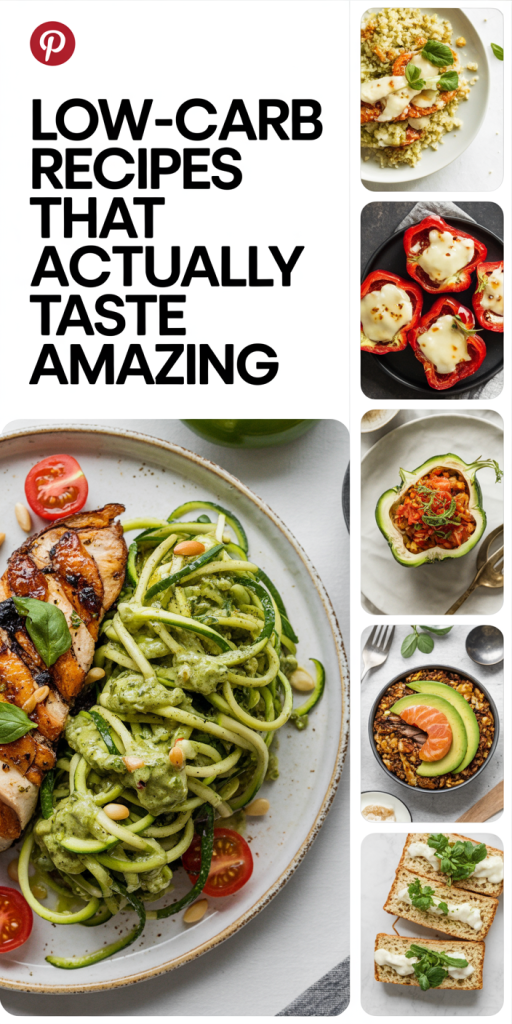
Creamy Tuscan Chicken Over Zucchini Noodles
Sear chicken breasts, remove, then build a creamy sauce with garlic, sun-dried tomatoes, spinach, heavy cream, and Parmesan. Serve over spiralized zucchini tossed lightly in olive oil.
Why it works: The luxurious cream sauce gives that indulgent feeling we associate with carbs (think creamy pasta), while zoodles keep it light and low-carb. For families with picky eaters, serve part of the sauce over a small portion of pasta for the carb-curious.
Baked Salmon With Pesto And Roasted Radishes
Top salmon fillets with a spoonful of herby pesto and roast alongside halved radishes tossed in olive oil and thyme. The radishes caramelize and mellow in the oven, becoming a surprising potato-like side.
Why it works: Pesto is a flavorful shortcut that elevates simple proteins, and roasted radishes are an underused low-carb swap that gives roast texture similar to potatoes without the starch.
Comforting Low-Carb Sides And Swaps
Low-carb sides can make or break a meal. Here we focus on texture and richness so sides feel like part of the indulgence, not an afterthought.
Cauliflower Mash And Cheesy Broccoli Gratin
Cauliflower Mash: Steam cauliflower until very tender, then blend with butter, cream, and a good pinch of salt until silky. Add roasted garlic for extra depth.
Cheesy Broccoli Gratin: Blanch broccoli florets, arrange in a baking dish, pour a béchamel-style sauce made with cream and a small amount of almond flour (or very finely grated Parmesan as a thickener), top with sharp cheddar, and bake until bubbly.
Why it works: Both sides use techniques we associate with comfort food, cream, cheese, and roasting, delivering emotional satisfaction without the carb load of mashed potatoes or a potato gratin.
Low-Carb Bread Alternatives: Cloud Bread And Almond Rolls
Cloud Bread: Whip egg whites to stiff peaks with cream of tartar, fold in whipped yolks mixed with cream cheese and herbs, pipe rounds and bake until set.
Almond Rolls: Combine almond flour, egg, baking powder, and melted butter into a dough, shape into rolls, and bake. Optional additions: rosemary, sesame seeds, or grated Parmesan.
Why it works: These options give us a handheld bread experience for sandwiches or as a side to stew and soups. They won’t bite exactly like wheat bread, but their texture and ability to hold fillings make them practical low-carb replacements.
Snacks, Appetizers, And Sweets Without The Carb Crash
Snacking smart keeps energy steady and prevents overeating at mealtime. These ideas are crunchy, sweet, or creamy, all with minimal carbs.
Spiced Nuts And Herbed Cheese Crisps
Spiced Nuts: Toss raw nuts with melted coconut oil, smoked paprika, cumin, and a pinch of salt, then roast until aromatic. Portion into small snack packs so a little goes a long way.
Herbed Cheese Crisps: Grate sharp cheddar, sprinkle small mounds on a parchment-lined sheet, top with dried herbs, and bake until golden and crisp.
Why it works: Nuts provide sustained energy via fat and protein: cheese crisps satisfy a crunchy, salty craving with zero carbs.
Keto Chocolate Mousse And Berry Parfait Alternatives
Chocolate Mousse: Melt high-quality dark chocolate (70–85% cacao) with butter or coconut oil, fold into whipped cream or aquafaba for a lighter texture, and sweeten sparingly with allulose or erythritol. Refrigerate until set.
Berry Parfait Alternative: Layer strained Greek yogurt (full-fat) sweetened lightly, with macerated berries (fresh berries with a touch of lemon and a low-carb sweetener) and toasted nuts for crunch.
Why it works: A small portion of rich, chocolate mousse satisfies chocolate cravings because fat carries flavor. The berry parfait satisfies texture contrast and the desire for something fruity without a big sugar hit.
Smart Ingredient Swaps To Boost Flavor And Cut Carbs
The secret to great low-carb cooking is knowing which ingredients you can swap and how the swap changes flavor and texture. Below are strategic swaps we use regularly.
Best Low-Carb Flours, Sweeteners, And Thickening Tricks
Flours:
- Almond flour: Great for baking and forming crumb structures: adds a mild nutty flavor.
- Coconut flour: Very absorbent, use sparingly and pair with extra eggs or liquid.
- Ground flax and psyllium husk: Excellent for adding structure and chew in breads.
Sweeteners:
- Allulose and erythritol: Taste closest to sugar with fewer aftertastes: work well in baking and sauces.
- Monk fruit blends: Good for those avoiding sugar alcohols: excellent in beverages and some baked goods.
Thickeners:
- Xanthan gum and glucomannan (konjac): Powerful thickeners: use a little at a time.
- Egg yolks and reduction: Natural thickeners that add creaminess: reduce sauces to concentrate flavor rather than adding starches.
Why it works: Picking the right low-carb ingredient for the job keeps texture and mouthfeel intact. Often a combination (e.g., almond flour + psyllium) gives the best result.
Flavor Boosters: Umami, Acids, And Textural Additions
Umami:
- Anchovy paste in small amounts elevates savory sauces without tasting fishy.
- Miso and soy/tamari add depth to dressings and marinades.
Acids:
- Lemon, lime, sherry vinegar, and apple-cider vinegar brighten dishes and balance richness.
Texture:
- Toasted seeds and nuts add crunch: pork rinds can be ground for a crispy coating: roasted vegetables with high-heat caramelization mimic roasted potatoes.
Why it works: Fat and low-carb veggies can feel heavy if unbalanced. Acids cut richness: umami adds depth: crunch keeps the eating experience satisfying.
Practical pairing: Use a splash of acid at the end of a creamy sauce to lighten it. Add a pinch of anchovy paste to tomato-based sauces for a deeper savory backbone.
Meal Prep Tips, Portioning, And Tracking Macros Easily
We want low-carb cooking to be sustainable, not a daily chore. These meal-prep strategies help us save time and track macros without stress.
Batch Cooking Templates And Freezer-Friendly Options
Weekly template idea:
- Protein: Roast a whole chicken or batch-cook ground beef/turkey. Portion into 4–6 servings.
- Base: Make a large container of cauliflower rice and a tray of roasted mixed vegetables.
- Sauces: Prep two sauces (one savory, chimichurri or pesto: one creamy, tahini-lemon or yogurt-based). Sauces keep meals from feeling repetitive.
Freezer-friendly items:
- Meatballs (almond-flour binder) or assembled casseroles (covered) freeze well.
- Cloud bread and almond rolls can be frozen and toasted directly from frozen.
Storage tips: Label containers with date and contents. Use clear meal containers so you can visually rotate meals and avoid waste.
How To Scale Recipes For Families Or Meal Plans
Scaling basics:
- Multiply proteins and bases by number of servings, then adjust herbs and acids to taste (these don’t always scale linearly).
- For picky eaters, cook a small portion of a neutral carb (rice or regular pasta) alongside low-carb options so everyone’s happy while keeping the family’s overall carb load lower.
Tracking macros:
- Use a kitchen scale and a nutrition app to log one prototype serving, then save it as a custom recipe. That way we only log once and paste for every future batch.
- If you prefer not to be precise, follow plate method guidelines: half non-starchy veggies, one-quarter protein, one-quarter healthy fats (or low-carb base). This approach keeps carbs low while simplifying portioning.
Why it works: Meal prep reduces decision fatigue and helps us stick to flavor-forward low-carb choices. Frozen components let us assemble fresh-feeling meals even on hectic days.
Conclusion
Low-carb eating in 2026 isn’t about sacrifice, it’s about smarter choices that increase flavor, texture, and satisfaction while reducing carbs. From savory egg muffins to zucchini noodle dinners, our 25 recipes and technique-driven tips show that you can have variety, convenience, and indulgence without the carb crash.
Start small: pick two breakfasts, two lunches, and a few sides you like and rotate them. Use the ingredient swaps and flavor boosters to keep things interesting. And remember: meal prep is your ally, a little planning makes flavorful low-carb eating effortless.
If we keep experimenting with bold flavors, umami-rich ingredients, and fun textural swaps, low-carb cooking becomes not a limitation but a creative challenge, one that rewards us with meals that actually taste amazing.