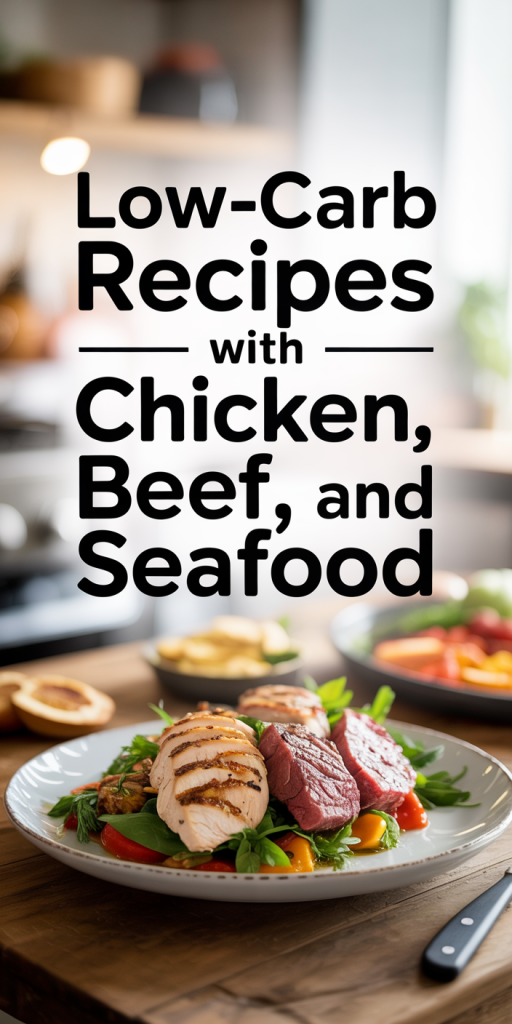
Low-Carb Recipes With Chicken, Beef, And Seafood: 25 Easy Dinners To Cut Carbs Without Sacrificing Flavor
Cutting carbs doesn’t mean giving up bold, satisfying dinners. In this guide we share 25 easy low-carb recipes centered on chicken, beef, and seafood that deliver big on flavor and minimal on carbs, plus practical pantry tips, meal-prep strategies, and nutrition guidance so you can make weeknight cooking simple. Whether you’re following a keto, paleo, gluten-free, or diabetes-friendly plan, you’ll find adaptable recipes and time-saving hacks that keep meals interesting and realistic for busy lives.
Why Low-Carb Eating Works — Benefits And When To Choose It
Low-carb eating has moved well beyond a fad: it’s now a practical nutritional approach for many goals: weight loss, blood sugar control, improved triglycerides, and sometimes better appetite regulation. When we reduce refined carbs, think white bread, sugary drinks, and high-starch sides, the body relies more on dietary fat and stored fat for fuel. That shift can translate into steady energy and fewer blood sugar spikes for people with insulin resistance or type 2 diabetes.
When to choose a low-carb plan:
- If you’re chasing fat loss and want a simpler way to lower calorie intake without constant portion counting. Lowering carbs often reduces hunger.
- If you have prediabetes or type 2 diabetes: many studies show improved glycemic control on lower-carb diets.
- If you feel sluggish after carb-heavy meals and want steadier energy across the day.
- If you’re already comfortable with moderate-to-high protein and higher healthy-fat meals.
When to be cautious:
- Athletes or highly active people who require large glycogen reserves may need targeted carbs around workouts.
- People with certain medical conditions (e.g., pancreatitis, advanced kidney disease) should consult a clinician before major dietary changes.
- Pregnant or breastfeeding women should get personalized guidance.
Net carbs vs. total carbs: Many low-carb plans use net carbs (total carbs minus fiber and certain sugar alcohols) because fiber doesn’t raise blood glucose. We prefer focusing on whole, minimally processed foods, lean proteins, nonstarchy vegetables, healthy fats, which keeps things simple and sustainable.
In this text we focus on practical, flavorful dinners using chicken, beef, and seafood so you can stay satisfied while cutting carbs.
Essential Pantry Ingredients, Tools, And Substitutes For Low-Carb Cooking
Stocking a low-carb pantry makes weeknight dinners fast and flexible. Below are ingredients and tools we rely on, plus smart substitutes to keep recipes low in net carbs without sacrificing texture or taste.
Pantry staples:
- Olive oil, avocado oil, and ghee: for high-heat searing and flavor.
- Canned tomatoes (no-sugar-added): useful in sauces and stews.
- Low-sodium chicken/beef broth: base for braises and risottos.
- Coconut milk (full-fat): for creamy sauces and curries.
- Dijon mustard, apple cider vinegar, soy sauce or tamari (gluten-free option): flavor builders.
- Nuts and seeds (almonds, walnuts, chia): for texture and healthy fats.
- Almond flour and pork rind crumbs: great low-carb binder/breading alternatives.
- Shirataki noodles and spaghetti squash: low-carb noodle substitutes.
- Nutritional yeast: cheesy flavor without carbs.
- Stevia or erythritol: optional sweeteners for sauces/dressings.
Fresh produce to always have on hand:
- Leafy greens (spinach, kale, lettuce for wraps), broccoli, cauliflower, zucchini, asparagus, bell peppers, and avocados.
- Fresh herbs (parsley, cilantro, dill) and aromatics (garlic, onions, shallots) for flavor.
Tools that speed low-carb cooking:
- A heavy skillet (cast iron or stainless steel) for good searing.
- Instant Pot or pressure cooker: fast braises and stews.
- Sheet pans: for one-pan roasted proteins and vegetables.
- Spiralizer or a julienne peeler: to turn zucchini into noodles.
- Food processor: for cauliflower rice and nut crusts.
Smart low-carb swaps:
- Rice → cauliflower rice (roughly 75–90% fewer carbs).
- Pasta → shirataki noodles or spiralized vegetables.
- Breadcrumbs → almond flour or crushed pork rinds (1:1 by volume is a decent start, though texture varies).
- Regular milk → unsweetened almond milk or half-and-half for creaminess.
Flavor tip: When we replace a carb-centric element, we compensate with acid, herbs, or a crunchy element to make the dish feel complete, a squeeze of lemon, a handful of fresh herbs, or toasted nuts every time.
Quick And Versatile Low-Carb Chicken Recipes
Chicken is lean, affordable, and forgiving, perfect for low-carb dinners. Here are four chicken-centered recipes that are quick, adaptable, and crowd-pleasing.
Garlic Herb Chicken Thighs With Roasted Broccoli
Why we love it: Bone-in or boneless chicken thighs stay juicy and develop deep flavor with minimal effort.
Essentials: Season thighs with salt, pepper, minced garlic, lemon zest, and chopped thyme. Roast at 425°F on a sheet pan with broccoli florets tossed in olive oil and smoked paprika for about 25–30 minutes until skin is crisp and broccoli is caramelized. Finish with lemon juice and parsley.
Low-carb notes: Serve as-is or over a bed of cauliflower rice to soak up pan juices.
Creamy Tuscan Chicken (Low-Carb Version)
Why we love it: Rich, garlic-forward sauce with sun-dried tomatoes and spinach, decadent without pasta.
Method: Sear seasoned chicken breasts: remove. In the same pan sauté garlic and shallots, deglaze with a splash of white wine (optional), stir in sun-dried tomatoes, heavy cream, and a handful of grated Parmesan. Add spinach until wilted, return chicken and simmer until cooked through.
Swap note: Use coconut cream for a dairy-free, paleo-friendly twist.
Chicken Lettuce Wraps With Spicy Peanut Sauce
Why we love it: Light, crunchy, and customizable, great for a make-at-home casual dinner.
Filling: Cook ground chicken with ginger, garlic, green onion, water chestnuts (optional), and a splash of tamari. Sauce: mix natural peanut butter, lime juice, a touch of chili paste, and warm water to thin. Spoon into butter lettuce leaves: top with cilantro and chopped peanuts.
Low-carb hack: Use powdered peanut butter if you want fewer calories but keep the flavor.
One-Pan Lemon Pepper Chicken With Zucchini Noodles
Why we love it: Minimal dishes, big flavor, and a satisfying ‘pasta’ feel without the carbs.
Prepare: Season chicken cutlets with lemon pepper, sear until golden, remove. Sauté minced garlic and cherry tomatoes briefly, add spiralized zucchini and cook 1–2 minutes (don’t overcook), return chicken, finish with lemon juice and grated Parmesan.
Timing tip: Spiralize zucchini just before cooking to avoid excess moisture.
These chicken recipes average 10–20 minutes active cooking time and can be scaled up for meal prep.
Hearty And Flavorful Low-Carb Beef Recipes
Beef brings umami and satiety, perfect for low-carb dinners that feel indulgent but are carb-conscious. Here are four recipes that cover stir-fries, skillet dinners, and slow-cooker convenience.
Beef Stir-Fry With Bell Peppers And Shirataki Noodles
Why we love it: Quick, saucy, and great for using lean cuts like flank or skirt steak.
Method: Slice steak thin against the grain, marinate briefly in tamari, sesame oil, and a touch of rice vinegar. High-heat sear in batches, add sliced bell peppers and onions, toss with a sauce made from tamari, chili garlic sauce, and a low-carb sweetener if desired. Drain and rinse shirataki noodles, then toss into the pan to coat and warm.
Texture tip: Pat steak very dry and use a rippingly hot pan for a good sear.
Keto Beef And Cabbage Skillet
Why we love it: One-skillet comfort that’s hearty, inexpensive, and freezes well.
Ingredients: Ground beef browned with onion and garlic, shredded green cabbage, tomato paste, smoked paprika, and beef broth. Simmer until cabbage is tender and sauce concentrates. Finish with apple cider vinegar for brightness.
Carb note: Cabbage is low-carb and high-fiber, making this an excellent filling choice.
Steak With Garlic Butter And Cauliflower Mash
Why we love it: Classic steakhouse flavors at home with a low-carb mash that feels like mashed potatoes.
Steak: Season with salt and pepper, sear in a hot skillet to desired doneness, rest, and top with garlic-herb compound butter. Mash: Steam cauliflower until tender, then blend with cream, butter, and a splash of Parmesan until smooth.
Pro tip: For an ultra-creamy mash, use a high-speed blender or immersion blender.
Slow-Cooker Bunless Cheeseburger Bowls
Why we love it: Hands-off cooking with diner-style flavors, perfect for meal prep.
Build: Slow-cook ground beef or chuck roast with diced onions, garlic, Worcestershire sauce, and tomato paste. Shred or crumble when done. Serve over shredded lettuce or cauliflower rice with pickles, grated cheddar, diced tomatoes, and mustard.
Make-ahead: The meat reheats beautifully and maintains flavor for 3–4 days in the fridge.
Fresh And Satisfying Low-Carb Seafood Recipes
Seafood cooks fast and often needs few ingredients to shine. Here are four seafood recipes that are light, nutrient-dense, and low in carbs.
Garlic Butter Shrimp Skillet With Asparagus
Why we love it: Takes 10 minutes, pairs protein with fibrous veggies, and uses minimal cleanup.
Method: Sauté shrimp in butter and olive oil with lots of garlic, add trimmed asparagus and a splash of lemon. Finish with chopped parsley and red pepper flakes.
Serving ideas: Serve over a small bed of cauliflower rice or alongside a simple mixed-green salad.
Baked Salmon With Dill Yogurt Sauce And Green Beans
Why we love it: Salmon delivers omega-3s and a simple yogurt-dill sauce adds freshness without many carbs.
Method: Season salmon with salt, pepper, and lemon slices, bake at 400°F for 10–12 minutes. Sauce: plain Greek yogurt (or dairy-free coconut yogurt), fresh dill, lemon zest, and minced cucumber. Roast green beans on the same pan for a full meal.
Swap: For paleo or dairy-free, use a tahini-lemon sauce instead of yogurt.
Seared Scallops Over Cauliflower Risotto
Why we love it: Elegant enough for guests, but quick to prepare.
Risotto: Sauté riced cauliflower with shallot, white wine (optional), and simmer in warm chicken broth until tender: finish with butter and Parmesan. Scallops: Pat very dry, sear in a hot pan 1–2 minutes per side until caramelized.
Texture tip: Don’t overcrowd scallops in the pan – you want a golden crust.
Tuna-Stuffed Avocado Boats
Why we love it: No cooking required: high in healthy fats and simple for packed lunches.
Filling: Mix canned tuna (in water) with mayo, Dijon, celery, chopped dill, lemon juice, salt, and pepper. Spoon into halved avocados: top with sesame seeds or chopped pickled jalapeño for heat.
Portioning: This is an excellent option for a satiating, low-carb weekday lunch or light dinner.
Meal Prep, Batch Cooking, And Time-Saving Tips For Weeknight Low-Carb Dinners
Low-carb meals are especially meal-prep friendly. With a few strategic batches and simple storage methods we can have ready-to-eat dinners all week.
How To Scale Recipes, Store Leftovers, And Reheat Without Losing Texture
Scaling: Most skillet and roast recipes scale linearly: double or triple protein and vegetables in a larger pan or multiple sheet trays. When doing sheet-pan dinners, keep similar-cooking-time items together to avoid over- or undercooking.
Storing leftovers: Cool food quickly and store in shallow airtight containers. Proteins like chicken, beef, and fish keep well in the fridge for 3–4 days. Cooked low-carb vegetables (broccoli, asparagus, cauliflower rice) keep 3–5 days.
Reheating without sogginess:
- Oven or toaster oven (375°F) for 8–12 minutes revitalizes roasted vegetables and crisps surfaces.
- Skillet reheat on medium heat with a small splash of oil to sear and evaporate excess moisture.
- Avoid microwaving fried or crusted items for long stretches, they turn limp. If microwaving, finish briefly in a hot skillet.
Batch-cooking proteins: Roast a tray of seasoned chicken thighs, slow-cook a chuck roast, or pan-sear a sheet of salmon. Pre-sliced steak or shredded beef can be transformed across multiple meals (salads, bowls, stir-fries).
Make-Ahead Sauces, Protein Prep, And Veggie Hacks
Make-ahead sauces: Whip up dressings, compound butter, chimichurri, spicy mayo, and creamy yogurt sauces in advance, they keep 4–7 days refrigerated and instantly elevate leftovers.
Protein prep: We like pre-portioning cooked proteins into single-serving containers for grab-and-go meals. Marinating proteins overnight also reduces hands-on time.
Veggie hacks:
- Cauliflower rice: Pulse raw cauliflower in a food processor and freeze in portions. Sauté from frozen for 5–7 minutes.
- Spiralized veggies: Spiralize zucchini and pat dry: store between paper towels to absorb moisture.
- Roasted vegetable medley: Roast a big pan of mixed nonstarchy vegetables: use across bowls, omelets, and sides.
Labeling and rotation: Label containers with date and contents. Use more perishable items early in the week and freeze items intended for later.
With these strategies we halve dinner stress and keep low-carb meals tasting freshly made.
Nutrition, Macros, And Portion Guidance For Low-Carb Meals
Understanding macros helps us tailor low-carb dinners to our goals while ensuring balanced nutrition.
Estimating Carbs, Protein, And Fat Per Serving
Simple macro estimates per typical low-carb dinner plate:
- Protein: 25–40 grams (4–6 oz of chicken, beef, or fish). This supports satiety and muscle maintenance.
- Carbs: 5–30 grams net, depending on vegetable choices and whether we include low-carb substitutes (e.g., cauliflower rice vs. a small serving of sweet potato). A strict keto meal often stays under 10–15 grams net per meal.
- Fat: 15–40 grams, coming from cooking oils, butter, dressings, and natural fats in meats and fish.
Practical method: Use a food scale and apps or nutrition labels for precision when tracking. For general, non-tracking use, fill half your plate with low-carb vegetables, one-quarter with protein, and one-quarter with healthy fats or a low-carb starchy substitute if desired.
Adjusting Portions For Weight Loss, Maintenance, Or Muscle Gain
- Weight loss: Reduce calorie-dense fats slightly if total daily calories are too high, keep protein high to preserve lean mass, and focus on lower-calorie vegetables.
- Maintenance: Keep portions steady and let hunger cues guide small adjustments. Balance fat and protein to prevent overeating.
- Muscle gain: Increase protein (aim for 0.7–1.0 g per pound of body weight depending on training) and add slightly more carbs around workouts if needed, e.g., small sweet potato or more starchy vegetables on training days.
Hydration and electrolytes: Low-carb eating can lower insulin and reduce sodium retention: we encourage adequate salt, magnesium, and potassium intake, through food (leafy greens, avocados, nuts) or supplements if needed, especially in the first weeks.
For people with diabetes: Monitor blood glucose to see how different meals affect you and work with a healthcare provider to adjust medications if you significantly lower carbs.
Adapting Recipes For Specific Diets And Restrictions (Keto, Paleo, Gluten-Free, Diabetes-Friendly)
Low-carb recipes are inherently adaptable. Here are practical swaps and safety notes to tailor dishes for common dietary patterns.
Simple Swaps To Make A Recipe Keto Or Paleo Compliant
Keto adjustments:
- Increase healthy fats (butter, olive oil, fatty fish) and keep carbs typically under 20–50 g per day depending on personal targets.
- Use heavy cream, full-fat coconut milk, and extra olive oil or avocado.
Paleo adjustments:
- Remove dairy: swap cream and yogurt for coconut cream or blended cashew cream.
- Use naturally derived sweeteners sparingly (maple syrup is technically paleo but adds carbs: we avoid it in low-carb contexts).
Cross-compatible tips: Many seafood and chicken recipes adapt easily: for example, swap Parmesan (not paleo) for nutritional yeast or a nut-based crumb.
Reducing Sodium And Managing Allergens
Reducing sodium:
- Choose low-sodium broths and tamari, then add brightness with acid (lemon, vinegar) and herbs to boost flavor without salt.
- Use fresh aromatics and toasted spices for depth.
Managing common allergens:
- Nuts: For nut-free low-carb crumbs, use crushed seeds (sunflower) or crushed pork rinds for those who consume pork products.
- Dairy: Use coconut cream, olive-oil–based sauces, or nut-based creams when dairy is a problem.
- Shellfish/fish allergies: Substitute chicken or beef where possible: e.g., swap shrimp in a skillet for diced chicken.
Diabetes-friendly considerations: Prioritize nonstarchy vegetables, lean proteins, and measured portions of higher-glycemic items. Pair carbs with protein and fat to blunt glucose spikes. Continuous glucose monitoring or frequent checks can inform personal adjustments.
We recommend working with a registered dietitian or clinician when combining low-carb eating with medication adjustments or managing multiple allergies.
Conclusion
Low-carb cooking needn’t be complicated or flavorless. By centering meals on chicken, beef, and seafood and leaning on bold herbs, acids, and well-made sauces, we create dinners that satisfy both appetite and health goals. Use the pantry staples and tools above, batch-cook when you can, and apply the swaps to fit keto, paleo, gluten-free, or diabetes-friendly needs. With a few simple routines, prepped proteins, make-ahead sauces, and smart reheating, we can enjoy 25 easy, low-carb dinners that keep things varied, flavorful, and realistic for busy weeks. Let’s get cooking.