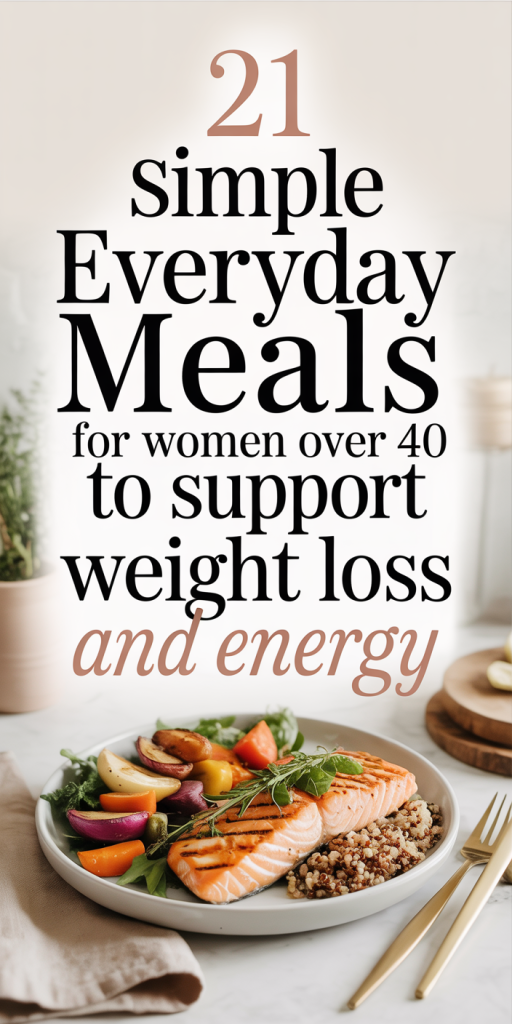
21 Simple Everyday Meals For Women Over 40 That Boost Weight Loss And Energy
As we move through our 40s, our bodies and lifestyles shift, hormones change, muscle mass slowly declines, and our energy needs evolve. That doesn’t mean dieting or deprivation: it means choosing meals that support metabolism, keep blood sugar steady, preserve lean mass, and fuel busy days. In this guide we share 21 simple everyday meals for women over 40 that focus on protein, fiber, healthy fats, and smart timing so you feel energized and lose weight sustainably. Each recipe is quick, realistic for weeknights or meal prep, and paired with a short explanation of why it supports weight loss and energy in 2026’s nutritional landscape.
Why Nutrition Changes After 40 Matter For Weight And Energy
After 40, a few predictable physiological shifts change how we should eat. Metabolism often slows because of reduced resting metabolic rate and modest loss of lean muscle. Hormonal changes, especially around perimenopause and menopause, can affect insulin sensitivity, appetite, and how fat gets stored. Sleep quality sometimes dips, and stress can spike cortisol, which influences energy and cravings. All of this means that the same meals that worked in our 20s or 30s may no longer support weight control or steady energy.
So what should we prioritize? First, preserving muscle is paramount: muscle burns calories and helps maintain functional fitness. That means a consistent focus on protein across meals. Second, stabilizing blood sugar prevents energy crashes and late-night snacking: fiber and balanced carbohydrates matter. Third, healthy fats and micronutrient-dense foods support hormones and satiety. Finally, timing, spreading protein across the day and avoiding long carbohydrate-only gaps, helps maintain both energy and metabolic health.
We’ll be realistic: we need meals that fit real lives, short cook times, easy ingredients, and options for batch cooking. Below we outline core principles, then give 21 practical recipes built around those ideas, plus a sample 7-day meal plan to help you begin.
Core Principles To Prioritize: Protein, Fiber, Healthy Fats, And Timing
We follow four guiding principles when assembling meals for women over 40:
- Prioritize Protein at Every Meal
- Aim for 20–35g of protein per main meal when possible. That supports muscle maintenance, increases satiety, and has a higher thermic effect (we burn more calories digesting protein).
- Good choices: skinless poultry, fish, eggs, dairy or fortified plant-based proteins (tofu, tempeh, legumes), and protein-rich grains like quinoa.
- Build Each Plate Around Fiber
- Fiber slows glucose absorption, reduces hunger, and supports gut health. Include vegetables, fruit, whole grains, legumes, nuts, and seeds.
- We favor non-starchy veg (leafy greens, crucifers) and controlled portions of starchy carbs (sweet potato, brown rice) timed around activity.
- Include Healthy Fats for Hormone Support and Satiety
- Avocado, olive oil, fatty fish, nuts, and seeds provide omega-3s and monounsaturated fats that help hormonal balance and keep us full.
- Keep portions mindful, fats are calorie-dense but highly satisfying.
- Timing & Distribution
- We spread protein across the day instead of loading at dinner. A protein-rich breakfast and balanced lunches prevent midafternoon energy dips.
- Pair carbs with protein or fat to blunt blood-sugar spikes. Post-workout meals should emphasize protein and some carbs for recovery.
We also value simplicity: choose recipes that scale for leftovers, freeze well, or require five ingredients plus pantry staples. Below, each meal lists why it works for weight and energy, so you can adapt confidently.
How To Use These 21 Meals: Portions, Easy Swaps, And Meal-Prep Tips
We designed these 21 meals to be mixed-and-matched across the week. Here are practical rules for portions, swaps, and prepping.
Portion cues
- Protein: a palm-sized portion for women is a good starting point (roughly 3–5 oz cooked) at main meals: if you’re active, choose the larger end.
- Vegetables: aim to fill half your plate with non-starchy vegetables.
- Carbs: a cupped hand for denser carbs (rice, potatoes, quinoa) or one small starchy item per meal.
- Fats: ~1 tablespoon olive oil, 2 tbsp nuts, or 1/4 avocado per meal as a guide.
Easy swaps
- Swap animal protein with plant-based options: swap grilled chicken for tempeh or lentils: replace Greek yogurt with a fortified plant-based yogurt plus a scoop of protein powder.
- If dairy bothers you, choose lactose-free or fermented options: many fermented foods also help gut health.
- For gluten sensitivity, use certified gluten-free oats and quinoa.
Meal-prep tips
- Batch-cook proteins (bake chicken breasts, roast salmon, make a pot of lentils) and store in airtight containers for 3–4 days.
- Pre-chop vegetables and roast a large tray of mixed veggies for grabs.
- Use mason jar salads or layered bowls for ready-to-go lunches: dressing at the bottom, sturdy veg next, protein on top.
- Freeze individual portions of soups, stews, and casseroles in portion-sized containers for easy reheating.
We recommend picking 7–10 recipes from the list and repeating them in different combinations over two weeks. That keeps shopping simple and reduces decision fatigue while delivering nutritional variety.
21 Simple Everyday Meals (Quick Recipes And Why They Work)
Below we list 21 recipes grouped by breakfast, lunches, dinners, and snacks. Each recipe includes ingredients, quick instructions, and a short explanation of why it supports weight loss and energy.
Breakfasts (5)
- Greek Yogurt Power Bowl
Ingredients: 1 cup plain Greek yogurt, 1/4 cup berries, 2 tbsp chopped walnuts, 1 tbsp chia, drizzle of honey (optional).
Instructions: Layer yogurt, berries, and toppings. Stir chia in and eat immediately.
Why it works: High protein + fiber and omega-3 from walnuts keep blood sugar steady and curb mid-morning snacking.
2. Savory Spinach & Feta Omelette
Ingredients: 2 eggs + 1 egg white, 1 cup baby spinach, 1 oz feta, 1 tsp olive oil.
Instructions: Sauté spinach in oil, whisk eggs, cook into an omelette, sprinkle feta.
Why: Eggs provide complete protein: spinach adds fiber and micronutrients that support energy.
3. Oat + Protein Smoothie
Ingredients: 1/2 cup oats, 1 scoop protein powder, 1 small banana, 1 cup unsweetened milk, ice.
Instructions: Blend until smooth.
Why: Oats add soluble fiber for slow-release energy: protein powder ensures adequate morning protein.
4. Cottage Cheese + Fruit Toast
Ingredients: 3/4 cup cottage cheese, 1 slice whole-grain toast, 1/2 cup sliced peaches or berries.
Instructions: Top toast with cottage cheese and fruit.
Why: Combines carbs and protein to prevent energy dips, plus calcium for bone health.
5. Smoked Salmon & Avocado Plate
Ingredients: 2 oz smoked salmon, 1/2 avocado, 1 cup mixed greens, lemon.
Instructions: Arrange salmon over greens, slice avocado, squeeze lemon.
Why: Omega-3s and protein support inflammation control and satiety.
Lunches (6)
6. Quinoa & Black Bean Bowl
Ingredients: 1 cup cooked quinoa, 1/2 cup black beans, 1 cup roasted veg, 1 tbsp olive oil, cilantro, lime.
Instructions: Toss ingredients together and dress with lime and oil.
Why: Plant protein + fiber-packed beans stabilize glucose and provide sustained energy.
7. Turkey, Apple & Arugula Wrap
Ingredients: 3–4 oz sliced turkey, whole-grain wrap, handful arugula, thin apple slices, 1 tbsp mustard.
Instructions: Layer and roll.
Why: Lean protein plus fiber-rich apple keeps calories controlled and hunger low.
8. Lentil & Veggie Soup
Ingredients: 1 cup cooked lentils, carrots, celery, onion, 4 cups low-sodium broth, herbs.
Instructions: Sauté veg, add broth and lentils, simmer 15–20 minutes.
Why: High-fiber, protein-rich, and hydrating, great for weight control and fullness.
9. Mediterranean Chickpea Salad
Ingredients: 1 cup chickpeas, cucumber, tomato, olives, 1 tbsp olive oil, lemon, parsley.
Instructions: Combine and toss.
Why: Chickpeas provide protein and resistant starch: healthy fats help with satiety.
10. Chicken & Veggie Mason Jar Salad
Ingredients: 4 oz grilled chicken, mixed greens, cherry tomatoes, bell pepper, 1 tbsp vinaigrette.
Instructions: Layer in jar (dressing bottom), shake when ready to eat.
Why: Portable protein-rich lunch that avoids soggy greens and keeps portions in check.
11. Sardine & Avocado Toast
Ingredients: 1 can sardines (in water), 1/2 avocado, 1 slice whole-grain bread, lemon.
Instructions: Mash avocado on toast, top with sardines, squeeze lemon.
Why: Sardines deliver protein, calcium, and omega-3s, nutrient-dense and satisfying.
Dinners (8)
12. Baked Salmon with Asparagus
Ingredients: 4–6 oz salmon, asparagus spears, 1 tbsp olive oil, lemon, salt & pepper.
Instructions: Roast salmon and asparagus at 400°F for 12–15 minutes.
Why: Fatty fish supports hormones and inflammation control: simple, fast, and filling.
13. Turkey & Vegetable Stir-Fry
Ingredients: 4 oz ground turkey, mixed bell peppers, broccoli, 1 tbsp soy sauce, garlic, ginger.
Instructions: Sauté turkey, add veg and sauce, cook until tender-crisp.
Why: High-protein lean meat with fiber-rich veg: fast to make and low in calories.
14. Shrimp & Zucchini Noodle Scampi
Ingredients: 4–6 oz shrimp, 2 cups spiralized zucchini, 1 tbsp olive oil, garlic, lemon.
Instructions: Sauté garlic and shrimp, add zucchini noodles, toss briefly.
Why: Low-carb, protein-forward dinner that’s light but satisfies cravings for pasta.
15. Lentil Bolognese over Spaghetti Squash
Ingredients: 1 cup cooked lentils, 1 cup marinara, 1 small spaghetti squash, Italian herbs.
Instructions: Roast squash, heat lentils with marinara, spoon over squash.
Why: Plant-based protein with fiber-rich squash mimics comfort food without excess calories.
16. Chicken, Sweet Potato & Kale Tray Bake
Ingredients: 4–6 oz chicken breast, 1 small sweet potato (cubed), 2 cups kale, olive oil, paprika.
Instructions: Roast everything on a sheet pan at 425°F until chicken cooked and sweet potato tender.
Why: Balanced macros in one pan, protein, complex carbs, and nutrient-dense greens.
17. Tofu & Broccoli with Peanut Sauce
Ingredients: 6 oz firm tofu, broccoli, 1 tbsp peanut butter, tamari, lime.
Instructions: Pan-sear tofu, steam broccoli, toss with a simple peanut-tamari sauce.
Why: Plant protein with healthy fats: peanut sauce boosts flavor so veg feels indulgent.
18. Beef & Vegetable Kabobs with Quinoa
Ingredients: 4–6 oz lean beef cubes, bell peppers, onion, cherry tomatoes, 1/2 cup cooked quinoa.
Instructions: Grill skewers and serve over quinoa.
Why: Iron-rich beef supports energy: combining it with quinoa adds fiber and complete protein.
19. Miso Salmon & Bok Choy Bowl
Ingredients: 4–6 oz salmon, 1 tbsp miso paste, bok choy, brown rice (1/2 cup).
Instructions: Marinate salmon quickly in miso, broil: sauté bok choy: serve with rice.
Why: Fermented miso supports gut health: salmon provides anti-inflammatory fats.
Snacks & Light Meals (2)
20. Hummus & Veg Plate with Hard-Boiled Egg
Ingredients: 1/4 cup hummus, carrot sticks, cucumber, 1 hard-boiled egg.
Instructions: Plate and enjoy.
Why: Fiber from veg plus hummus and egg protein curb hunger between meals.
21. Almond Butter Chia Pudding
Ingredients: 3 tbsp chia seeds, 1 cup unsweetened milk, 1 tbsp almond butter, cinnamon.
Instructions: Mix and refrigerate 2+ hours: stir before serving.
Why: Provides healthy fats, fiber, and sustained energy: good as a dessert or snack.
We recommend mixing these meals so most days include two protein-rich meals, one lighter protein meal, and 1–2 balanced snacks. Adjust portion sizes to meet your calorie needs and activity level.
Sample 7‑Day Meal Plan Using These Recipes
This sample plan demonstrates how to combine the 21 meals into a week that supports weight loss and steady energy. Portions assume a moderately active woman aiming for gradual weight loss: adjust up or down.
Day 1
- Breakfast: Greek Yogurt Power Bowl
- Lunch: Quinoa & Black Bean Bowl
- Snack: Hummus & Veg Plate + Hard-Boiled Egg
- Dinner: Baked Salmon with Asparagus
Day 2
- Breakfast: Savory Spinach & Feta Omelette
- Lunch: Turkey, Apple & Arugula Wrap
- Snack: Almond Butter Chia Pudding (small)
- Dinner: Turkey & Vegetable Stir-Fry with a side salad
Day 3
- Breakfast: Oat + Protein Smoothie
- Lunch: Mediterranean Chickpea Salad
- Snack: Cottage Cheese + Fruit Toast (half portion)
- Dinner: Shrimp & Zucchini Noodle Scampi
Day 4
- Breakfast: Smoked Salmon & Avocado Plate
- Lunch: Lentil & Veggie Soup with small whole-grain roll
- Snack: Handful of nuts or small fruit
- Dinner: Chicken, Sweet Potato & Kale Tray Bake
Day 5
- Breakfast: Cottage Cheese + Fruit Toast
- Lunch: Chicken & Veggie Mason Jar Salad
- Snack: Hummus & Veg Plate
- Dinner: Lentil Bolognese over Spaghetti Squash
Day 6
- Breakfast: Savory Spinach & Feta Omelette (repeat)
- Lunch: Sardine & Avocado Toast with side salad
- Snack: Almond Butter Chia Pudding
- Dinner: Tofu & Broccoli with Peanut Sauce over brown rice
Day 7
- Breakfast: Oat + Protein Smoothie
- Lunch: Quinoa & Black Bean Bowl (leftovers)
- Snack: Greek Yogurt small bowl
- Dinner: Miso Salmon & Bok Choy Bowl with brown rice
Practical tips for the week
- Cook a double batch of quinoa and roasted vegetables on Sunday for use across lunches and dinners.
- Hard-boil 6–8 eggs to use for snacks and quick breakfasts.
- Freeze extra portions of lentil bolognese and soup in single servings for easy reheating.
- Keep a small notebook of combinations you liked so you can repeat them the next week.
We find that rotating meals like this reduces decision fatigue while keeping variety high. If you’re new to meal structuring, start by picking three breakfasts, four lunches, and four dinners from the recipes above and repeating each twice over two weeks.
Conclusion
We’ve given 21 simple everyday meals tailored to women over 40 that prioritize protein, fiber, healthy fats, and realistic timing, all designed to support weight loss and steady energy. The key is consistency: choosing meals you actually enjoy, prepping a few staples, and distributing protein throughout the day. Start small, pick a few recipes, build a simple rotation, and tune portions to your activity level. Over time, these small changes add up to better energy, improved body composition, and a more sustainable relationship with food. Let’s get cooking and make this year our most energized yet.