The Protein + Fiber Combo Trick: Boost Satiety, Curb Cravings, And Stabilize Energy
We’ve all experienced the mid-morning crash or the 3 p.m. snack raid that derails our day. The simplest fix isn’t a new supplement or a fad diet, it’s a plate strategy we can use every meal. The protein + fiber combo trick is an evidence-backed, practical way to feel fuller longer, reduce cravings, and keep blood sugar and energy steadier. In 2026, with more ultra-processed options than ever, leaning into meals built around adequate protein and fiber is one of the highest-return habits we can adopt. In this text we’ll explain why protein and fiber work synergistically, how they affect satiety, blood sugar, and the gut, and give realistic daily targets and meal formulas. We’ll finish with concrete pairings for breakfast, lunch, snacks, and dinner so you can put the combo to work immediately. No extremes, just simple, sustainable swaps that make our days calmer and our bodies more resilient.
Why Protein And Fiber Work Better Together
Protein and fiber each help with appetite and blood-sugar control on their own, but their effects multiply when combined. Protein triggers hormonal responses, like increased peptide YY and GLP-1, that tell our brain we’re full and slow gastric emptying so calories arrive more gradually. Fiber, especially soluble fiber, forms a gel in the gut that physically slows digestion, increases chewing satisfaction with whole foods, and feeds beneficial microbes. When we pair protein with fiber, we get both the hormonal signaling (from protein) and the mechanical/digestive pacing (from fiber), so satiety lasts longer than either alone.
Beyond fullness, this pairing reduces the glycemic load of a meal. Fiber blunts the speed at which carbohydrates hit the bloodstream: protein promotes insulin-independent glucose uptake by muscles after meals. That combination smooths post-meal glucose spikes, lowering hunger rebounds that trigger overeating. Practically, a breakfast of eggs alone is filling, but eggs plus a fiber-rich slice of whole-grain toast or beans keeps us satisfied far longer than either component solo.
There’s also a behavioral angle: fiber-rich foods tend to be whole, minimally processed items, vegetables, legumes, intact grains, which force us to slow down (chewing more, savoring) and naturally reduce eating speed, another factor linked to less intake. In short: protein sets the internal “stop” signals: fiber slows the arrival of fuel and extends the signal’s duration. That synergy is why we call it a trick, not a gimmick, but a reliably effective habit.
The Science: Satiety, Blood Sugar, And Gut Health
Let’s look under the hood at three mechanisms where the protein + fiber combo shines.
Satiety: Protein has the strongest effect per calorie on appetite suppression. Studies consistently show higher-protein meals increase fullness and reduce subsequent intake. Fiber, particularly viscous fibers like psyllium, guar, and beta-glucan, slows gastric emptying and prolongs the sensation of fullness. Together they reduce both immediate hunger and the next-meal appetite spike.
Blood sugar: High-fiber meals slow carbohydrate absorption, lowering postprandial glucose peaks. Protein stimulates insulin and incretin hormones that help tissues take up glucose more efficiently. For people with insulin resistance or type 2 diabetes risk, combining protein and fiber is one of the most effective dietary strategies to blunt glycemic excursions without medication changes.
Gut health: Fiber is the primary fuel for our microbiome. Fermentable fibers produce short-chain fatty acids (SCFAs) like butyrate that help gut barrier integrity and regulate inflammation. Protein contributes amino acids for tissue repair and, when consumed with fiber-rich whole foods, the overall dietary pattern supports a diverse microbiome. Note: excessive isolated protein without adequate fiber may shift fermentation toward less favorable metabolites: pairing prevents that.
The bottom line: these mechanisms, hormonal, absorptive, and microbial, overlap to produce steadier energy, fewer cravings, and a metabolically healthier environment.
How Much To Aim For: Daily Targets And Quick Math
Setting realistic, personalized targets makes this trick practical. We’ll give general ranges and a simple way to divide them across the day.
Daily targets
- Protein: Aim for roughly 0.6–1.0 grams per pound of body weight (1.3–2.2 g/kg), depending on activity and goals. For most adults aiming to maintain muscle and satiety, 0.7–0.8 g/lb is a sensible middle ground.
- Fiber: Target at least 25–35 grams per day. Many people fall short, average intake in the U.S. is ~15 g, so incremental increases matter.
Quick math for real meals
If we choose a middle path, 0.75 g protein per pound for protein and 30 g fiber per day, and we eat three meals and two snacks, we can divide like this:
- Protein: 30–40% of daily protein at each main meal, 10–15% at each snack.
- Fiber: 30–40% at each main meal, 5–10% at each snack.
Example for a 150-lb person
- Protein goal: ~112 g/day (0.75 × 150). Breakdown: ~35 g at breakfast, ~40 g at lunch, ~30 g at dinner, and ~6–7 g per snack.
- Fiber goal: 30 g/day. Breakdown: ~9–11 g per main meal, ~3–4 g per snack.
Practical cues
- A palm-sized portion of cooked lean protein (chicken, fish, tofu) generally equals 20–25 g protein. Two eggs + 1/2 cup Greek yogurt hits ~25–30 g.
- One cup cooked beans provides 15 g fiber?, Correction: one cup cooked beans provides ~12–16 g fiber (varies by type). Oats (1/2 cup dry) deliver ~4–5 g. A medium apple with skin is ~4 g. Adding a cup of vegetables at meals commonly nets 3–6 g.
We don’t need perfection. Hitting these ranges consistently will shift appetite and energy in our favor.
Meal-Building Formula: The 3-Part Plate (Protein + Fiber + Smart Fat)
To make this usable, we use a 3-part plate formula: protein + fiber-forward carbs + smart fat. This keeps meals balanced and satiating without being rigid.
- Protein (25–40% of the plate): Choose quality sources, poultry, fish, eggs, dairy, legumes, tofu, tempeh, lean beef, or plant-based meat alternatives. Aim for a portion that meets your per-meal protein target (we covered that earlier). Protein is the core satiety driver here.
- Fiber-forward carbs (30–50% of the plate): Think minimally processed whole grains (farro, barley, oats, brown rice), starchy vegetables (sweet potato), legumes, and plenty of non-starchy vegetables. Prioritize whole forms over isolated fiber supplements: whole foods deliver micronutrients and promote slower eating.
- Smart fat (10–25% of the plate): Add a modest amount of unsaturated fats, olive oil, avocado, nuts, seeds, or fatty fish. Fat rounds the meal, helps with fat-soluble vitamin absorption, and further slows digestion, but keeps portions moderate so we don’t overshoot calories.
Why this formula works
- The protein provides hormonal satiety: the fiber slows absorption and feeds the gut: the fat smooths energy release and enhances flavor and satisfaction. Together they reduce the urge to snack and improve sleep by preventing late-night glucose dips.
Practical plating tip
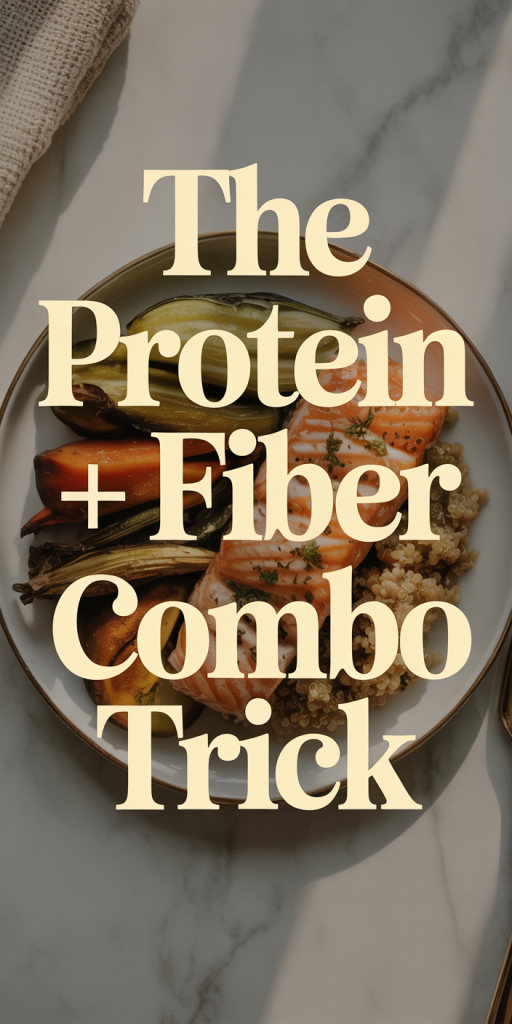
Visualize the plate: half non-starchy vegetables + one-quarter protein + one-quarter fiber-forward carb, then drizzle or include a small portion of fat (a tablespoon of olive oil, a quarter avocado, or a small handful of nuts). This simple layout translates targets into real meals without measuring everything.
Practical Pairings And Examples
We’ll translate the formula into concrete, tasty pairings for every eating occasion, breakfast, lunch, snacks, and dinner. Each example focuses on combining around the per-meal protein and fiber targets we discussed so the combo actually works in daily life.
Breakfast Pairings: Start The Day Full And Focused
- Greek Yogurt Bowl: 1 cup plain Greek yogurt (~20–24 g protein) + 1/3 cup rolled oats (4–5 g fiber) + 1/2 cup berries (2–3 g fiber) + 1 tbsp chia seeds (5 g fiber). Drizzle cinnamon or a touch of honey. Total: ~25–30 g protein, ~11–13 g fiber.
- Savory Eggs + Beans: Two eggs (12–14 g protein) scrambled with spinach + 1/2 cup black beans (~7–8 g fiber, 7–8 g protein) + whole-grain toast. Add avocado for healthy fat. Morning hunger is subdued and we get a mix of fast and slow-digesting protein.
- Smoothie with Intent: 1 scoop whey or plant protein (20–25 g protein) + 1 tbsp flaxseed (3 g fiber) + 1/2 cup frozen oats (3–4 g fiber) + a cup of leafy greens + a small banana. Avoid making it too thin, thicker textures slow intake and increase satisfaction.
Why these work: Each option gives a clear protein anchor with fiber coming from whole grains, legumes, seeds, or fruit. We avoid sugary cereals and pastries that provide quick energy and quick hunger in return.
Conclusion
The protein + fiber combo trick isn’t about restriction, it’s about reshaping how we build meals so energy and appetite work for us instead of against us. By aiming for practical daily targets, using a 3-part plate (protein + fiber-forward carbs + smart fat), and applying the pairing examples above, we can reduce cravings, stabilize blood sugar, and support gut health without dramatic changes. Start by swapping one low-protein, low-fiber meal for a paired option this week, small, consistent shifts compound quickly. Over time we’ll notice steadier energy, fewer impulsive snacks, and better recovery from activity. That’s a simple habit with outsized returns for 2026 and beyond.