The After-Meal Walk Trick: How 10 Minutes Can Boost Digestion, Energy, and Weight Loss
We’ve all heard advice about moving more, but the simple habit we want to highlight is specific and powerful: the after-meal walk. In just 10 minutes after eating, a brief, purposeful walk can improve digestion, stabilize blood sugar, lift energy, and support weight management. In 2026, new research and refined practical tips make this “after-meal walk trick” easier to use than ever, no gym membership required. In this text we’ll explain the physiology behind the effect, summarize key studies, show how to do the walk correctly, offer routines for different lifestyles, and flag when walking may not be the right choice. Our goal is to give you a realistic, evidence-based plan you can try tomorrow and keep for the long term.
Why The After-Meal Walk Works—A Simple Physiology Primer
There’s nothing mystical about the after-meal walk trick: it’s practical physiology. When we eat, blood flow increases to the gut to support digestion, and hormones like insulin and incretins are released to manage postprandial glucose. Gentle movement after a meal shifts the body’s state in several helpful ways.
First, walking activates skeletal muscles that consume glucose. Even mild contractions increase glucose uptake independently of insulin through pathways such as AMP-activated protein kinase (AMPK). That reduces post-meal blood sugar spikes and eases the demand on pancreatic insulin secretion.
Second, walking speeds gastric emptying modestly and reduces sensations of bloating and fullness for many people. A light walk helps coordinate peristalsis, the gentle wave-like contractions that move food through the digestive tract, so food progresses steadily rather than pooling and causing discomfort.
Third, there’s a cardiovascular and autonomic effect: slow-to-moderate walking stimulates the parasympathetic system less than resting but still promotes circulation without the large sympathetic surge that intense exercise causes. That balance means we get metabolic benefits without diverting excessive blood flow away from the gut.
Finally, psychological effects matter. A short walk after eating reduces mental fatigue and post-meal somnolence by increasing alertness, oxygen delivery, and mood, helpful for productivity and for avoiding the temptation to snack out of boredom.
Put together, these mechanisms explain why the after-meal walk works: it’s a low-effort, low-risk way to aid glucose control, digestion, and energy management using systems we already rely on every day.
Key Health Benefits Backed By Research
We often call the after-meal walk a trick because the gains are disproportionate to the time invested. Here are the main benefits that studies and meta-analyses have highlighted.
Blood sugar control: Multiple randomized trials show that short walks timed after meals reduce postprandial glucose excursions compared with sitting. Small studies in people with type 2 diabetes found that three 10-minute post-meal walks significantly lowered average glucose over 24 hours compared with one continuous 30-minute walk at another time of day.
Weight management: While a single 10-minute walk won’t burn many calories, the cumulative effect matters. Regular post-meal walking improves total daily energy expenditure slightly, reduces snacking, and supports better appetite regulation, factors that help with long-term weight loss and maintenance.
Digestive comfort: Clinical and anecdotal reports show reductions in bloating, gas, and mild indigestion when people walk after meals. Improved gastric motility and coordinated peristalsis are the likely causes.
Cardiometabolic risk: Short, frequent activity bouts, including post-meal walks, are associated with improved lipid profiles and lower markers of inflammation when part of a regular routine. They also help break up prolonged sitting, which independently increases cardiovascular risk.
Mood and cognition: Even ten minutes of walking increases alertness and executive function in the short term. For people working from home or in offices, a post-lunch walk can reduce the mid-afternoon slump and enhance productivity.
Importantly, benefit size varies by individual factors, meal composition, baseline fitness, body weight, and whether the person has metabolic disease. But across populations, the evidence supports the after-meal walk as a low-cost, scalable intervention with measurable health upside.
How To Do The After-Meal Walk Correctly (Timing, Pace, And Duration)
To get consistent benefits from the after-meal walk trick, we need to be intentional about timing, pace, and duration. Here’s a practical guide that takes the science into everyday movement.
Timing: Aim to start walking 5–30 minutes after finishing a meal. Waiting too long dilutes the glucose-lowering effect: starting immediately (within 5 minutes) is fine if the meal was small and you feel comfortable. For larger, high-fat meals we recommend waiting 10–20 minutes to avoid nausea.
Duration: Ten minutes is the sweet spot for most people, short enough to be feasible and long enough to influence glucose and digestion. If you have more time, 15–20 minutes provides additional benefits. We don’t need long continuous sessions to get value: multiple brief walks after each meal are often better than a single long walk at another time.
Pace: Keep it light to moderate. The goal is brisk walking where you can talk but not sing, roughly 3–4 mph for average adults. Use perceived exertion: 3–5 out of 10 feels right. Intense or sprint-style walking right after a full meal can cause discomfort and isn’t necessary for metabolic benefits.
Posture and form: Walk tall with relaxed shoulders, a slight forward lean from the ankles, and natural arm swing. Proper posture aids breathing and maintains comfort, especially after eating.
Environment: Indoor treadmill walking or a loop around the block both work. If weather or safety is a concern, walk inside halls, stairwells (gentle pace), or even march in place while watching a short video.
Consistency beats perfect technique. We recommend committing to at least one post-meal walk daily for two weeks to observe changes, then expand to after two or three meals if it fits your schedule.
Sample Routines: 10-Minute Walks For Busy People, Seniors, And Fitness Fans
Different lifestyles require different approaches. Below are practical 10-minute after-meal routines tailored to typical needs.
Busy People (commuters, parents, knowledge workers)
- Routine: After lunch or dinner, put on a pair of comfortable shoes, step outside or pace a hallway, and walk briskly for 10 minutes. If you’re at work, take a meeting with a colleague while walking or use a standing/walking workstation briefly.
- Tip: Set a calendar reminder 10 minutes after your regular lunch to make it automatic. Keep a pair of walking shoes at the office or by the door.
Seniors (joint-friendly, lower-intensity needs)
- Routine: A gentle 8–12 minute loop at a conversational pace. Focus on stable surfaces and use supportive shoes. If balance is a concern, walk with a partner, near railings, or with a cane for safety.
- Variations: Chair-assisted marches for those who can’t ambulate long distances, sit near a table and march legs for 10 minutes in sets of 2–3 minutes with rests.
- Tip: Shorten first walks to 5–6 minutes and gradually progress. If osteoporosis or cardiac issues exist, consult a clinician first.
Fitness Fans (want more challenge)
- Routine: Start with a 10-minute brisk walk at moderate intensity, then add 2–3 minutes of faster-paced intervals (30–45 seconds brisk, 45–60 seconds easy) if digestion feels fine.
- Variations: Hill or stair walking if tolerated, these add strength and cardiovascular load but should be attempted only after lighter adaptation.
- Tip: Avoid maximal efforts immediately after large meals: keep intensity moderate.
Family-Friendly Option
- Routine: Make post-dinner walks a family ritual, 10 minutes around the neighborhood with kids or pets. It boosts digestion and creates bonding time.
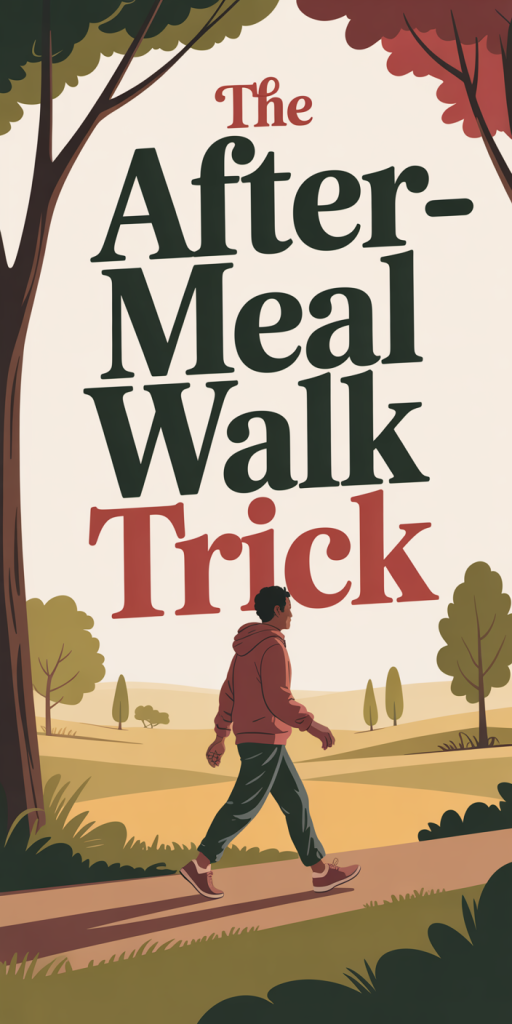
These sample routines show the after-meal walk trick can be adapted to any fitness level. The common thread: make it short, regular, and low enough intensity to be comfortable after eating.
Integrating After-Meal Walks Into Your Day: Practical Tips And Habit Hacks
Starting a new habit is the hard part: keeping it is where results happen. We’ve found a set of habit hacks that make the after-meal walk stick.
Pairing: Use habit pairing, attach the walk to an existing cue. After we clear our plate or put dishes in the sink, we leave the house or stand up and walk for ten minutes. The plate-clearing becomes the trigger.
Micro-commitments: Promise yourself just 5 minutes. Often we’ll continue and complete the full 10. Lowering the activation energy dramatically increases adherence.
Environment design: Keep walking shoes by the door, stash a treadmill in easy view, or create a short indoor loop. If the route is pleasant, we’re more likely to go.
Reminders and streaks: Use a calendar event or habit app to track streaks. Seeing a 14-day streak nudges most of us to keep going. But don’t obsess, view streaks as encouragement, not punishment.
Social accountability: Turn walks into social time. Walk with coworkers during lunch or with family in the evening. Group habits last longer.
Make it enjoyable: Listen to an interesting podcast episode, an audiobook chapter, or a favorite playlist reserved only for walks. We’re more likely to move if the walk becomes a reward.
Adjust for seasons: When weather’s poor, have an indoor backup plan, hallway laps, mall walking, or a guided walk-video. Planning alternatives prevents the “I’ll skip today” slip.
Track simple signals: Note reductions in bloating, fewer afternoon cravings, or better afternoon focus. These subjective wins reinforce the behavior faster than waiting for a scale change.
By designing cues, lowering friction, and making walks pleasant, we can turn the after-meal walk trick into an enduring habit that pays continuous dividends.
Common Mistakes And How To Avoid Them
Even a simple habit can be undermined by common missteps. Here are pitfalls we see often and how to sidestep them.
Mistake: Walking too intensely immediately after a large meal.
- Why it matters: High-intensity exercise redirects blood away from the gut, can cause nausea or cramping, and often feels unpleasant.
- Fix: Keep the pace light to moderate for at least 20 minutes after big meals.
Mistake: Skipping the walk because time feels tight.
- Why it matters: Perceiving the walk as an “add-on” makes it easy to drop.
- Fix: Reframe as a productivity or digestion strategy. Do micro-walks of 5–10 minutes and schedule them as part of the meal routine.
Mistake: Expecting immediate weight loss.
- Why it matters: The after-meal walk is supportive, not a miracle. Unrealistic expectations lead to disappointment.
- Fix: Track small wins, better glucose, less bloating, improved energy, and treat weight change as a longer-term outcome.
Mistake: Walking on hazardous routes or without proper footwear.
- Why it matters: Injuries derail habits quickly.
- Fix: Choose safe, even paths and wear comfortable shoes. For seniors, consider walking with a partner or using indoor alternatives.
Mistake: Doing nothing else, relying only on walks for health improvements.
- Why it matters: Diet, sleep, resistance training, and stress management are also critical.
- Fix: Use the after-meal walk as one pillar in a broader lifestyle strategy.
Avoiding these mistakes keeps the after-meal walk pleasant, sustainable, and beneficial. Our experience is that small course corrections early on prevent abandonment later.
When Not To Walk After Eating: Red Flags And Medical Considerations
While the after-meal walk trick is safe for most people, there are situations where caution, or avoidance, is warranted.
Severe gastroesophageal reflux disease (GERD): For some people with pronounced reflux, even gentle walking immediately after a heavy meal can worsen symptoms. If reflux flares, waiting 30–60 minutes or modifying meal composition (smaller, lower-fat meals) may help.
Recent cardiovascular events or unstable angina: Anyone recovering from a recent heart attack, unstable chest pain, or who has been advised against exertion should consult their cardiologist before initiating post-meal activity. Often, clinicians will approve very light ambulation but with structured guidance.
Orthopedic or balance problems: People with recent fractures, severe osteoarthritis flare-ups, or significant balance impairments should consult a clinician or physical therapist. Alternatives like seated leg marches or supervised walking can be safer.
Severe nausea or vertigo: If a meal triggers pronounced nausea or balance disturbance, walking won’t help and may increase fall risk. Identify and treat the underlying cause.
Hypoglycemia risk on glucose-lowering medications: People taking insulin or insulin secretagogues (e.g., sulfonylureas) should monitor blood glucose and understand how post-meal activity affects their levels. In some cases a small carbohydrate snack or medication adjustment may be advised by the care team.
Pregnancy with complications: Most uncomplicated pregnancies tolerate light walking after meals and benefit from it, but women with obstetric complications should check with their provider.
In short, the after-meal walk is broadly safe, but we must respect individual medical contexts. When in doubt, ask a healthcare professional for personalized guidance.
Measuring Progress: How To Track Benefits Without Obsessing Over Numbers
We want to know if the after-meal walk trick is working, but tracking shouldn’t become a burden. Here’s a pragmatic approach to measurement that balances insight with simplicity.
Subjective signals (daily): Start with quick, subjective checks: do we feel less bloated? Are afternoon energy levels improved? Are cravings between meals reduced? These are meaningful signals that don’t require devices.
Objective metrics (weekly to monthly): Pick one or two objective metrics that align with your goals. For blood sugar control, a few post-meal glucose checks with a glucometer (if we’re monitoring diabetes) can show acute effects. For weight goals, weekly weigh-ins under consistent conditions are enough, daily fluctuations are noise.
Activity tracking: Use a step counter or smartwatch to verify that we’re actually completing the walks. A habit of 10 minutes post-meal usually adds 1,000–1,500 steps per day depending on pace.
Performance markers: For fitness-oriented people, note improvements in how you feel during walks, longer distance in the same time, less perceived exertion, or improved recovery.
Behavioral tracking: Track streaks or number of meals followed by a walk each week. Increasing from one to three post-meal walks per day is progress in itself.
Avoiding obsession: Limit measurement frequency. Daily subjective notes and weekly objective checks are enough for most. If using blood glucose monitoring, follow clinician recommendations to avoid over-testing.
Interpretation: Expect gradual changes. Immediate improvements in energy or digestion are common: metabolic markers often shift over weeks. Use data to inform adjustments, change timing, shorten or lengthen duration, or consult a clinician if results are inconsistent.
This low-burden measurement strategy keeps us accountable without turning the after-meal walk into a source of stress.
Conclusion
The after-meal walk trick is a small behavior with outsized returns. Ten minutes of gentle walking after eating leverages well-understood physiology to smooth digestion, blunt blood sugar spikes, boost alertness, and support gradual weight management. It’s adaptable, suitable for busy schedules, older adults, and fitness-minded people, and easy to make into a lasting habit with simple cues and environmental tweaks.
We recommend trying a 10-minute walk after one meal each day for two weeks, observing for improvements in digestion and energy, then expanding the habit as it fits. And if you have medical concerns, check with your clinician. In an era where convenience often trumps wellbeing, this tiny, free intervention gives us a practical way to reclaim better metabolism and more consistent energy, one short walk at a time.