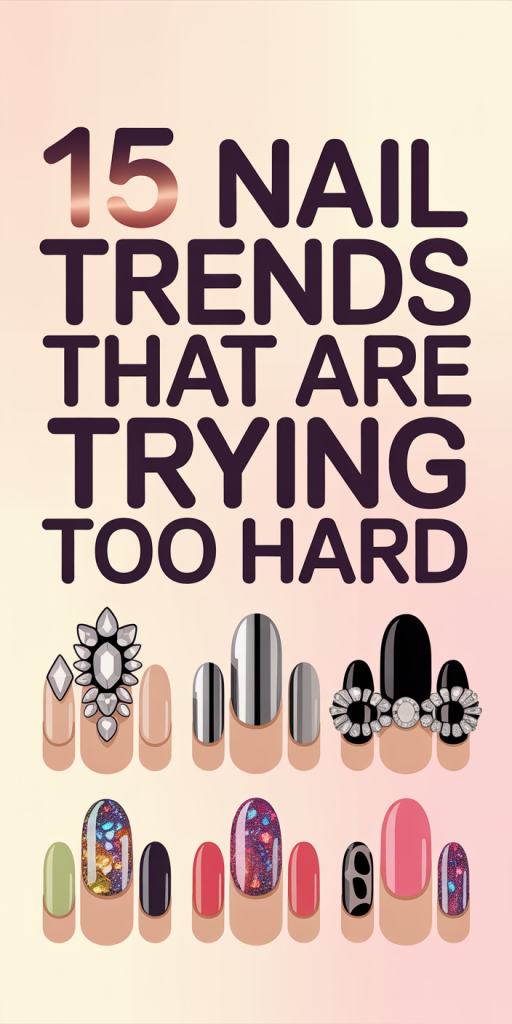
15 Nail Trends That Are Trying Too Hard (And What To Wear Instead) — 2026 Guide
Nail trends come and go faster than a new polish drop, and in 2026 we’re seeing more extremes than ever: tiny sculptures, logo-heavy manicures, and color combos that make you squint. We love creativity, nails are one of the easiest ways to express personality, but there’s a difference between bold and breathless. In this guide we look at 15 nail trends that are trying too hard, explain why they miss the mark, and offer wearable, modern alternatives that keep your manicure interesting without turning it into a costume. Whether you’re a salon regular or DIY at home, our aim is to help you spot when a trend sacrifices taste or function and how to translate the idea into something polished, practical, and flattering. Let’s cut through the clutter and get nails that look intentional, not desperate.
Why Nail Trends Start Trying Too Hard
Trends escalate for predictable reasons: social media rewards novelty, creators chase likes, and brands push novelty to stand out. What begins as a clever twist, a micro-sculpture, an unusual accent, a shock color, can quickly balloon into extremes that prioritize shock value over wearability. We see three recurring patterns when nail trends cross the line. First, scale creep: what was a small accent becomes an all-over treatment that overwhelms the hand. Second, complexity inflation: simple motifs become intricate, layered, and fragile: more detail means more opportunities for breakage and maintenance headaches. Third, context collapse: a design that works on editorial hands or runway models gets copied wholesale into everyday life without adapting for usability.
The result is manicures that look impressive in a single photo but are impractical for daily tasks, difficult to maintain, or simply visually noisy. That said, the impulse behind these trends is valid, we want to express individuality. Our approach is to preserve the creativity while dialing back extremes so the manicure complements your lifestyle and personal style rather than competing with it.
Overdone 3D Embellishments And Gem Overload
Three-dimensional nail art, crystals, pearls, studs, and sculptural acrylic pieces, can be stunning in moderation. The problem arrives when every nail is loaded with large gems or when pieces are asymmetrically massive, turning hands into fragile decorative props. Practically, heavy 3D work chips glue, snag fabrics, and interferes with typing, cooking, or picking up small items. Aesthetically, gemstone overload reads theatrical rather than luxe.
Instead of packing every nail, we recommend strategic placement and scale control. Choose one focal nail per hand or use micro-crystals for subtle shimmer. Opt for low-profile embellishments that sit flush with the nail surface and pick neutral-toned hardware (antique gold, matte silver) to avoid visual clutter. For special occasions, consider detachable jewel accents you can remove after the event, they give the wow factor without extended impracticality. If you love texture, a single sculpted accent or a textured topcoat offers tactile interest without constant maintenance.
Designer Logos, Faux Luxury And Branded Nail Art
Slapping designer logos or faux brand patterns across nails is a clear sign a trend is trying too hard. Branded nail art often reads like advertising rather than personal style, and it can feel tone-deaf outside celebrity contexts. The look originated as a playful nod to luxe fashion, but when every manicure becomes a runway billboard, authenticity is lost.
We prefer translating the vibe of luxury without literal logos. Think about what makes a designer aesthetic, restrained color palettes, thoughtful negative space, and elevated materials, and use those elements. A deep espresso polish with a thin metallic stripe evokes leather goods without brand-name repetition. Matte finishes, minimalist geometrics, or subtle monograms (your initials in a refined script on one nail) preserve sophistication without courting faux-luxury kitsch. If you do want a logo, keep it tiny and intentionally placed, not slapped across every finger.
Clashing Maximalist Mixes: Prints, Textures, And Stickers
Maximalism can be thrilling when thoughtfully curated: it fails when it becomes an anything-goes pileup. We’re talking about manicures that combine loud animal prints, chunky glitter, micro-foam textures, holographic foils, and sticker decals, all on adjacent nails. The eye has nowhere to rest, and the overall effect can look chaotic rather than curated.
The rule we follow is restraint through a unifying theme. Pick one dominant element, a print, a texture, or a metallic accent, and use the others as supportive players in smaller doses. For example, pair a single leopard-print accent with two solid nails and one foil-highlighted nail. Limit your palette to two or three complementary colors so the variety reads as deliberate. If you love stickers, integrate them into negative space designs instead of layering multiple sticker types on top of each other. The aim is to celebrate variety without sacrificing cohesion.
Obstinate Length And Shape Extremes That Sacrifice Wearability
Extreme nail lengths (think talons that double as tiny shovels) and exaggerated shapes are striking on style editors and performance artists, but they rarely work for most people’s daily routines. Long, square-edged stiletto nails can cause painful breaks: dramatically long squares or flats make typing and manual tasks awkward. There’s also a safety angle: overly long nails increase the risk of accidental scratching or snagging.
We advocate for balanced proportions. Consider medium lengths with softened edges, a rounded or squoval shape is flattering and functional for most finger types. If you crave drama, experiment with length asymmetrically (longer accents on ring fingers only) or choose a pointy almond over a razor-sharp stiletto: you keep the silhouette without the hazard. Another smart move is press-on nails for short-term commitments: try a dramatic length for an event, then switch back to a practical, shorter shape for everyday life.
Overcomplicated Themed Art And Literal Miniature Scenes
Literal miniature scenes, tiny beaches, miniature food sculptures, or elaborate holiday tableaux painted or sculpted onto nails, are the apex of maximalism. They demonstrate skill, but they also cross into novelty territory that’s hard to justify beyond a single photo. These designs demand time, attention, and delicate care: smudges or chips ruin the storytelling effect.
We love narrative nails in principle but suggest translating the idea into suggestive, simplified motifs. Instead of painting an entire seaside, pick one element (a palm silhouette, a single shell charm) repeated across a couple of nails. Use fine-line art or negative space to imply detail without overcrowding. For seasonal fun, alternate a punchy themed nail with minimalist companion nails, a gingerbread accent can sit beside two neutral glossy nails rather than competing across your whole hand. Storytelling should enhance your look, not dominate it.
Garish Gradients, Busy Ombrés, And Excessive Layering
Gradient and ombré techniques can be elegant, soft shifts from nude to blush or blue to indigo are timeless. They go wrong when the transitions are garish, the colors clash, or the design uses excessive layering of glitter, topcoats, and transfers that create a cakey, uneven surface. Over-layering not only looks heavy but also causes premature lifting and peeling.
Our approach: simplify your gradients and prioritize smoothness over complexity. Choose color families that graduate naturally (warm to warm, cool to cool) and favor softer fades. Limit overlays to one thin layer of glitter or foil instead of multiple chunky coats. Gel systems with fine airbrush blending or professional ombré brushes produce a cleaner finish than haphazard sponges. If you want depth, opt for translucent glazes or a single holographic accent rather than multiple heavy layers that age badly and chip visibly.
Trend-Chasing Color Combos That Just Don’t Work
Every season has its curated palettes, but some combinations get recycled into disasters: neon neons paired with neon neons, clashing jewel tones stacked without breathing room, or muddy mixes that drain the manicure. Trends often push people to try the hottest color pairing only to discover it washes them out or clashes with their wardrobe.
We advise color choices anchored in skin tone and wardrobe cohesion. If a trendy combo feels off, mute one of the hues (think pastelized neon or a deeper, toned-down version) to make it wearable. A simple guideline: pair a statement color with neutrals or with one complementary shade instead of several competing ones. Use color placement strategically, darker shades at the base, lighter at the tips, or the reverse, to create flattering illusions for different nail lengths and finger shapes. And remember, color is personal: if it doesn’t make you feel good, it’s not the right trend for you.
How To Tone Down A Trying-Too-Hard Nail Trend (Tips For Simpler, Smarter Looks)
When a trend tempts you but feels over the top, we follow a few consistent tactics to temper it without killing the original idea. First, scale back: apply the trend to one or two nails rather than the whole hand. This keeps the look modern and gives the eye a place to rest. Second, limit color: reduce the number of competing hues to two, one main color and one accent. Third, choose low-profile materials: swap massive gems for micro crystals or chunky textures for a matte or satin finish.
Here are practical steps you can take at the salon or at home:
- Ask for negative space: it modernizes busy art and makes manicures breathe.
- Combine trend elements with a classic base (sheer nude, soft pink, or clean white) to anchor the look.
- Choose detachable or clip-on accents for events so you don’t commit to impractical pieces long-term.
- Favor scratch- and chip-resistant topcoats and request sealed edges for longevity.
Finally, communicate with your nail technician: bring reference photos and explain which parts of the trend you love and which parts you want toned down. A collaborative approach yields a tailored manicure that feels like you.
Conclusion
Not every trend deserves a full commitment, many are best borrowed from, not replicated. Our priority is to keep nails expressive yet functional: pick elements you love, reduce scale and complexity, and tie designs back to your personal style and daily life. When we temper extremes, fewer gems, subtler logos, curated maximalism, and wearable shapes, we get manicures that turn heads for the right reasons. Try one of these softer alternatives next time a viral design tempts you: you’ll get the creative payoff without the constant upkeep or awkwardness. In short: embrace invention, but let practicality lead.