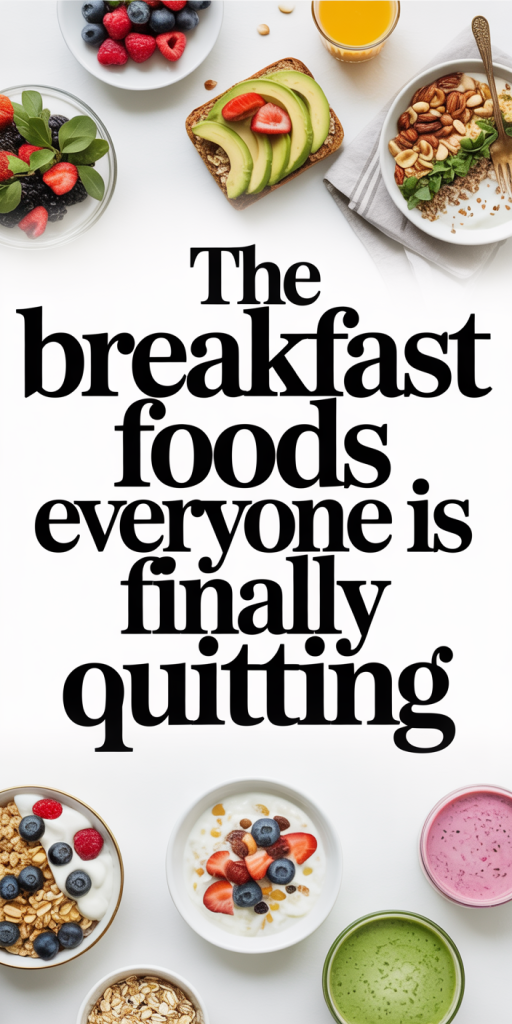
The Breakfast Foods Everyone Is Finally Quitting: What To Stop Eating In 2026 And What To Eat Instead
We’ve been eating breakfast the same way for decades: a quick bowl, a grab-and-go cup, or something microwaved while sprinting out the door. But in 2026 our habits are finally catching up with what the science has been telling us. Rising rates of metabolic disease, new insights into sugar’s effects on mood and cognition, and a cultural push for more sustainable, minimally processed foods are changing what we choose for the most important meal of the day. In this text we’ll cut through the marketing and the nostalgia to show which breakfast foods we should stop eating, and what to swap in that keeps convenience, flavor, and real nutrition. Expect practical swaps, label-reading tips, and quick recipes that actually fit our mornings.
Why Breakfast Habits Are Changing Now
We’re changing breakfast for three big reasons: health data, convenience innovation, and shifting values. First, the evidence linking ultra-processed, high-sugar breakfasts to weight gain, insulin resistance, and mood swings is stronger and more public than ever. Longitudinal studies and meta-analyses in the last few years highlight how frequent intake of sugar-sweetened breakfast items correlates with higher risk of type 2 diabetes and cardiovascular markers. That’s made clinicians and consumers rethink the cereal-and-juice default.
Second, convenience no longer means compromised nutrition. Ready-to-eat options with whole-food ingredients, improved shelf-stable proteins, and quick-prep appliances (air fryers, high-speed blenders) let us make better breakfasts in minutes. Startups and established brands have introduced minimally processed alternatives that actually compete on price and shelf life.
Third, environmental and ethical concerns are nudging choices. People increasingly prefer breakfasts with fewer ingredients, transparent sourcing, and lower packaging waste. Combine that with a stronger desire for stable blood sugar during the day, and it’s easy to see why sugary, ultra-processed breakfast staples are falling out of favor.
We’re not saying goodbye to all convenience, just to the products that deliver taste at the expense of long-term energy and health.
Sugary Cereals And Processed Granola: What’s Wrong With The Crunch
Many of us grew up on colorful boxes and crunchy clusters that promised a quick start and instant energy. But that crunch often hides high amounts of added sugar, refined grains, and oils with little nutritional payoff. The marketing around cereal and granola emphasizes whole grains and energy, but when you read labels you often find sugar listed as the second or third ingredient, and serving sizes that are smaller than what people actually eat.
Cereal and granola deliver fast-digesting carbs that spike blood glucose and then leave us hungry again an hour later. That roller-coaster contributes to overeating, mid-morning crashes, and cravings for caffeine and sweets. For people trying to lose weight or stabilize mood and focus, these breakfasts are counterproductive. There’s also the issue of portion creep: a “one-cup serving” isn’t realistic for many of us, and a typical bowl more than doubles the calories and sugar in one sitting.
Finally, some granolas are packed with oils and saturated fat from low-quality sources. That adds calories without meaningful micronutrients. We still want the texture and convenience, so the next section covers swaps that keep the crunch without the metabolic cost.
Flavored Yogurt Cups: The Sneaky Sugar Bombs In Your Fridge
Flavored yogurt cups are sold as healthful, calcium-rich options, but many contain as much sugar as a candy bar. Fruit-on-the-bottom and dessert-style yogurts often combine sweetened dairy with fruit concentrates, syrups, and flavorings. When we buy flavored cups for convenience, we trade a good source of protein and probiotics for a heavy dose of added sugar and refined starches.
The problem is both the amount and the form of the sugar. Yogurt sugars mixed with starches cause rapid glucose absorption: paired with a small serving size it doesn’t satisfy hunger for long. We then reach for a mid-morning snack, frequently another processed item, keeping us in a cycle of peaks and troughs.
There’s another angle: flavored yogurts mask poor-quality fats and additives to mimic texture and mouthfeel. That raises concerns about hidden ingredients and makes it harder to know what we’re actually eating. For households with kids, flavored cups make it challenging to teach expectations around sweetness.
The good news is yogurt is easy to rescue: by switching to plain varieties and customizing toppings, we reclaim control over sugar and still enjoy convenience and taste.
Fruit Juice And Sugar-Loaded Smoothie Bowls: Liquid Calories You Don’t Need
Juice and smoothie bowls promise nutrition by packaging fruit and color into attractive servings. But the processing and portion sizes often concentrate sugar and remove fiber, turning whole fruit into a liquid sugar rush. A typical 12-ounce fruit juice can contain 30–45 grams of sugar, equivalent to many sodas, without the chewing, which moderates intake.
Smoothie bowls can be deceptive: restaurants and social media photos often show thick, brightly colored bowls topped with granola and fruit, but many recipes rely on banana, fruit juices, and sweetened yogurt as a base. The result is a dense, calorie-heavy meal that’s easy to overconsume. Because we perceive liquids as less filling than solids, we may still snack soon after, undermining appetite control and daily calorie balance.
There’s also the blood-glucose impact: quickly absorbed sugars from juices and sugary smoothies trigger insulin responses similar to sugary cereals. For people managing blood sugar, weight, or PCOS, those liquid breakfasts can be especially problematic.
That’s not to say all smoothies are bad, smartly built smoothies keep the fiber, add protein and fat, and use whole fruit in moderation. The key is structure and portion control.
Highly Processed Breakfast Meats And Instant Pancakes: Convenience At A Cost
Bacon, sausage links, and instant pancake mixes are classic weekend comforts that many of us have cycled into weekday routines because they’re quick and gratifying. But massively processed breakfast meats often contain nitrates, high sodium, and preservatives linked to increased risk of hypertension and certain cancers when consumed heavily over time. Instant pancakes and commercial mixes may be fortified, but they’re typically made from refined flours and include added sugars and texturizers to improve shelf life and texture.
We should be honest: these items taste good and they satisfy cravings. But their habitual consumption shifts our diets toward higher saturated fats, sodium, and refined carbs. That combination is not ideal for cardiovascular health, for maintaining steady energy, or for weight management.
When we prioritize speed, we can overlook how these convenience products shape our palate and appetite around overly processed textures and flavors. The better approach is to keep the ritual, pancakes and savory sides, but change the ingredients and methods so we don’t sacrifice health for nostalgia.