17 Tiny Apartment Mistakes That Scream “I’ve Given Up” (And How To Fix Them In 2026)
We’ve all walked into an apartment and immediately felt the little, nagging vibe that someone stopped trying. Those tiny details, dusty lamp shades, mismatched containers, a pile of mail on the counter, don’t just look messy: they signal resignation. The good news is that most of these “I’ve given up” cues are easy to reverse with small habits, better choices, and a few strategic purchases that make a big visual impact. In this guide we’ll call out 17 common tiny apartment mistakes, explain why they read as neglect, and give practical, modern fixes you can carry out in 2026 without a full renovation. Whether you rent, share a compact studio, or just want your place to feel cared for again, these fixes help your apartment look intentional, tidy, and genuinely lived-in rather than abandoned.
Overlooked Cleaning Habits That Make Your Space Feel Abandoned
We underestimate how quickly small cleaning lapses add up. When we skip basic tasks, our apartment doesn’t just get dirty, it starts to broadcast neglect. Common habits that age a space fast include letting dishes pile in the sink for days, ignoring quick spills on upholstery, and avoiding regular dusting on tops of shelves and picture frames. Those surfaces collect film and pet hair, and even if we vacuum occasionally, the invisible grime gives a room a tired, uncared-for look.
Fixes are less dramatic than they sound. First, adopt micro-cleaning routines: ten minutes of surface wipe-down each day, a 20-minute kitchen blitz after dinner, and a weekly dust-and-vac cycle. Invest in a few easy tools, a cordless stick vacuum, microfiber cloths, and a multi-surface cleaner, and keep them visible. When cleaning supplies are within arm’s reach, we’re more likely to use them. Finally, set small, trackable routines in a calendar app or Sunday checklist so upkeep becomes part of our rhythm, not a looming chore. That consistent care changes the overall vibe immediately.
Furniture And Layout Mistakes That Kill Flow And Function
Furniture choices and placement make or break how lived-in, but loved, our apartment feels. A common mistake is cramming too much furniture into a small footprint or pushing everything against the walls. That leaves awkward negative space where activity should happen. We also sometimes pick pieces that are purely cheap or purely sentimental without considering scale: a huge sectional that swallows the room, or a tiny table that can’t hold a lamp and a mug.
Better flow requires intention. Start by measuring: know your dimensions and sketch a simple layout before moving even one item. Create natural pathways, aim for 24–30 inches of walking space in main circulation routes. Mix scale: combine one bold piece (like a modest sofa) with lighter items (slim-legged chairs or open shelving) so the room breathes. Use furniture to define zones, an area rug can anchor a seating area and make the layout feel purposeful. Finally, choose multi-functional pieces (nesting tables, ottomans with storage) to add utility without cluttering. Thoughtful arrangement transforms a cramped, neglected room into a welcoming space we want to use.
Storage And Clutter Signals (And What To Do Instead)
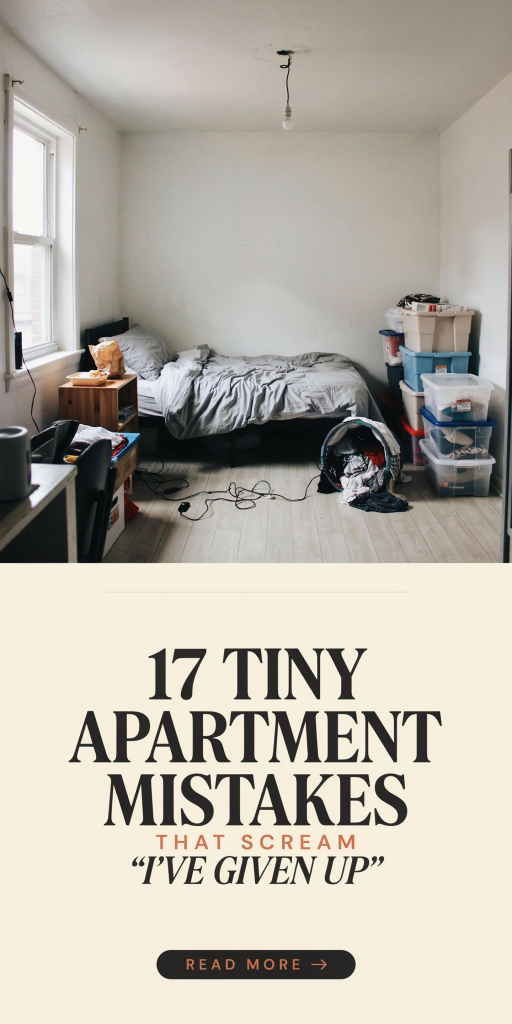
Clutter signals give the clearest “we don’t care” message. When items land on every horizontal surface, or when storage is an afterthought, the apartment visually screams chaos. We often react by hiding things in closed cabinets, only to open them later and find a tangled mess that makes retrieval a chore. The key is smarter storage that’s visible, organized, and tailored to how we live.
We’ll address three high-impact mistakes below and offer fixes that actually stick.
Surfaces, Fabrics, And Decor Neglect That Dates Your Home
Neglected surfaces and tired textiles age a home faster than almost anything else. Sun-faded throw pillows, stained rugs, fraying curtains, and outdated art choices tell a story of indifference. We often keep items because they’re inexpensive or because we don’t know what to replace them with. But thoughtful swaps can modernize a space on a budget.
Start by auditing textiles: wash or replace cushion covers, and choose slipcovers for worn sofas. If rugs show traffic patterns, rotate them or layer a smaller rug on top to hide wear. Curtains that don’t reach the floor shorten the room visually, hang rods closer to the ceiling and use longer panels for a polished look. Swap out dated frames for simple, consistent designs or create a curated gallery wall with a clear color story. Small upgrades, a couple of new throw pillows, a fresh duvet cover, or a single statement piece of art, deliver disproportionate visual lift. These are quick wins that make the apartment feel intentional and loved.
Kitchen And Food Hygiene Red Flags That Say ‘I Don’t Care’
The kitchen is the heart of a home, and the easiest place to broadcast neglect. Obvious red flags include permanent crumbs around the toaster, sticky cabinet handles, an overflowing compost bin, and containers of last week’s takeout left on counters. These signs communicate a lack of care and invite odors and pests.
We recommend a two-tier approach: daily maintenance and accessible systems. Daily, wipe counters after every meal, rinse and load dishes immediately (or run the dishwasher nightly), and take out food waste before it festers. Keep a small caddy of dish soap and a brush by the sink to remove the barrier to quick cleaning. Organize the fridge with clear bins and date labels to prevent forgotten leftovers. For renters, inexpensive cabinet liners make surfaces easier to clean and protect rental finishes. Finally, schedule a short weekly deep-clean, wipe appliance exteriors, sanitize handles, and check pantry expiration dates. Clean kitchens aren’t perfect: they’re consistent, and that consistency keeps the “we don’t care” feeling at bay.
Lighting, Windows, And Safety Slipups That Feel Defeated
Poor lighting and neglected windows make even tidy spaces feel gloomy and unloved. Dim bulbs, dusty fixtures, and curtains that never open create a permanent twilight. On the safety side, missing smoke alarm checks, frayed cords, and blocked egress points silently suggest we’ve stopped paying attention.
Brightening the apartment is often affordable. Replace warm, yellow bulbs with daylight or soft-white LEDs in layered lighting, ambient overhead, targeted task lamps, and a few accent lights. Clean windows inside and out (or hire a one-time service) to maximize daylight: open curtains daily to let the room breathe. For fixtures, swap outdated shades for simple drum or linen styles that diffuse light evenly. From a safety standpoint, test smoke and carbon monoxide detectors monthly and replace batteries yearly. Tame cords with clips and use surge protectors for concentrated electronics. Clear exits and hallways of obstructions to keep spaces visually open and practically safe. These small steps boost mood and demonstrate care.
Conclusion: Small Fixes That Make Your Apartment Look Loved Again
We don’t need a makeover to stop our apartment from looking like we’ve given up. The pattern through these 17 mistakes is consistent: neglect is visible in small, repeatable ways, and reversing it is mostly about tiny behaviors and a few smart choices. Commit to micro-routines, daily declutter, weekly surface care, intentional furniture placement, and invest selectively in vertical storage, better containers, refreshed textiles, and lighting. Those moves give the biggest return for minimal effort and cost. Start with one area this weekend, clear floors, swap a rug, or set a five-minute nightly tidy, and build from there. Our homes will quietly thank us, and visitors will notice the difference without us having to say a word.