14 Nail Styles That Need To Be Retired Immediately (And What To Try Instead In 2026)
We love nails as a micro canvas, a tiny space where creativity, fashion, and personality collide. But not every trend ages well. As we move through 2026, some nail styles that once felt daring now read as impractical, dated, or simply overdone. In this piece we’re calling out 14 looks that should quietly exit the salon chair and offering fresh, wearable alternatives that fit modern aesthetics and real life. Expect clear reasoning, realistic swaps, and tips that help you keep your manicure game sharp without sacrificing functionality.
Why So Many Nail Trends Should Be Reconsidered Now
Trends evolve for a reason: culture shifts, materials improve, and we learn what’s actually sustainable. Lately we’ve seen extremes win clicks, gigantic crystals, architectural extensions, and finishes that age poorly. But the trade-offs are obvious once you look beyond the ‘instant viral’ appeal: comfort, durability, and suitability for everyday life often take a back seat. In 2026, our standards are changing. People want beauty that’s invested in longevity, low maintenance, and environmental sense. That means trends that prioritize spectacle over function deserve a second look. We’re not here to shame anyone who loved those trends: instead we’ll critique them with an eye for what’s genuinely worth keeping. By reconsidering certain looks, we create space for smarter, more original expressions of style, ones that photograph well and survive dish-duty. In short: it’s time to retire looks that exist only for shock value and keep designs that balance creativity with wearability.
The Aesthetic And Practical Problems Behind Outdated Nails
When a manicure crosses from avant-garde into annoyance, the problems are usually aesthetic and practical. Aesthetically, trends that repeat identical flourish after flourish start to look derivative, think the same rhinestone layout on every influencer’s hand. That flattens individuality. Practically, many dramatic styles compromise daily function: typing, cooking, and dressing become fiddly tasks. There’s also a hygiene angle, excessive gaps under heavy decorations trap dirt and are hard to clean. From an environmental standpoint, disposable extras (single-use decorations, long-lasting gels that require aggressive removal) contribute to waste. We should also consider longevity: nails that chip, lift, or tear force frequent salon visits, which is costly and time-consuming. Finally, safety matters, sharp points and rigid, long extensions can injure us or others. All these drawbacks compound when the visual payoff isn’t proportional to the inconvenience. Our goal here is to identify what’s no longer worth the compromise and suggest practical, stylish alternatives that actually improve the manicure experience.
Rhinestone Overload, Giant Charms, And Other 3D Extremes
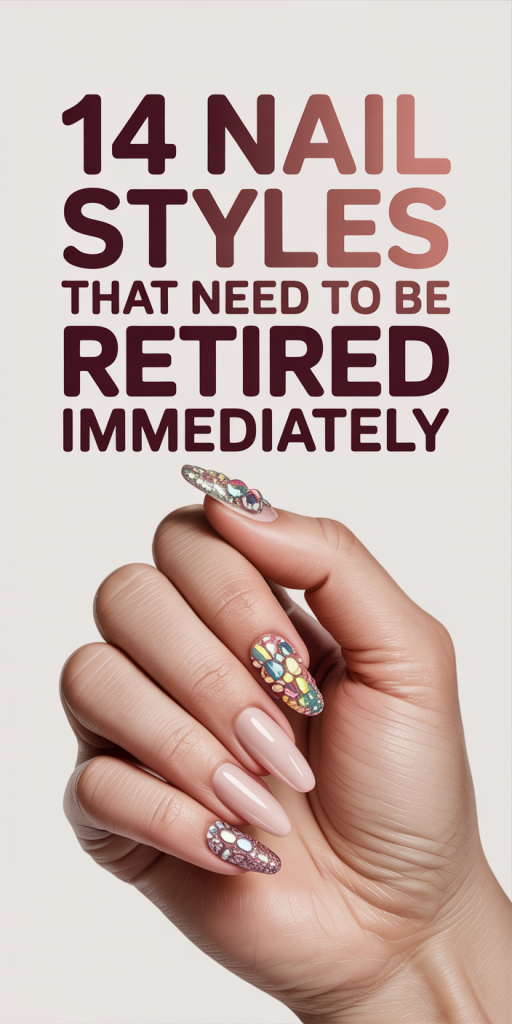
Three-dimensional embellishments transformed nails into jewelry, which was a fun experiment. But overuse turned novelty into a pattern: layers of bling on every finger, often glued so heavily they weigh down the tip. These designs photograph well close-up, but they rarely survive a week of real life intact. The other issue is context, office settings, parenting, or active hobbies don’t pair well with oversized 3D elements. We’re not suggesting zero texture: rather, we believe 3D should be used with restraint and intention. Opt for one statement finger, smaller accents, or pieces integrated into the surface so they don’t snag. Better adhesives and lower-profile crystals can give the luxe look without the bulk. And if you want true sparkle, consider jewelry-inspired finishes like rose-gold foil, micro-glitter gradients, or metallic flake encapsulated under a glossy topcoat, they catch light without inviting disaster.
Bubble Nails, Sculpted Gimmicks, And Other Fragile Fads
Bubble nails, bulbous, acrylic-heavy shapes that resemble mini domes, were experimental and Instagram-perfect. The problem: the sculpting is inherently delicate at stress points and often chips or cracks along the curves. Sculptural gimmicks, like precarious ridges or stacked tiers, also create structural weak spots. Rather than commit to extensive 3D architecture, we suggest exploring sculptural illusions using color and polish technique. A well-executed gradient, a shadowed French, or painted 3D illusions can convey dimensionality without compromising strength. If true sculpting is your thing, choose denser materials and a shorter profile: technicians can reinforce bulk with proper layering and cured gel topcoats. But for most clients, smaller, intention-driven accents achieve the same visual impact with far less maintenance. In 2026 we’ll see a shift from overbuilt novelties back to clever technique and subtle depth.
The Case Against Extra-Long, Pointy, Or Unwieldy Shapes
Extreme length and aggressive points were a staple of fantasy manicures, but they’re not always compatible with daily life. Long, sharp nails increase the likelihood of breaks and make simple tasks like buttoning or handling small items frustrating. They can also look disproportionate with shorter fingers or certain hand shapes. There’s a growing preference for proportion, nail length that complements rather than competes with one’s hand. We recommend prioritizing shapes that balance elegance and utility: soft squares, tapered ovals, or a modest almond length. These silhouettes retain an elongating effect without demanding special care routines. We should also note the aging of visual taste, less is often more. In our view, design choices that reward longevity and comfort will win out in 2026, especially as people demand versatility from their manicures across work, travel, and parenting.
Coffinette, Extreme Stiletto Hybrids, And Dangerous Points
Coffinette and hybrid stiletto variations tried to merge styles but often produced the most impractical results. These hybrid tips accentuated corners and points that increase snagging and risk. What’s more, extreme points can pose safety concerns, scratching skin, catching on thin fabrics, or even causing accidental scrapes. They also age poorly in photos once chips appear at the stress points. We’d rather see designs that reference those edgy silhouettes without copying their hazards. Think tapered edges softened with a slightly rounded apex or a reinforced tip that keeps the look but not the danger. For those who want the thrill of an extreme shape, a single ‘accent’ nail can provide drama without turning every task into an obstacle course.
Designs That Read As Messy Rather Than Creative
Not all busy equals creative. Sometimes, piling color, random lines, and haphazard shapes together just reads as messy. We’ve seen manicures that attempt to be eclectic but lack coherent palette choices or negative-space consideration. The result is visual noise. Creativity shines when there’s intention, thoughtful contrast, controlled asymmetry, a limited color story, or a repeating motif. To avoid messy-looking nails, we recommend a simplified approach: pick a dominant color, choose one or two supporting tones, and limit high-contrast elements to an accent finger or two. Use negative space as a compositional tool rather than treating every free edge as real estate to fill. Cleaner lines, carefully placed texture, and consistent scale across nails make a manicure feel considered and modern. In 2026, restraint will often read as sophistication rather than boring.