How I Finally Stopped Wasting Food and Money (And Started Actually Eating Well)
I used to believe that being “healthy” was synonymous with being spontaneous at the grocery store. I thought the hallmark of a wellness-focused life was wandering the produce aisle with a reusable tote bag, letting the seasonal vegetables inspire me, and throwing whatever looked fresh and green into my cart. I would buy massive bags of spinach, a few random bell peppers, perhaps some expensive wild-caught salmon, and a carton of organic strawberries. Walking out of the store, I felt incredibly virtuous. I was, in my mind, a person who ate well.
Then Wednesday would roll around.
The reality of my “spontaneous” grocery shopping hit hard by mid-week. The spinach would be wilting in the crisper drawer, slowly turning into a sad, green sludge. I would stare at the bell peppers, having absolutely no idea what to do with them because I had forgotten to buy onions, garlic, or a complementary protein. By 6:00 PM, exhausted from a long day and completely uninspired by the disconnected ingredients in my fridge, I would inevitably pull out my phone and order Thai food. Again.
This was not a one-time failure. It was a relentless, expensive cycle. I was spending a premium on “healthy” groceries, throwing half of them away by Friday due to spoilage, and still spending a small fortune on takeout because I never actually had anything to eat when I needed it most. I was paying twice for the same problem—once at the grocery store for food I didn’t use, and again at the restaurant for food I didn’t plan for.
The Breaking Point: Confronting the Real Cost
The breaking point arrived during a quiet Sunday morning when I finally sat down and looked at my bank statements for the month. I had categorized my spending to see where my money was going, and the numbers were genuinely staggering. Between the aspirational, unplanned grocery hauls and the desperate weeknight takeout orders, I had spent far more than I ever would have guessed on food. Worse yet, despite all that spending, I still wasn’t eating the way I wanted to. I felt sluggish, stressed, and constantly behind.
I sat there for a long time staring at those numbers. I kept waiting to feel angry at myself, but what I felt instead was something closer to relief—because I finally understood the actual problem. It wasn’t a lack of willpower. It wasn’t that healthy food was inherently too expensive. It certainly wasn’t that I didn’t know how to cook. The fundamental problem was that I was buying ingredients without any plan for how they would become meals.
I was shopping like someone who had a personal chef waiting at home to figure out the details. I didn’t. I had a tired, hungry version of myself at 6:00 PM who needed dinner to already be decided, not invented from scratch.
The Shift: One Rule That Changed Everything
That Sunday, I made a strict rule for myself—a rule I still follow to this day without exception: I am not allowed to buy a single item of food unless I know exactly which meal it belongs to.
It sounds almost insultingly simple. But implementing this one rule completely transformed how I eat, how I spend my money, and how I feel on a Wednesday evening. The beautiful asparagus on sale? I don’t buy it unless I can immediately name the specific meal it will be part of. The interesting new grain I’ve never tried? Not going in the cart until I have a recipe in mind. The impulse bag of fancy cheese? Only if I know exactly when and how it will be eaten.
This single constraint forced me to develop a system. And that system is what I want to share with you here, in full detail, because it is the thing that actually worked after years of failed attempts at “eating healthier.”
The System: Four Steps That Actually Work
Step 1: Shop the Pantry Before You Shop the Store
Before I open a recipe book, scroll through a cooking blog, or write down a single item on a grocery list, I open my fridge, my freezer, and my pantry. I am looking for what I call the “anchors”—the ingredients I already own that need to be used before they go bad or get forgotten for another three months.
Do I have half a bag of dried lentils sitting in the back of the cupboard? That is the base for a hearty soup. Is there a random jar of artichoke hearts and a block of feta cheese in the fridge? That is going to become a Mediterranean pasta salad on Thursday. Are there two chicken breasts buried in the freezer? That is Tuesday’s dinner, full stop.
By starting with what I already own, I instantly cut my grocery list down by 20 to 30 percent. More importantly, I prevent food waste before it even happens. I am no longer buying food to add to a stockpile of ingredients I might someday use. I am buying only what is necessary to complete the specific meals I have already started building around what I have.
Step 2: Plan Only Three Core Dinners Per Week
When I first attempted meal planning years ago, I made the classic beginner’s mistake: I planned a complex, unique, from-scratch dinner for all seven nights of the week. I bought seven sets of ingredients, each for a different recipe, each requiring different spices and produce. By Thursday, I was completely burned out. I was too tired to cook the ambitious meal I had planned, the ingredients went bad because I had fallen behind, and the entire system collapsed into exactly the kind of takeout-and-guilt spiral I was trying to escape.
Now, I am fiercely realistic about my own capacity. I only plan three core dinners for the entire week. That is it. Just three.
I make sure these three meals vary deliberately in effort level. One is always something incredibly quick and easy—a sheet-pan chicken and roasted vegetables that requires minimal chopping and only one pan to clean, or a simple grain bowl that comes together in 15 minutes. The second is always a batch-cooked meal that makes excellent leftovers, such as a big pot of turkey chili, a hearty lentil soup, or a large quinoa salad that holds well in the fridge for three days. The third might be slightly more involved for a night when I know I have more time and energy, and when I actually want to enjoy the cooking process rather than just survive it.
What about the other four nights? They are filled intentionally, not accidentally. One or two nights are dedicated strictly to eating the leftovers from the batch-cooked meals—this is not a failure, it is the plan. One night is a designated “clean out the fridge” night, where we make a massive kitchen-sink salad, throw everything into a frittata, or make loaded baked potatoes with whatever toppings need to be used up. And one night is a planned, guilt-free night for eating out or ordering in. Because it is planned and budgeted for, it feels like a genuine treat rather than a defeat.
Step 3: Use the “Cook Once, Eat Twice” Rule for Lunches
Lunches used to be a massive, separate drain on my budget and mental energy. I would buy entirely different groceries dedicated to lunch—expensive deli meats, specific artisanal breads, pre-packaged salads from the deli counter that cost $12 and left me hungry two hours later. It was costly, annoying to manage, and completely unnecessary.
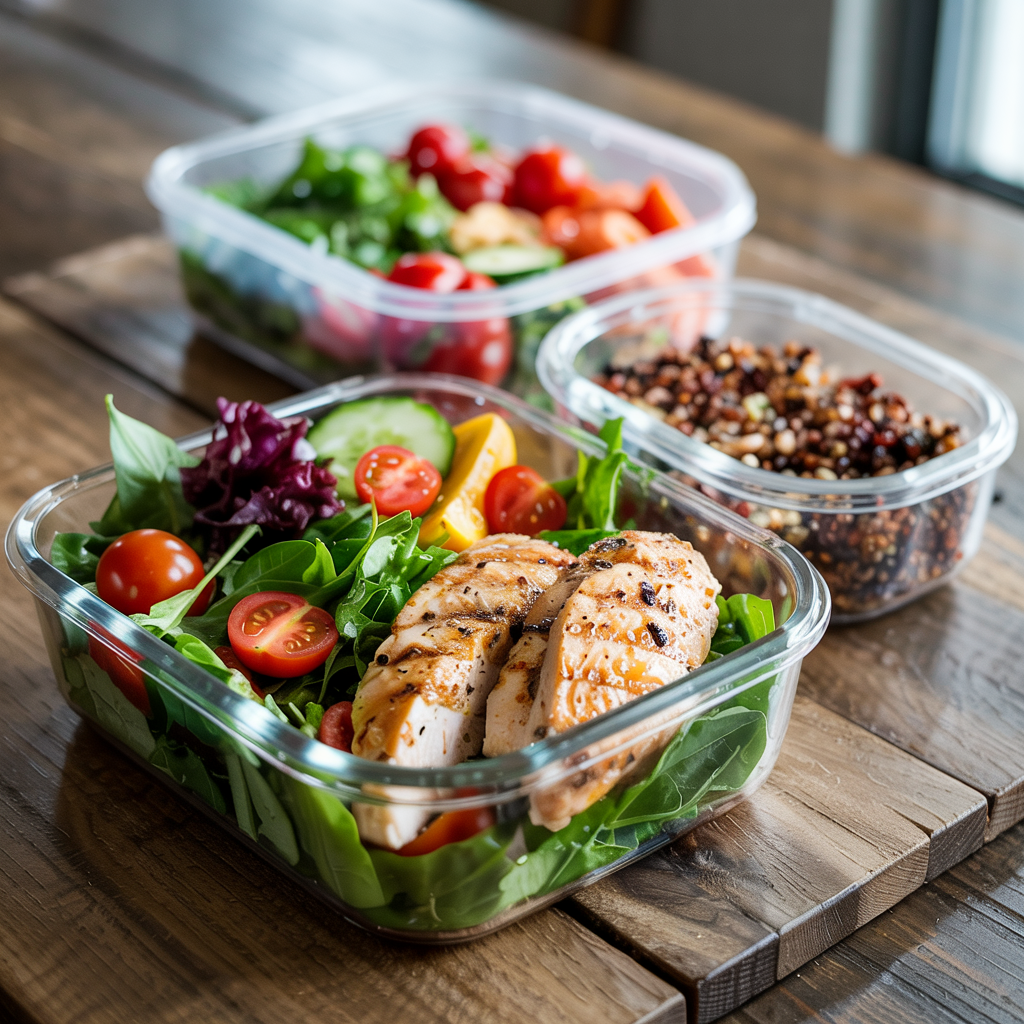
Now, I rely entirely on the “cook once, eat twice” rule. When I make those three core dinners, I intentionally make double portions. Every single time, without exception. The secret to making this work consistently is timing: as I am cleaning up after dinner—before I even sit down to relax—I immediately portion the leftovers into glass containers for the next day’s lunch. It takes zero extra cooking time, requires no additional grocery shopping, and my lunch is packed and ready to go before I even go to sleep.
This one habit alone eliminated my lunch spending almost entirely. The food I was already making was suddenly doing double duty, and I was eating better at lunch than I ever had when I was buying separately.
Step 4: Write the List and Enforce It at the Store
Once I have my three dinners planned and my pantry anchors identified, I write the actual grocery list. I categorize it by store section—Produce, Dairy, Meat, Pantry, Frozen—so I can navigate the store efficiently and get in and out without wandering down aisles I have no business being in.
And here is the most critical, non-negotiable part of the entire system: if it is not on the list, it does not go in the cart. Period. No exceptions, no “I’ll figure out how to use it later,” no “it was on sale.” If I see a beautiful, vibrant bunch of asparagus on sale, I do not buy it unless I can immediately, in that moment, assign it to one of my planned meals. Aspirational vegetables are the enemy of a budget and the primary cause of food waste. They are purchased by the person I want to be, not the person I actually am on a Tuesday night.
What Actually Changed
That first week I tried this system, the results were immediate and almost disorienting in how straightforward they were. My grocery bill dropped noticeably because I was no longer buying random, disconnected items that would never become a coherent meal. I was buying exactly what I needed and nothing more.
But the financial savings, while genuinely meaningful, were not the most profound change. The real transformation happened on Wednesday at 6:00 PM. I walked into the kitchen, exhausted from a long day, and instead of staring blankly into the fridge feeling a wave of guilt and anxiety, I didn’t have to think at all. I knew exactly what was in the fridge. I knew exactly which meal it was designated for. I knew it would take 20 minutes to put together. The decision had already been made—by the Sunday version of me who had the time and energy to think clearly.
I stopped throwing away wilted spinach. I stopped ordering emergency, guilt-ridden takeout. I stopped the cycle of aspirational shopping followed by practical failure. And perhaps most surprisingly, I started eating significantly healthier—not because I was trying harder, but simply because the healthy choice was already planned, prepped, and waiting. When the path of least resistance leads to a good meal, you eat a good meal.
The Honest Truth About Meal Planning
Meal planning is not about being perfectly organized. It is not about having a color-coded binder, spending your entire Sunday chopping vegetables into tiny uniform cubes, or following a rigid schedule that makes eating feel like a chore. Every version of meal planning I tried that looked like that failed within two weeks, because it was designed for a fantasy version of my life rather than the actual one.
The version that worked is the one I described above: three dinners, pantry anchors, cook once eat twice, and a list you actually stick to. It is not glamorous. It will not make a compelling Instagram Reel. But it works consistently, week after week, in a real kitchen with a real schedule and a real budget.
If you find yourself staring blankly into the fridge every night, feeling overwhelmed by the thought of dinner, spending money on food you throw away, and ordering takeout more than you want to—try planning just three meals this week. Not seven. Three. See what happens on Wednesday evening. It might just change the way you think about your kitchen entirely.
