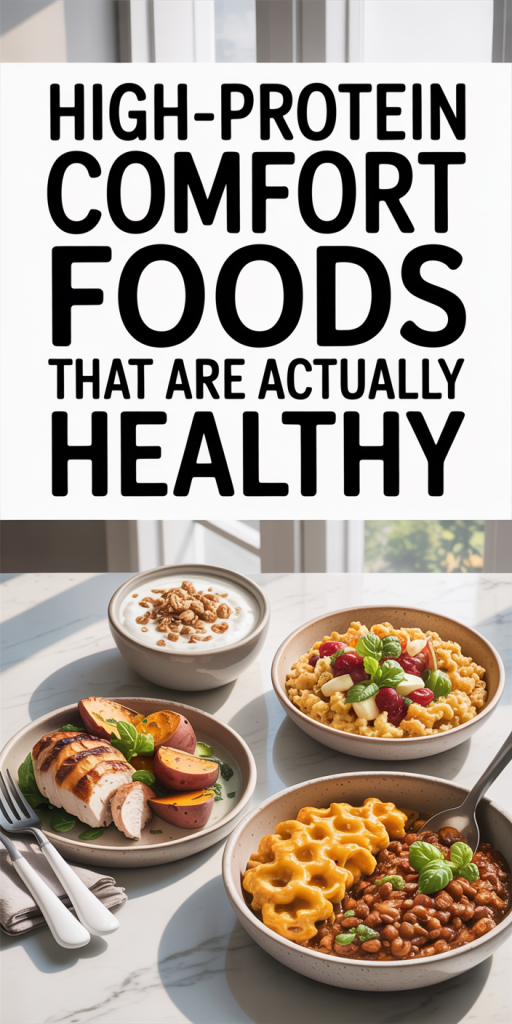
Comfort food usually conjures warm bowls, cheesy bakes, and sweet treats, not the first place we look for nutrition. But in 2026, comfort eating and health can coexist. We want satisfying meals that warm us up, soothe stress, and help us meet protein goals without relying on empty calories. In this guide we’ll explain why protein matters for comfort eating, share practical principles and staples, give recipe ideas across categories, and provide meal-prep and tracking strategies so your favorite cozy dishes support strength, mood, and metabolic health. Read on: we’ve rounded up 25 high-protein comfort foods and the smart swaps that make them actually healthy.
Why Protein Matters For Comfort Eating
Protein isn’t just for bodybuilders, it’s central to how we feel and recover. When we choose comfort foods with meaningful protein, we get several advantages:
- Satiety and appetite control: Protein helps us feel full longer, reducing late-night snacking and that heavy, regret-filled feeling after calorie-dense comfort meals.
- Mood and stress regulation: Amino acids, such as tryptophan, are precursors to neurotransmitters that influence mood. A protein-containing meal can stabilize blood sugar and mood swings that often prompt comfort eating.
- Repair and metabolic health: Especially as we age, maintaining lean mass supports metabolism, mobility, and injury recovery, all reasons to prioritize protein even in cozy dishes.
Beyond physiological effects, protein-rich comfort foods tend to be more balanced: they pair carbs and fats with a structural component that moderates digestion. That balance keeps us satisfied and nourished instead of crashing an hour after a bowl of carb-heavy comfort food.
Our goal here is practical: we’ll keep the indulgence and sensory satisfaction, but swap in higher-quality proteins, increase fiber, and trim excess saturated fat and sodium in ways that don’t feel punitive.
Principles For Healthy High-Protein Comfort Foods
When we remake comfort classics, we follow a few simple principles to keep flavor and texture while improving nutrition:
- Prioritize whole-food proteins over highly processed options. Think beans, legumes, eggs, seafood, poultry, lean pork, and minimally processed dairy or meat.
- Combine protein with fiber-rich carbs and vegetables to slow digestion and improve satiety.
- Use culinary techniques (braising, roasting, low-and-slow) that develop flavor without heavy creams or excess oil.
- Replace part of refined flour or starch with legumes, whole grains, or vegetable purees to increase protein and fiber.
- Be conservative with cheese and butter: use strong-flavored cheeses, smaller amounts, or protein-rich substitutes (Greek yogurt, ricotta) to keep mouthfeel without excess saturated fat.
Below we list pantry staples, prioritized protein sources, and techniques that let us keep the comfort while boosting nutrition.
Simple High-Protein Comfort Recipes By Category
We’ve organized ideas by category so you can swap ingredients and adapt to preferences. Each subsection includes healthy swaps to increase protein or reduce empty calories.
Soups, Stews, And Chilis (Ideas And Healthy Swaps)
- Turkey and white bean chili: Use lean ground turkey, canned white beans, diced tomatoes, and chili spices. Beans add fiber and plant protein: turkey keeps it lean. Top with a tablespoon of Greek yogurt instead of sour cream.
- Lentil and sausage stew: Brown sliced chicken or turkey sausage (or smoked tempeh for vegans), simmer with brown lentils, carrots, and kale. Lentils contribute both protein and a creamy texture: kale adds micronutrients.
- Creamy salmon chowder (lighter): Use flaked cooked salmon, potatoes, corn, and a roux made from olive oil and whole-wheat flour, then finish with low-fat milk or a blend of milk and Greek yogurt. Salmon provides omega-3s and a hefty protein punch.
Healthy swaps: replace heavy cream with blended white beans or plain Greek yogurt: use bone broth for depth instead of extra butter: bulk up with lentils, beans, or shredded chicken to increase protein per bowl.
Casseroles, Bakes, And Gratins (Lower-Fat Options)
- High-protein shepherd’s pie: Swap ground lamb for lean ground turkey or a mix of mushrooms and lentils. For the topping, mix mashed cauliflower into mashed potatoes to reduce carbs and boost fiber.
- Chickpea, spinach, and ricotta bake: Use canned chickpeas, part-skim ricotta, and sautéed spinach under a light tomato sauce. Chickpeas bring protein and a pleasing texture: ricotta adds creamy mouthfeel without excessive fat.
- Tuna noodle gratin (lighter): Use whole-wheat or legume-based pasta, drained tuna in water, peas, a light béchamel made with milk thickened with a cornstarch slurry, and a modest sprinkle of Parmesan.
Healthy swaps: use legume-based pastas, reduce cheese quantity and choose sharp flavors, and incorporate vegetables into the base to increase volume and micronutrients.
One-Pot Bowls And Skillets (Balanced Meals In One Pan)
- Chicken, farro, and roasted vegetable skillet: Sear diced chicken breast, add toasted farro, sun-dried tomatoes, spinach, and a splash of lemon. Farro adds chew and protein: chicken keeps the dish filling.
- Tofu and peanut sweet potato hash: Crispy extra-firm tofu, cubed roasted sweet potatoes, and a light peanut-ginger sauce. Tofu’s protein and texture make it satisfyingly savory.
- Shrimp and black bean skillet: Quickly seared shrimp with black beans, peppers, and quinoa. Shrimp cooks fast and pairs well with legumes for a balanced protein profile.
Healthy swaps: choose whole grains (quinoa, farro, barley) or legume pastas: sear proteins for flavor instead of heavy sauces: add leafy greens at the end for volume.
Pasta, Noodles, And Gratins (Higher-Protein Alternatives)
- Creamy Alfredo with white beans and spinach: Purée cannellini beans with a bit of stock to create a creamy sauce, then toss with whole-wheat fettuccine, sautéed garlic, spinach, and grilled chicken.
- Bolognese with lentils: Combine lean ground beef or turkey with red lentils to stretch protein and add fiber: simmer long for depth. Serve over high-protein pasta (chickpea or lentil pasta).
- Soba noodle bowl with edamame and miso-tahini sauce: Buckwheat soba with shelled edamame, mushrooms, and a tangy dressing provides a satisfying, slurpable comfort bowl.
Healthy swaps: swap half or all of regular pasta for legume- or ancient-grain alternatives: make sauces from blended legumes or dairy substitutes to reduce saturated fat.
Baked Goods, Snacks, And Sweets With Extra Protein
- Greek yogurt banana bread: Swap half the butter/oil for plain Greek yogurt and add protein powder or ground oats. Use ripe bananas and a touch of maple syrup for sweetness.
- Protein brownies: Make black bean brownies using blended black beans, cocoa, eggs or flax eggs, and a small amount of dark chocolate. They deliver fiber and protein with a familiar fudgy texture.
- Cottage cheese fruit parfait: Layer cottage cheese with berries, toasted oats, and a drizzle of honey. Cottage cheese is an underappreciated, high-protein, low-fat option.
Healthy swaps: incorporate yogurt, ricotta, cottage cheese, or protein powder into baked goods: use nut flours or ground seeds to increase protein and healthy fats: reduce refined sugar with fruit purées.
These category ideas let us keep the flavors we crave while increasing protein density and fiber, a blueprint for turning indulgence into nourishment.
Meal Prep, Batch Cooking, And Time-Saving Strategies
Comfort food should be convenient. Here are strategies we use to make protein-rich comfort accessible all week long:
- Batch-cook base proteins: Roast a large tray of chicken thighs, bake salmon fillets, or press and bake extra-firm tofu. Store in portioned containers for quick assembly.
- Cook grains and legumes in bulk: Make a big pot of quinoa, farro, or lentils. They reheat well and are a quick protein-and-fiber foundation.
- Freeze portioned soups and stews: Many high-protein soups (lentil soup, turkey chili) freeze perfectly. Portion into single-serve containers so we can reheat a satisfying meal in minutes.
- Use sheet-pan dinners: Toss protein (chicken or tempeh) with vegetables and a drizzle of oil and roast. It’s largely hands-off and yields multiple meals.
- Prep mix-ins and toppings: Chop herbs, roast nuts, and make quick dressings (Greek yogurt–based or tahini dressings) to add flavor without extra cooking later.
For busy weeks we rely on assembly rather than cooking from scratch: a bowl of warm grain + reheated protein + steamed vegetables + sauce is fast, comforting, and nutritionally balanced. Invest an hour or two on the weekend and you’ll have ready-made comfort for the whole week.
How To Portion, Balance Macros, And Track Protein Targets
We recommend a pragmatic approach to portions and macros so comfort foods fit into overall goals.
- Protein targets: A common recommendation is 0.7–1.0 grams per pound of bodyweight for active adults aiming to maintain or build muscle. For many people this translates to 80–150 grams per day depending on size and activity. We should personalize targets with a clinician or dietitian when needed.
- Plate method for comfort meals: Aim for roughly 1/4 plate protein, 1/4 plate whole grain or starchy vegetable, and 1/2 plate non-starchy vegetables. That keeps meals cozy but balanced.
- Portion examples: 3–4 oz cooked meat or fish (20–30 g protein), 1 cup cooked beans or lentils (15–18 g), 1 cup Greek yogurt (20 g), 3 oz firm tofu (9–11 g). Combine multiple sources across the day.
- Tracking without obsession: Use a simple app to check protein density (grams per serving) for new recipes, then estimate for familiar meals rather than logging every ingredient. Over time we internalize portions and stop needing constant tracking.
When we build comfort meals with at least one concentrated protein source and fiber-rich sides, we tend to meet daily protein needs while enjoying our favorites.
Nutrition Notes: Protein Quality, Fiber, Sodium, And Calories
A few technical notes to keep in mind when optimizing comfort foods:
- Protein quality: Animal proteins are complete (contain all essential amino acids). Plant proteins can be combined (grains + legumes) to achieve completeness. Including a variety across the day ensures amino acid adequacy.
- Fiber matters: High-fiber sides (vegetables, whole grains, legumes) blunt glucose spikes and increase fullness. Many comfort recipes are low in fiber by default, that’s where swaps like adding lentils or beans help.
- Sodium: Commercial comfort foods and canned broths can be sodium-heavy. Choose low-sodium broths, rinse canned beans, and flavor with herbs, acid (lemon/vinegar), and spices instead of relying on salt.
- Calories and energy density: Fat adds flavor but also calories. We don’t eliminate fat: we choose heart-healthy fats (olive oil, nuts, seeds, oily fish) and use techniques like roasting to concentrate flavor so we can use less added fat.
If we pay attention to protein quality, fiber, sodium, and energy density, our comfort foods become nutrient-dense, not just calorie-dense.
Dietary Modifications And Substitutions (Vegetarian, Vegan, Gluten-Free)
Comfort food should be inclusive. Here’s how we adapt recipes to common dietary needs without losing satisfaction:
- Vegetarian: Favor eggs, dairy (Greek yogurt, cottage cheese, ricotta), legumes, tempeh, and seitan. Example: Swap shredded chicken for crumbled tempeh in a chili: finish baked pasta with ricotta instead of ricotta mixed with eggs for protein.
- Vegan: Combine legumes, tofu, tempeh, and seitan with higher-protein grains (quinoa, farro) and nutritional yeast for savory umami. Use flax or chia “eggs” in baking and nondairy yogurts fortified with protein for parfaits.
- Gluten-free: Use naturally gluten-free grains (quinoa, brown rice, millet) or legume-based pastas. Many comfort recipes translate well when swapping flour for almond flour, oat flour, or chickpea flour, both for structure and protein boost.
We should also be mindful of micronutrients when removing animal products: B12, iron, and omega-3s may need attention for strict vegans. For most people, thoughtful planning makes these comfort food adaptations delicious and nutritionally solid.
7-Day Sample Meal Plan Featuring High-Protein Comfort Foods
Here’s a practical 7-day plan that keeps comfort at the center while prioritizing protein. Portions assume average adult needs: adjust according to personal targets.
Day 1
- Breakfast: Greek yogurt parfait with berries, toasted oats, and a scoop of whey or plant protein (25–30 g)
- Lunch: Lentil and roasted vegetable salad with feta (25–30 g)
- Dinner: Turkey and white bean chili with a side of roasted broccoli (35–40 g)
Day 2
- Breakfast: Cottage cheese with sliced peaches and toasted almonds (25 g)
- Lunch: Quinoa bowl with roasted salmon, spinach, and lemon-tahini (30–35 g)
- Dinner: Chickpea and ricotta bake with mixed greens (25–30 g)
Day 3
- Breakfast: Scrambled eggs with smoked salmon and whole-grain toast (25–30 g)
- Lunch: Chicken, farro, and roasted peppers skillet (30–35 g)
- Dinner: Bolognese with lentils over chickpea pasta (35–40 g)
Day 4
- Breakfast: Protein smoothie (Greek yogurt, banana, spinach, protein powder) (30–35 g)
- Lunch: Tofu and peanut sweet potato hash (25–30 g)
- Dinner: Creamy salmon chowder made lighter, side salad (30–35 g)
Day 5
- Breakfast: Oatmeal made with milk, stirred-in cottage cheese, and blueberries (25 g)
- Lunch: Shrimp and black bean skillet over brown rice (30–35 g)
- Dinner: High-protein shepherd’s pie (lentil + turkey), steamed green beans (35 g)
Day 6
- Breakfast: Chickpea flour omelet with veggies (25–30 g)
- Lunch: Tuna noodle gratin with legume pasta and peas (30–35 g)
- Dinner: Soba bowl with edamame and miso-tahini (30 g)
Day 7
- Breakfast: Greek yogurt banana bread slice + boiled egg (25–30 g)
- Lunch: Leftover turkey chili with a side salad (30–35 g)
- Dinner: Black bean brownies (small portion) and cottage cheese parfait (20–25 g)
This plan mixes animal and plant proteins to maintain variety and keeps meals cozy and satisfying without excessive calories.
Smart Swaps And Ordering Tips For Eating Out Or Takeout
We don’t always cook, so here are quick rules for eating out while staying high-protein and comfortable:
- Choose grilled, roasted, or braised proteins over deep-fried options.
- Ask for sauces on the side and use modest amounts: favor tomato- or broth-based sauces over cream-based ones.
- Swap fries for a side salad, steamed vegetables, or a cup of beans when possible.
- Opt for protein-forward dishes: grilled fish, rotisserie chicken, steak salads, or legume-based bowls.
- When ordering pizza, pick a thinner crust or cauliflower/legume crust when available, load up on vegetables and a lean protein (grilled chicken, shrimp), and request light cheese.
- For comfort classics like mac and cheese or lasagna, ask if the restaurant offers a smaller portion or a side salad to balance the meal.
With simple requests and mindful swaps, we can keep the comfort dining experience while aligning with our protein and health goals.
Conclusion
Comfort food and health aren’t mutually exclusive. By prioritizing protein, adding fiber-rich sides, using smart cooking techniques, and making targeted swaps, we can enjoy the warmth and nostalgia of comfort dishes while supporting our energy, mood, and body composition. Use the recipe ideas, meal-prep tips, and the 7-day plan as a starting point: adapt flavors you love, keep a few high-protein staples on hand, and let comfort food be both cozy and constructive. When we plan intentionally, our favorite meals become part of a sustainable, nourishing lifestyle, satisfying in every sense.