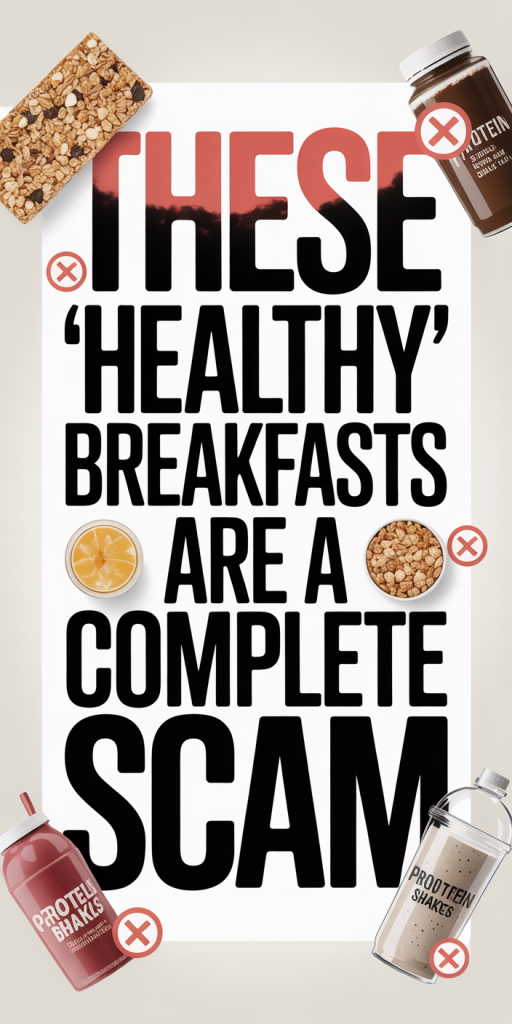
These “Healthy” Breakfasts Are A Complete Scam — What To Eat Instead In 2026
We’ve been sold a tidy story: breakfast equals health, and the boxes and bowls in supermarkets are proof. But as food companies sharpen their marketing, many so-called “healthy” breakfasts are engineered more for taste, shelf life, and profit than for sustained nutrition. In 2026, with clearer labeling rules and a louder conversation about ultra-processed foods, it’s time we stopped treating marketing claims as nutrition advice. In this text we’ll unpack why popular breakfast options often mislead us, show the label tricks and serving-size sleights of hand to watch for, and, most importantly, give practical, realistic swaps that keep mornings simple while actually fueling our day. We’re not after perfection: we want breakfasts that keep us full, steady, and clear-headed without a sugar crash by 10 a.m. Read on and you’ll see how to spot the scams and what to eat instead.
Why So Many Breakfasts Pretend To Be Healthy
Breakfast is prime real estate for food marketers. Most of us eat it daily, often on autopilot, and many manufacturers know that a single successful product can become a category staple. That’s created a huge incentive to design foods that look healthy at a glance, bright packaging, buzzwords like “natural,” “whole grain,” or “high protein,” and Instagram-ready imagery. But the gap between appearance and composition is wide.
We also need to understand that food engineering often prioritizes convenience, texture, and shelf stability over nutrition. Additives, refined sugars, and processed oils extend shelf life and make breakfast items more palatable, which helps brands retain customers. Meanwhile, nutrition claims are regulated loosely enough that a product can be labeled “low fat” or “made with real fruit” while still being packed with added sugars or refined carbs.
Behavior plays a role, too. Mornings are rushed: we’ll reach for anything that promises quick energy or satiety. Marketers exploit that urgency by positioning sugary or ultra-processed items as time-saving solutions. The result is a marketplace where “healthy” is more about perception than physiological impact, many breakfasts spike blood sugar, leave us hungry, and undermine long-term health goals. Recognizing this dynamic is the first step toward making smarter choices.
The Most Common “Healthy” Breakfast Scams: How To Spot The Red Flags
There are recurring patterns across breakfast products that tell us they’re more hype than help. Sweeter-than-advertised ingredients, tiny serving sizes, protein claims that don’t match reality, and ingredients lists that read like chemistry lessons, those are our red flags. Below we break down four familiar categories and what gives them away so we can make better swaps.
Granola And Muesli: Sugar-Loaded Crunch Masquerading As Health Food
Granola and muesli are classic examples of “looks healthy, isn’t.” Whole oats, nuts, and seeds are genuinely nutritious, but many commercial blends add honey, brown sugar, syrups, and even candy-like inclusions (chocolate chips, yogurt-covered bits) to hit a consumer-desired flavor profile. That crunch you love is often the result of sugar and oil baked until glossy.
Serving size tricks amplify the problem. A bag may list calories and sugar per 1/3 cup, but most people spoon 3/4 to 1 cup into a bowl. Suddenly we’re eating two to three times the sugar listed on the label. Granola’s fat often comes from added oil rather than whole-food sources: that increases calories without adding the stabilizing effect of intact nuts.
How to spot a better option: look for short ingredient lists where oats, whole nuts, and seeds appear first, without cane sugar or syrups in the top three ingredients. Or better yet, make a simple stovetop batch at home, toast oats with a handful of nuts and a touch of maple, and you control the sweetness. We’ll prefer a crunchy topping for yogurt, not the base of our breakfast energy.
How Food Labels, Serving Sizes, And Marketing Tricks Mislead You
Labels can be useful, but only if we read them critically. The most common label illusions include misleading serving sizes, clever phrasing, and selective highlighting of a single good attribute to obscure the rest.
Serving sizes are especially deceptive. Manufacturers set them to make calorie and sugar numbers look smaller. We need to ask: how much would we actually eat? If the serving is 1/3 cup but our bowl holds 1 cup, adjust the numbers accordingly. Also watch for “per package” versus “per serving” language, some packages contain multiple servings but advertise the lower per-serving numbers.
Buzzwords like “natural,” “whole grain,” or “high protein” aren’t guarantees. “Natural” has no consistent definition across categories: “whole grain” may be present in tiny amounts while refined flour is the main ingredient. “High protein” can be accomplished with isolates and powders that don’t offer the same digestion pace or micronutrient profile as whole-food protein.
Finally, ingredient order matters: ingredients are listed by weight, so the first three items are the largest components. If sugar or syrup appears high on the list, it’s not a health food even if the front of the box shows a bowl of fruit. We must read labels like detectives, not shoppers who trust packaging.
How To Build A Truly Nourishing, Sustainable Breakfast (Macros, Fiber, And Satiety)
A nourishing breakfast does three things: provides adequate protein, includes healthy fats, and supplies fiber-rich carbohydrates. That combination supports steady blood sugar, prolonged satiety, and cognitive clarity. We can roughly aim for 20–30 grams of protein, 10–20 grams of fat (depending on total calories), and 6–12 grams of fiber at breakfast to keep hunger and cravings at bay.
Protein anchors the meal. Eggs, Greek yogurt, cottage cheese, smoked fish, tofu, tempeh, and a measured scoop of high-quality protein powder are reliable sources. Fat slows digestion and adds flavor, think avocado, nuts, seeds, and full-fat dairy or plant-based yogurts. Fiber from whole grains, legumes, vegetables, and fruit supplies bulk and feeds the microbiome.
Balance is also individual. Athletes may need more protein: someone aiming to lose weight may reduce carbs slightly. But the principle stands: prioritize whole, minimally processed foods, pair carbs with protein and fat, and include vegetables when possible. For instance, scrambled eggs with sautéed greens and a slice of sprouted-grain toast or a savory oatmeal with a soft-boiled egg and pumpkin seeds meet these goals.
Sustainability matters, too. Choose breakfasts that fit our schedules and taste preferences so we’ll repeat them. Batch-cooked items, simple templates, and small rituals (a favorite mug or a quick chopped herb) help make nourishing breakfasts the path of least resistance, not a chore.
Quick, Realistic Swaps And Meal Ideas For Busy Mornings
We don’t need complicated recipes to escape the breakfast scam. Swaps that preserve convenience while improving nutrition are our best allies. Below are practical ideas you can adopt quickly.
- Swap flavored yogurt parfaits for plain Greek yogurt topped with a small handful of berries and chopped nuts. Protein stays high: sugar stays low.
- Replace store-bought granola with a mixed-nut and toasted-oat crumble: mix oats, almonds, and pumpkin seeds with a teaspoon of maple and roast briefly. Store in a jar for the week.
- Trade a smoothie bowl heavy on fruit for a greens-forward smoothie: spinach, half a banana, unsweetened protein powder, and a tablespoon of almond butter. It blends fast and keeps us full.
- Instead of a breakfast bar, pack two hard-boiled eggs and an apple, or a whole-grain wrap with hummus and turkey. These portable options have better macros and less hidden sugar.
- For cereal lovers, pick a minimally processed whole-grain option and add your own nuts and seeds: use plain milk or a low-sugar plant milk.
- Make savory overnight oats: rolled oats soaked with stock or milk, mixed with herbs, grated cheese, and a soft-boiled egg when ready. It’s surprising how satisfying savory breakfasts can be.
Batching helps: hard-boil eggs, make a big tray of roasted vegetables, or portion single-serving jars of oats so mornings are still smooth. These swaps shave off sugar and processed fat while keeping speed and taste.
Conclusion
The breakfast marketplace will keep inventing glossy, convenient options that claim to be healthy. That’s why we need a simple, repeatable framework: read labels, favor whole foods, pair protein with fat and fiber, and make swaps that fit our lives. Doing so doesn’t mean mornings have to be complicated, just intentional. When we choose breakfasts that actually nourish, our energy, mood, and appetite become more predictable, and we stop paying the hidden cost of “healthy” marketing. Start with one swap this week and build from there: the cumulative effect is where the real change happens.