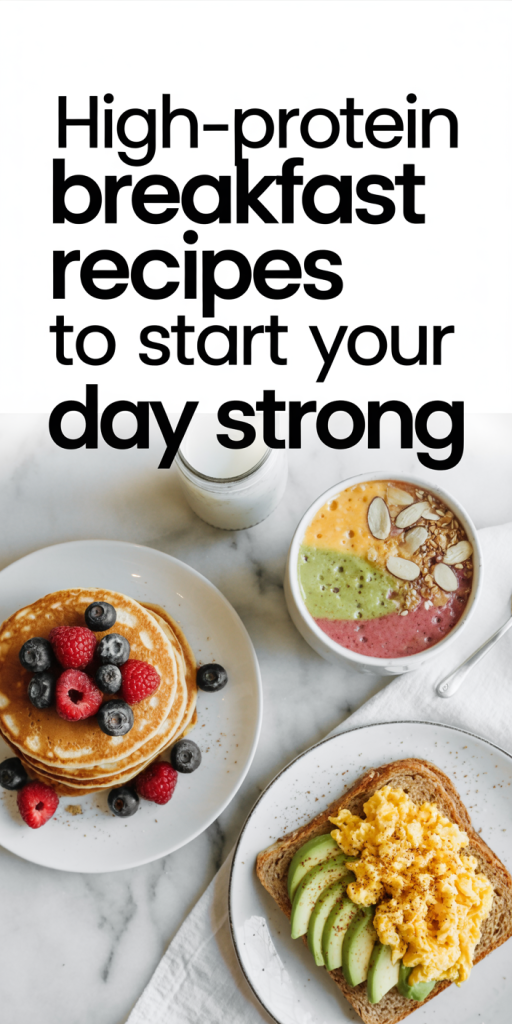
We all know mornings are rushed, but what we put in our bodies first thing shapes energy, appetite, and focus for the rest of the day. A high-protein breakfast is one of the simplest, most effective ways to stabilize blood sugar, reduce mid-morning cravings, and support muscle and metabolic health. In this guide we’ll share 25 easy high-protein breakfast recipes, quick strategies for busy mornings, meal-prep ideas, vegetarian and vegan swaps, and a full 7-day plan with a shopping list, so you can start each morning strong without extra stress.
Why A High-Protein Breakfast Matters
Protein at breakfast does much more than build muscle. When we prioritize protein first thing, it helps in several measurable ways:
- Keeps us full longer: Protein slows gastric emptying and increases release of satiety hormones, which reduces snacking and overeating before lunch.
- Stabilizes blood glucose: Pairing protein with carbs blunts post-meal blood sugar spikes and the subsequent crash that drains energy.
- Supports lean mass and metabolism: For people who exercise, or are trying to maintain muscle as they age, breakfast protein helps stimulate muscle protein synthesis earlier in the day.
- Improves cognitive performance: Several studies show protein-rich breakfasts can improve attention and memory in the morning hours.
We don’t recommend eliminating carbs at breakfast: rather, we suggest balancing carbs with a solid protein source. That combination delivers steady energy and often better food choices throughout the day. Practically, swapping a sugary cereal for Greek yogurt with nuts or an egg-based dish will change how we feel by 10–11 a.m.
Finally, a high-protein breakfast can be flexible: it’s not all eggs or heavy meals. As you’ll see in this guide, there are quick options, make-ahead meals, vegetarian and vegan approaches, and ways to boost protein in familiar breakfasts with minimal fuss.
How Much Morning Protein Do You Need? Guidelines By Goal
Protein needs vary by body size, activity level, and goals. Here’s a practical, goal-oriented approach we use with clients and apply to our own breakfasts:
- General health / weight maintenance: Aim for 20–30 grams of protein at breakfast. That level supports satiety for most adults.
- Weight loss / appetite control: 25–35 grams. Slightly higher protein helps reduce overall calorie intake throughout the day.
- Strength training / muscle gain: 30–40 grams. If we’re training hard, front-loading more protein can support greater muscle protein synthesis.
- Older adults (to combat muscle loss): 30–40 grams: aging muscles respond less strongly to protein, so higher per-meal doses are useful.
How to estimate: A large egg has ~6–7 grams: 3/4 cup Greek yogurt has 15–18 grams: 1 scoop whey protein yields 20–25 grams: 1/2 cup cottage cheese gives ~12–14 grams: 3 ounces cooked lean meat or tofu is ~20–24 grams. We combine these building blocks to hit our target range.
One last note: protein distribution matters. Getting a meaningful dose at breakfast, then at lunch and dinner, is better than loading most protein into one meal.
Quick & Simple High-Protein Recipes (Under 15 Minutes)
We designed this section for the fastest mornings, meals that deliver 20+ grams of protein with minimal fuss. You can mix and match ingredients to suit taste and pantry items.
Egg-Based Power Breakfasts
- Scrambled Eggs with Cottage Cheese and Spinach: Scramble 3 large eggs with 1/3 cup cottage cheese and a handful of spinach. Cottage cheese adds creaminess and an extra ~12 grams of protein.
- Microwave Omelet Mug: Beat 2 eggs + 2 egg whites, add chopped ham or smoked salmon (2 oz), and microwave 90 seconds. Top with salsa. Fast, portable, ~25+ grams protein depending on add-ins.
- Soft-Boiled Eggs + Whole-Grain Toast + Almond Butter: Two soft-boiled eggs (12–14 g) plus a tablespoon of almond butter on toast adds protein and healthy fat.
Greek Yogurt, Cottage Cheese, And Savory Bowls
- Greek Yogurt Parfait with Hemp Seeds: 1 cup plain Greek yogurt (20 g) topped with 1–2 tbsp hemp seeds (6–8 g), berries, and a sprinkle of granola.
- Savory Cottage Cheese Bowl: 1 cup cottage cheese with cherry tomatoes, cucumber, black pepper, and za’atar, add a boiled egg for extra protein.
Protein-Packed Toasts And Wraps
- Smoked Salmon Avocado Toast: 2 slices whole-grain toast topped with 3 oz smoked salmon (~15–18 g) and mashed avocado. Add a poached egg for a bigger protein hit.
- Turkey + Hummus Wrap: Whole-wheat tortilla, 3–4 oz sliced turkey, 2 tbsp hummus, mixed greens, wrap and go. Protein ~25 g.
High-Protein Smoothies And Fruit Bowls
- Berry Protein Smoothie: 1 scoop whey or plant protein (20–25 g), 1 cup unsweetened almond milk, 1/2 cup frozen berries, and 1 tbsp nut butter. Simple, under 5 minutes.
- Chia Protein Bowl: 2 tbsp chia (4 g protein) soaked in milk with 1 scoop protein powder stirred in after set, toppings like nuts and seeds add more protein and texture.
All of these options can be assembled in 5–15 minutes. We recommend prepping small components the night before (chopping veggies, portioning seeds) to save even more time.
Hearty Cooked Breakfasts For Slower Mornings
When we have extra time, cooked breakfasts can be comforting and nutrient-dense. These recipes take 15–30 minutes but reward us with volume and sustained energy.
- Vegetable and Turkey Sausage Frittata: Whisk 6 eggs with 1/4 cup milk, fold in 4 oz cooked turkey sausage, sautéed peppers, onions, and spinach. Bake or finish under the broiler. Yields 6 servings, each with ~20–25 g protein.
- Quinoa Breakfast Bowl: Cooked quinoa (1 cup cooked ~8 g protein) topped with a fried egg, sautéed mushrooms, and shredded low-fat cheese. Add a spoonful of Greek yogurt for extra protein and creaminess.
- Cottage Cheese Pancakes: Blend 1 cup cottage cheese, 3 eggs, 1/2 cup oats, pan-fry small pancakes. These are high in protein and low in refined carbs.
- Savory Breakfast Hash: Roast sweet potatoes with onions and bell peppers, toss in cooked beans or diced chicken breast, and top with a couple of poached eggs. Hearty and balanced.
For weekend mornings we like making larger skillets or frittatas to reheat during the week. They keep well and make a protein-rich grab-and-go breakfast a simple microwave away.
Overnight Oats And Make-Ahead Egg Bakes (Meal-Prep Friendly)
Meal prep changes the game for busy weeks. With a little planning we can have ready-to-eat high-protein breakfasts all week.
- High-Protein Overnight Oats: Mix 1/2 cup rolled oats, 1 cup milk (dairy or soy), 1 scoop protein powder, 1 tbsp chia seeds, and a pinch of cinnamon. Refrigerate overnight. In the morning top with nuts and berries. Protein: ~25–30 g depending on powder.
- Savory Overnight Oats: Use Greek yogurt as the base (1/2 cup), add oats, diced cucumber, cherry tomatoes, and a pinch of salt, top with a boiled egg. A different flavor profile but equally filling.
- Make-Ahead Egg Muffins: Whisk 12 eggs with diced vegetables and cooked lean meat or tofu, pour into muffin tins, bake 18–20 minutes. Each muffin ~6–8 g protein: two or three muffins make a full breakfast.
- Breakfast Casserole: Layer whole-grain bread, cooked spinach, turkey bacon, and beaten eggs in a baking dish, bake, and portion out for the week. Reheat in the microwave for 60–90 seconds.
We recommend labeling portions with dates and using airtight containers. These make-ahead choices save 10–15 minutes per morning and keep protein levels steady without decision fatigue.
Vegetarian And Vegan High-Protein Options
Plant-based breakfasts can be just as protein-rich as animal-based ones when we combine complementary sources and use concentrated protein foods.
- Tofu Scramble: Crumbled firm tofu sautéed with turmeric, nutritional yeast (adds protein and savory flavor), greens, and tomatoes. Add a side of whole-grain toast.
- Chickpea Pancakes (Socca): Made from chickpea flour, water, and oil, these pancakes are savory and packed with protein. Top with smashed avocado and herbs.
- Vegan Protein Smoothie Bowl: Plant-based protein powder (pea or blend), silken tofu or soy yogurt, frozen berries, and a handful of spinach. Top with seeds and hemp for extra grams.
- Lentil Breakfast Bowl: Warm lentils with roasted sweet potato, tahini drizzle, and a sprinkle of pepitas. Legumes + seeds create a complete amino acid profile.
- Tempeh Breakfast Stir-Fry: Thin-sliced tempeh pan-fried with bell peppers and kale, served over quinoa.
Practical tips for plant-based eaters: use soy or pea protein powders, keep tofu/tempeh on hand, and add seeds (hemp, pumpkin, chia) liberally. Combining grains and legumes across the day ensures we hit amino acid needs without relying solely on single items.
Smart Swaps, Protein Boosters, And Ingredient Substitutions
Small swaps can increase breakfast protein without changing the meal’s essence. Here are our favorite adjustments:
- Swap milk: Use dairy or soy milk instead of almond milk for higher protein. Soy milk has ~7 g per cup: almond milk is usually 1 g.
- Add a scoop: Stir a scoop of protein powder into oatmeal, yogurt, or smoothies, fast and reliable.
- Double up on dairy: Mix cottage cheese into scrambled eggs or Greek yogurt into overnight oats.
- Seed power: Add 2 tablespoons hemp seeds (6–8 g protein) or pumpkin seeds (5–6 g) to bowls and smoothies.
- Use higher-protein bread: Choose sprouted grain or high-protein bread for toast, can add 6–12 g protein per 2 slices.
- Swap grains: Replace part of oatmeal with quinoa for additional protein and texture.
- Legume inclusion: Add black beans or lentils to savory breakfasts like breakfast burritos or bowls.
We try to make swaps that don’t feel like dieting. Instead, they slightly upgrade familiar foods so protein becomes a default, not a chore.
Practical Tips To Maximize Satiety And Nutrient Balance
Protein is crucial, but meals that satisfy and support health have three elements: protein, fiber-rich carbs, and healthy fat. Here’s how we balance all three consistently:
- Include fiber: Add fruit, vegetables, or whole grains to slow digestion and increase fullness.
- Don’t fear fat: Add nuts, seeds, avocado, or a little olive oil, the fat sustains energy and improves nutrient absorption.
- Prioritize hydration: Many people mistake thirst for hunger: a glass of water with breakfast helps digestion and satiety.
- Time protein around workouts: If we train in the morning, we aim for 20–30 g pre- or post-workout to support performance and recovery.
- Portion control: Use components (protein, carb, fat) as guides rather than exact rules, this keeps meals flexible and enjoyable.
- Combine textures: Creamy yogurt + crunchy seeds or a runny egg + crisp toast makes meals more satisfying psychologically, which reduces grazing later.
We also recommend occasional variety to avoid palate fatigue: rotate between dairy, eggs, legumes, and plant proteins across the week. That keeps breakfast enjoyable and nutritionally diverse.
Sample 7-Day High-Protein Breakfast Meal Plan (With Shopping List)
Below is a practical 7-day plan that balances convenience and variety. Each day targets roughly 25–35 grams of protein. Quantities assume two adults: scale as needed.
Day 1: Greek yogurt parfait (1 cup Greek yogurt + 2 tbsp hemp seeds + berries), ~28 g
Day 2: Scrambled eggs with cottage cheese and spinach (3 eggs + 1/3 cup cottage cheese), ~30 g
Day 3: Berry protein smoothie (1 scoop whey/pea protein + 1 tbsp almond butter + 1 cup milk) + 1 boiled egg, ~30 g
Day 4: Make-ahead egg muffins (3 muffins) + whole-grain toast, ~28–32 g
Day 5: Smoked salmon avocado toast with a poached egg, ~30 g
Day 6: Tofu scramble with sautéed greens and quinoa side, ~25–30 g
Day 7: Overnight oats with protein powder, chia seeds, and walnuts, ~30 g
Quick shopping list (basics for week):
- Eggs (2–3 dozen)
- Greek yogurt (32–48 oz)
- Cottage cheese (16–24 oz)
- Protein powder (whey or plant)
- Hemp seeds, chia seeds, walnuts, almonds
- Rolled oats, quinoa
- Tofu, tempeh (or turkey sausage/chicken breast for omnivores)
- Smoked salmon or deli turkey
- Whole-grain bread/wraps
- Berries, apples, avocados
- Leafy greens, bell peppers, onions
- Olive oil, nut butter, spices (turmeric, za’atar, nutritional yeast)
Prep tips: Bake egg muffins or a frittata Sunday night, rinse and portion berries, and pre-cook a pot of quinoa. Make a double batch of overnight oats to rotate through the week. With 60–90 minutes of weekend prep we can save at least 10 minutes every morning.
Conclusion
We don’t have to overcomplicate mornings to get a high-protein breakfast. With a few building blocks, eggs, Greek yogurt, cottage cheese, protein powder, tofu, and seeds, we can create dozens of satisfying options that fuel focus, control appetite, and support muscle and metabolic health.
Start by picking one quick recipe for weekdays and one make-ahead option for busy mornings. Use smart swaps to boost protein where needed and rotate plant and animal sources for variety. If we commit to a protein-focused breakfast routine for a few weeks, we’ll likely notice steadier energy, fewer cravings, and better performance, morning after morning.
Want the printable shopping list or recipe cards for the 25 recipes mentioned? We can put together a downloadable PDF tailored to your dietary preferences, just tell us whether you prefer omnivore, vegetarian, or vegan options and we’ll customize it.