We know the value of protein when our goals include losing fat and building muscle at the same time. In 2026 the basics haven’t changed, adequate protein, a slight caloric deficit for fat loss or a modest surplus for growth, and progressive resistance training are still the cornerstones, but we’ve refined how to turn those principles into practical meals and a realistic weekly plan. In this guide we’ll explain why protein is so effective, show how to calculate targets, share kitchen strategies, and give 18 tested high-protein recipes (breakfast, lunch, dinner, snacks) plus a ready-to-follow 7-day meal plan with macro examples. Let’s make eating for fat loss and hypertrophy simple, tasty, and sustainable.
Why High Protein Works for Fat Loss and Muscle Growth
Protein is uniquely powerful for two reasons that matter when we want to lose fat and build muscle simultaneously: it supports muscle protein synthesis (MPS) and it increases satiety and thermogenesis. MPS is the process by which we repair and build muscle tissue after resistance training: without sufficient protein, even the best workouts yield minimal gains. At the same time, protein has a higher thermic effect of food (TEF) than carbs or fat, roughly 20–30% of protein’s calories are used during digestion, so a higher-protein diet slightly increases energy expenditure.
Practically, that means when we prioritize protein we preserve lean mass during a calorie deficit, keep hunger in check, and improve body composition. Studies across ages and training levels consistently show higher-protein diets lead to greater fat loss and better maintenance of muscle mass than lower-protein diets with the same calories. For athletes and recreational lifters aiming for hypertrophy, spreading protein intake through the day and using quality protein sources further optimizes MPS.
Key takeaway: protein is not just a building block, it’s a metabolic and behavioral tool. When combined with resistance training and an appropriate calorie strategy, it helps us lose fat and gain or preserve muscle.
How Much Protein Do You Need? Calculating Targets for Weight Loss and Hypertrophy
There’s no single “perfect” number for everyone, but practical ranges make planning easy.
- For weight loss with muscle retention: aim for 1.6–2.4 g/kg of body weight (0.7–1.1 g/lb).
- For muscle gain/hypertrophy: aim for 1.6–2.2 g/kg (0.7–1.0 g/lb), with the higher end useful during calorie deficits.
Example calculations:
- A 75 kg (165 lb) person aiming for fat loss: 75 × 1.8 g = ~135 g protein/day.
- A 90 kg (200 lb) person focusing on hypertrophy: 90 × 1.8–2.0 g = 162–180 g/day.
We prefer using bodyweight for estimates because it’s simple. If someone has a lot of excess fat, using lean body mass or an adjusted bodyweight (e.g., target weight within a healthy range) can be more accurate.
Distribution matters: aim for 3–5 protein-containing meals evenly spaced, each providing 20–40 g of protein (or ~0.3–0.6 g/kg per meal) to maximize MPS. Post-workout, a 20–40 g dose of a fast-digesting protein (whey or a mixed meal) supports recovery. For older adults, higher per-meal doses at the upper end of these ranges are beneficial.
We should also note calorie context: if we’re in a calorie deficit, prioritize protein first, then adjust carbs and fats to meet energy needs and performance requirements.
Meal Timing, Portioning, and Macronutrient Balance
Timing doesn’t trump total intake, but smart timing and portioning improve performance and adherence.
- Pre-workout: a meal with 20–30 g protein + easily digestible carbs 1–3 hours before training helps performance.
- Post-workout: aim for 20–40 g protein within 1–2 hours: pairing with carbs (20–40 g) helps glycogen repletion when workouts are intense or frequent.
- Daily spread: 3–5 meals with protein at each helps maintain steady amino acid availability.
Macronutrient balance depends on goals and preferences. A common split for recomposition looks like:
- Protein: 30–40% of calories (matches high-protein targets)
- Carbohydrates: 30–45% (supporting training intensity and recovery)
- Fat: 20–30% (for hormone support and satiety)
Portioning examples for a ~2,000 kcal day with 30% protein: ~150 g protein (600 kcal), remaining calories split between carbs (~200–250 g) and fats (~55–70 g). If we lower calories for weight loss, keep protein absolute intake high and reduce carbs/fats proportionally.
Small adjustments: if we’re low-carb, keep protein steady and increase fats slightly for satiety and energy. If vegan, combine complementary protein sources through the day to meet amino acid needs.
Kitchen Staples, Smart Swaps, and Batch-Prep Tips
Stocking a protein-forward kitchen makes consistency easy. Staples we rely on:
- Animal proteins: chicken breast, ground turkey, lean beef, salmon, shrimp, eggs, Greek yogurt, cottage cheese, whey protein.
- Plant proteins: tofu, tempeh, edamame, lentils, canned beans, chickpeas, quinoa.
- Healthy fats: olive oil, avocado, nuts, seeds.
- Carbs for performance: oats, sweet potatoes, brown rice, whole-grain wraps.
- Flavor builders: low-sodium soy sauce, tahini, hot sauce, lemon, herbs, spices.
Smart swaps to reduce calories and increase protein:
- Swap regular yogurt for Greek yogurt or skyr.
- Use egg whites or a mix of whole eggs and whites to reduce saturated fat while keeping protein.
- Replace some rice with lentils or edamame to boost protein and fiber.
Batch-prep tips:
- Roast a sheet pan of mixed protein (chicken thighs/breasts, salmon) and different veggies: portion for lunches.
- Cook a big pot of lentil chili or turkey chili that freezes well.
- Pre-portion smoothies in freezer bags (fruit + spinach): add protein powder and liquid when blending.
Label containers with portion sizes and macros if we’re tracking. A simple scale and a food-tracking app save time and keep us honest.
High-Protein Recipes: Quick Breakfasts To Start Your Day Strong
Protein-Packed Breakfast Recipes
Breakfast is a chance to secure an early protein dose and reduce mid-morning cravings. Here are three fast, high-protein options that suit both weight loss and muscle gain strategies.
1) Greek Yogurt Parfait With Whey Granola (Quick, 20–30g Protein)
Ingredients (serves 1):
- 1 cup plain nonfat Greek yogurt (~20 g protein)
- 1 scoop whey protein (vanilla) mixed into yogurt (~20–24 g)
- 1/4 cup high-fiber granola or homemade whey granola (~3–5 g)
- 1/2 cup berries
- 1 tbsp chia seeds
Method: Mix protein powder into Greek yogurt until smooth. Layer with berries, granola, and chia seeds. Total protein: ~40–45 g (depending on scoop). Lower calories by using 1/2 scoop if desired.
2) Veggie Egg-White Frittata With Turkey Sausage (Make-Ahead)
Ingredients (makes 4 servings):
- 10 egg whites + 2 whole eggs (~26 g protein total)
- 8 oz turkey sausage, cooked and crumbled (~40 g protein)
- 2 cups spinach, 1 bell pepper diced, 1/2 onion
- 1/2 cup reduced-fat cheddar
Method: Sauté veggies, mix with eggs, turkey sausage, and cheese. Bake at 350°F for 20–25 minutes. Slice into 4 portions. Each portion: ~16–18 g protein. Serve with a slice of whole-grain toast or fruit.
3) Savory Cottage Cheese Bowl With Smoked Salmon And Herbs
Ingredients (serves 1):
- 1 cup low-fat cottage cheese (~25 g protein)
- 2–3 oz smoked salmon (~12–15 g protein)
- Chopped cucumber, dill, lemon zest, black pepper
Method: Combine cottage cheese with herbs and lemon zest, top with smoked salmon and cucumber. Ready in minutes. Total protein: ~37–40 g. Great for low-carb days and quick recovery mornings.
High-Protein Lunches That Fuel Workouts And Focus
Protein-Packed Lunch Recipes
Lunchtime should sustain energy and keep us focused for afternoon training or work. These lunches balance protein, veggies, and smart carbs.
1) Grilled Chicken And Quinoa Power Bowl With Tahini-Lime Dressing
Ingredients (serves 1):
- 5–6 oz grilled chicken breast (~35–40 g protein)
- 1/2 cup cooked quinoa (~4 g protein)
- Mixed greens, cherry tomatoes, cucumber
- 2 tbsp tahini + lemon juice + water to thin
Method: Assemble bowl with quinoa, greens, and sliced chicken. Drizzle dressing. Approx protein: 40–45 g. Quinoa adds fiber and plant protein.
2) Tuna And White Bean Salad With Greek Yogurt Dressing
Ingredients (serves 2):
- 2 cans tuna in water (~50 g protein total)
- 1 cup cooked cannellini beans (~15 g protein)
- 1/2 cup plain Greek yogurt, lemon, mustard, parsley
Method: Mix drained tuna and beans with the yogurt dressing. Season to taste. Per serving protein: ~32–33 g. This salad stores well for lunches and packs on-the-go.
3) Lentil And Turkey Chili (High Protein, Low Fat)
Ingredients (6 servings):
- 1 lb lean ground turkey (~90 g protein total)
- 2 cups dried lentils (~36 g protein total)
- Crushed tomatoes, chili spices, onions, bell peppers
Method: Brown turkey, add aromatics and spices, stir in lentils and tomatoes, simmer until lentils are tender. Each serving: ~21–25 g protein. Use Greek yogurt or avocado for topping.
Satisfying High-Protein Dinners For Recovery And Growth
Protein-Packed Dinner Recipes
Dinner is where we rebuild and recover. Choose lean proteins, fiber-rich sides, and some healthy fat to support overnight repair.
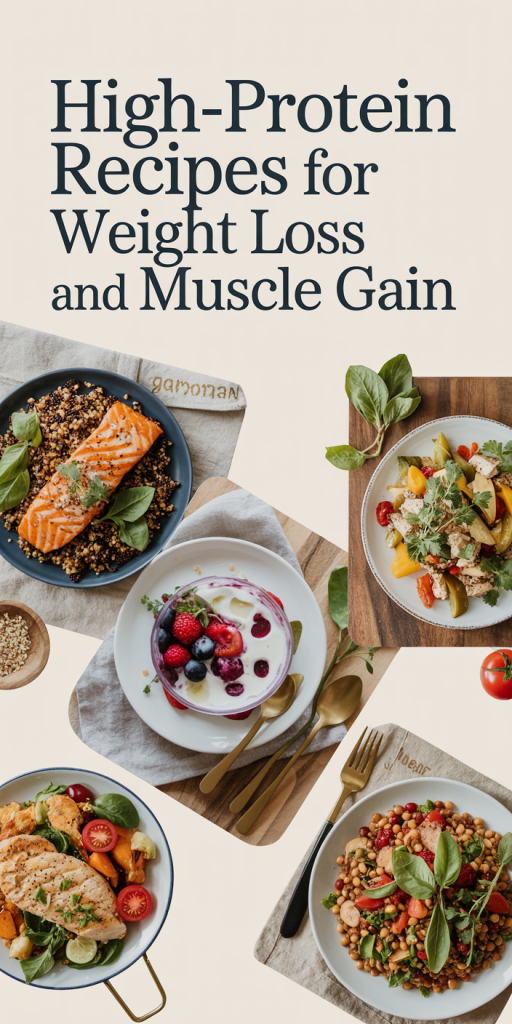
1) Baked Salmon With Lentil Pilaf And Greens
Ingredients (serves 2):
- 10–12 oz salmon fillet (split) (~50–60 g protein)
- 1 cup cooked brown lentils (~18 g protein)
- Sauteed kale or spinach
Method: Season and bake salmon at 400°F for 10–12 minutes. Serve over lentil pilaf and greens. Per serving protein: ~34–40 g. Rich in omega-3s for recovery.
2) Lean Beef Stir-Fry With Broccoli And Cauliflower Rice
Ingredients (serves 2):
- 10 oz lean beef strips (~60 g protein)
- 3 cups broccoli florets, bell pepper
- 3 cups cauliflower rice
- Low-sodium soy sauce, garlic, ginger
Method: Stir-fry beef, remove, then cook veggies and cauliflower rice: return beef to pan. Per serving protein: ~30–35 g. Swap in more veg to reduce calories.
3) Tofu, Edamame, And Vegetable Curry (Plant-Based Option)
Ingredients (serves 3):
- 14 oz firm tofu (~28 g protein)
- 1 cup shelled edamame (~17 g protein)
- Light coconut milk, curry paste, mixed vegetables
Method: Sear tofu, simmer with curry paste, coconut milk, edamame, and vegetables. Per serving protein: ~15–20 g, boost with extra edamame or a side of quinoa to hit higher targets.
4) Shrimp And Chickpea One-Pan With Spinach (Quick Cleanup)
Ingredients (serves 2):
- 10–12 oz shrimp (~40–48 g protein)
- 1 can chickpeas (~12–15 g protein)
- Garlic, lemon, baby spinach
Method: Sauté garlic, add chickpeas and shrimp until cooked, toss in spinach. Per serving protein: ~26–30 g. Fast, flavorful, and nutrient-dense.
High-Protein Snacks, Smoothies, And Treats
Protein Snack And Smoothie Recipes
Snacks bridge meals and prevent energy dips. These options are portable and macro-friendly.
1) Spiced Roasted Chickpeas And Edamame Crunch
Method: Roast canned chickpeas and shelled edamame with smoked paprika, cumin, and a touch of olive oil at 400°F until crisp. One cup combined provides ~15–18 g protein and is great for nibbling.
2) Chocolate Protein Smoothie With Avocado And Spinach
Ingredients (serves 1):
- 1 scoop chocolate whey or plant protein (~20–25 g)
- 1/4 avocado, 1 cup spinach, 1/2 banana, 8–10 oz unsweetened almond milk
Method: Blend until smooth. Protein: ~22–26 g. Texture is creamy and satisfying.
3) Protein Pancakes With Ricotta And Berries (Higher Protein Dessert)
Method: Mix 1/2 cup oats, 1/2 cup cottage cheese or ricotta, 2 eggs, and 1 scoop protein powder: cook small pancakes and top with berries. Yield: ~25–30 g protein for the batch. Works as a weekend treat or post-workout meal.
Sample 7-Day High-Protein Meal Plan (Weight Loss + Muscle Gain Focus)
Below is a sample 7-day plan designed for someone aiming for ~1,800–2,100 kcal/day with protein targets ~140–160 g/day, adjust portion sizes to fit specific calorie and protein needs. We prioritize simplicity, meal prep, and variety.
Day 1 (Higher Carb Training Day)
- Breakfast: Greek yogurt parfait with whey granola (40 g protein)
- Lunch: Grilled chicken quinoa bowl (42 g)
- Snack: Chocolate protein smoothie (24 g)
- Dinner: Baked salmon with lentil pilaf (36 g)
Total protein ~142 g
Day 2 (Lower Carb Rest Day)
- Breakfast: Cottage cheese bowl with smoked salmon (38 g)
- Lunch: Tuna & white bean salad (33 g)
- Snack: Roasted chickpeas/edamame (16 g)
- Dinner: Lean beef stir-fry (34 g)
Total protein ~121 g (increase portion sizes slightly or add a small protein shake to reach 140+g)
Day 3 (Training)
- Breakfast: Egg-white frittata + whole-grain toast (18 g)
- Lunch: Lentil & turkey chili (25 g)
- Snack: Protein pancakes (28 g)
- Dinner: Shrimp and chickpea one-pan (30 g)
Total protein ~101 g (adjustments: increase egg portion or add whey to smoothie)
Day 4
- Breakfast: Greek yogurt parfait (40 g)
- Lunch: Chicken quinoa bowl (42 g)
- Snack: Protein smoothie (24 g)
- Dinner: Tofu & edamame curry + quinoa (22 g)
Total protein ~128 g
Day 5 (Training)
- Breakfast: Cottage cheese & salmon (38 g)
- Lunch: Tuna & white bean salad (33 g)
- Snack: Roasted chickpeas + a boiled egg (24 g)
- Dinner: Baked salmon + lentils (36 g)
Total protein ~131 g
Day 6
- Breakfast: Egg-white frittata (18 g)
- Lunch: Lentil turkey chili (25 g)
- Snack: Chocolate protein smoothie (24 g)
- Dinner: Lean beef stir-fry (34 g)
Total protein ~101 g
Day 7 (Flexible)
- Mix favorite meals from the week and include one higher-protein dessert like protein pancakes. Aim to hit the weekly average rather than obsessing about daily parity.
Daily Macro Examples And Portion Notes For Each Day
- We recommend tracking at least protein and calories for the first 2–3 weeks. Portion notes: 4–6 oz cooked lean meat ≈ 25–40 g protein: 1 scoop whey ≈ 20–25 g: 1 cup Greek yogurt ≈ 17–22 g: 1/2 cup cooked lentils ≈ 9 g.
We emphasize flexibility: if one day falls short, we make up protein across other meals. Weekly averages matter more than rigid daily perfection.
Shopping List, Batch Cooking Schedule, And Time-Saving Hacks
Shopping list (essentials for a week):
- Proteins: chicken breasts, lean ground turkey/beef, salmon, shrimp, eggs, Greek yogurt, cottage cheese, whey protein
- Plant proteins: tofu, tempeh, lentils, canned beans, quinoa, edamame
- Veggies: spinach, kale, broccoli, bell peppers, onions
- Carbs: oats, sweet potatoes, brown rice
- Fats/flavor: olive oil, tahini, lemons, herbs, spices
Batch cooking schedule (example weekend plan):
- Saturday: Roast 2–3 chicken breasts, bake a sheet of salmon, cook a large pot of lentil chili, roast chickpeas/edamame.
- Sunday: Make egg-white frittata, portion quinoa and brown rice, prep smoothie freezer bags.
Time-saving hacks:
- Use a slow cooker or Instant Pot for chilis and stews.
- Keep pre-washed greens and pre-chopped veggies in clear containers for quick assembly.
- Freeze single-serve portions of cooked proteins to maintain freshness.
We also recommend doubling recipes and freezing half: this reduces decision fatigue and keeps protein intake consistent when life gets busy.
Modifying Recipes For Dietary Preferences And Restrictions (Vegan, Dairy-Free, Low-Carb)
We can adapt most recipes without losing protein density.
Vegan: emphasize legumes, tofu, tempeh, edamame, seitan (if tolerated), and soy-based yogurts. Combine grains and legumes (e.g., quinoa + lentils) and consider a high-quality plant protein powder (pea/rice blend) to hit targets.
Dairy-free: swap Greek yogurt and cottage cheese for fortified soy yogurt or coconut-based alternatives (note: coconut yogurt has less protein). Use tofu, tempeh, and lean meats or fish instead of dairy-heavy recipes.
Low-carb: reduce starchy sides (rice, potatoes) and increase nonstarchy vegetables and protein. Add healthy fats like avocado and olive oil to maintain calories. For breakfast, focus on eggs, smoked salmon, and cottage cheese alternatives.
Allergy-friendly swaps: for nut allergies, avoid almond-based products and use seeds (sunflower or pumpkin) for crunch. If soy is an issue, favor legumes, dairy (if tolerated), eggs, and meats.
The principle stays the same: prioritize protein first, then fit the rest of macros around preferences and restrictions.
How To Track Progress, Adjust Protein Targets, And Avoid Common Pitfalls
Tracking progress requires both objective and subjective measures.
Objective measures:
- Body composition: use consistent methods (DEXA, calipers, or at-home assessments) every 4–8 weeks.
- Scale weight: track trends rather than daily fluctuations.
- Strength: monitor lifts, progressive overload indicates muscle gain.
Subjective measures:
- Energy, hunger levels, sleep, and gym performance.
Adjusting protein targets:
- If losing weight but losing strength or muscle mass, increase protein toward the top of the range (2.4 g/kg) and reassess calorie deficit.
- If gaining excessive fat during a bulk, keep protein steady and lower calories slightly while keeping progressive training.
Common pitfalls and fixes:
- Pitfall: relying on protein shakes alone. Fix: pair shakes with whole-foods for micronutrients and fiber.
- Pitfall: inconsistent meal timing leading to energy slumps. Fix: prepare portable snacks and schedule meals around workouts.
- Pitfall: underestimating calories in dressings, oils, and nuts. Fix: measure and log initially until you build awareness.
We recommend patience: recomposition is gradual. Use weekly trends and strength progress as primary feedback rather than day-to-day scale changes.
Conclusion
High-protein meals give us the best chance to lose fat while preserving and building muscle. By calculating reasonable protein targets, spreading intake across meals, using strategic kitchen habits, and following simple, tasty recipes, we make progress sustainable. The 18 recipes and 7-day plan here are designed for flexibility, adapt portions, swap ingredients, and keep training consistent. If we focus on protein first, track trends, and tweak intelligently, we’ll make measurable changes without giving up flavor or sanity. Let’s cook, track, and lift, results follow.