If we want to lose fat without losing strength or feeling ravenous, protein is our most reliable ally. Over the past decade the evidence has become clearer: higher-protein eating supports satiety, preserves lean mass during weight loss, and increases total energy expenditure through the thermic effect of food. In this guide we’ll translate that science into the kitchen, 12 practical, tasty high-protein recipes, cooking tips, meal-planning tools, and tracking advice so we can burn fat naturally and sustainably in 2026. Expect simple swaps, realistic portioning, and quick meal-prep strategies: nothing faddy, just food that works.
How Protein Helps Burn Fat: The Science In Plain English
Protein helps with fat loss through several complementary mechanisms. First, it increases satiety more than carbohydrates or fat, when we eat protein-rich meals we feel fuller for longer, so we naturally reduce overall calorie intake. Second, protein preserves lean muscle mass during calorie deficits. That’s important because muscle is metabolically active: keeping more muscle helps maintain resting metabolic rate while we lose fat.
Third, protein has a higher thermic effect of food (TEF). TEF refers to the energy our body uses to digest, absorb, and process nutrients. Protein’s TEF is roughly 20–30% of its calories, compared to 5–10% for carbs and 0–3% for fat. Practically, that means eating 100 calories of protein burns more calories during digestion than 100 calories of carbs.
Fourth, protein supports recovery and performance. When we resistance-train and eat sufficient protein, our bodies rebuild and sometimes increase muscle. That combination, lifted weight and higher protein, often produces better body composition changes than dieting alone.
Finally, protein influences appetite-regulating hormones like ghrelin and peptide YY, which helps reduce cravings and late-night snacking. Put together, these effects make higher-protein diets one of the most evidence-backed strategies for sustainable fat loss.
Quick takeaway: protein isn’t magical, but it stacks metabolic and behavioral advantages that make fat loss easier and more maintainable.
How Much Protein You Actually Need For Fat Loss
The ideal protein target varies with our body size, activity level, and goals. For fat loss while preserving muscle, current consensus recommendations generally fall between 1.2–2.2 grams of protein per kilogram of body weight daily (0.55–1.0 g/lb). We can refine that range using our activity level:
- Sedentary or light activity: aim for the lower end, ~1.2–1.4 g/kg.
- Moderate activity or steady resistance training: 1.6–1.8 g/kg is a practical sweet spot.
- Intense training, older adults, or aggressive calorie deficits: 1.8–2.2 g/kg can help preserve muscle.
Example: a 75-kg (165-lb) person doing regular resistance training should target roughly 120–135 g of protein per day (1.6–1.8 g/kg). That amount supports satiety, muscle maintenance, and optimal recovery.
We should also account for total calories. Protein needs to fit into our daily energy target for fat loss. If we’re in a large calorie deficit, err toward the upper end of the protein range to protect lean mass. For modest deficits, the mid-range usually suffices.
Finally, variety matters. A mix of animal and plant proteins helps ensure we get all essential amino acids, especially leucine, which triggers muscle protein synthesis. If we’re plant-based, combining sources (legumes, tofu, seitan, tempeh, and higher-protein grains) and timing protein across meals will help meet targets.
Timing, Distribution, And Thermic Effect: Eat Smart, Burn More
How we distribute protein across the day influences muscle maintenance and satiety. Research suggests that evenly spreading protein across meals (for instance, 25–40 g per main meal) stimulates muscle protein synthesis more consistently than skewing most protein into one meal.
Practical rules we use:
- Aim for 3 main protein-containing meals plus one or two protein-rich snacks if needed.
- Shoot for roughly 25–40 g of protein per meal for most adults, adjust based on total daily target.
- Prioritize a protein-rich meal or snack within a couple hours after resistance training to support recovery.
The thermic effect of protein means higher-protein meals temporarily increase energy expenditure, so when we choose protein-forward breakfasts and lunches, we get a mild metabolic boost that can accumulate across the day.
Timing also helps with appetite control. A protein-forward breakfast often reduces mid-morning cravings and lowers total daily calories. Likewise, a satisfying protein dinner helps us avoid late-night snacking.
We shouldn’t overcomplicate timing, consistent daily protein and resistance training matter more than precise meal-clock alignment. Still, distributing protein and matching intake to training days gives us better results than random timing.
Simple Cooking Techniques And Ingredient Swaps To Maximize Protein
Small cooking changes can boost protein per bite without sacrificing flavor. Here are practical swaps and techniques we use regularly:
- Bulk protein with legumes and lean meats: Add lentils to turkey chili or mix chickpeas into salads to increase protein and fiber.
- Use high-protein dairy: Greek yogurt, skyr, cottage cheese, and ricotta add 15–20+ grams per serving and work in sweet or savory dishes.
- Swap refined carbs for protein-rich grains: Choose quinoa, farro, or amaranth instead of white rice: these add modest extra protein and nutrients.
- Boost sauces with protein powder: Unflavored whey or plant protein can thicken soups, stews, and smoothies without big taste changes.
- Try searing and oven-finishing: Sear chicken or salmon for flavor, then finish in the oven for consistent texture, less need for calorie-heavy sauces.
- Roast big batches: Roasting a tray of tofu, chickpeas, or chicken lets us add protein to meals across the week with minimal effort.
- Air-fry for crunch: Air-fried chickpeas, tofu, or lean meat strips give satisfying texture without deep-frying calories.
Ingredient-level swaps:
- Replace half the pasta with edamame or legume-based pasta to increase protein.
- Exchange full-fat mayo for Greek yogurt in dressings and salads.
- Use eggs or egg whites to add protein in fried rice or grain bowls.
These methods help us keep meals high in protein while staying flavorful and satisfying, key to long-term adherence.
High-Protein Breakfasts To Kickstart Fat Burning
Starting the day with protein sets the tone for appetite and energy. Below are three breakfasts that are quick, versatile, and grounded in the principles we just covered.
Greek Yogurt Berry Bowl With Seeds — Why It Works & Quick Tips
Why it works:
- Greek yogurt provides 15–20 g of protein per 5–6 oz serving, plus probiotics and a creamy texture that satisfies. Paired with berries and a tablespoon of mixed seeds, we add fiber and healthy fats that slow digestion and increase fullness.
Quick recipe and tips:
- Combine 6 oz plain Greek yogurt, 1/2 cup mixed berries, 1 tbsp chia seeds, and 1 tbsp hemp seeds.
- Add a sprinkle of cinnamon and a drizzle of lemon for brightness.
- If we need more protein, fold in one scoop of unflavored or vanilla whey/plant protein.
- To keep sugar low, use fresh or frozen berries and skip sweetened yogurt.
Savory Egg White Frittata With Spinach And Turkey — Why It Works & Quick Tips
Why it works:
- Egg whites are virtually pure protein: adding a couple whole eggs improves flavor and fat balance. Lean turkey adds additional protein while keeping saturated fat low.
Quick recipe and tips:
- Sauté 1 cup spinach and 3 oz diced lean turkey breast in a nonstick skillet. Whisk together 4 egg whites and 1 whole egg, pour over the filling, and cook until mostly set, then finish under the broiler for 2–3 minutes.
- Add herbs (parsley, chives) and a small sprinkle of low-fat cheese for flavor.
- This frittata keeps 3–4 days in the fridge and reheats quickly, ideal for meal prep.
Overnight Oats With Protein Powder And Nuts — Why It Works & Quick Tips
Why it works:
- Oats provide slow-digesting carbs and fiber, while added protein powder and a small handful of nuts raise the protein and healthy-fat content, improving satiety.
Quick recipe and tips:
- Mix 1/2 cup rolled oats, 1 scoop protein powder, 3/4 cup unsweetened almond milk (or dairy milk), and 1 tbsp chopped walnuts. Refrigerate overnight.
- Stir in cinnamon and a few slices of banana or berries in the morning.
- Use casein or a blend protein if we prefer a creamier texture and slower digestion, good for workouts later in the day.
High-Protein Lunches And Dinners That Keep You Full
For controlled fat loss, our lunches and dinners should combine high-quality protein, fiber-rich veggies, and moderate whole-grain or starchy sides. Below are three dinners that are satisfying, packable, and easy to scale for meal prep.
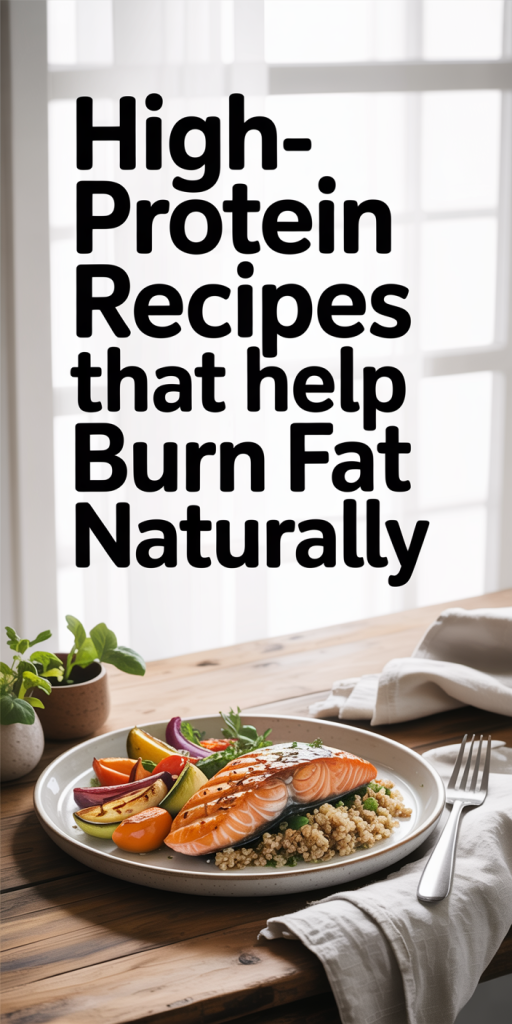
Grilled Salmon Bowl With Quinoa And Veggies — Why It Works & Quick Tips
Why it works:
- Salmon is protein-dense and provides omega-3 fats that support metabolic health. Quinoa adds plant-based complete protein and fiber, making the bowl a balanced, filling meal.
Quick recipe and tips:
- Grill a 4–6 oz salmon fillet, season with lemon, garlic, and black pepper.
- Serve over 1/2 cup cooked quinoa with a mix of roasted vegetables (broccoli, bell peppers, zucchini).
- Add a simple dressing of Greek yogurt, lemon juice, and dill for extra protein and flavor.
- Swap salmon for canned tuna or mackerel for a budget-friendly option.
Turkey, Veggie, And Lentil Chili — Why It Works & Quick Tips
Why it works:
- Combining lean ground turkey and lentils boosts total protein while stretching the meal, lentils add fiber and micronutrients that improve satiety.
Quick recipe and tips:
- Brown 1 lb lean ground turkey, add 1 cup cooked lentils, canned tomatoes, bell peppers, onions, chili powder, cumin, and simmer for 30 minutes.
- Portion into 4–6 servings: each provides a high-protein, fiber-rich bowl that reheats well.
- Top with a dollop of Greek yogurt and chopped cilantro instead of sour cream to reduce calories and add protein.
Tofu Stir-Fry With Broccoli And Edamame — Why It Works & Quick Tips
Why it works:
- Tofu and edamame are soy sources with complete proteins. Stir-fries are quick, customizable, and ideal for getting vegetables and protein in one pan.
Quick recipe and tips:
- Press and cube 14 oz firm tofu, toss with a little cornstarch, and pan-sear until golden. Sauté with broccoli, sliced carrots, and 1/2 cup shelled edamame. Add garlic, ginger, low-sodium soy sauce, and a splash of rice vinegar.
- Serve over cauliflower rice or 1/2 cup cooked brown rice/quinoa depending on carb goals.
- For extra protein, toss in a scrambled egg or sprinkle toasted sesame seeds and chopped scallions.
High-Protein Snacks And Smoothies To Curb Cravings
Snacks are where diets often fall apart. Choosing protein-packed snacks keeps hunger at bay and helps us stick to calorie targets. Below are three options that are portable, flavorful, and simple to make.
Cottage Cheese And Cucumber Snack Plate — Why It Works & Quick Tips
Why it works:
- Cottage cheese offers 12–15 g of protein per half-cup and pairs well with low-calorie vegetables for a filling, low-carb snack.
Quick recipe and tips:
- Plate 1/2 cup low-fat cottage cheese with sliced cucumber, cherry tomatoes, and a sprinkle of black pepper and paprika.
- Add a few whole-grain crackers if we want carbs for energy before a workout.
- Cottage cheese can be blended with herbs and lemon to make a savory dip for convenience.
Chocolate Peanut Butter Protein Smoothie — Why It Works & Quick Tips
Why it works:
- Smoothies are fast ways to pack protein and nutrients. Combining protein powder with a small amount of nut butter balances macronutrients for longer satiety.
Quick recipe and tips:
- Blend 1 scoop chocolate protein powder, 1 cup unsweetened almond milk, 1 tbsp natural peanut butter, 1/2 frozen banana, and a handful of spinach.
- Add ice for texture or 1–2 tbsp oats for extra carbs if we plan to exercise.
- Use plant or whey protein depending on preference, just watch for added sugars in flavored powders.
Roasted Chickpea Crunch With Spices — Why It Works & Quick Tips
Why it works:
- Roasted chickpeas deliver plant protein and fiber with a crunchy, snackable texture. They satisfy cravings for chips without the empty calories.
Quick recipe and tips:
- Toss canned chickpeas (drained & dried) with 1 tbsp olive oil and spices (smoked paprika, cumin, garlic powder). Roast at 400°F for 30–40 minutes until crisp.
- Store in an airtight container for up to a week.
- For higher protein, mix roasted chickpeas with a handful of roasted edamame or roasted soy nuts.
Practical Meal Planning: Sample 7-Day Fat-Loss Meal Plan Using These Recipes
Below is a practical 7-day framework using the recipes above. Portions and exact calorie/protein counts will vary by ingredient brands and portion sizes, so we suggest adjusting serving sizes to meet our daily protein target (from the earlier section).
General structure we use each day:
- Breakfast: 25–35 g protein
- Lunch: 30–45 g protein
- Dinner: 30–45 g protein
- 1–2 snacks: 10–20 g protein each as needed
Sample 7-day outline (swap lunches/dinners to keep variety):
Day 1
- Breakfast: Greek yogurt berry bowl (add 1 scoop protein if needed)
- Lunch: Grilled salmon bowl with quinoa and veggies
- Snack: Cottage cheese & cucumber
- Dinner: Turkey, veggie, and lentil chili
Day 2
- Breakfast: Savory egg white frittata with spinach and turkey
- Lunch: Tofu stir-fry with broccoli and edamame over cauliflower rice
- Snack: Roasted chickpea crunch
- Dinner: Salmon bowl or leftover chili
Day 3
- Breakfast: Overnight oats with protein powder and nuts
- Lunch: Leftover turkey-lentil chili topped with Greek yogurt
- Snack: Chocolate peanut butter protein smoothie
- Dinner: Grilled salmon or baked white fish with roasted Brussels sprouts and quinoa
Day 4
- Breakfast: Greek yogurt bowl with added protein
- Lunch: Tofu stir-fry with brown rice
- Snack: Cottage cheese plate
- Dinner: Turkey meatballs with spaghetti squash and marinara (add lentils to sauce)
Day 5
- Breakfast: Egg white frittata and a slice of whole-grain toast
- Lunch: Salmon salad with mixed greens and quinoa
- Snack: Protein smoothie
- Dinner: Turkey and lentil chili
Day 6
- Breakfast: Overnight oats with protein
- Lunch: Grilled tofu bowl with roasted vegetables and edamame
- Snack: Roasted chickpeas
- Dinner: Baked salmon, farro, and steamed asparagus
Day 7
- Breakfast: Greek yogurt bowl
- Lunch: Leftover meat or tofu bowl with extra greens
- Snack: Cottage cheese with a few berries
- Dinner: Light stir-fry with tofu/turkey and lots of vegetables
We recommend prepping protein components (grilled chicken/salmon, baked tofu, lentil chili) on two dedicated cooking sessions per week. That way we can assemble fresh bowls or heat-and-eat meals quickly. Adjust portions and snacks to meet our daily protein target and calorie goals.
Smart Grocery List And Batch-Prep Checklist
A focused grocery list saves time and reduces decision fatigue. Below are items we buy regularly, followed by a batch-prep checklist to get a week of meals ready in 60–90 minutes.
Smart grocery staples:
Protein
- Greek yogurt (plain)
- Cottage cheese
- Eggs and egg whites
- Skinless chicken breast or turkey breast
- Salmon or canned tuna
- Firm tofu or tempeh
- Canned lentils/chickpeas and dried lentils
- Protein powder (whey or plant)
Veggies & Fruits
- Spinach, kale, mixed salad greens
- Broccoli, bell peppers, zucchini
- Onions, garlic, carrots
- Berries (fresh or frozen), bananas
Grains & Seeds
- Quinoa, farro, or brown rice
- Rolled oats
- Chia seeds, hemp seeds, mixed nuts
Pantry & Extras
- Low-sodium soy sauce, rice vinegar
- Olive oil, spices (smoked paprika, cumin, chili powder)
- Low-fat cheese, Greek yogurt for dressings
Batch-prep checklist (60–90 minutes):
- Roast proteins: Bake 4–6 salmon fillets and 2–3 chicken breasts at once, season simply with lemon, pepper, and garlic.
- Cook grains: Make a large batch of quinoa or farro in a rice cooker.
- Roast vegetables: Toss several trays of mixed veggies (broccoli, peppers, carrots).
- Make chili: Simmer a pot of turkey-lentil chili: portion into containers.
- Press and marinate tofu: Press tofu and pan-sear or roast until golden.
- Portion snacks: Make roasted chickpeas and portion cottage cheese servings.
- Assemble overnight oats and yogurt bowls in jars for quick grab-and-go breakfasts.
Label containers with dates and use the oldest within 3–4 days for freshness. Batch prep lowers day-to-day friction, making it much easier to stick with a high-protein plan.
How To Track Progress And Adjust Protein Intake Over Time
Tracking helps us know what’s working and where to tweak. We recommend a simple, sustainable approach rather than obsessive calorie counting.
Key metrics to monitor:
- Body composition trends: Track weight weekly and take progress photos every 2–4 weeks. If possible, use body-fat measures (DEXA, BIA, or caliper) to track lean mass changes.
- Strength and performance: Are we maintaining or improving lifts and cardio metrics? Lost strength often indicates an insufficient calorie or protein intake.
- Hunger and satiety: If we feel constantly hungry even though meeting protein targets, increase fiber-rich vegetables and slightly raise protein or healthy fats.
How to adjust protein:
- If we’re losing weight but losing strength or muscle, raise protein by 0.2–0.4 g/kg and reassess.
- If weight loss stalls for 3+ weeks and we’re already at a reasonable deficit, we can slightly reduce calories (200–300 kcal) but keep protein high to protect muscle.
- For older adults or those doing high-volume training, err on the higher end of the protein range (1.8–2.2 g/kg).
Tracking tools and habits:
- Use an app to log meals for 1–2 weeks to estimate baseline protein intake, then transition to counting protein grams rather than calories long-term.
- Keep a simple training log to correlate performance with dietary changes.
- Reassess goals every 6–8 weeks and adjust macronutrient targets accordingly.
We find small, data-informed adjustments beat dramatic rules. Protein is one pillar: sleep, stress management, and consistent training finish the job.
Conclusion
High-protein eating is one of the most practical, evidence-based strategies to support fat loss while preserving muscle and energy. By prioritizing protein-rich breakfasts, lunches, dinners, and snacks, and using simple cooking techniques and batch-prep, we can eat satisfying meals that make calorie control feel easier, not punishing.
Start by calculating a reasonable protein target from our earlier guidelines, plan a few go-to recipes (we recommend the salmon bowl, turkey-lentil chili, and Greek yogurt bowl), and batch-prep twice weekly. Track progress with a mix of scale, photos, and strength markers and adjust protein modestly if we see unwanted muscle loss or persistent hunger.
If we stick with these habits, consistent protein distribution, smart ingredient swaps, and realistic meal planning, we’ll be in a strong position to burn fat naturally in 2026 and keep it off long-term. Let’s get cooking.