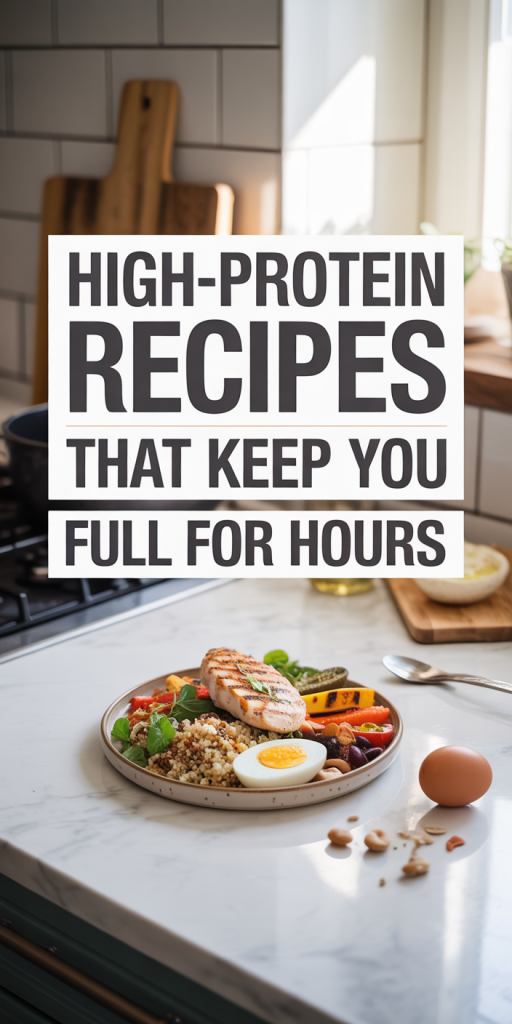
We all know that protein helps us feel fuller, stabilizes energy, and supports muscle and metabolic health, but turning that into everyday meals can feel fiddly. In this guide we’ll explain the science behind protein and satiety in plain language, show how to build meals that actually satisfy, share practical prep tips, and give you 12 tested recipes (plus swaps) that keep you full for hours. Whether you’re trying to manage weight, build strength, or simply stop reaching for snacks mid-afternoon, these recipes and strategies will make high-protein eating easy and enjoyable.
Why Protein Keeps You Full: The Science Made Simple
Protein is one of the most effective macronutrients for reducing hunger and extending the time between meals. We’ll break down why without the jargon so you can use the concepts when planning real meals.
Satiety Mechanisms: How Protein Affects Hunger Hormones and Digestion
Protein influences satiety through several connected mechanisms:
- Hormonal signals: When we eat protein, our bodies release hormones like peptide YY (PYY) and glucagon-like peptide-1 (GLP-1), which lower appetite. Protein also helps suppress ghrelin, the “hunger hormone.”
- Slower gastric emptying: Protein-rich meals often slow the rate at which food leaves the stomach, so we feel satisfied longer.
- Muscle and metabolic effects: Protein supports muscle repair and growth. Having more lean mass raises resting energy use, which can help with weight control and reduce fat regain.
These effects add up: compared with carbs or fats, protein typically reduces subsequent calorie intake and snacking for several hours after a meal.
How Much Protein Per Meal For Lasting Fullness
Research and practical experience converge on a reasonable target: aim for 20–40 grams of protein per main meal for most adults to maximize satiety and muscle protein synthesis. The exact number depends on body size, age, and goals:
- Smaller adults or those aiming for weight maintenance: ~20–25 g per meal.
- Most active adults and those building muscle: ~30–40 g per meal.
- Older adults benefit from the higher end (closer to 40 g) because of lower anabolic sensitivity.
For snacks, 8–15 grams of protein helps bridge the gap between meals without blunting appetite at the next meal. The goal is consistent protein across the day, roughly 25–35% of daily calories from protein is effective for fullness and weight control for many people.
How To Build A High-Protein Meal That Actually Satisfies
Building satisfying high-protein meals is more than piling protein on a plate. We focus on balance and practical portions so each meal keeps us energized for hours.
Macronutrient Targets and Ideal Portion Sizes
Aim for a plate composition that hits our protein targets while balancing carbs and fats for taste and extended fullness:
- Protein: 25–40 g (examples: 4–6 oz cooked chicken or salmon, 1.5 cups Greek yogurt, 1 cup cooked lentils + 2 tbsp nut butter)
- Carbohydrate (mostly fibrous/whole): 25–45 g (1 cup cooked quinoa, 1 medium sweet potato, or 1–2 cups mixed veggies + 1/2 cup whole grains)
- Fat: 10–20 g (1–2 tbsp olive oil, 1 oz nuts, or 1/4 avocado)
Portion examples:
- 4 oz cooked salmon (about a deck-of-cards) + 1 cup roasted Brussels sprouts + 1/2 cup cooked farro + 1 tbsp olive oil dressing = ~30 g protein.
- 1 cup Greek yogurt + 1/2 cup berries + 2 tbsp toasted almonds + 1/4 cup granola = ~25–30 g protein depending on yogurt.
High-Protein Ingredients and Smart Portion Examples
Stock your kitchen with ingredients that reliably deliver protein per serving:
- Animal: chicken breast (26 g/3 oz cooked), salmon (22 g/3 oz), lean beef (22–25 g/3 oz), turkey, eggs (6–7 g each)
- Dairy & alternatives: Greek yogurt (15–20 g/cup), cottage cheese (14 g/1/2 cup), kefir, high-protein plant yogurts
- Legumes & pulses: lentils (18 g/cup cooked), chickpeas (15 g/cup), edamame (17 g/cup)
- Grains & seeds: quinoa (8 g/cup cooked), farro (6–8 g/cup cooked), chia (4 g/2 tbsp), hemp hearts (10 g/3 tbsp)
- Plant proteins: tofu (10–20 g/half block depending on type), tempeh (15–21 g/3 oz), pea protein powders for boosting shakes/snacks
Balancing Fiber, Fat, and Carbs To Extend Fullness
Protein gets us part of the way. Fiber and fat slow digestion and help satiety too. We recommend:
- Fiber: include vegetables, fruit, whole grains, or legumes in every meal (aim for 7–12 g per meal when possible).
- Healthy fats: 1–2 tablespoons of oil, a quarter avocado, or a small handful of nuts adds flavor and slows gastric emptying.
- Low-glycemic carbs: choose whole grains and starchy vegetables over refined carbs to avoid quick blood sugar dips that trigger hunger.
Combining these elements, protein + fiber + fat, produces a more sustained fullness than any single nutrient alone.
Quick Swaps and Pantry Staples For Fast High-Protein Meals
Here are fast swaps that convert common meals into high-protein wins:
- Swap regular yogurt for Greek yogurt or skyr.
- Add a scoop of unflavored or vanilla pea/whey protein to smoothies, oatmeal, or batters.
- Use canned tuna/salmon or rotisserie chicken for quick protein on salads and wraps.
- Replace half the pasta with edamame or chickpea pasta to boost protein and fiber.
- Keep cooked lentils and beans in the fridge, they dress up a grain bowl in minutes.
These pantry-friendly changes make high-protein eating much more accessible on busy days.
Prep Tips To Make High-Protein Eating Practical
Consistency beats perfection. Practical prep tips help us stick with high-protein meals without spending all day in the kitchen.
Batch Cooking, Freezing, and Safe Storage
Batch-cook key proteins and grains to mix-and-match through the week:
- Proteins: Grill or bake several chicken breasts, a tray of tofu, or a large batch of lentils. Cool and portion into 3–4 meal containers.
- Grains & bases: Cook quinoa, farro, or brown rice in large batches and portion into 1-cup servings.
- Freezing: Freeze individual portions of cooked proteins and stews in meal-sized containers. Most cooked proteins keep 2–3 months frozen: thaw overnight in the fridge.
- Storage safety: Refrigerate cooked food within two hours and eat refrigerated meals within 3–4 days. Use airtight containers to preserve texture and flavor.
Batch-cooking saves time and reduces the friction of assembling a high-protein meal on hectic days.
Time-Saving Tools and Shortcuts (One-Pan, Sheet-Pan, Slow Cooker)
Use equipment that reduces hands-on time:
- Sheet-pan meals: Toss protein (salmon, tofu, chicken) with vegetables and oil, roast at 400°F for 20–30 minutes.
- One-pan skillet: Sear meat or tofu, then add veggies and a grain or sauce for an all-in-one dinner.
- Slow cooker / Instant Pot: Great for beans, stews, and shredded chicken, set it and forget it.
- Air fryer: Crisps proteins and veggies quickly with little oil: excellent for edamame, chickpeas, or tofu.
Shortcuts like pre-washed greens, canned beans, and store-bought hummus speed assembly with minimal sacrifice to nutrition.
12 High-Protein Recipes That Keep You Full (Recipes and What Makes Them Filling)
Below are 12 recipes, breakfasts, lunches, dinners, and snacks, with a short note on why each one keeps us full. We focus on real-food ingredients and easy techniques.
Breakfast, Greek Yogurt Berry Parfait With Toasted Nuts
What makes it filling: Greek yogurt provides 15–20 g protein per cup: nuts add fat and crunch, while berries deliver fiber and antioxidants.
Quick method: Layer 1 cup plain Greek yogurt, 1/2 cup mixed berries, 2 tbsp toasted almonds, and 2 tbsp high-fiber granola. Drizzle with a teaspoon of honey if needed.
Estimated protein: 20–25 g.
Breakfast, Savory Cottage Cheese, Avocado, and Smoked Salmon Bowl
What makes it filling: Cottage cheese has a high-casein protein profile (slow-digesting), smoked salmon adds lean protein and omega-3s, and avocado contributes satiating fats.
Quick method: Combine 1 cup low-fat cottage cheese, 2 oz smoked salmon, 1/4 sliced avocado, chopped chives, pepper, and a squeeze of lemon.
Estimated protein: 25–30 g.
Lunch, Chicken, Quinoa, and Roasted Veggie Power Bowl With Tahini Dressing
What makes it filling: Lean chicken and quinoa provide complementary proteins: roasted vegetables and tahini add fiber and healthy fat to extend fullness.
Quick method: Toss 4 oz grilled chicken, 1/2 cup cooked quinoa, and 2 cups roasted mixed vegetables (broccoli, peppers, carrots). Drizzle with 1 tbsp tahini mixed with lemon juice and water.
Estimated protein: 30–35 g.
Lunch, Lentil, Feta, and Spinach Salad With Lemon-Herb Vinaigrette (Vegetarian)
What makes it filling: Lentils are a dense plant-protein source with fiber: feta adds extra protein and savory fat to satisfy.
Quick method: Combine 1 cup cooked green lentils, 2 cups baby spinach, 1/4 cup crumbled feta, cherry tomatoes, cucumber, and a vinaigrette of olive oil, lemon, and herbs.
Estimated protein: 20–25 g.
Lunch, Turkey, Hummus, and Veggie Whole-Grain Wrap With Greek Yogurt Dip
What makes it filling: Lean turkey supplies solid protein while hummus and whole-grain wrap add fiber and healthy fats. A Greek yogurt dip boosts the meal’s protein.
Quick method: Layer 3–4 oz sliced turkey, 2 tbsp hummus, mixed greens, shredded carrots, and sliced bell pepper in a whole-grain wrap. Serve with 1/2 cup Greek yogurt mixed with lemon and herbs.
Estimated protein: 30–35 g (including dip).
Lunch, Spiced Chickpea and Farro Bowl With Tahini (Vegan-Friendly Protein Boost)
What makes it filling: Chickpeas and farro combine for a hearty protein and fiber base: tahini and olive oil add fat for slow digestion.
Quick method: Roast 1 cup chickpeas with cumin, paprika, and olive oil. Toss with 3/4 cup cooked farro, chopped parsley, cucumber, and 1–2 tbsp tahini.
Estimated protein: 18–24 g depending on portions.
Dinner, Seared Salmon With Lentil Mash and Greens
What makes it filling: Salmon delivers high-quality protein and fats: lentil mash adds slow-digesting carbs and extra protein.
Quick method: Sear a 5–6 oz salmon fillet skin-side down until crisp. Serve over a mash of 1 cup cooked lentils blended with a little olive oil and garlic, alongside sautéed kale.
Estimated protein: 35–40 g.
Dinner, Beef and Vegetable Stir-Fry Over Cauliflower Rice
What makes it filling: Lean beef is a concentrated protein source: vegetables contribute fiber, and cauliflower rice keeps carbs low but satisfying.
Quick method: Stir-fry 4–6 oz thinly sliced beef with broccoli, bell pepper, and snap peas in a high-heat skillet. Season with soy, ginger, and garlic. Serve over 1–1.5 cups cauliflower rice.
Estimated protein: 30–40 g.
Dinner, Tofu and Broccoli Sheet-Pan With Peanut Sauce (Vegan)
What makes it filling: Extra-firm tofu is a reliable plant protein: broccoli adds fiber: peanut sauce contributes fat and flavor to slow digestion.
Quick method: Toss 14 oz cubed extra-firm tofu and broccoli florets with a little oil, roast at 425°F for 20–25 minutes. Drizzle with a sauce made from 2 tbsp peanut butter, lime, soy, and water.
Estimated protein: 25–30 g.
Dinner, Chicken and White Bean Stew With Kale (High-Protein Comfort Bowl)
What makes it filling: White beans are protein- and fiber-dense: chicken boosts the total protein: kale adds volume and micronutrients.
Quick method: Simmer shredded chicken, 1.5 cups cooked white beans, diced tomatoes, garlic, and chopped kale for 15–20 minutes. Season with rosemary and lemon.
Estimated protein: 35–40 g per bowl.
Snacks, Roasted Edamame With Sea Salt and Chili Flakes
What makes it filling: Edamame is high in complete plant protein and fiber, making it an ideal snack to bridge meals.
Quick method: Roast shelled edamame at 400°F for 12–15 minutes with a touch of oil, sea salt, and chili flakes.
Estimated protein: 15–17 g per cup.
Snacks, Protein-Packed Energy Balls With Oats, Nut Butter, and Pea Protein
What makes it filling: Combining protein powder, oats, and nut butter yields a compact, satisfying snack with slow-burning energy.
Quick method: Mix 1 cup oats, 1/2 cup nut butter, 1/4 cup honey or maple syrup, 2 scoops pea protein, and 2 tbsp chia seeds. Roll into 12 balls and refrigerate.
Estimated protein: 8–12 g per ball depending on size and protein powder.
These recipes are designed so we can rotate flavors, meet protein targets, and feel satisfied for hours after eating.
Customizing Recipes For Dietary Needs And Preferences
High-protein eating should adapt to our preferences, allergies, and goals. Here are practical swaps and adjustments.
Vegetarian and Vegan Protein Swaps and Fortification Tips
- Swap animal proteins for tofu, tempeh, seitan (if gluten-tolerant), lentils, and edamame.
- Use concentrated plant proteins: pea, soy, or brown rice protein powders to boost smoothies, oatmeal, or energy balls.
- Combine complementary plant proteins (grains + legumes) across a meal to improve amino acid profiles, e.g., farro + chickpeas, rice + beans.
- Fortify meals with hemp hearts, chia, or ground flax for extra protein and healthy fats.
Gluten-Free and Dairy-Free Modifications
- Gluten-free grains: quinoa, brown rice, buckwheat, and certified gluten-free oats replace wheat-based grains.
- Dairy-free protein sources: swap Greek yogurt and cottage cheese for fortified soy yogurt or higher-protein plant yogurts: use silken tofu or blended soaked cashews in creamy recipes.
- Ensure sauces and condiments are gluten-free and use tamari instead of regular soy sauce when needed.
Adjusting For Weight Loss, Muscle Gain, Or Medical Needs
- Weight loss: prioritize lean proteins, non-starchy vegetables, and controlled portions of whole grains: keep protein high (30–35% of calories) to preserve muscle and increase fullness.
- Muscle gain: increase total calories and shift protein toward the higher end (1.2–2.0 g/kg bodyweight daily). Emphasize protein timing around workouts (20–40 g within two hours post-exercise).
- Medical needs: consult a registered dietitian or clinician for conditions like kidney disease, where protein targets differ. We can adapt textures and flavors for swallowing difficulties or other needs.
Sample 7-Day High-Protein Meal Plan For Lasting Fullness
Here’s a practical 7-day outline that uses the recipes above. Portions aim for roughly 25–40 g protein per main meal and 8–15 g per snack. Tweak quantities to match energy needs.
Daily Schedule With Portion Notes and Snack Timing
Day 1
- Breakfast: Greek yogurt berry parfait (1 cup yogurt), ~25 g
- Snack: Roasted edamame (1 cup), ~15 g
- Lunch: Chicken, quinoa, roasted veggie bowl, ~35 g
- Snack: Protein energy ball (1), ~10 g
- Dinner: Seared salmon, lentil mash, greens, ~35 g
Day 2
- Breakfast: Cottage cheese, avocado, smoked salmon bowl, ~30 g
- Snack: Apple with 2 tbsp peanut butter, ~8 g
- Lunch: Lentil, feta, spinach salad, ~22 g
- Snack: Greek yogurt (1/2 cup) with cinnamon, ~8–10 g
- Dinner: Beef and vegetable stir-fry over cauliflower rice, ~35 g
Day 3
- Breakfast: Smoothie (pea protein, spinach, frozen berries, 1 tbsp almond butter), ~25–30 g
- Snack: Handful of almonds (1 oz), ~6 g
- Lunch: Turkey, hummus, veggie wrap + Greek yogurt dip, ~30 g
- Snack: Carrot sticks with hummus (1/4 cup), ~4–6 g
- Dinner: Tofu and broccoli sheet-pan with peanut sauce, ~28 g
Day 4
- Breakfast: Oatmeal with 1 scoop protein powder, chia, and berries, ~25 g
- Snack: Roasted chickpeas (1/2 cup), ~7–10 g
- Lunch: Spiced chickpea and farro bowl, ~20 g
- Snack: Cottage cheese (1/2 cup) with cucumber, ~12–14 g
- Dinner: Chicken and white bean stew with kale, ~35 g
Day 5
- Breakfast: Greek yogurt parfait with granola, ~25 g
- Snack: Protein energy ball, ~10 g
- Lunch: Salmon salad with mixed greens and quinoa, ~30 g
- Snack: Edamame, ~15 g
- Dinner: Beef stir-fry leftovers, ~30–35 g
Day 6
- Breakfast: Savory cottage cheese bowl with smoked salmon, ~30 g
- Snack: Small smoothie with protein powder, ~20 g
- Lunch: Lentil salad with feta, ~20–25 g
- Snack: Handful of pumpkin seeds (1/4 cup), ~9 g
- Dinner: Tofu sheet-pan with broccoli and brown rice, ~28 g
Day 7
- Breakfast: Oats with Greek yogurt swirl and fruit, ~25 g
- Snack: Roasted edamame, ~15 g
- Lunch: Chicken power bowl with tahini, ~35 g
- Snack: Veggies and hummus, ~4–6 g
- Dinner: Salmon or chicken with roasted veg and farro, ~30–40 g
Timing tips: Space meals roughly 3–4 hours apart and include a mid-morning and mid-afternoon snack if needed. Including protein at each eating occasion keeps hunger cues steady.
Shopping List and Make-Ahead Prep Guide
Shopping essentials for the week (adjust quantities for household size):
- Proteins: chicken breasts, salmon fillets, ground or sliced beef, extra-firm tofu, tempeh (optional), eggs, Greek yogurt, cottage cheese
- Legumes & grains: lentils, chickpeas (canned or dry), white beans, quinoa, farro, brown rice
- Nuts & seeds: almonds, peanut butter or other nut butter, hemp hearts, chia seeds
- Vegetables & fruit: mixed salad greens, spinach, kale, broccoli, bell peppers, tomatoes, avocados, berries, apples
- Pantry: tahini, olive oil, soy/tamari, canned tomatoes, oats, protein powder (pea or whey), spices
Make-ahead guide:
- Cook 4–6 chicken breasts and portion into 3–4 containers.
- Roast a large sheet-pan of mixed vegetables.
- Cook 4 cups of quinoa/farro and portion into jars.
- Prepare a batch of energy balls and roast a double batch of edamame.
- Pre-mix dressings (tahini dressing, lemon-herb vinaigrette) in jars for quick assembly.
With these basics prepped, assembling high-protein meals becomes fast and reliable.
Conclusion
High-protein meals don’t have to be complicated or bland. By aiming for 20–40 grams of protein per meal, pairing protein with fiber and healthy fats, and using simple prep strategies, we can enjoy food that keeps us full for hours and supports our energy and body-composition goals. The 12 recipes and the 7-day plan above give a practical roadmap, mix and match them, use the swaps for dietary needs, and rely on batch-cooking to make high-protein eating sustainable. If we focus on consistency rather than perfection, we’ll find staying satisfied between meals gets a lot easier, and more delicious.