Over 50? THIS Diet Is The ONLY Way To Lose Stubborn Fat
If you’re over 50 and feel like your body doesn’t respond the way it used to, you’re not imagining it.
The workouts that once melted fat now barely move the scale. The same calorie deficit that worked in your 30s leaves you exhausted. And that belly fat? It seems to have signed a long-term lease.
Here’s the truth: your body has changed. And if you want to lose stubborn fat after 50, your strategy has to change too.
This isn’t about another trendy diet. It’s about understanding what’s actually happening inside your body — and using a science-backed system that works with your biology instead of fighting it.
Let’s break it down.
The Struggle After 50 Is Real — And It’s Not Your Fault
Most people blame themselves.
They assume they’ve lost discipline. That they’re not trying hard enough. That they just need to “eat less and move more.”
But after 50, the rules shift.
What worked before often stops working because your metabolism, muscle mass, and hormones are different now. If you keep using the old playbook, you’ll keep getting frustrated.
So let’s talk about what’s actually changed.
What Happens to Your Body After 50
There are three major shifts that make fat loss harder:
1. Muscle Loss (Sarcopenia)
By age 50, most adults have already lost about 10% of their muscle mass. Muscle is your calorie-burning engine. Less muscle means fewer calories burned at rest.
If you don’t actively work to preserve and rebuild muscle, your metabolism keeps slowing year after year.
2. Metabolic Slowdown
Your resting energy expenditure drops gradually with age — even if your weight stays the same. On average, people need roughly 200 fewer calories per day in their 50s compared to their 40s.
If you keep eating the same way you always have, slow weight gain is almost inevitable.
3. Hormonal Shifts
Declining estrogen in women and testosterone in men changes how and where fat is stored. The result? More abdominal fat — especially visceral fat.
And that brings us to a serious issue.
The Visceral Fat Problem
Not all fat is the same.
Visceral fat is the deep abdominal fat that surrounds your organs. It’s metabolically active and releases inflammatory compounds that disrupt insulin sensitivity and increase your risk of heart disease and type 2 diabetes.
After 50, visceral fat increases significantly — especially during and after menopause.
This isn’t just about how your clothes fit. It’s about long-term health.
And this is why “just eating less” doesn’t work.
Why “Eat Less” Backfires After 50
Drastic calorie cutting sounds logical.
But here’s the problem: when you slash calories without a strategy, your body doesn’t just burn fat — it burns muscle.
Less muscle = slower metabolism.
Now your body becomes even more efficient at storing fat. So when you eventually eat more again (which always happens), the weight comes back — often as fat, not muscle.
You can’t out-diet muscle loss.
That’s why the only way to lose stubborn fat after 50 is a three-pillar system.
The ONLY Way That Works After 50
Forget fad diets. The solution is a metabolic rebuild.
You need three things working together:
- Strength Training
- High-Protein Nutrition
- Intermittent Fasting
Each pillar addresses a root cause of age-related fat gain.
Let’s go deeper.
Pillar 1: Strength Training — Rebuild Your Metabolic Engine
If you do nothing else, lift weights.
Muscle tissue burns calories 24/7. The more muscle you preserve and build, the higher your metabolic rate.
And no — this isn’t just for men.
Women over 50 benefit just as much from resistance training. In fact, it’s one of the most powerful tools for reversing metabolic decline.
Strength Training vs. Cardio
Cardio burns calories during the workout.
Strength training builds tissue that burns calories all day.
Studies show that people who diet plus strength train lose more fat and preserve more muscle compared to those who diet plus cardio.
Cardio-only weight loss often leads to significant muscle loss — which slows metabolism long term.
How to Start
You don’t need a gym membership.
Start with:
- Bodyweight squats
- Modified push-ups
- Lunges
- Planks
- Resistance bands
- Light dumbbells
Aim for:
- 2–3 full-body sessions per week
- 30–45 minutes
- 48 hours recovery between sessions
Consistency matters more than intensity.
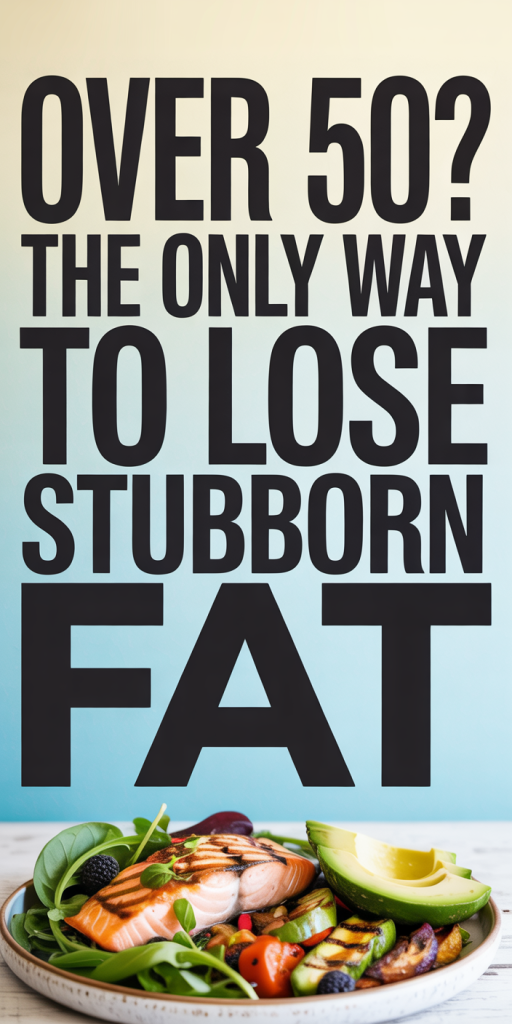
Pillar 2: High-Protein Nutrition — Fuel the Engine
After 50, your body becomes less responsive to protein. This is called anabolic resistance.
That old recommendation of 0.8 grams per kilogram? Not enough anymore.
You should aim for:
1.2–1.6 grams per kilogram of body weight per day
For a 150-pound person, that’s roughly 82–109 grams daily.
Why Protein Is Critical
Protein:
- Preserves and builds muscle
- Increases metabolism (higher thermic effect of food)
- Reduces hunger and cravings
- Stabilizes blood sugar
Protein Distribution Matters
Don’t eat 10 grams at breakfast and 60 at dinner.
Spread it evenly:
- 25–35 grams per meal
- 3 meals per day
This keeps muscle protein synthesis elevated throughout the day.
Best Protein Sources
Animal-based:
- Eggs
- Chicken
- Salmon
- Lean beef
- Greek yogurt
- Cottage cheese
Plant-based:
- Lentils
- Chickpeas
- Quinoa
- Tofu
- Edamame
Protein powders can help if needed.
Pillar 3: Intermittent Fasting — Unlock Fat Stores
Intermittent fasting isn’t about starving yourself.
It’s about controlling insulin.
When you constantly eat, insulin stays elevated. High insulin locks fat inside fat cells.
When insulin drops low enough, your body can finally access stored fat.
The most effective approach for many adults over 50:
16:8 fasting
- 16 hours fasting
- 8-hour eating window
Example:
- First meal at 12 PM
- Last meal by 8 PM
During fasting:
- Water
- Black coffee
- Unsweetened tea
Why It Works
After 12–16 hours without food, your body switches from burning glucose to burning stored fat. This is called metabolic switching.
Intermittent fasting:
- Lowers insulin
- Improves insulin sensitivity
- Reduces visceral fat
- Increases growth hormone
- Supports cellular repair (autophagy)
Women may benefit from starting with a 14–15 hour window and adjusting gradually.
When All Three Work Together
This isn’t a menu. You can’t pick one.
- Strength training creates demand for muscle.
- Protein provides the building blocks.
- Fasting lowers insulin so fat can be released.
Together, they reverse the core drivers of age-related fat gain.
Lifestyle Accelerators
To amplify results:
1. Hydration
Aim for half your body weight in ounces daily.
2. Sleep
7–9 hours per night. Poor sleep increases cortisol and hunger hormones.
3. Daily Movement
8,000–10,000 steps per day. Walking burns more total calories over time than most realize.
Common Mistakes to Avoid
Starvation dieting
→ Causes muscle loss and metabolic slowdown.
Endless cardio
→ Raises cortisol and reduces lean mass.
Low protein intake
→ Undermines muscle preservation.
Stick to the system.
What to Expect
Weeks 1–2:
- Water weight drops
- Energy stabilizes
Weeks 3–8:
- Clothes fit looser
- Waist circumference decreases
3–6 Months:
- Noticeable visceral fat reduction
- Improved metabolic markers
Fat loss after 50 should average:
0.5–1 pound per week
Slow is sustainable.
Your 30-Day Action Plan
Week 1
- Remove processed snacks
- Start tracking protein
- Walk daily
Week 2
- Hit 30g protein per meal
- Begin 12–14 hour fasting
Week 3
- Add 2 strength sessions
- Extend fasting to 16:8
- Increase daily steps
Week 4
- Add third strength session
- Measure waist, not just scale
The Bottom Line
Your metabolism isn’t broken.
It’s under-stimulated.
After 50, stubborn fat doesn’t respond to restriction alone. It responds to signals:
- Lift heavy enough to rebuild muscle.
- Eat enough protein to support it.
- Fast long enough to unlock fat.
This is not a crash diet.
It’s a metabolic transformation.
And it works because it addresses the real biological shifts that happen after 50.
Start today.
Not perfectly. Just consistently.
Your strongest years can still be ahead of you.