13 Nail Trends That Are Not Aging Well: What To Ditch In 2026 And Stylish Alternatives
Nail trends move fast, so fast that something wildly chic one season can look dated the next. As nail professionals and enthusiasts, we’ve watched stands of rhinestones, sky-high stilettos, and neon gels burst onto the scene and then fade into cringe. In 2026, it’s time to be deliberate about what we keep and what we retire from our nail vocabulary. This article highlights 13 popular nail trends that aren’t aging well, explains why they’ve peaked, and offers wearable, modern alternatives so your hands always look current and intentional. If you’ve got a stash of clunky press-ons or a photo of your 2019 manicure you’re embarrassed to resurface, don’t worry. We’ll guide you through which fads to ditch and how to pivot toward timeless, flattering looks that last beyond the next viral moment.
Why Nail Trends Lose Appeal Quickly (And How To Spot A Fad)
Trends in nails, like fashion, are driven by visibility, novelty, and the desire to stand out. But many nail crazes burn bright and fast because they prioritize shock value over versatility. We can spot a fad when it checks several boxes: it’s overly distinctive (hard to wear daily), demands frequent maintenance, relies heavily on ephemeral pop-culture references, or depends on materials or techniques that damage the natural nail over time.
Social media accelerates the cycle. Platforms reward extreme visuals, think multilayered 3D jewels or ten-inch stiletto nails, so creators push boundaries to get likes. That creates a skewed impression of what’s practical. Another red flag: if removal is a chore or the look requires specialized products we don’t already use, it’s probably a trend designed for attention rather than longevity.
We also evaluate trends by wearability. Does it suit multiple lifestyles? Will it look good in photos and in real life? If the answer is no, it’s likely a short-lived craze. Finally, environmental and health considerations are increasingly important. Trends that use wasteful materials, harmful adhesives, or risky application methods are becoming socially unacceptable, another reason some styles fade quickly.
Knowing how to spot a fad helps us make smarter choices in-salon and at home. We’ll dig into the specific styles that are past their prime and propose modern, wearable swaps.
Overly Embellished Acrylics: Chunky 3D Decorations, Rhinestone Overload, And Excessive Tips
A few years back, bigger really was better: ornate 3D charms, chains, oversized bows, and rhinestone pavés turned nails into miniature sculptures. While dramatic and undeniably eye-catching, these overly embellished acrylics have several drawbacks that make them less appealing in 2026.
First, they’re impractical. Large jewels catch on clothing and hair, make typing or fine motor tasks awkward, and can break off, leaving damage or creating sharp edges. Second, the maintenance burden is high. Frequent fills and reattachments add time and cost, which most clients no longer want. Third, the look often reads costume-y rather than polished: once the novelty fades, the aesthetic can feel heavy-handed.
Health-wise, layering heavy embellishments on acrylic bases can stress the nail plate and weak natural nails beneath. Removal is also more intensive, sometimes requiring force that lifts or thins the natural nail.
Alternatives we recommend: curated accents instead of full-hand bling. A single focal jewel or a minimalist cluster on one nail gives interest without overwhelm. Micro-embellishments, tiny metallic studs or a refined rhinestone near the cuticle, preserve shine without sacrificing function. We also like pressed metallic foils, subtle chrome gradients, or thin, hand-painted lines that catch light without physical bulk.
If clients want statement looks, suggest removable, detachable elements meant for short events (clip-on charms or temporary stick-ons) so they can enjoy drama without long-term wear or nail damage.
Extremely Long Shapes: Stiletto, Ultra-Pointed Almonds, And Unrealistic Lengths
The era of skyscraper nails, stiletto points and ultra-length almonds, gave us dramatic silhouettes and editorial shots for days. But those extreme lengths are losing their cultural currency for several reasons. Functionally, they’re limiting: daily tasks like buttoning, typing, or holding a phone become trickier. Safety and durability are concerns too: longer nails are more prone to breakage, and a sudden snap can be painful or injure the nail bed.
From a style perspective, ultra-long points often read as costume or influencer-specific. As aesthetics swing back toward understated elegance, we’re seeing a preference for shapes that flatter the hand without dominating it. Proportion matters: nails should complement hand size and lifestyle.
Our go-to replacements: moderate almond, soft square, and short- to medium-length rounded shapes. These feel contemporary without being severe. For clients who love pointy silhouettes, we propose a tapered almond with a clean edge, shorter than that extreme stiletto, so the shape remains modern and functional.
When recommending length, we measure from the free edge to the fingertip and discuss daily activities. Hands-on clients or those working with their hands often need shorter, reinforced shapes like squoval or short rounded. For a high-fashion look that’s still wearable, try a medium-length coffin with reinforced gel and a careful stress point design, this keeps the drama but reduces break risk.
In short: scale back the length, keep the silhouette intentional, and match shape to lifestyle.
Ultra-Busy Nail Art: Maximalist Prints, Sticker Mania, And Logo-Centric Designs
We’ve seen nail art evolve from subtle hand-painted accents into arena-ready canvases where every nail tells a different story. Maximalist prints, sticker overload, and brand logos splashed across nails were huge, but now they can look cluttered and dated.
The issue isn’t creativity: it’s coherence. When each nail has a competing motif, animal print, florals, stripes, metallics, and corporate logos, the overall effect is noisy rather than thoughtfully curated. Stickers and transfers can also lift or bubble, especially when applied quickly for social content. And logo-centric nails, once a flex, now risk looking overly branded and less personal.
We prefer a curated approach: pick a theme and extend it across nails with variation, not contradiction. For instance, choose a color story and apply three complementary motifs rather than seven unrelated ones. Hand-painted micro-art (a single small design on an accent nail) signals skill and intention without visual chaos.
Stickers still have a place, used sparingly and professionally sealed under a glossy topcoat. For longevity, we recommend thin foils, negative-space techniques, or delicate line work that reads modern and wearable. If clients want branded elements, suggest minimal, tasteful nods (a tiny logo on the ring finger) rather than full-hand banners.
Eventually, restraint elevates art. Thoughtful simplicity lasts longer in both fashion and taste.
Outdated Color Choices: Neon Gel Overload, Washed-Out Pastels, And Trendy Brown That Faded
Colors rise and fall based on cultural moments. Neon gel mania gave us eye-popping brights, and for a while, washed-out pastels and the so-called ‘it’ brown dominated feeds. Now, many of those palettes are showing their age.
Neon gels still read party-ready, but they can be harsh in everyday settings and age poorly as chips or lift show. Washed-out pastels, those dusty, desaturated tones, can look dingy under indoor lighting and don’t flatter many skin tones. As for the trend-heavy brown family, certain muddy shades that were everywhere a few seasons ago now feel dated when paired with contemporary wardrobe palettes.
We recommend a refined, seasonless color strategy. Classic reds, clean nudes (with warm or cool undertones tailored to the client), and soft cremes or muted jewel tones offer broad appeal. If a client wants color, suggest modern twists: translucent jelly finishes (not neon), milky tints that look sophisticated, or tonal French tips where the color complements rather than dominates.
Gradient ombrés can feel fresh when executed with subtlety, think soft transitions instead of stark contrasts. And for those craving brightness, we prefer a single accent nail in a saturated shade rather than head-to-toe neon.
Color longevity matters too: advise durable gel formulas with proper prep to prevent premature fading. Choosing hues that align with a client’s wardrobe and skin tone ensures nails feel intentional and timeless, not like a relic of a past feed.
Fragile, High-Maintenance Finishes: Matte That Chips, Gel Lift, And Excessive Topcoat Tricks
Certain finishes dazzled us when techniques were new, matte textures, elaborate topcoat layering, and DIY ‘mirror’ tricks, but many have revealed downsides once worn in the real world. Matte nails can look chic, but they show wear quickly: chips, oil from hands, and even natural shine near the cuticle stand out. Some matte topcoats also alter the color underneath, making touch-ups tricky.
Gel lift is another problem. Poor prep, incompatible layers, or over-buffed natural nails cause gels to lift, creating gaps where water and bacteria can accumulate. Clients with repeated lift risk nail thinning from aggressive removal or constant reapplication.
Then there are the “hacks”, multiple topcoats, experimental sealers, or thick finish layers that create an uneven surface and high breakage risk. Over-reliance on corrective topcoats to mask poor application is an unsustainable practice.
Our recommendations: prioritize proper application and maintenance over gimmicks. For a matte look, use satin finis, matte but durable, and show clients how to refresh the finish with light buffing from a professional rather than piling on layers. For gel services, ensure correct curing times, balanced product systems, and responsible removal.
When clients want special finishes, suggest alternatives like soft-touch topcoats with hydrating ingredients, subtle satin sheens, or micro-gloss that resists scratches. Maintenance education, how to avoid oils before polish, when to book fills, and when to remove services, will keep finishes looking intentional, not fragile.
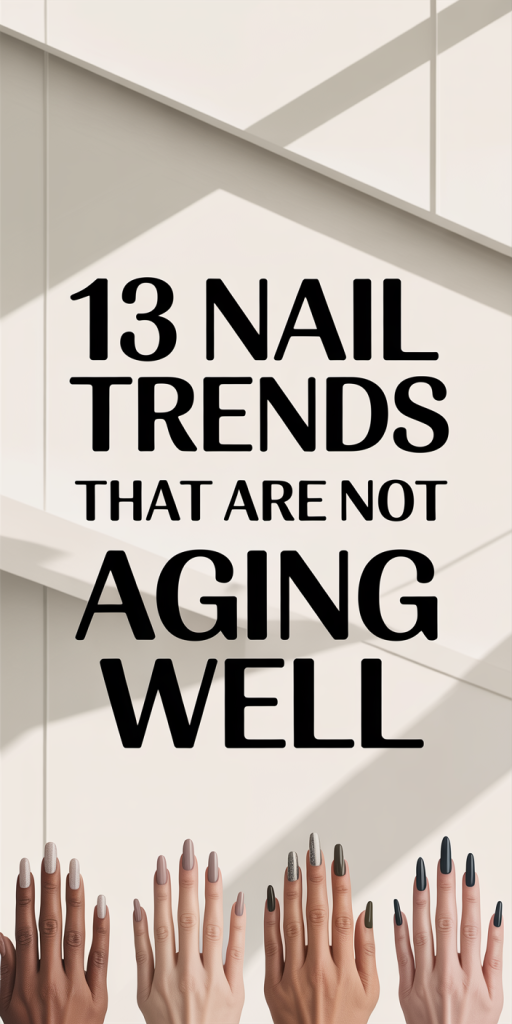
How To Transition From Dated Trends To Timeless, Wearable Looks (Shapes, Lengths, And Color Swaps)
Transitioning clients away from dated trends requires tact. We’re not asking people to abandon self-expression, just to update it with longevity and wearability in mind. Here’s a practical plan we use in the salon to pivot tastes without losing personality.
- Assess lifestyle first. Ask about daily activities, job requirements, and comfort with maintenance. Use that to recommend realistic shapes and lengths, short rounded or squoval for hands-on work, tapered almond for a refined look, medium-length coffin for fashion-forward clients who can commit to care.
- Make gradual changes. If someone loves extreme length, suggest a staged shortening over two appointments while introducing a sleeker shape. For heavy embellishments, replace a full-rhinestone hand with a single accent gem or metallic wire detail.
- Offer color bridges. Move from neon to vivid-but-balanced shades (e.g., coral instead of fluorescent orange), or shift washed pastels to milky or creamier versions that retain softness without looking faded. For clients stuck in brown, introduce warm taupes or chestnut with a glossy finish to modernize the palette.
- Show alternatives visually. Create swatch books and before/after photos. People respond to visuals more than verbal suggestions. We often present three tailored options: conservative, modern classic, and bold-but-wearable.
- Emphasize maintenance and health. Recommend strengthening treatments, hydration, and proper removal. A healthy nail looks better with simpler design.
- Use transitional designs. Negative space, minimalist line art, single-tone French variations, and micro-accents let clients keep personality while moving away from extremes.
Changing a look is about aligning aesthetics with real life. When clients feel heard and see flattering, practical alternatives, they’re eager to evolve their style.
Conclusion
Trends come and go, but thoughtful nails last. In 2026, we’re favoring intentionality, design choices that flatter, function, and respect nail health. Ditch the excess: oversized embellishments, impractical lengths, noisy art, and finishes that chip or lift. Instead, embrace curated accents, wearable lengths and shapes, refined color choices, and application methods that prioritize longevity.
We encourage everyone, technicians and clients alike, to prioritize versatility and nail health when choosing styles. Small changes, a single accent jewel, a tapered almond instead of an extreme stiletto, or a creamy nude instead of neon, yield modern looks that still feel personal. Let’s keep nails creative, but sustainable and stylish beyond the next viral moment.