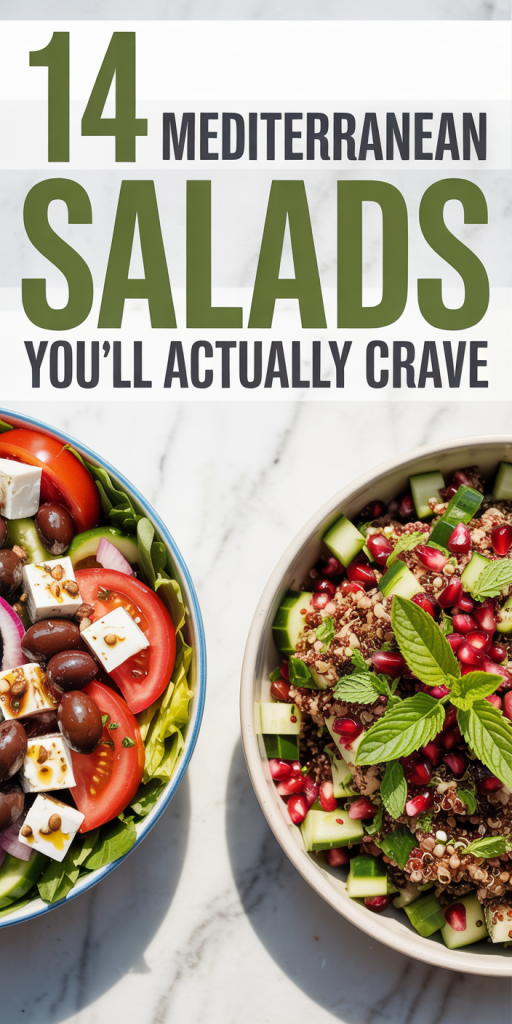
Mediterranean salads are more than side dishes, they’re bright, balanced meals built on fresh produce, bold herbs, and simple dressings. We’ve gathered 14 Mediterranean salads you’ll actually crave: classics we make when friends come over, vegetable-forward plates we reach for in summer, hearty grain and bean bowls for satisfying lunches, and protein-rich options when we want something more substantial. Across these recipes you’ll find the same guiding principles: seasonal ingredients, generous olive oil, a citrus or vinegar lift, and herbs that sing. Read on for recipes, component tips, and smart swaps so you can make these salads part of your weekly rotation.
Why Mediterranean Salads Work
Health Benefits And Flavor Principles
Mediterranean salads pack a lot of nutritional punch without sacrificing flavor. We’re talking fiber from vegetables and whole grains, plant-based protein from beans and lentils, healthy fats from olive oil and nuts, and antioxidants from tomatoes, olives, and herbs. Eating this way regularly is backed by decades of research linking the Mediterranean dietary pattern to lower risk of heart disease, better blood sugar control, and longer healthy life expectancy.
But the reason they taste so good isn’t just the health angle. Mediterranean salads balance four key flavor principles: bright acid, rounded fat, fragrant herbs, and a contrast element, salty feta or olives, crunchy toasted bread, or smoky roasted vegetables. When those elements are in harmony, every bite is interesting.
Core Ingredients And Pantry Staples
We keep a small set of staples on hand so an off‑the‑cuff Mediterranean salad is always possible:
- Extra-virgin olive oil (good quality but doesn’t have to be expensive)
- Fresh lemons and a few vinegars (red wine, sherry, or balsamic)
- Canned chickpeas and tuna for quick proteins
- Dried grains (farro, orzo, bulgur) and lentils
- Olives, capers, and preserved lemon for salty, briny notes
- Feta or ricotta salata for creaminess and salt
- Garlic, red onion, and fresh herbs (parsley, mint, dill)
- Sturdy tomatoes (heirlooms in season), cucumbers, and bell peppers
With these on hand we can build everything from a rustic panzanella to an elegant orzo salad.
Dressing Basics: Olive Oil, Acid, And Umami
Dressing is where most Mediterranean salads come alive. Our baseline formula is simple: 3 parts olive oil to 1 part acid, salt, pepper, and an umami element when useful (anchovy, grated Parmesan, preserved lemon, or a splash of soy for fusion). Shake or whisk until emulsified and taste, if it’s flat, add more acid or salt.
Small techniques that make a big difference:
- Massage: Rub oil and salt into shredded cabbage or kale to soften and mellow bitterness.
- Crush garlic and let it sit in the acid before adding oil for milder garlic flavor.
- Temper citrus: add a tiny pinch of sugar or a splash of good vinegar with lemon to round it out.
Once you understand these basics, you can riff endlessly.
Classic Mediterranean Salads
Greek (Horiatiki) Salad
Why we love it: Horiatiki is the expression of peak summer tomatoes and cucumbers, no lettuce needed. We keep the pieces large so each forkful includes tomato, cucumber, a sliver of red onion, a briny olive, and a ribbon of feta.
Key ingredients: ripe tomatoes, cucumber (English or Persian keep seeds low), red onion, Kalamata olives, block feta, oregano, olive oil, red wine vinegar.
Tips: Salt tomatoes and let them sit 10 minutes to pull out juices: use that juice as part of the dressing. Finish with a generous drizzle of extra-virgin olive oil and a grind of black pepper.
Fattoush
Why we love it: Fattoush offers crisp greens, roasted or charred vegetables, and shards of toasted or fried pita for irresistible texture.
Key ingredients: romaine or mixed greens, radish, cucumber, tomato, parsley, mint, toasted pita, sumac (for lemony tang), lemon juice, olive oil.
Tips: Tear pita and toast until golden: toss with lemony-sumac dressing right before serving to keep crunch. Sumac is the signature flavor, don’t skip it.
Tabbouleh
Why we love it: Tabbouleh is herb-forward and refreshing, heavy on parsley, light on bulgur. It’s almost a herb salad with grains as an accent.
Key ingredients: lots of flat-leaf parsley, mint, bulgur (fine or medium), tomato, lemon juice, olive oil, scallion.
Tips: Hydrate bulgur with hot water, then squeeze excess moisture. Chop herbs very fine: texture is everything here. Make it a day ahead and the flavors marry beautifully.
Panzanella (Mediterranean Bread Salad)
Why we love it: Panzanella rescues good day‑old bread and transforms it into a juicy, crunchy, tangy salad. It’s rustic, forgiving, and deeply satisfying.
Key ingredients: stale country bread, ripe tomatoes, red onion, basil, cucumber, capers (optional), olive oil, red wine vinegar.
Tips: Toast or lightly soak the bread in vinaigrette so it holds shape but absorbs flavor. Use the best tomatoes you can find: they’re the star.
Grain, Bean, And Pasta Salads
Mediterranean Chickpea Salad
Why we love it: Fast, protein-packed, and versatile, this chickpea salad is our go-to for quick lunches or potlucks.
Key ingredients: canned chickpeas (rinsed), cucumber, cherry tomatoes, red onion, parsley, olives, feta, lemon-olive oil dressing.
Make‑it‑better tip: Smash some chickpeas while mixing to make a creamier texture that clings to dressing.
Lentil Salad With Herbs And Lemon
Why we love it: Lentils hold their texture and soak up tangy dressings. This one is earthy, herb-packed, and filling.
Key ingredients: green or French lentils (Puy), shallot, parsley, dill, lemon, olive oil, capers or anchovy for depth.
Tips: Cook lentils until just tender, no falling apart. Chill and let flavors develop: it’s excellent served slightly warm or at room temperature.
Orzo With Feta, Olives, And Cherry Tomatoes
Why we love it: Orzo feels like pasta but makes a denser, more salad-friendly base. It pairs beautifully with briny olives and creamy feta.
Key ingredients: orzo (cooked al dente), halved cherry tomatoes, crumbled feta, Kalamata olives, basil, lemon zest, olive oil.
Tips: Rinse orzo briefly under cold water after cooking to halt cooking and remove excess starch. Toss with dressing while still slightly warm for better absorption.
Farro With Roasted Vegetables And Herbs
Why we love it: Farro provides a nutty chew and stands up to roasted root vegetables, making this a hearty main-dish salad.
Key ingredients: cooked farro, roasted eggplant/zucchini/red pepper, parsley, mint, toasted pine nuts or almonds, lemony vinaigrette.
Tips: Roast vegetables until slightly caramelized for sweet depth. Toast nuts to intensify flavor. For extra richness, finish with a drizzle of good olive oil and grated Pecorino.
Vegetable‑Forward And Fruit Salads
Roasted Eggplant And Pepper Salad (Caponata Style)
Why we love it: Caponata comes from Sicily and is sweet, sour, and satisfyingly chunky, an ideal make-ahead antipasto or a salad with rustic heft.
Key ingredients: eggplant, bell peppers, tomato, capers, olives, red wine vinegar, sugar or raisins for a touch of sweetness, celery (optional).
Tips: Salt eggplant and let it sweat to remove bitterness, then roast or sauté until deeply caramelized. Balance the vinegar with a hint of sugar or a spoon of raisins to round the sharpness.
Tomato, Cucumber, And Mint Salad
Why we love it: Simple and cooling, this is what we reach for on hot afternoons. It’s light, hydrating, and insanely quick.
Key ingredients: ripe tomatoes, cucumber, fresh mint, red onion or scallion, lemon juice, olive oil.
Tips: For extra zip, add a sprinkle of sumac or crumbled feta. Serve chilled.
Watermelon, Feta, And Mint Salad
Why we love it: Sweet watermelon against salty feta and cooling mint is one of those genius flavor pairings we can’t get enough of in summer.
Key ingredients: cubed watermelon, crumbled feta, torn mint, lime juice, a drizzle of olive oil, flaky sea salt.
Tips: For texture, add thinly sliced cucumber, or a handful of toasted pistachios. Keep it chilled and dress immediately before serving to avoid soggy melon.
Shaved Fennel And Citrus Salad
Why we love it: An elegant, palate-cleansing salad, anisey fennel with bright citrus and a little peppery arugula is unexpectedly refreshing.
Key ingredients: thinly shaved fennel bulb, segmented oranges or grapefruit, olive oil, lemon or sherry vinegar, black pepper, optional shaved Parmesan.
Tips: Use a mandoline or a very sharp knife to get paper-thin fennel. Marinate briefly so the citrus juices soften the layers slightly.
Seafood And Protein‑Rich Salads
Grilled Shrimp With Lemon‑Garlic Dressing
Why we love it: Grilled shrimp bring smokiness and a meaty bite to a salad without heaviness. We pair them with crisp greens, tomatoes, and a lively lemon-garlic vinaigrette.
Key ingredients: large shrimp (peeled, deveined), garlic, lemon zest and juice, olive oil, crushed red pepper, mixed greens, cherry tomatoes.
Tips: Marinate shrimp briefly, in minutes, then grill on high heat for two minutes per side. Rest a minute before tossing with the salad so juices redistribute.
Nicoise‑Inspired Tuna, Potato, And Green Bean Salad
Why we love it: The classic Niçoise is a composed salad that reads like a full meal, potato, green beans, egg, olives, and tuna. We prefer seared tuna or good-quality canned tuna packed in olive oil for convenience.
Key ingredients: small new potatoes, blanched green beans, seared or canned tuna, hard-cooked eggs, Niçoise or Kalamata olives, anchovy in the dressing (optional), Dijon mustard vinaigrette.
Tips: Dress components separately, potatoes warm, greens cool, then assemble so nothing gets gummy. Use fingerling or new potatoes for the best texture.
Protein swap ideas: Roast chicken thighs with lemon and oregano for another hearty variation, or add sliced grilled halloumi for vegetarian protein.
Make‑Ahead, Serving, And Substitution Tips
How To Prep Components Ahead And Store Safely
Meal-prep is where Mediterranean salads shine. Here’s how we plan ahead without losing texture:
- Cook grains and legumes 3–4 days ahead: store in airtight containers in the fridge.
- Roast vegetables and keep separately from any delicate greens: combine at serving time.
- Make dressings up to one week ahead, olive oil and vinegar don’t go bad quickly, and keep refrigerated. Bring to room temperature and shake before using.
- For composed salads (Niçoise, panzanella), store components separately and assemble within a few hours of serving.
- Protein note: seafood should be consumed within 24 hours of cooking: cooked poultry within 3–4 days.
Swaps For Dietary Preferences And Seasonal Produce
Mediterranean salads are flexible. A few substitutions we rely on:
- Gluten-free: Swap farro or orzo for quinoa or a certified gluten-free grain.
- Vegetarian/vegan: Omit cheese or use a plant-based feta: replace tuna/shrimp with roasted chickpeas or grilled tofu.
- Low-carb: Use cauliflower rice instead of grains, or pile more greens and halve starchy components.
- Seasonal produce: In winter, swap watermelon for pomegranate arils, tomatoes for slow-roasted cherry tomatoes, and cucumbers for thinly sliced kohlrabi.
Plating, Pairings, And Serving Suggestions
Presentation elevates a simple salad. We prefer composed salads for dinner parties, arrange ingredients in sections on a large platter so guests can see everything. For casual meals, toss in a large bowl and serve family-style.
Pairings:
- Light grilled fish or roasted chicken for a fuller meal.
- Crusty bread or grilled pita to mop up dressings.
- A chilled rosé, unoaked white (Sauvignon Blanc or Verdejo), or even a lively sparkling water with lemon.
Portioning: For a main-dish salad, plan on about 2 to 3 cups per person depending on how many sides are involved. For sides, 1 cup per person is usually enough.
Small finishing touches we use frequently: a drizzle of good olive oil, a scattering of toasted nuts or seeds for crunch, and a few leaves of fresh herb for brightness.
Conclusion
These 14 Mediterranean salads show how the region’s pantry produces endlessly adaptable, flavorful meals. We’ve included quick throw-togethers like the tomato-cucumber-mint salad, make-ahead heavy hitters like lentil and farro bowls, and show-stopping classics like panzanella and Niçoise. Our final bit of advice: focus on balance, fat, acid, herb, and texture, and favor good ingredients. Start with small batches, taste as you go, and don’t be afraid to tweak dressings until they sing. With a handful of pantry staples and a few seasonal vegetables, we can build a satisfying Mediterranean salad for every meal of the week, one we’ll actually crave.