14 Ways to Build a $350 Two-Week Family Menu Plan for Six
A low-cost family menu works best when it is flexible rather than repetitive. This two-week plan for six combines filling breakfasts, practical lunches, affordable dinners, planned leftovers, simple produce, and a few homemade treats. The approach is designed for households that shop their pantry and freezer first, cook some basics from scratch, and adjust portions or ingredients to fit what is already available.
1. Start with a pantry-and-freezer inventory
Before writing a shopping list, check the cupboards, refrigerator, and freezer for ingredients that need to be used. Build meals around stored rice, beans, vegetables, cooked meat, fruit, dairy, and baking supplies. Buying sale items in useful quantities can lower the cost over time, but only when the food is something the household will actually use.
Explore this resource
2. Use a short planning cycle to stay flexible
Plan two weeks at a time instead of locking in an entire month. A shorter cycle makes it easier to respond to changing schedules, leftovers, sales, and family preferences. Keep a few interchangeable meals available so a planned dinner can become a leftover night when necessary.
3. Make hearty breakfasts that carry the family to lunch
Rotate inexpensive, substantial breakfasts such as homemade granola, baked oatmeal, cereal with fruit, or another simple grain-based meal. Repeating a dependable breakfast is not a weakness when it saves money and morning effort. Prepare a larger batch when possible so several mornings require little more than serving and adding fruit.
4. Pack lunches from familiar combinations
Build lunches from meat-and-cheese sandwiches, yogurt, fruit, and any leftovers that can be packed safely. Tuna toast is another economical option: toast buttered bread with shredded cheese, then top it with tuna salad. Beans, cheese, and tortillas can also become quick quesadillas when sandwich supplies are running low.
5. Keep snacks simple and mostly nourishing
When meals are filling, many family members may need fewer snacks. Offer fruit, nuts, yogurt, popcorn, or homemade energy bites before relying on packaged treats. The goal is not perfection; keeping a few inexpensive choices ready simply makes impulse purchases less likely.
6. Cook versatile basics once and reuse them
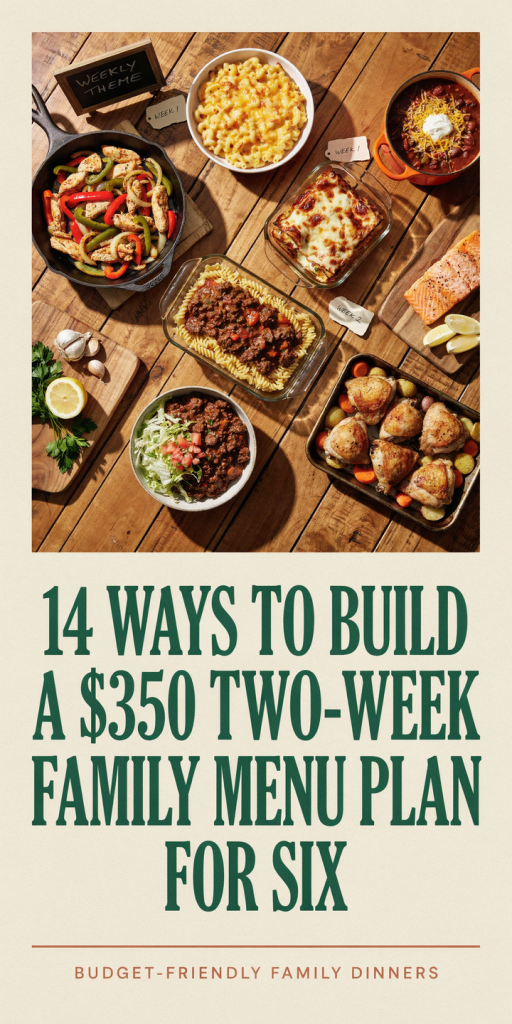
Prepare larger amounts of rice, beans, soup, or cooked meat and freeze the extra in meal-sized portions. Homemade refried beans can support quesadillas, bean dip, or soup, while cooked rice can stretch skillet meals. This turns one cooking session into several future meals and reduces waste from ingredients that spoil before they are used.
7. Plan week one around familiar, adaptable dinners
A practical first week can include garlic chicken with rice and green beans; cheeseburger soup with salad; Mexican bean soup with quesadillas; porcupines made in a skillet; creamy sausage and potatoes with peas; and a leftover night. Add a salad with a homemade dressing when vegetables are available, and use remaining desserts or cookies rather than opening something new every evening.
8. Stretch inexpensive proteins across different meals
Beans, tuna, eggs, sausage, chicken, and ground beef can each appear in more than one format without making the menu feel identical. A small amount of meat goes farther when paired with rice, potatoes, lentils, beans, or bread. Changing the seasoning and presentation—such as soup, skillet, toast, or quesadilla—helps the same budget-friendly staples feel fresh.
9. Use week two for new flavors and planned repeats
The second week can introduce shakshuka, one-pot ground beef and potatoes, a sausage-lentil-rice skillet, chicken and potato chowder, and ground beef with rice. Pepperoni pizza quesadillas provide a quick lunch or light meal, while leftover cake or brownies can cover dessert without another baking project. Repeating successful components from week one keeps the grocery list manageable.
10. Let salads and frozen produce fill the gaps
A basic lettuce salad with a homemade ranch-style or Mexican-inspired dressing can accompany several dinners. Fresh apples, bananas, grapes, clementines, pineapple, and canned peaches can rotate through lunches and breakfasts, while frozen blueberries and peas provide dependable produce when fresh options are expensive or unavailable.
11. Bake selectively and use dessert leftovers
A from-scratch chocolate cake, cheesecake-style dessert, rhubarb cake, pie, brownies, or another simple bake can provide several dessert servings when planned across the week. Bake only what the household will finish, portion leftovers intentionally, and substitute seasonal fruit when a recipe calls for an ingredient that is costly or difficult to find.
12. Create a leftovers night before food accumulates
Reserve one evening in each week for reheating remaining mains and serving them with salad, peas, or another easy side. This gives small portions a purpose, reduces cooking, and reveals what needs to be used before the next shopping trip. A planned leftovers night is especially useful after meals that make large batches, such as soup or skillet dinners.
13. Make room for one convenience meal
A frugal menu does not have to eliminate every convenience. One store-bought pizza, a few cookies, or ice cream bars can make the plan more realistic and enjoyable. Keeping the splurge limited and placing it beside inexpensive sides helps protect the overall budget without making family meals feel restrictive.
14. Cook from scratch where the savings are real
Homemade bread, dressings, cream-style soup mix, baking mixes, pie crust, sauces, and drinks can replace packaged versions when the ingredients are already on hand and the preparation fits the household routine. Choose only a few high-value basics to make yourself; the best budget plan balances lower costs with time, energy, and the likelihood that the food will actually be eaten.
A $350 menu plan is most useful as a framework, not a rigid promise. Inventory the food you already own, choose filling meals with overlapping ingredients, freeze extras, rotate simple produce, and schedule leftovers before they become waste. With a few dependable breakfasts, flexible lunches, economical protein-and-starch dinners, and limited treats, a family of six can enjoy variety while keeping shopping and cooking under control.