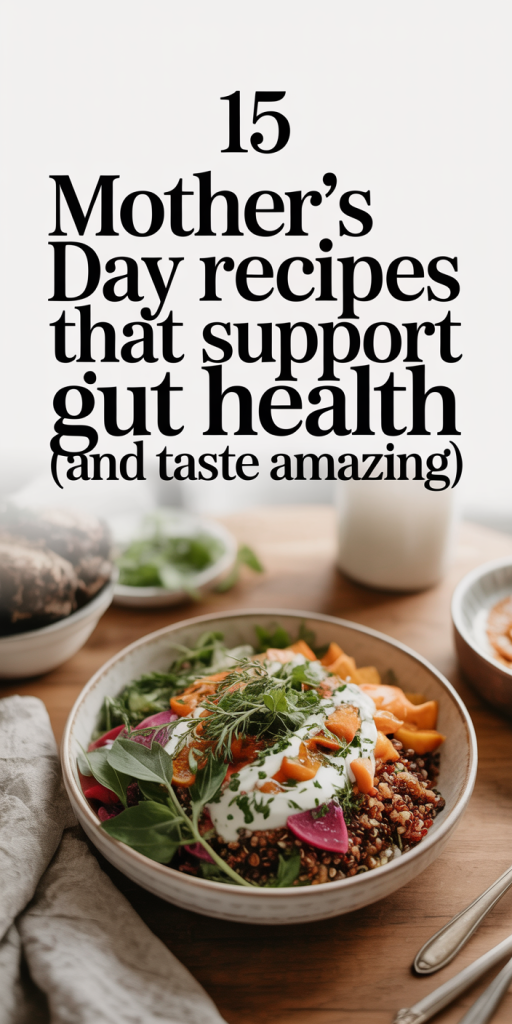
Mother’s Day is a chance to celebrate the people who care for us, and what better gift than a meal that tastes amazing and supports gut health? We’ve gathered 15 full recipes designed to be approachable, flavorful, and microbiome-friendly. Whether we’re planning a leisurely brunch, a cozy dinner, or a selection of sides, desserts, and drinks, these recipes emphasize fiber, fermented foods, prebiotic ingredients, and gentle cooking techniques that help digestion. We’ll also explain why gut health matters for moms and call out the specific ingredients and principles behind these dishes so you can assemble a balanced, thoughtful menu with confidence.
Why Gut Health Matters For Mom: Benefits And What To Expect
Gut health affects far more than digestion, it influences energy, mood, immunity, skin, and nutrient absorption. As we age, the diversity of our gut microbiome can decline, and life factors like stress, irregular sleep, antibiotics, and diet shifts can change which bacteria dominate. For many moms, the practical benefits of prioritizing gut-friendly meals are immediate: more reliable digestion after meals, reduced bloating, steadier energy levels, and improved satiety that helps with healthy weight management.
Expectations matter. These recipes aren’t medical treatments: they’re dietary supports. When we consistently choose fiber-rich, fermented, and polyphenol-packed foods, we create an environment where beneficial microbes can thrive. That often translates to fewer digestive upsets and a general sense of well-being. Small changes compound: swapping highly processed brunch items for whole-grain and fermented alternatives, adding a colorful salad for lunch, and finishing with a fruit- and probiotic-forward dessert can all add up to measurable improvements over weeks.
We should also note variability, each person’s microbiome is unique. Some moms will notice fast benefits like reduced bloating, while others may see subtler changes such as improved sleep or mood. If there are chronic digestive concerns, these recipes can complement professional guidance from a dietitian or clinician.
How These Recipes Support Gut Health: Key Ingredients And Cooking Principles
Across the 15 recipes you’ll find recurring, evidence-backed elements that support a diverse microbiome:
- Fiber First: Soluble and insoluble fibers from oats, beans, vegetables, fruits, and whole grains feed beneficial bacteria and produce short-chain fatty acids (SCFAs) that soothe the gut lining.
- Fermented Foods: Yogurt, kefir, sauerkraut, and miso introduce live cultures or encourage beneficial species. They’re easy to include as condiments or components.
- Prebiotic Foods: Garlic, onions, leeks, asparagus, bananas, and chicory feed good bacteria. We use them sparingly or cooked to be gentle on sensitive stomachs.
- Polyphenols and Color: Berries, citrus, herbs, green tea, and dark chocolate contain polyphenols that act as microbial fertilizers, promoting diversity.
- Healthy Fats & Protein: Olive oil, fatty fish, nuts, legumes, and eggs support absorption of fat-soluble vitamins and provide stable energy without spiking blood sugar.
- Gentle Cooking Techniques: Steaming, gentle roasting, braising, and quick pickling preserve nutrients and make fermentable fibers easier to digest.
We also avoid heavy refined sugars and overly processed fats in these recipes: those ingredients can reduce microbial diversity when consumed regularly. Portion balance matters: pairing fiber with protein and healthy fat reduces fermentative discomfort and provides steady energy. Finally, when a recipe calls for fermented components, we use unpasteurized or live-culture options when possible, or add cultured foods at the end of cooking to preserve viability.
Breakfast & Brunch: 5 Gut-Friendly Recipes Mom Will Love
- Blueberry Oat & Kefir Bake (serves 6)
Ingredients: 2 cups rolled oats, 1 1/2 cups plain kefir, 2 eggs, 1/3 cup maple syrup, 1 tsp baking powder, 1 cup blueberries, 1 tsp cinnamon, 1/2 tsp salt, 2 tbsp chopped walnuts.
Directions: Preheat to 350°F. Mix oats, kefir, eggs, syrup, baking powder, cinnamon, and salt. Fold in blueberries. Pour into a greased baking dish, sprinkle walnuts, bake 30–35 minutes until set. Serve warm.
Gut note: Oats provide beta-glucan fiber: kefir adds probiotics, a calming combo for digestion.
- Savory Spinach, Leek & Miso Frittata (serves 4)
Ingredients: 8 eggs, 1 cup chopped spinach, 1 small leek (white/light green), sliced, 1 tbsp white miso dissolved in 1 tbsp water, 2 tbsp olive oil, pepper to taste.
Directions: Sauté leek in olive oil until soft. Add spinach until wilted. Whisk eggs with miso and pour over vegetables in skillet. Cook gently until edges set, finish under broiler 3–4 minutes. Slice and serve.
Gut note: Miso brings fermented flavors and live cultures: leeks act as a prebiotic.
- Overnight Chia Pudding with Banana & Toasted Almonds (serves 4)
Ingredients: 1/2 cup chia seeds, 2 cups unsweetened almond milk or milk of choice, 2 tbsp maple syrup, 2 ripe bananas (1 mashed + slices), 1/3 cup toasted almonds.
Directions: Whisk chia, milk, and syrup. Stir in mashed banana. Refrigerate 6+ hours. Top with banana slices and almonds.
Gut note: Chia seeds add soluble fiber that forms a gentle gel, slowing digestion and feeding microbes.
- Whole-Grain Buckwheat Pancakes with Berry Compote (serves 4)
Ingredients: 1 1/2 cups buckwheat flour, 1 tsp baking soda, 1/2 tsp salt, 1 egg, 1 1/4 cups buttermilk (or kefir), 2 cups mixed berries, 1 tbsp lemon juice, 1 tbsp honey.
Directions: Make batter by whisking dry and wet separately then combining. Cook pancakes on a griddle. For compote, simmer berries, lemon, and honey until slightly thickened. Top pancakes.
Gut note: Buckwheat is gluten-free and rich in resistant starch: the berry compote adds polyphenols.
- Avocado Toast with Sauerkraut & Hemp Seeds (serves 2)
Ingredients: 2 slices sprouted whole-grain bread, 1 ripe avocado, 3 tbsp mild sauerkraut (drained), 1 tbsp hemp seeds, lemon juice, salt.
Directions: Toast bread, mash avocado with lemon and salt, spread, top with sauerkraut and hemp seeds.
Gut note: Sauerkraut supplies fermented bacteria: fiber from sprouted bread keeps us full and feeds the microbiome.
Lunch & Dinner: 5 Satisfying, Digestion-Friendly Main Dishes
- Salmon & Lentil Salad with Herbs (serves 4)
Ingredients: 1 lb salmon fillet, 1 cup green lentils (cooked), 1/2 cup chopped parsley, 1/4 cup chopped dill, 1 small red onion thinly sliced, juice of 1 lemon, 3 tbsp olive oil, salt and pepper.
Directions: Roast salmon 12–15 minutes at 400°F until flaky. Toss cooked lentils with herbs, onion, lemon, and oil. Flake salmon over salad and serve warm or room temp.
Gut note: Lentils provide fermentable fiber and resistant starch: omega-3s from salmon support anti-inflammatory pathways.
- Miso-Ginger Soba Bowl with Vegetables (serves 4)
Ingredients: 8 oz buckwheat soba noodles, 2 cups shredded cabbage, 1 cup grated carrot, 1 cup edamame, 2 tbsp white miso, 1 tbsp grated ginger, 2 tbsp rice vinegar, 2 tsp sesame oil.
Directions: Cook soba per package, rinse under cold water. Whisk miso, ginger, vinegar, sesame oil. Toss noodles with vegetables and dressing, top with edamame.
Gut note: Soba (buckwheat) + miso is a gut-friendly, lower-gluten option with fermented umami.
- Chicken, Sweet Potato & Kale One-Pan Roast (serves 4)
Ingredients: 4 chicken thighs, 2 medium sweet potatoes cubed, 4 cups chopped kale, 3 cloves garlic, 2 tbsp olive oil, 1 tsp smoked paprika, salt and pepper.
Directions: Toss chicken and sweet potatoes with oil, garlic, paprika, salt. Roast at 425°F for 25–30 minutes, add kale for final 5 minutes to wilt. Serve.
Gut note: Sweet potatoes provide resistant starch when cooled slightly: kale adds diverse fibers and polyphenols.
- White Bean & Tomato Braise with Polenta (serves 4)
Ingredients: 1 can cannellini beans (drained), 2 cups crushed tomatoes, 1 small onion, 2 cloves garlic, 1 tsp oregano, 1 cup quick polenta, 4 cups vegetable broth, olive oil.
Directions: Sauté onion and garlic, add tomatoes, beans, oregano and simmer 10 minutes. Prepare polenta per package in broth, serve beans over polenta.
Gut note: Beans are prebiotic powerhouses: pairing with polenta reduces heavy bloating risk while keeping us satisfied.
- Mediterranean Quinoa-Stuffed Peppers (serves 4)
Ingredients: 4 bell peppers halved, 1 cup cooked quinoa, 1/2 cup chopped cucumber, 1/3 cup chopped olives, 1/2 cup crumbled feta, 2 tbsp chopped mint, lemon vinaigrette.
Directions: Roast pepper halves at 400°F for 15 minutes. Mix quinoa, cucumber, olives, feta, mint, and vinaigrette. Stuff peppers and serve.
Gut note: Quinoa and veggies provide varied fibers: fresh herbs and olives add polyphenols that benefit microbiota.
Sides, Desserts & Drinks: 5 Tasty Recipes To Boost Microbiome Diversity
- Quick Pickled Beet & Apple Salad (serves 6)
Ingredients: 2 medium beets (cooked and sliced), 1 apple thinly sliced, 1/3 cup apple cider vinegar, 2 tbsp honey, 1/4 tsp salt, 1/2 cup chopped walnuts.
Directions: Warm vinegar and honey until combined. Toss beets and apple with pickling liquid and chill 1 hour. Sprinkle walnuts to serve.
Gut note: Beets and apples add polyphenols and fibers: quick pickling introduces beneficial acidity that supports digestion.
- Fermented Carrot & Ginger Spears (makes about 4 cups)
Ingredients: 1 lb carrots cut into sticks, 2 tsp grated ginger, 2 tbsp sea salt, 4 cups filtered water.
Directions: Dissolve salt in water. Pack carrots and ginger into a jar, cover with brine, weigh down, and ferment at room temp 3–5 days until tangy. Refrigerate.
Gut note: A simple DIY fermented side that supplies live bacteria and crunchy satisfaction.
- Dark Chocolate & Almond Medjool Date Bites (makes 12)
Ingredients: 12 pitted Medjool dates, 1/2 cup almond butter, 1/3 cup chopped roasted almonds, 3 oz dark chocolate (70%+), sea salt.
Directions: Stuff each date with almond butter and almonds. Melt chocolate and dip bites halfway, chill until set, sprinkle sea salt.
Gut note: Dates and dark chocolate supply polyphenols and prebiotic fibers: portion-controlled sweetness avoids gut irritation.
- Berry-Lime Kefir Smoothie (serves 2)
Ingredients: 1 cup plain kefir, 1 cup mixed berries (fresh or frozen), 1/2 banana, juice of 1 lime, 1 tbsp chia seeds.
Directions: Blend all ingredients until smooth. Serve immediately.
Gut note: Kefir provides probiotics: berries and chia add fiber and polyphenols, a morning or post-meal boost.
- Warm Yogurt & Honey Poached Pears (serves 4)
Ingredients: 4 firm pears peeled and halved, 2 cups plain yogurt (live-culture), 1/2 cup honey, 1 cinnamon stick, 1 cup water.
Directions: Simmer pears, honey, cinnamon, and water until pears are tender, about 10–12 minutes. Serve warm over a spoonful of yogurt.
Gut note: Cooking fruit softens fibers for easier digestion: yogurt adds probiotics and creamy contrast without heavy sugar.
Conclusion: Planning A Gut-Healthy Mother’s Day Menu And Timing Tips
When we plan a gut-healthy Mother’s Day menu, balance and variety are our best tools. Pick one or two recipes from each category so the meal feels abundant without overwhelming the digestive system. A sample menu could be Blueberry Oat & Kefir Bake for brunch, Salmon & Lentil Salad for dinner, and Quick Pickled Beets plus Warm Yogurt Poached Pears as side and dessert.
Timing matters: serve fermented foods as condiments or at the end of cooking to preserve live cultures, and avoid stacking several high-fiber dishes all at once if someone has a sensitive stomach, spread them across the day. Encourage leisurely pacing: digestion favors calm conversation and relaxed eating.
Above all, these recipes are meant to be enjoyed, not strict rules. We’ll nourish moms with thoughtful flavors and ingredients that support gut diversity, while creating a meal that feels celebratory and comforting.