27 Clean Eating Recipes for Women Over 40: Simple, Balanced, and Delicious
As I move through my 40s and beyond, my nutritional needs change, from supporting bone density and hormone balance to preserving muscle and steady energy. Clean eating isn’t about deprivation: it’s about choosing nutrient-dense, minimally processed meals that make me feel strong, clear-headed, and satisfied. In this guide I share 27 practical, flavor-first clean eating recipes tailored for women over 40. Each recipe is simple enough for weeknights, balanced for key needs (protein, fiber, healthy fats, calcium, vitamin D, magnesium), and built so I can meal‑prep or mix-and-match. I’ll also explain how to use the collection, note important nutrition considerations for this life stage, and give realistic meal-prep tips so clean eating becomes sustainable, not a chore. Let me cook smarter, not harder.
Why Clean Eating Matters After 40: Hormones, Bone Health, And Energy
After 40 many of us notice shifts: changing sleep, slower recovery, different energy patterns, and the beginnings of bone density concerns. Clean eating supports these shifts by focusing on whole foods that deliver steady glucose, high-quality protein to sustain lean mass, and micronutrients that support hormones and bones.
Protein: We lose muscle mass gradually with age (sarcopenia). Getting 20–30 grams of protein at each meal helps preserve muscle and supports metabolic health. Choose lean animal proteins, oily fish, legumes, eggs, and dairy or fortified plant alternatives.
Healthy fats: Omega-3s from fatty fish or flax/chia support cognitive health and inflammatory balance. Monounsaturated fats (olive oil, avocados, nuts) help satiety and heart health.
Fiber and gut health: Fiber stabilizes blood sugar, supports a healthy microbiome, and helps with cholesterol, aim for vegetables, fruit, whole grains, and legumes.
Bone-supporting nutrients: Calcium and vitamin D are crucial: include low-fat dairy, calcium-fortified plant milks, leafy greens, and consider safe sun exposure or supplements when needed. Magnesium and vitamin K also matter for bone metabolism and can be found in nuts, seeds, and greens.
Hormone balance and blood sugar: Meals combining protein, fiber, and healthy fats blunt glycemic spikes and reduce mood swings or energy crashes. Small habit shifts, like starting the day with protein rather than carbs alone, can make a big difference in daily energy and mid-day cravings.
How To Use This Recipe Collection: Meal Patterns, Swaps, And Serving Sizes
This collection is organized by meal type so you can build a flexible weekly plan. Use these guidelines to fit recipes to your needs:
Meal patterns
- Breakfast: Aim for 20–30 g protein + fiber. Many breakfasts below are portable and quick.
- Lunch: Balanced plate with lean protein, whole grains or legumes, and vegetables.
- Dinner: Lighter carbs in the evening, focus on veg-forward plates and healthy fats.
- Snacks: 150–250 calories combining protein + fiber or fat to curb hunger.
Swaps and modifications
- Dairy: Swap Greek yogurt for plant-based fortified yogurt: add a scoop of protein powder if needed.
- Gluten or grain-free: Substitute quinoa or buckwheat for wheat-based grains: use cauliflower rice for lower carbs.
- Vegetarian: Most recipes can swap tofu/tempeh/legumes for meat: increase portion size slightly to meet protein targets.
Serving sizes
- Protein: 3–5 oz cooked lean protein per adult serving (about 20–30 g protein).
- Vegetables: At least 1–2 cups non-starchy veg per meal.
- Grains/starches: ½–1 cup cooked whole grains depending on activity level.
Make it realistic: choose 2–3 breakfasts, 3 lunches, and 3 dinners to rotate each week. Batch-cook grains, roast a sheet-pan of vegetables, and portion proteins to speed daily assembly.
27 Clean Eating Recipes (Organized By Meal Type With Quick Notes)
We’ve condensed each recipe to an ingredient list and concise instructions so you can cook efficiently. Notes highlight swaps and estimated servings.
Breakfasts (7)
- Greek Yogurt Berry Protein Bowl (serves 1)
- Ingredients: 1 cup plain Greek yogurt, ½ cup mixed berries, 2 tbsp chia seeds, 1 tbsp chopped walnuts, 1 tsp honey.
- Instructions: Stir chia into yogurt, top with berries, walnuts, and honey. Let sit 5 minutes or enjoy immediately. (Swap: plant yogurt + protein powder.)
2. Savory Spinach & Feta Omelet (serves 1)
- Ingredients: 2 whole eggs + 1 egg white, 1 cup spinach, 2 tbsp crumbled feta, 1 tsp olive oil, salt/pepper.
- Instructions: Sauté spinach in oil, whisk eggs, pour in, sprinkle feta, fold when set.
3. Steel-Cut Oats with Almond Butter & Pear (serves 1)
- Ingredients: ½ cup cooked steel-cut oats, 1 tbsp almond butter, ½ pear sliced, cinnamon.
- Instructions: Warm oats, stir in almond butter, top with pear and cinnamon.
4. Smoked Salmon Avocado Toast (serves 1)
- Ingredients: 1 slice whole-grain bread, ¼ avocado mashed, 2–3 oz smoked salmon, lemon, pepper.
- Instructions: Toast bread, spread avocado, top salmon, squeeze lemon.
5. Cottage Cheese & Pineapple Bowl (serves 1)
- Ingredients: 1 cup low-fat cottage cheese, ½ cup pineapple chunks, 1 tbsp flaxseed.
- Instructions: Combine and serve chilled.
6. Berry-Chia Smoothie (serves 1)
- Ingredients: 1 cup unsweetened almond milk, ½ cup frozen berries, 1 scoop protein powder, 1 tbsp chia.
- Instructions: Blend until smooth.
7. Quinoa Breakfast Porridge (serves 2)
- Ingredients: 1 cup cooked quinoa, 1 cup milk, 1 tbsp maple syrup, ½ tsp cinnamon, 2 tbsp chopped nuts.
- Instructions: Warm quinoa with milk, sweeten, top nuts.
Lunches (8)
- Mediterranean Chickpea Salad (serves 2)
- Ingredients: 1 can chickpeas drained, 1 cup cucumber diced, 1 cup cherry tomatoes halved, ¼ cup red onion, 2 tbsp olive oil, 1 tbsp lemon juice, 2 tbsp parsley, salt/pepper.
- Instructions: Toss everything together: chill. (Great make-ahead.)
8. Grilled Chicken & Farro Bowl (serves 2)
- Ingredients: 8 oz grilled chicken breast sliced, 1 cup cooked farro, 2 cups arugula, ½ cup roasted peppers, 2 tbsp vinaigrette.
- Instructions: Layer grains, greens, chicken, and drizzle vinaigrette.
9. Lentil & Roasted Veggie Bowl (serves 2)
- Ingredients: 1 cup cooked lentils, 2 cups roasted seasonal veg (zucchini, carrots, peppers), 2 tbsp tahini dressing.
- Instructions: Combine lentils and veg, drizzle tahini.
10. Turkey, Apple & Greens Wrap (serves 1)
- Ingredients: 1 whole-grain wrap, 3–4 oz sliced turkey, ¼ apple thinly sliced, handful spinach, 1 tbsp mustard.
- Instructions: Assemble and roll.
11. Sardine Salad on Greens (serves 1)
- Ingredients: 1 can sardines in olive oil, 3 cups mixed greens, ½ cup cherry tomatoes, 1 tbsp capers, lemon juice.
- Instructions: Flake sardines over greens, dress with lemon.
12. Tuna-Stuffed Avocado (serves 2)
- Ingredients: 1 can tuna in water drained, 2 avocados halved, 2 tbsp Greek yogurt, 1 tbsp Dijon, chives.
- Instructions: Mix tuna with yogurt and mustard, fill avocado halves.
13. Black Bean & Quinoa Salad (serves 2)
- Ingredients: 1 cup cooked quinoa, 1 cup black beans, ½ cup corn, cilantro, lime dressing.
- Instructions: Mix and chill.
14. Miso Salmon Grain Bowl (serves 2)
- Ingredients: 10 oz salmon fillet, 2 tbsp miso paste, 1 cup brown rice, steamed bok choy.
- Instructions: Roast salmon brushed with diluted miso at 400°F for 12–15 minutes: serve over rice with bok choy.
Dinners (8)
15. Herb-Roasted Chicken Thighs with Broccoli (serves 4)
- Ingredients: 4 bone-in chicken thighs, 1 lb broccoli florets, 2 tbsp olive oil, rosemary, salt/pepper.
- Instructions: Toss chicken with oil and herbs, roast at 425°F 30–35 min: add broccoli for last 12 minutes.
16. Baked Cod with Lemon & Lentils (serves 2)
- Ingredients: 12 oz cod, 1 cup cooked lentils, lemon zest, 1 tbsp olive oil, parsley.
- Instructions: Bake cod at 400°F 10–12 minutes: serve on lentils with lemon.
17. Turkey & Veggie Stir-Fry (serves 3)
- Ingredients: 1 lb ground turkey, 3 cups mixed stir-fry veg, 2 tbsp low-sodium soy, 1 tsp sesame oil.
- Instructions: Brown turkey, add veg and sauce, cook until crisp-tender.
18. Zucchini Noodles with Pesto & Shrimp (serves 2)
- Ingredients: 12 oz shrimp, 3 cups spiralized zucchini, 3 tbsp basil pesto, 1 tbsp olive oil.
- Instructions: Sauté shrimp, toss zucchini with pesto and warm briefly.
19. Stuffed Bell Peppers with Quinoa & Feta (serves 4)
- Ingredients: 4 bell peppers halved, 2 cups cooked quinoa, 1 cup chopped spinach, ½ cup feta, marinara.
- Instructions: Mix quinoa, spinach, feta, fill peppers, bake at 375°F 25–30 min with a spoonful of marinara on top.
20. Beef & Vegetable Kebabs with Tzatziki (serves 4)
- Ingredients: 1 lb lean beef cubes, bell peppers, red onion, 1 cup Greek yogurt, cucumber, dill, garlic.
- Instructions: Thread and grill kebabs: mix yogurt, grated cucumber, garlic for tzatziki.
21. Cauliflower & Chickpea Curry (serves 4)
- Ingredients: 1 head cauliflower florets, 1 can chickpeas, 1 can light coconut milk, 2 tbsp curry paste, spinach handful.
- Instructions: Sauté curry paste, add coconut milk, cauliflower, chickpeas: simmer until tender, stir in spinach.
Snacks & Small Plates (4)
22. Hummus & Veggie Sticks (serves 4)
- Ingredients: 1 cup hummus, carrots, cucumber, bell pepper sticks.
- Instructions: Portion hummus into containers and pair with fresh veg.
23. Roasted Almonds & Dried Cranberries (serves 6)
- Ingredients: 2 cups raw almonds, 1 cup unsweetened dried cranberries, pinch salt.
- Instructions: Toss and roast almonds 8–10 minutes at 350°F, mix with cranberries.
24. Edamame with Sea Salt (serves 2)
- Ingredients: 2 cups shelled edamame, sea salt, lemon wedge.
- Instructions: Steam edamame 5–7 minutes, season.
25. Baked Apple with Cinnamon & Walnuts (serves 2)
- Ingredients: 2 apples cored, 2 tbsp chopped walnuts, 1 tsp cinnamon, 1 tsp maple syrup.
- Instructions: Fill apples with walnuts, drizzle syrup, bake 20–25 minutes at 375°F.
26. Dark Chocolate & Almond Butter Cups (serves 6)
- Ingredients: 4 oz dark chocolate (70%+), 3 tbsp almond butter, pinch sea salt.
- Instructions: Melt chocolate, spoon into molds, add almond butter, top with more chocolate and chill until set.
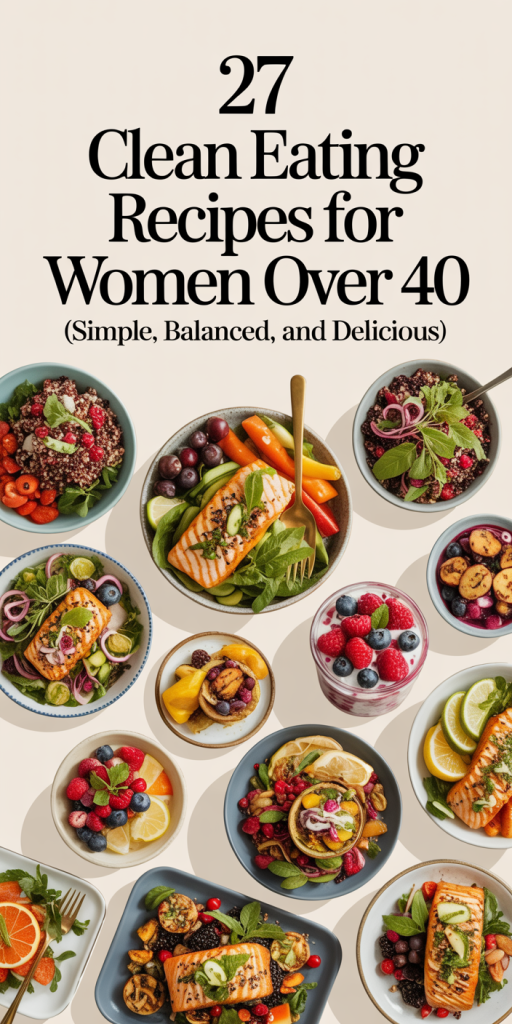
Quick notes: Most recipes serve 1–4: scale portions for family meals or batch-cook proteins to use across multiple dishes. These recipes emphasize whole-food ingredients, lean protein, healthy fats, and fiber, core clean eating principles for women over 40.
Nutrition Notes For Women Over 40: Protein, Fiber, Healthy Fats, And Key Micronutrients
We want meals that deliver muscle-supporting protein, fiber for gut and metabolic health, and key micronutrients to support bone and hormonal health.
Protein targets
- Aim for 20–30 g of protein per main meal. Include a quality source at breakfast to reduce mid-day cravings and maintain lean mass. Our recipes include eggs, Greek yogurt, poultry, fish, legumes, and dairy as reliable options.
Fiber goals
- Target 25–30+ grams of fiber daily from vegetables, fruits, whole grains, and legumes. Fiber slows glucose absorption and supports a healthy microbiome. Salads, lentil dishes, and whole-grain bowls in this collection are intentionally fiber-forward.
Healthy fats
- At least two servings of omega-3-rich foods per week (salmon, sardines, flax, chia). Use olive oil and nuts for monounsaturated fats that support heart health and satiety.
Calcium & Vitamin D
- Women over 40 should pay attention to calcium (1000–1200 mg daily depending on age) and vitamin D (often 600–800 IU or individualized by blood levels). Include dairy, fortified milks, leafy greens, and consider a supplement after discussing with your healthcare provider.
Iron, magnesium, B12
- Iron needs depend on menopause status: include lean red meat, legumes, and vitamin C with plant iron sources to boost absorption. Magnesium (nuts, seeds, whole grains) supports sleep and muscle function. B12 is critical for older adults, include fortified foods or animal products or test levels if vegetarian.
Practical tip: If you’re tracking macros, these recipes make it easy to estimate protein and fiber. If not, use the plate method: half non-starchy vegetables, one-quarter lean protein, one-quarter whole grains or starchy veg, plus a small serving of healthy fat.
Meal Prep Strategies, Grocery Lists, And Time‑Saving Tips
Meal prep keeps clean eating sustainable. We use simple systems: batch-cook, component-prep, and quick-assemble.
Weekly system (2 hours)
- Sunday: Roast a sheet pan of mixed vegetables, cook a large batch of a grain (quinoa, farro, brown rice), and grill/roast 2–3 proteins (chicken breasts, salmon, tofu). Portion into containers for lunches.
- Midweek refresh: Make a fresh salad or quick stir-fry using prepped grains and proteins.
Grocery list framework (per 1-week for 2 people)
- Proteins: 6–8 oz salmon, 1 lb chicken, 1 dozen eggs, 2 cans tuna/sardines, 1 lb lean beef or turkey, 2 cans legumes.
- Vegetables: 2 heads leafy greens, 1 head broccoli, 4 bell peppers, 2 zucchinis, 1 bag carrots, onions, garlic.
- Fruits: Berries, apples, 2 bananas, 1–2 pears.
- Grains & pantry: Quinoa, steel-cut oats, farro or brown rice, olive oil, canned tomatoes, miso, spices.
- Dairy/alternatives: Greek yogurt, cottage cheese, plant milk (fortified).
- Snacks: Nuts, hummus, edamame, dark chocolate.
Time-saving tips
- Use the oven: roasting multiples pans at once saves time and hands-on attention.
- One-pot meals: Lentil soups or curries reduce cleanup.
- Pre-chop veg or buy pre-washed greens for faster assembly.
- Freeze portions: Freeze cooked grains and protein in single portions for quick thaw-and-reheat meals.
Make-ahead breakfast ideas
- Overnight oats or chia bowls, egg muffin cups baked with spinach and feta, and portioned smoothie bags (freeze fruit + scoop protein) for quick blending.
Mindful shopping
- Stick to the perimeter for fresh produce and lean proteins, scan ingredients for hidden sugars in sauces, and choose low-sodium canned goods when possible. Small planning steps cut decision fatigue and keep healthy choices within easy reach.
Conclusion: Simple Steps To Make Clean Eating Sustainable Long Term
Clean eating after 40 is about practical consistency, not perfection. Start by choosing three recipes from this list you enjoy and can prep reliably: one breakfast, one lunch, one dinner. Batch-cook core components, prioritize protein at each meal, and include vegetables at every plate. Over time increase variety and pay attention to bone-supporting nutrients and omega-3s. Small, repeatable habits, a protein-rich breakfast, a weekly grain batch, and a simple salad routine, will compound into better energy, stronger bones, and steadier hormones. We’ve given you 27 recipes and the systems to use them: now let’s pick a few, cook once, and enjoy food that supports this next chapter.